Complete Guide to Shitori Shrine | History, Deities, and Childbirth Faith of Hoki Province’s Ichinomiya
What is Shitori Shrine?
Shitori Shrine is a historic shrine located in Miyauchi, Yurihama-cho, Tohaku-gun, Tottori Prefecture. It has long been revered as the Ichinomiya (first-ranked shrine) of Hoki Province, and is affectionately known locally as “Ichinomiya-san.”
The most notable feature of Shitori Shrine is its nationwide recognition as a god of safe childbirth. Especially on the Day of the Dog (Inu no Hi), it is bustling with many worshippers praying for safe childbirth. Furthermore, the shrine grounds contain the Hoki Ichinomiya Sutra Mound, a nationally designated historical site, and artifacts unearthed from it have been designated national treasures, making it a shrine of high historical and cultural value.
Pronunciation and Origin of the Name of Shizuri Shrine
“Shizuri” can be read as “Shitori,” “Shizuri,” or “Shidori.” This name originates from “Shizuri-ori,” an ancient weaving technique. Shizuri-ori refers to silk fabrics woven with patterns using colored threads such as red, blue, yellow, and purple. In ancient Japan, it was a valuable textile requiring advanced techniques.
There are several Shizuri Shrines throughout Japan, all dedicated to Takehazuchi-no-mikoto, the god of weaving, and established by the Shizuri clan, who made their living from weaving. Within Tottori Prefecture, there are Shizuri Shrines in Yurihama Town and Tottori City, each with its own unique history and beliefs.
Deities Enshrined at Shizuri Shrine
Several deities are enshrined at Shizuri Shrine, but the main deities are the following two:
Takehazuchi-no-Mikoto
Takehazuchi-no-Mikoto is a deity known as the god of weaving. He is also known by other names such as Ame-no-Hazuchi-no-Mikoto, Ame-no-Hazuchi-o-no-Mikoto, and Takehazuchi-o-no-Mikoto. He is considered the ancestral deity of the Shizuri clan and has been worshipped since ancient times as the god who presides over weaving techniques.
It is believed that the Shizuri Shrine was founded to enshrine Takehazuchi-no-Mikoto, the ancestral god of weaving, because many members of the Shizuri clan, who made their living from weaving, lived in this region. In ancient times, weaving techniques were an extremely important industry, and he was revered as a god who protected and passed down these techniques.
Shitateluhime-no-Mikoto
Shitateluhime-no-Mikoto is a deity said to be the daughter of Okuninushi-no-Mikoto of Izumo, and is a central figure in the Shizuri Shrine’s belief in safe childbirth. According to shrine tradition, Shitateluhime-no-Mikoto arrived in this area by sea from Izumo and established her residence at the present shrine site with her attendants.
It is said that during her time living in this area, Shita-teruhime-no-Mikoto devoted herself to guiding women through safe childbirth and contributed to agricultural development and the spread of medicine. Because she ended her life in this area, the Hoki Ichinomiya Sutra Mound within the shrine grounds has long been revered as Shita-teruhime-no-Mikoto’s tomb.
Due to this legend, Shizuri Shrine has been widely worshipped as a deity of safe childbirth since ancient times, and even today, it is a representative sacred site for prayers for safe childbirth in Tottori Prefecture, visited by many pregnant women.
Other Deities
In addition to the main deity, several other deities are enshrined at Shizuri Shrine. These deities are also deeply connected to local beliefs and history, demonstrating the diverse aspects of Shizuri Shrine’s faith.
History and Origins of Shizuri Shrine
History of Founding
The exact founding date of Shizuri Shrine is unknown, but it is certain that it is a shrine with a very long history. The shrine’s ancient history can be learned from shrine records, local folklore, and historical documents.
As mentioned earlier, this region has been inhabited since ancient times by a people known as the Shizuri tribe, who made their living from weaving. It is believed that the origin of Shizuri Shrine lies in their worship of their ancestral deity, Takehazuchi-no-Mikoto. In ancient times, when the weaving industry flourished, worshipping the god of technology held significant meaning for the local community.
Shizuri Shrine in Historical Documents
The historical importance of Shizuri Shrine is also recorded in ancient official records.
The entry for August of the 3rd year of the Saiko era (856) in the “Montoku Jitsuroku” (Chronicle of Emperor Montoku) mentions “Shizuri Shrine of Hoki Province, Junior Fifth Rank, Upper Grade,” indicating that it was already an important shrine receiving divine rank from the imperial court in the mid-9th century.
The “Engishiki Jinmyocho” (List of Shrines in the Engi Era, 927) lists it as “Shizuri Shrine in Kume District, Hoki Province,” recognizing it as a high-ranking shrine listed in the Engishiki. The shrines listed in the Engishiki Jinmyocho (a list of shrines compiled in the Heian period) were those that were particularly important to the state at the time, demonstrating the high status of Shizuri Shrine.
Furthermore, the entry for September of the 3rd year of Tenkei (940 AD) in the Nihon Kiryaku (a historical record of Japan) states, “The Shizuri Shrine of Hoki Province, which held the rank of Junior Third Rank, was elevated to Senior Third Rank,” recording that its divine rank was raised to Senior Third Rank. This is an extremely high divine rank, indicating that Shizuri Shrine was positioned as a nationally important shrine.
Status as the Ichinomiya (first-ranked shrine) of Hoki Province
Shizuri Shrine, as the Ichinomiya of Hoki Province, has long been a central figure in regional faith. An Ichinomiya is the shrine with the highest rank in a province (a province under the Ritsuryo system).
In Hoki Province (present-day central and western Tottori Prefecture), Shizuri Shrine functioned as the most important shrine religiously and politically, and was deeply revered by rulers, including the provincial governor. The shrine’s status as Ichinomiya (first-ranked shrine) speaks volumes about the significant influence of Shizuri Shrine on the local community.
National Treasure/National Historic Site: Hoki Ichinomiya Sutra Mound
What is a Sutra Mound?
The Hoki Ichinomiya Sutra Mound, located within the shrine grounds, is an essential historical site for understanding the history of Shizuri Shrine. This sutra mound is designated a national historic site, and all unearthed artifacts are designated as national treasures.
A sutra mound is a mound in which Buddhist scriptures are buried underground. In the late Heian period, amidst the spread of the belief in the decline of Buddhism, the practice of preserving scriptures underground to pass them on to future generations became popular. The construction of sutra mounds was a concrete manifestation of this belief.
Discovery and Investigation of the Hoki Ichinomiya Sutra Mound
A container for scriptures left by a Heian period monk for 5.67 billion years into the future was discovered at the Hoki Ichinomiya Sutra Mound. This enormous number of years represents the time when Maitreya Bodhisattva will descend to earth in Buddhism. Maitreya Bodhisattva is said to appear in this world 5.67 billion years after the death of Shakyamuni Buddha to save all sentient beings, and this monument embodies the grand wish to preserve the scriptures until that time.
The unearthed artifacts include valuable crafts, such as sutra containers, making them extremely important resources for understanding the beliefs and culture of the Heian period. The fact that all of these items have been designated as National Treasures demonstrates their high historical and cultural value.
The Legend of Shita-teruhime-no-Mikoto’s Tomb
Interestingly, this sutra mound has long been revered in the region as the tomb of Shita-teruhime-no-Mikoto. While it has been determined to be a sutra mound from the Heian period, it is clear that it was recognized as a sacred place and associated with Shita-teruhime-no-Mikoto even before that.
This legend demonstrates the depth of the worship of Shita-teruhime-no-Mikoto at Shizuri Shrine and is an interesting example illustrating the unique Japanese religious culture of syncretism between Shinto and Buddhism.
Faith as a God of Safe Childbirth
Ancient Belief in Safe Childbirth
Shizuri Shrine became widely known as a “god of safe childbirth” based on the legend of Shita-teruhime-no-Mikoto. According to legend, Shita-teruhime-no-Mikoto dedicated herself to guiding women through safe childbirth in this area, and since ancient times, it has been revered as a sacred place for prayers for safe childbirth.
The belief in safe childbirth also has an aspect of being a guardian deity for women. Many women and their families have visited Shizuri Shrine to pray for the gods’ protection in order to safely overcome the life-threatening process of childbirth. This belief has been passed down through the ages, and even today, it is widely known as a representative god of safe childbirth in Tottori Prefecture.
Prayers for Safe Childbirth on the Day of the Dog
Even today, many pregnant women and their families visit Shizuri Shrine on the Day of the Dog to pray for safe childbirth. The Day of the Dog (Inu no Hi) refers to the day corresponding to the Dog in the Chinese zodiac. Because dogs are known for their easy births and large puppies, this day is considered auspicious for praying for a safe delivery.
On the Day of the Dog, Shizuri Shrine is particularly bustling with worshippers praying for safe childbirth. The custom of “Obi-iwai” (belly band ceremony), where a pregnant woman wears a belly band on the Day of the Dog in her fifth month of pregnancy to pray for a safe delivery, is a traditional Japanese form of praying for a safe delivery that is still practiced by many today.
Etiquette for Praying for a Safe Delivery
At Shizuri Shrine, prayers for a safe delivery are usually conducted through a formal prayer service. You can make a reservation in advance or register at the shrine office on the day of your visit to receive a formal prayer service from a Shinto priest.
During the prayer service, prayers are offered to the gods for the health of the pregnant woman and her unborn baby, and for a safe delivery. After the prayer service, it is common to receive amulets and a belly band. These are considered symbols of divine protection and should be cherished until childbirth.
Shizuri Shrine Grounds and Highlights
Main Hall and Worship Hall
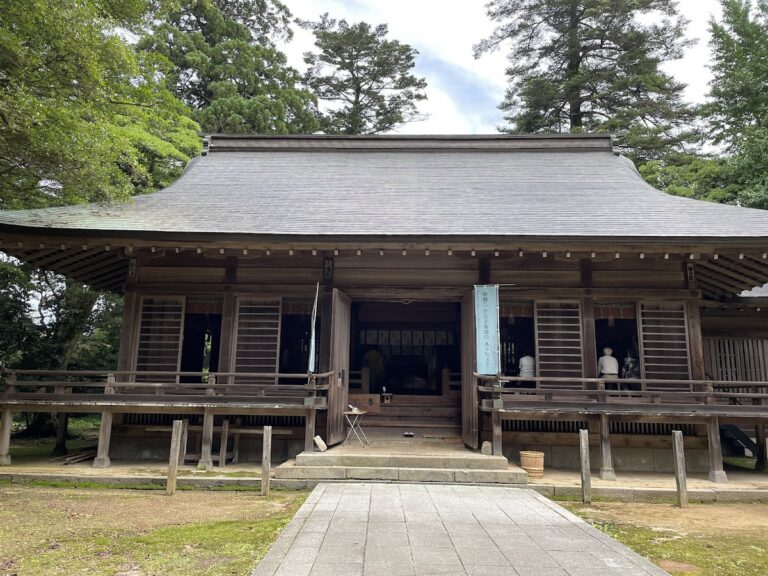
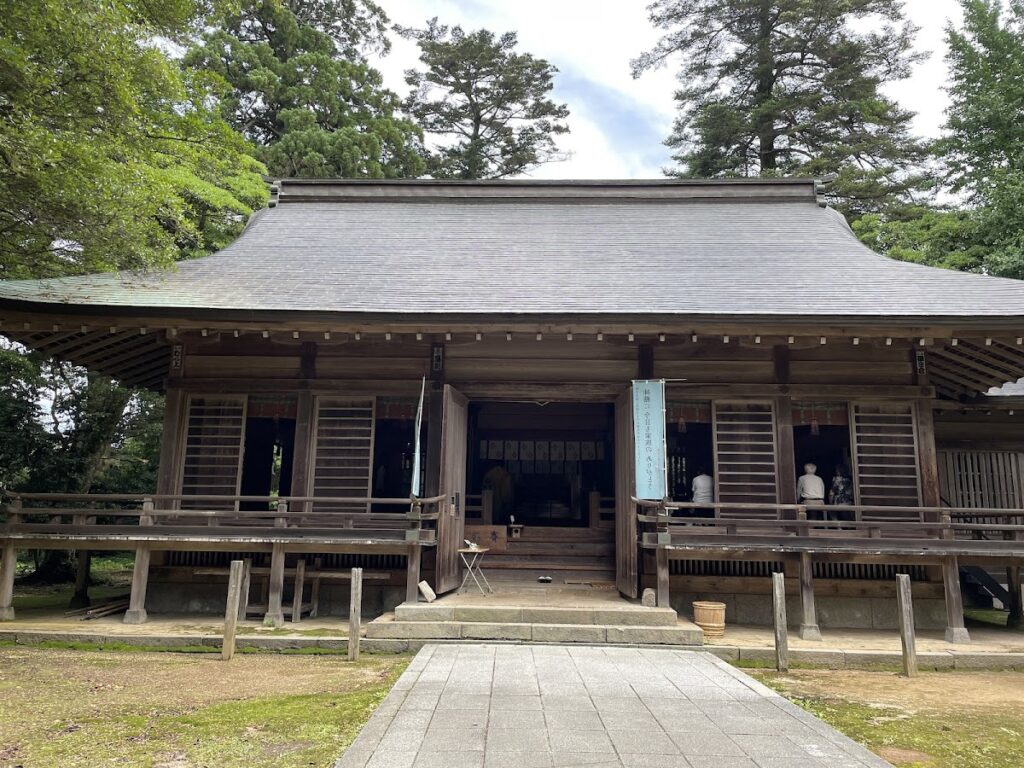
The buildings of Shizuri Shrine preserve the beauty of traditional shrine architecture. The main hall is the most sacred place where the enshrined deity is worshipped, while the worship hall is where worshippers offer their prayers.
The grounds are enveloped in a tranquil atmosphere, and the sacred area surrounded by ancient trees provides peace of mind to visitors. The charm of Shizuri Shrine lies in the coexistence of the solemnity unique to a shrine with a long history and a friendly, community-based atmosphere.
Subsidiary Shrines and Auxiliary Shrines
In addition to the main shrine, several subsidiary shrines are enshrined within the grounds. Each of these small shrines enshrines a historically significant deity, demonstrating the diversity of local beliefs.
Nature of the Sacred Area
The grounds of Shizuri Shrine are blessed with abundant nature. The ancient guardian forest creates a sacred atmosphere and also plays a role in preserving the local ecosystem. The changing natural scenery within the shrine grounds with each season allows visitors to experience the passage of time. From the fresh greenery of spring, the deep green of summer, the vibrant autumn leaves, to the tranquility of winter, the shrine grounds display different expressions in each season, offering a fresh and moving experience with every visit.
Visiting Information
Access
The most convenient way to access Shizuri Shrine is by car. It’s approximately a 15-minute drive from Kurayoshi Station or Matsuzaki Station on the JR San’in Main Line. While public transportation is available via bus, the number of services is limited, so it’s recommended to check the timetable in advance.
The shrine has a parking lot for visitors, making it convenient for those arriving by private car. Especially on days when crowds are expected, such as the Day of the Dog, it’s recommended to allow ample time for your visit.
Visiting Hours and Shrine Office
While the grounds of Shizuri Shrine are generally open for free worship, there are set times for prayers and the reception of amulets. The shrine office is usually open from 9:00 AM to around 5:00 PM, but this may vary depending on the season and events.
If you wish to receive prayers such as prayers for safe childbirth, it is recommended to make a reservation by phone in advance. Especially on the Day of the Dog, it is expected to be crowded, so early reservations are recommended.
Items Offered
At Shizuri Shrine, you can receive various amulets, including amulets for safe childbirth, and goshuin (shrine stamps). The amulet for safe childbirth is popular as a charm to protect pregnant women and their unborn babies.
Many visitors also receive goshuin as a memento of their visit. The goshuin of Shizuri Shrine reflects its status as the Ichinomiya (first-ranked shrine) of Hoki Province and its characteristics as a deity of safe childbirth. Having it inscribed in your goshuin book allows you to preserve the memory of your visit.
Annual Events and Festivals
Main Festivals
Shizuri Shrine holds various festivals throughout the year. During major festivals, including the annual grand festival, local people gather to offer gratitude and prayers to the gods.
These festivals are not merely religious events, but also important opportunities to deepen the bonds of the local community. These traditional festivals, which have been passed down for generations, are carefully preserved and preserved as part of the region’s cultural heritage.
Seasonal Events
Seasonal events such as the New Year’s visit, the Setsubun festival, and the summer purification ceremony are also important annual events at Shizuri Shrine. Each of these events has deep meaning and is closely intertwined with people’s lives.
Shizuri Shrine’s Connection to the Community
As a Center of Local Faith
From ancient times to the present day, Shizuri Shrine has functioned as a spiritual pillar of the local community. Beyond its status as the Ichinomiya (first-ranked shrine) of Hoki Province, it is cherished by local residents as a familiar shrine that is an integral part of their daily lives.
Many people visit Shizuri Shrine as a place of prayer for important life events, such as prayers for safe childbirth, first shrine visits for newborns, Shichi-Go-San (a traditional rite of passage for children), and protection against misfortune. This accumulation of faith has created a deep bond between the shrine and the local community.
Protection and Preservation of Cultural Properties
Shizuri Shrine, which possesses national treasures and national historical sites, also plays an important role in the protection and preservation of cultural properties. Valuable cultural properties, including artifacts unearthed from the Hoki Ichinomiya Sutra Mound, are appropriately preserved, managed, and passed down to future generations.
These cultural properties are not merely relics of the past, but living evidence that represents the history and identity of the region, and continue to speak to people today.
Relationship with Shizuri Shrines Nationwide
Distribution of Shizuri Shrines
Shrines bearing the name “Shizuri Shrine” exist throughout Japan, in addition to Yurihama Town and Tottori City in Tottori Prefecture. These shrines all enshrine Takehazuchi-no-Mikoto, the god of weaving, and are deeply connected to the ancient Shizuri clan.
Major Shizuri shrines include the Shizuri Shrine in Shisō City, Hyogo Prefecture, and the Shizuri Shrine in Minamibōsō City, Chiba Prefecture. While each Shizuri shrine has its own unique history and beliefs, they are united by the common deity of weaving.
The Shizuri Clan and Textile Culture
The existence of Shizuri shrines indicates the spread of textile culture in ancient Japan. The Shizuri clan, possessing advanced weaving techniques, migrated to various regions, spreading their skills. It is believed that the current distribution of Shizuri shrines was formed as they were established in the areas where they migrated.
In ancient times, textiles were not merely practical goods, but important products used in rituals and diplomacy. Textiles with advanced techniques, such as Shizuri weaving, were treated as particularly valuable, giving rise to the worship of the god who presided over these techniques.
Significance of Visiting Shizuri Shrine
Experiencing History and Faith
Visiting Shizuri Shrine offers a valuable opportunity to experience Japan’s ancient history and traditional faith. A multi-layered history breathes within the shrine grounds, encompassing Heian period sutra mounds, ancient textile culture, and a continuously recurring belief in safe childbirth.
Beyond its cultural value as a national treasure and national historical site, Shizuri Shrine’s greatest appeal lies in its function as a living place of faith. The space where historical heritage and modern faith coexist deeply moves visitors.
A Sacred Site for Prayers for Safe Childbirth
For expectant mothers and their families praying for safe childbirth, Shizuri Shrine holds special significance. The ancient faith in the god of safe childbirth continues to be a source of comfort for many, even in today’s technologically advanced world.
Offering prayers to the gods at this important milestone in life—welcoming a new life—provides spiritual peace and deepens family bonds, making it a meaningful experience. Praying for a safe delivery at Shizuri Shrine is not merely a ritual; it’s also an opportunity to reaffirm the preciousness of life and the bonds of family.
Seeking Peace of Mind
The tranquil grounds, abundant nature, and sacred atmosphere created by its long history offer peace of mind to visitors. Leaving the hustle and bustle of everyday life behind and quietly offering prayers in this sacred space is a valuable opportunity for modern people to refresh themselves.
Summary
Shizuri Shrine, while possessing a dignified history as the Ichinomiya (first-ranked shrine) of Hoki Province, is also a shrine beloved by people as a deity of safe childbirth. It enshrines Takehazuchi-no-Mikoto, the god of weaving, and Shitateluhime-no-Mikoto, the goddess of safe childbirth, and has attracted unwavering devotion from ancient times to the present day.
The artifacts unearthed from the Hoki Ichinomiya Sutra Mound, designated a National Treasure, are valuable cultural assets that convey the faith and culture of the Heian period. Furthermore, the sacred atmosphere that permeates the entire shrine grounds provides visitors with deep emotion and peace of mind.
Whether you’re praying for a safe delivery, interested in Japanese history and culture, or simply seeking peace of mind, Shizuri Shrine is a special place well worth visiting. When you visit Tottori Prefecture, be sure to stop by Shizuri Shrine, the Ichinomiya (first-ranked shrine) of Hoki Province. This shrine, with its history of over a thousand years, will surely give you a warm welcome.