Complete Guide to Sugou Isobe Shrine | History, Ritual, and Access Information for Kaga Province’s Second-Ranked Shrine
Sugou Isobe Shrine, located on the grounds of Daishoji in Kaga City, Ishikawa Prefecture, is an ancient shrine boasting a history of over 1,400 years. Revered as the second-ranked shrine of Kaga Province, its annual “Gongan Shinji” (ritual offering) held on February 10th is a magnificent ritual known as the Bamboo Splitting Festival, attracting many worshippers. This article provides a detailed overview of Sugou Isobe Shrine, including its history, enshrined deities, highlights within the grounds, festival information, and access methods.
History and Origins of Sugou Isobe Shrine
Founding and Emperor Yomei
The founding of Sugou Isobe Shrine dates back to the first year of Emperor Yomei’s reign (585 AD). The Sugoishibe Shrine originated during the reign of Emperor Bidatsu, when Emperor Yomei relocated the Sugoishibe deity, which had been enshrined in the Imperial Palace, to this location in Echizen Province (present-day Kaga region) in the hope of promoting agriculture, ensuring abundant harvests, and ensuring the prosperity of all people.
This relocation was not merely a transfer of a shrine, but a significant event demonstrating the court’s emphasis on the development and stability of the Hokuriku region. By Emperor Yomei’s behest, the Sugoishibe Shrine was positioned as a center for the protection of the region and for industrial development.
Status as an Engishiki Shrine
The Sugoishibe Shrine is a Shikinaisha (shrine listed in the Engishiki Jinmyocho) and has been revered by the imperial court since ancient times. In the Middle Ages, it was considered the third-ranked shrine of Echizen Province, and later established a firm position as the second-ranked shrine of Kaga Province (the first-ranked was Shirayama Hime Shrine). Formerly a National Shrine of the lower rank, it is currently designated as a Special Shrine by the Association of Shinto Shrines.
Also known by common names such as “Shikichi Tenjin,” “Sugao Tenjin,” and “Sugao-sha,” it has been a center of local faith and continues to receive fervent reverence to this day.
Reverence from Samurai Families, Including the Maeda Family
During the Edo period, it received particularly deep reverence from the Maeda family, the lords of the Kaga Domain, and received many donations. The Maeda family protected the shrine for generations, supporting the construction and repair of the shrine buildings and the festivals. The fervent faith of these two major powers—the Imperial Court and the Maeda family—enhanced the status and prestige of Sugao Ishibe Shrine.
Due to this historical background, the shrine grounds retain dignified buildings, which are valuable cultural assets that convey the history of Kaga to the present day.
Deities and Divine Virtues
Three Deities Enshrined
The three deities enshrined at Sugao Ishibe Shrine are as follows:
Hikohohodemi-no-Mikoto
Also known as Yamasachihiko, this deity is known for the myth of visiting the palace of the sea god. He is worshipped as the guardian deity of agriculture and fishing.
Toyotamahime-no-Mikoto
The daughter of the sea god and consort of Hikohohodemi-no-Mikoto. She is revered as the goddess of safe childbirth and child-rearing.
Ugayafukiaezu-no-Mikoto
The son of Hikohohodemi-no-Mikoto and Toyotamahime-no-Mikoto, and the father of Emperor Jimmu, the first emperor of Japan.
These three deities represent three generations of a family and are believed to bestow a wide range of divine blessings, including family bonds, abundant harvests, maritime safety, and safe childbirth and child-rearing.
Various Theories Regarding the Deity of Sugaoishibe Shrine
There are various theories regarding the name “Sugaoishibe Shrine” in the shrine’s name. One theory suggests it refers to Sukunahikona-no-Mikoto, a child of Kamimusubi-no-Kami. Sukunahikona-no-Mikoto is known as the god of medicine, hot springs, and agriculture, and has deep ties to the Hokuriku region.
In any case, the deities enshrined at Sugaoishibe Shrine have been revered since ancient times as gods who protect the agricultural development and the lives of the people in this region.
Gongan Shinji (Bamboo Splitting Festival)
Overview of the Bamboo Splitting Festival
The most famous festival at Sugaoishibe Shrine is the “Gongan Shinji” (prayer ritual), held annually on February 10th. This ritual, also commonly known as the “Bamboo Splitting Festival,” is a magnificent event in which young men simultaneously split hundreds of green bamboo poles.
This Shinto ritual, performed in the harsh winter of Kaga, is a deeply rooted tradition among the local people, praying for a bountiful harvest and protection from disaster.
Flow and Significance of the Ritual
The ritual proceeds as follows:
- Bamboo Splitting: Hundreds of young men simultaneously strike hundreds of bamboo poles against the ground within the shrine grounds, splitting them. The sound of the splitting bamboo resonates, symbolizing the warding off of evil spirits.
- Large Rope Pulling: A large rope, representing a serpent that brings misfortune, is dragged out from inside the shrine. This rope is considered a symbol of calamity.
- Throwing into the River: The pulled-out rope is thrown into the Daishoji River, warding off evil. The river’s current symbolizes the washing away of misfortune.
This series of rituals is extremely rare and is attracting attention as a valuable cultural heritage, a fusion of Kaga’s unique folk beliefs and Shintoism. ### Gongan Bamboo and its Blessings
The green bamboo used in the Shinto ritual is called “Gongan Bamboo” and is given to worshippers. This bamboo is believed to bring protection from evil and ensure family safety, and many people take it home to display at their entrance or on their household altar.
The Gongan ritual takes place in the harsh cold of February, but every year many worshippers and tourists visit to witness the traditional ritual. A photo contest is also held, making it a major event for the entire community.
Highlights of the Shrine Grounds
Shrine Gate (City-Designated Cultural Property)
The shrine gate of Sugaoishibe Shrine is a valuable structure designated as a cultural property of Kaga City. Appearing at the top of a long stone staircase, this gate is characterized by its dignified construction and beautiful decorations, guiding worshippers into the sacred grounds.
When passing through the gate, it is recommended to take the time to appreciate its historical value and architectural beauty. It is a valuable cultural property that has been maintained through donations from successive generations of worshippers, including the Maeda family.
Main Shrine and Worship Hall
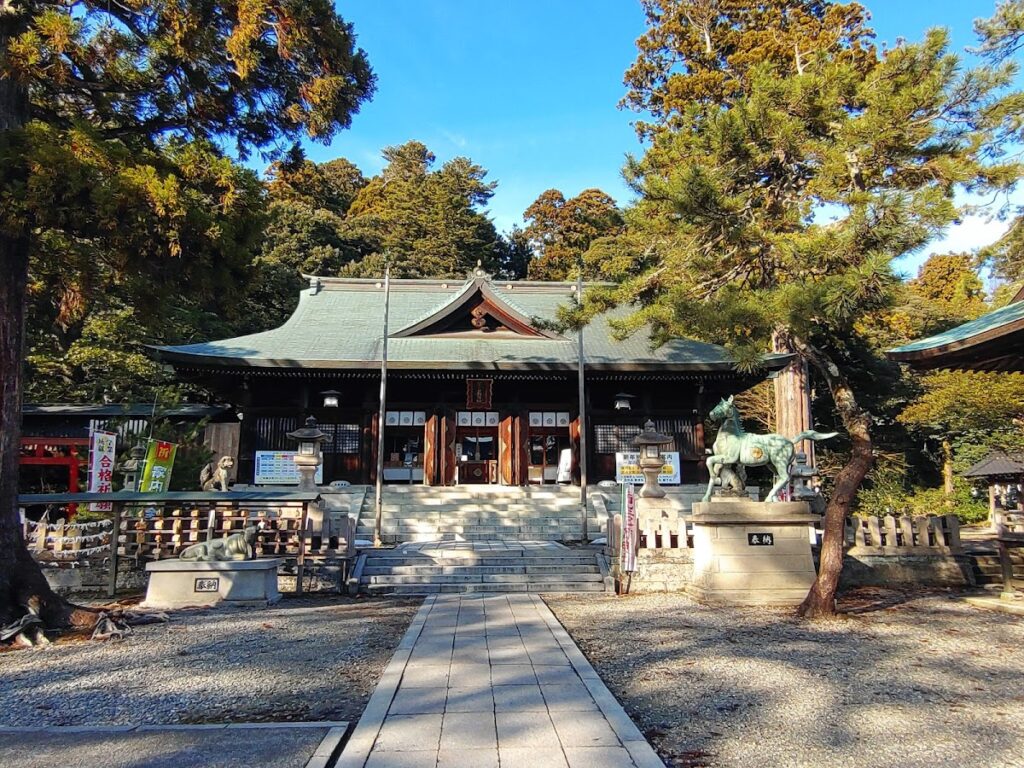
Beyond the main gate stands a shrine with an impressive, beautifully shaped roof. The main shrine preserves the traditional style of shrine architecture, and together with the worship hall, it exudes a solemn atmosphere.
The area around the shrine is enveloped in silence, allowing you to feel the dignity of this ancient shrine with a history of over 1,400 years. When visiting, please take your time to savor the atmosphere of the shrine grounds.
Atago Shrine and Exploring the Grounds
Within the grounds, Atago Shrine is also enshrined as a subsidiary shrine. From Atago Shrine, you can overlook the grounds and view the entire Sugoishibe Shrine from a different angle.
The entire grounds are enveloped in a tranquil atmosphere, and a stroll while enjoying the nature of each season is highly recommended. Especially during the seasons of fresh greenery and autumn leaves, beautiful scenery awaits visitors.
Stone Steps and Approach
The long stone steps leading from the torii gate to the shrine are an important element of the visit. As you ascend each step, compose your mind and heighten your resolve to approach the sacred grounds.
The stone steps are lined with trees, and the path surrounded by nature has a purifying effect on both mind and body. The steps are steep, so please climb slowly and carefully, paying attention to your footing.
Festivals and Annual Events
Main Festivals
Sugao Ishibe Shrine holds various festivals throughout the year.
Ogan Shinji (Bamboo Splitting Festival)
Date: February 10th every year
Content: A ritual to ward off evil through bamboo splitting and rope pulling
Annual Festival
Date: Important milestones in the year
Content: The shrine’s most important festival
Iiri Festival
In addition, seasonal festivals have been passed down since ancient times.
Precautions During Festivals
Please note the following points if you are attending a festival.
- Formal attire or equivalent is preferred.
- Maintain silence during Shinto rituals.
- Follow the instructions of the Shinto priests when taking photographs.
- Refrain from eating, drinking, or smoking on the shrine grounds.
Especially during the Shinto rituals, the shrine becomes crowded with many worshippers, so please arrive early and ensure your safety.
About Prayers
Types of Prayers
Sugaoishibe Shrine accepts various types of prayers from both individuals and corporations.
- Family Safety
- Business Prosperity
- Traffic Safety
- Protection from Evil
- Safe Childbirth Prayer
- First Shrine Visit for a Newborn
- Shichi-Go-San (7-5-3 Festival)
- Success in Exams
- Business Prosperity (Corporate)
Reception Hours and Confirmation Items
If you wish to request a prayer, we recommend confirming by phone in advance. Please contact the shrine office for reception hours and prayer fees.
Reception hours may change depending on the dates of festivals and events, so it is important to check in advance, especially if you are visiting from afar.
Access Information
Location
Address: 81-Otsu, Shikichi, Daishoji, Kaga City, Ishikawa Prefecture
Phone Number: Please inquire at the shrine office
Access by Public Transportation
By JR
- Approximately 1.5 km northeast from JR Hokuriku Main Line “Daishoji Station” (approximately 20 minutes on foot)
- Approximately 15 minutes by taxi from JR Hokuriku Main Line “Kaga Onsen Station”
While it is within walking distance from Daishoji Station, we recommend wearing comfortable shoes as there are stone steps.
By Bus
There are bus routes from Kaga Onsen Station and Katayamazu Onsen area, but the number of buses is limited, so please check the timetable in advance.
Access by Car
Using the Expressway
- Approximately 10 minutes from the Hokuriku Expressway “Kaga IC”
- Approximately 15 minutes from the Hokuriku Expressway “Katayamazu IC”
Parking
There is a parking lot for visitors on the shrine grounds. However, congestion is expected during major festivals such as Shinto rituals, so please consider using public transportation.
Combining with Nearby Sightseeing
Sugaoishibe Shrine is located in the Kaga Onsenkyo area and can be visited in combination with the following tourist attractions:
- Yamashiro Onsen (approximately 10 minutes by car)
- Yamanaka Onsen (approximately 20 minutes by car)
- Katayamazu Onsen (approximately 15 minutes by car)
- Natadera Temple (approximately 20 minutes by car)
- Kutani Ware Kiln (within the Daishoji area)
Kaga City is a region rich in traditional crafts and hot spring culture, so you can enjoy the charm of Kaga in conjunction with visiting the shrine.
Opening Hours and Points for Visiting the Shrine
Opening Hours
Opening hours may vary depending on the season and day. While daytime visits are usually possible, it is recommended to check in advance if you wish to visit early in the morning or evening.
Visiting Etiquette
Please observe basic shrine visiting etiquette.
- Bow when passing through the torii gate.
- Avoid walking in the center of the approach to the shrine.
- Cleanse your hands and mouth at the temizuya (water basin).
- At the front of the main hall, perform the “two bows, two claps, one bow” ritual.
- Maintain silence within the shrine grounds.
Photography
Photography is generally permitted within the shrine grounds, but there are areas where photography is restricted, such as during Shinto rituals or inside the main hall. Please ask a Shinto priest or the shrine office if you have any questions.
When posting on social media, please be considerate of the privacy of other visitors.
A Summary of the Charms of Sugaoishibe Shrine
Sugaoishibe Shrine is a venerable ancient shrine that has protected the Kaga region for over 1,400 years, since the time of Emperor Yomei. As the second-ranked shrine of Kaga Province, it received reverence from the imperial court and the Maeda family, and has been maintained through numerous donations, making it a historically valuable shrine.
In particular, the Gogan Shinto ritual (Takewari Festival) on February 10th is a unique ritual in which green bamboo is split and a large rope, representing a giant snake, is floated down the river. This is a valuable event that conveys the traditional culture of the Kaga region to the present day.
The shrine grounds are enveloped in tranquility, and the shrine gate (a city-designated cultural property), the beautiful shrine buildings, and the long stone steps and approach evoke a sense of history and sacredness in visitors. Numerous subsidiary shrines, including Atago Shrine, are scattered throughout the grounds, allowing visitors to enjoy a leisurely stroll.
The three deities enshrined at this shrine—Hikohohodemi-no-Mikoto, Toyotama-hime-no-Mikoto, and Ugayafukiaezu-no-Mikoto—offer a wide range of divine blessings, including abundant harvests, family safety, safe childbirth, and child-rearing. The shrine accommodates diverse prayers for both individuals and corporations.
Access is convenient, within walking distance of Daishoji Station and approximately 10 minutes by car from the Kaga Interchange, making it easy to combine a visit with sightseeing in the Kaga Onsenkyo area. Please note that opening and reception hours may change, so it is recommended to check in advance, especially if you are traveling from afar.
When visiting Kaga City, be sure to visit Sugaoishibe Shrine and spend some peaceful time in this sacred place steeped in long-standing history and tradition. During the period of the Shinto ritual, you can experience the magnificent bamboo-splitting ceremony, allowing you to more deeply connect with Kaga’s culture.
Sugaoishibe Shrine is not merely a tourist spot; it is a “living cultural asset” that continues to thrive as the center of faith for the local people. This shrine is a valuable representative of Kaga City, where visitors can experience firsthand Japan’s shrine culture and the history of the region through their worship.