
Complete Guide to Tado Taisha Shrine | A Thorough Explanation of Deities, Blessings, the Legend of the White Horse, and the Ageuma Ritual
What is Tado Taisha Shrine?
Tado Taisha Shrine is a prestigious shrine located in Tado-cho, Kuwana City, Mie Prefecture. Its official name is “Tado Shrine,” but it is commonly known as “Tado Taisha.” Since ancient times, it has been praised as “the Grand Shrine of Northern Ise” and “if you visit Ise, you should also visit Tado; if you don’t visit Tado, your pilgrimage is incomplete,” attracting faith comparable to that of Ise Grand Shrine.
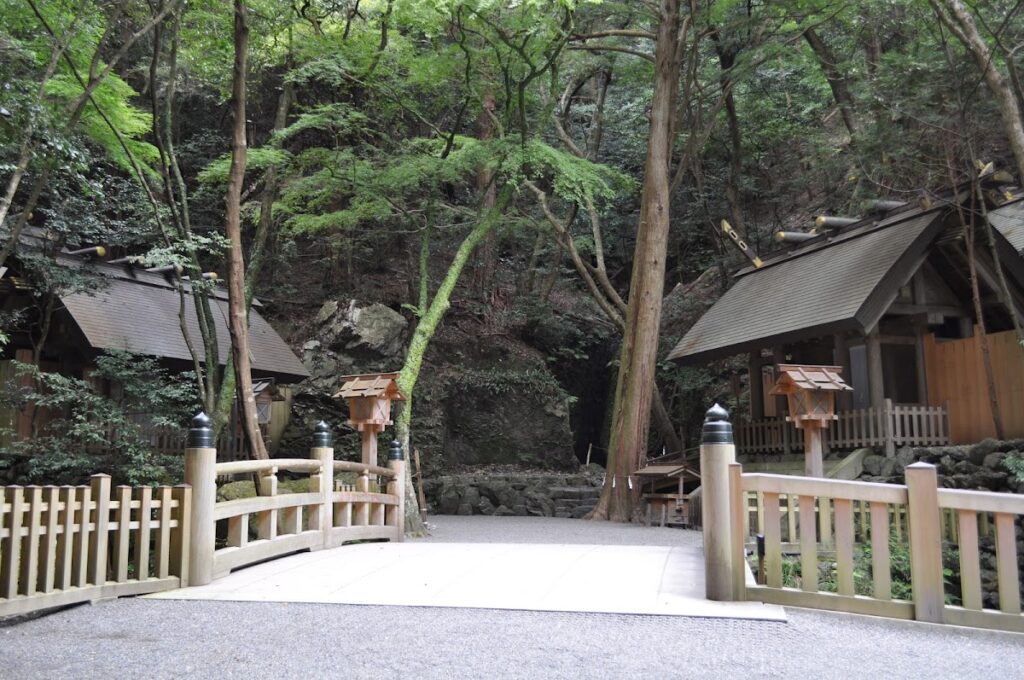
Tado Taisha Shrine is located at the foot of Mount Tado (elevation 403m) and is known as a sacred area surrounded by abundant nature. Within the grounds, the main shrine, the auxiliary shrine Ichimokuren Shrine, and various subsidiary shrines are scattered, preserving the history of ancient faith.
History of Tado Grand Shrine
Tado Grand Shrine has an extremely long history, with its origins dating back to the late 5th century, during the reign of Emperor Yuryaku. The *Shoku Nihongi* (Continued Chronicles of Japan) records that it was granted a divine rank in 763 AD (Tenpyo Hoji 7), and during the Heian period, it received the rank of Junior Third Rank, demonstrating its deep reverence from the imperial court.
The *Engishiki Jinmyocho* (Register of Shrines in the Engi Era) lists it as “Tado Shrine, Kuwana District, Ise Province, Two Deities,” making it a historically significant shrine with the status of a Shikinaisha (a shrine listed in the Engishiki). While the shrine buildings were destroyed by war during the medieval period, they were rebuilt and restored during the Edo period under the patronage of the Matsudaira clan, the lords of the Kuwana domain.
In the Meiji era, it was ranked as a National Grand Shrine, and after World War II, it became a Special Shrine, a status it maintains to this day. Throughout its long history, it has been revered as a center of faith for the local people and as the guardian shrine of the northern Ise region.
Deities and Benefits
Deities of the Main Shrine
At the main shrine of Tado Taisha, Amatsuhikone-no-Mikoto is enshrined as the principal deity. Amatsuhikone-no-Mikoto is a son of Amaterasu-Omikami and played a crucial role in the descent of the heavenly grandchild.
Amenomahitotsu-no-Mikoto is also enshrined as a secondary deity. Amenomahitotsu-no-Mikoto is known as the god of ironworking and blacksmithing, and is worshipped as the guardian deity of technology and crafts.
Separate Shrine – Ichimokuren Shrine
Located north of the main shrine, the separate shrine also enshrines Amenomahitotsu-no-Mikoto as its principal deity. Ichimokuren Shrine is known for its benefits in healing eye diseases and improving skills, and is deeply revered by craftsmen and artists.
The Benefits of Tado Taisha Shrine
Tado Taisha Shrine is known for its diverse blessings:
- Good Fortune and Protection from Evil: Prayers for protection from evil during unlucky years and for good fortune at important life milestones
- Traffic Safety: Based on the legend of the white horse, it is considered a guardian deity of traffic safety
- Family Safety: Peace and prosperity for the family
- Business Prosperity: Development of businesses and business success
- Healing from Illness: Especially healing of eye diseases (at Ichimokuren Shrine)
- Academic Success: Growth of children and improvement in academics
- Matchmaking: Success in finding a good partner and marital harmony
The blessing for traffic safety is particularly well-known, and many visitors come for car blessings when purchasing a new car and for prayers for traffic safety.
The Legend of the White Horse and the Sacred Horse
The Legend of the White Horse at Tado Taisha Shrine
The “Legend of the White Horse” is indispensable when discussing Tado Taisha Shrine. Since ancient times, it has been believed that a god descended upon Mount Tado on a white horse. According to this legend, Amatsuhikone-no-Mikoto descended upon Mount Tado on a white horse and protects this land.
The “Tado Jingu-ji Garan Engi narabini Shizai-cho” (Heian period) contains a description of a sacred horse residing on Mount Tado, indicating the ancient nature of the white horse worship. White horses of Tado Grand Shrine are also depicted in medieval picture scrolls, showing that this belief was widely known.
Sacred Horse Stable and Sacred Horses
Even today, there is a sacred horse stable on the grounds of Tado Grand Shrine, where sacred horses are actually kept. Visitors can see the sacred horses at the stable and even feed them carrots (this may vary depending on the season and circumstances). The sacred horses are cherished as messengers of the gods, and it is believed that seeing them brings good fortune.
White horses are considered symbols of traffic safety, and this is the origin of Tado Taisha Shrine’s reputation as a shrine for traffic safety. A constant stream of worshippers can be seen clasping their hands together in front of the sacred horse stable, praying for safety.
Ageuma Shinji Ritual
What is the Ageuma Shinji Ritual?
The most famous festival at Tado Taisha Shrine is the Ageuma Shinji ritual, held annually on May 4th and 5th. This magnificent ritual marks the climax of the Tado Festival and is designated as an Intangible Folk Cultural Property of Mie Prefecture.
The Ageuma Shinji ritual is said to have a history of over 500 years, serving as a divination ritual for the year’s harvest. Riders mount their horses and gallop up a steep, earthen wall approximately 2 meters high and 4 meters long. Whether the horses can cross the wall or not predicts the year’s harvest.
Highlights of the Ageuma Shinto Ritual
The greatest highlight of the Ageuma Shinto ritual is the moment when horse and rider work together to challenge the earthen wall. The sight of the horse, after a running start, charging towards the wall and galloping up the nearly vertical slope is breathtaking. A huge cheer erupts when successful, and even failures create a palpable sense of excitement as everyone prepares for the next attempt.
The ritual is rotated among six districts within Tado Town (Kaminogo, Shimonogo, Tozu, Koyama, Rikio, and Ikai), with young people selected from each district serving as riders. The riders undergo months of training and practice with their horses before the actual event.
The more times the horse successfully crosses the earthen wall, the more bountiful the harvest is believed to be, making it a traditional event that brings joy and disappointment to the entire community. While there has been some debate in recent years from an animal welfare perspective, efforts continue to balance the preservation of traditional culture with animal welfare.
Other Events of the Tado Festival
The Tado Festival, including the Ageuma ritual, is held over two days, May 4th and 5th. Besides the Ageuma ritual, various other rituals and events are held, such as the portable shrine procession, Yabusame (mounted archery) ritual, and a children’s procession.
During the festival, numerous stalls line the streets, creating a lively atmosphere as one of the largest festivals in the region. Tens of thousands of worshippers and spectators from within and outside the prefecture visit, and Tado Taisha Shrine and the entire town of Tado are enveloped in the festival’s excitement.
Highlights of the Shrine Grounds
Main Shrine (Agemiya)
The main shrine is the heart of Tado Taisha Shrine. Located on the slopes of Mount Tado, it is also known as “Agemiya.” The current shrine building was rebuilt during the Edo period and is a beautiful Shinto-style building with a cypress bark roof.
The approach to the main shrine consists of stone steps, with a large torii gate standing along the way. As you climb the stone steps and look back, you can see the townscape of Kuwana and Ise Bay, making the view one of the highlights.
In front of the main shrine is the worship hall, where worshippers perform the ritual of two bows, two claps, and one bow. The area around the shrine is surrounded by ancient trees, creating a sacred atmosphere.
Ichimokuren Shrine (Betsugu)
A short walk north from the main shrine is the Ichimokuren Shrine (Betsugu). This shrine, dedicated to Amenomehitotsu-no-Mikoto, is known for its blessings of healing eye diseases and improving skills.
The name Ichimokuren Shrine comes from the fact that Amenomehitotsu-no-Mikoto is considered a god with “one eye.” It is also said that the image of craftsmen working with one eye closed during ironmaking and blacksmithing was deified.
People suffering from eye diseases and those in professions requiring detailed work visit the shrine to pray for eye health and improved skills.
Sacred Horse Stable
Located in a prominent spot within the shrine grounds, the sacred horse stable houses a white sacred horse. Many worshippers gather in front of the stable, worshipping the horse and taking photographs.
The sacred horse is revered as a messenger of the gods, and its care is carried out by specialized Shinto priests and volunteers. Depending on the season, visitors can feed the horse carrots and other foods, making it particularly popular with children.
Tado Inari Shrine
Within the shrine grounds is the Tado Inari Shrine. It enshrines Ukanomitama-no-kami and is believed to bring blessings of business prosperity and abundant harvests. The approach to the shrine, lined with vermilion torii gates, is a popular photo spot.
Amatsu Shrine and Utsukushigozen Shrine
In addition, several subsidiary shrines, such as the Amatsu Shrine and Utsukushigozen Shrine, are scattered throughout the grounds. Each enshrines a different deity and is believed to offer various blessings. If you have time, we recommend visiting these shrines as well.
Sacred Water
There is also a place where pure water from Mount Tado springs forth as sacred water. This water has long been considered to have miraculous properties, and visitors are permitted to take some home (please bring your own container).
Etiquette and Manners for Visiting a Shrine
Basic Etiquette for Visiting a Shrine
Visiting Tado Taisha Shrine follows the general etiquette for visiting shrines:
- Bow before passing through the torii gate: As a sign of respect before entering the sacred area.
- Purify yourself at the water basin: Purify your left hand, then your right hand, then your mouth, and finally wash the handle.
- Walk along the edge of the path: The center is considered the path for the gods.
- Two bows, two claps, and one bow at the main hall: Bow deeply twice, clap twice, and finally bow once.
- Bow upon leaving: After leaving the torii gate, turn around and bow once.
About Goshuin (Shrine Seals)
You can receive a goshuin (shrine seal) at Tado Taisha Shrine. The goshuin office is located in the shrine office, and you can stop by after your visit. You can bring your own goshuincho (seal book) or purchase one on the spot.
Tado Taisha Shrine also sells its own original goshuincho (stamp books), with designs featuring white horses and Mount Tado being particularly popular. The offering fee for a goshuin (stamp) is usually around 300 to 500 yen.
Amulets and Souvenirs
The shrine office offers a variety of amulets and souvenirs:
- Traffic Safety Amulet: A traffic safety amulet related to the white horse
- Good Fortune Amulet: A good fortune and protection against evil amulet
- Academic Success Amulet: Amulet for academic success and passing exams
- Matchmaking Amulet: Amulet for finding a good partner
- Ema (votive tablet): Write your wish on an ema depicting a white horse and offer it to the shrine.
The traffic safety amulet, in particular, is a representative souvenir of Tado Taisha Shrine, and many people purchase it when buying a new car.
Access Information
Access by Train
Using the Yoro Railway:
- Get off at Tado Station on the Yoro Railway, approximately 20 minutes on foot.
- Or, approximately 5 minutes by taxi from Tado Station.
The Yoro Railway is a line that runs from Kuwana Station towards Ogaki. The journey from Kuwana Station to Tado Station takes approximately 15 minutes. From Nagoya, take the Kintetsu or JR line to Kuwana Station, then transfer to the Yoro Railway.
The path from Tado Station to Tado Taisha Shrine is a pleasant walk through a tranquil rural landscape. Signposts are well-maintained, so you are unlikely to get lost.
Access by Car
Using the Tomei-Hanshin Expressway:
- Approximately 10 minutes from Kuwana-Higashi IC
- Approximately 15 minutes from Yatomi IC
Access via National Route 258:
- Follow the signs for “Tado Taisha-mae” on National Route 258
Parking Information
Tado Taisha Shrine has a free parking lot for visitors:
- Capacity: Approximately 200 cars
- Operating Hours: Same as visiting hours
- Fee: Usually free (may be charged during festivals)
The parking lot becomes extremely crowded during major festivals such as the Ageuma Shinto ritual. Temporary parking lots may be set up, but using public transportation is recommended. Also, surrounding roads become congested, so it’s important to allow ample time for your visit.
Visiting Hours and Shrine Office Hours
- Visiting Hours: Generally open all day (Note: There is no lighting at night)
- Shrine Office Hours: 8:30 AM to 5:00 PM (May vary depending on the season)
- Prayer Request Reception: 9:00 AM to 4:00 PM (Advance confirmation required)
During the New Year’s period and major festivals, reception hours may be extended. If you wish to request a prayer, it is recommended to confirm and make a reservation by phone in advance.
Main Annual Festivals
January
- New Year’s Visit: January 1st to 3rd. Celebrating the New Year and praying for peace throughout the year.
- New Year’s Festival: January 1st. The first festival of the New Year.
February
- Setsubun Festival: Around February 3rd. Driving away evil spirits by scattering beans.
May
- Tado Festival: May 4th and 5th. The largest festival, including the Ageuma Shinto ritual.
November
- Shichi-Go-San: Mid-November. Celebrating the growth of children.
- Niiname-sai: November 23rd. A festival of gratitude for the harvest.
December
- Oharai: December 31st. Purifying oneself of the sins and impurities of the year.
In addition to these, regular festivals such as monthly festivals are held. Since the dates of festivals may vary from year to year, it is recommended to check official information.
Nearby Tourist Attractions
Tado Mountain Hiking
Tado Mountain, towering behind Tado Taisha Shrine, is a popular hiking destination. The trail to the 403m summit is well-maintained and easy even for beginners. From the summit, you can enjoy panoramic views of the Nobi Plain and Ise Bay, and on clear days, you can even see the skyscrapers of Nagoya.
The trailhead is accessible from the grounds of Tado Taisha Shrine. This round-trip course takes about 2-3 hours and allows you to enjoy a combination of shrine visit and hiking.
Tado Gorge
Tado Gorge, a valley in Mount Tado, is a scenic spot rich in nature. A clear stream flows through it, and the scenery is especially beautiful during the seasons of fresh greenery and autumn leaves. A walking path is maintained, allowing you to enjoy a stroll.
Sightseeing in Kuwana City
About 20 minutes by car from Tado Taisha Shrine, in the center of Kuwana City, there are the following tourist spots:
- Rokkaen: A valuable Western-style building and Japanese garden from the Meiji and Taisho periods
- Kuwana Castle Ruins: The remains of Kuwana Castle and Kyuka Park
- Shichiri no Watari Ruins: Traces of a post town on the Tokaido Fifty-three Stations
- Nabana no Sato: Flowers of all seasons and winter illuminations
Nagashima Onsen and Nagashima Spa Land
About 15 minutes by car from Tado Taisha Shrine are Nagashima Onsen and Nagashima Spa Land. After visiting the shrine, you can relax in a hot spring or enjoy the amusement park.
The Four Seasons of Tado Taisha Shrine
Spring (March-May)
Spring at Tado Taisha Shrine is a beautiful season with cherry blossoms in full bloom and lush greenery. When the cherry trees planted in the shrine grounds and along the approach are in full bloom, many visitors come to enjoy the blossoms. In May, the Ageuma Shinto ritual is held, making it the busiest time of year.
Summer (June-August)
Summer is enveloped in deep green, attracting visitors seeking respite from the heat. The trees on Mount Tado grow lush, creating a green tunnel within the shrine grounds. The sound of cicadas fills the air, creating a distinctly summery atmosphere.
Autumn (September-November)
Autumn is the season of autumn leaves. The entire Mount Tado turns red and yellow, creating a spectacular view. The best time to see the leaves is especially from mid- to late November. Many children visit the shrine for Shichi-Go-San (a traditional Japanese rite of passage for children), and the grounds are adorned with the sight of children in kimonos.
Winter (December-February)
In winter, the air is clear, and the shrine grounds are enveloped in a tranquil atmosphere. Many worshippers visit for Hatsumode (first shrine visit of the year), creating a lively New Year’s atmosphere. While snowfall is rare, you can occasionally see Mount Tado covered in snow.
How to Enjoy Visiting Tado Taisha Shrine
Morning Visit Recommended
Visiting Tado Taisha Shrine early in the morning is recommended. There are fewer people, allowing you to pray peacefully in the quiet grounds. Visiting the shrine in the refreshing morning air, seeing the sacred horses, and experiencing the nature of Mount Tado is a truly special experience.
Collecting Goshuin (Shrine Stamps)
At Tado Taisha Shrine, you can receive goshuin stamps from both the main shrine and the auxiliary shrine (Ichimokuren Shrine). If you are collecting goshuin stamps, why not try collecting both?
Photo Spots
Tado Taisha Shrine has many spots suitable for photography:
- Stone steps and torii gate leading to the main shrine
- White horses at the sacred horse stable
- Vermilion torii gate of Tado Inari Shrine
- View from the main shrine
- Seasonal flowers and autumn leaves
However, please observe proper etiquette when taking photos so as not to disturb worshippers.
Food Information
There are restaurants around Tado Taisha Shrine that you can visit after your visit. In particular, Tado’s specialty, “miso manju,” is a sweet and savory miso-flavored bun; be sure to try it as a memento of your visit.
Also, Kuwana City is famous for its clams. If you venture into Kuwana City, you can enjoy fresh clam dishes.
Summary
Tado Taisha Shrine is a venerable shrine with a history and tradition dating back to ancient times. It enshrines Amatsuhikone-no-Mikoto and offers various blessings, including good fortune, protection from evil, and traffic safety. Tado Taisha Shrine, with its unique beliefs and culture, including the legend of the white horse and the Ageuma Shinto ritual, is a beloved shrine representing the northern Ise region.
Nestled amidst the rich natural beauty of Mount Tado, the shrine grounds showcase the beauty of each season, offering healing and strength to visitors. When visiting Ise Grand Shrine, be sure to also visit Tado Taisha. As the saying goes, “If you visit Ise, you should also visit Tado,” a visit to Tado Taisha will enrich your trip.
Whether you wish to pray for safe travels, good fortune and protection from evil, witness the magnificent Ageuma Shinto ritual, or find peace in nature, Tado Taisha warmly welcomes visitors with a variety of purposes. Why not visit Tado Taisha at least once?

