Takebe Taisha Shrine Complete Guide | A Thorough Explanation of the History, Benefits, and Visiting Methods of the Ichinomiya Shrine of Omi Province
Takebe Taisha Shrine, located in Jinryo, Otsu City, Shiga Prefecture, is one of Japan’s leading ancient shrines with a history of approximately 1900 years. As the Ichinomiya (first-ranked shrine) of Omi Province, it has garnered reverence from both the imperial court and the common people, and is known as a venerable shrine with Yamato Takeru no Mikoto as its principal deity. This article comprehensively introduces information you should know before visiting Takebe Taisha Shrine, including its history, enshrined deities, benefits, highlights of the grounds, annual festivals, and access methods.
What is Takebe Taisha Shrine? | An Overview of the Representative Ancient Shrine of Omi Province
Takebe Taisha Shrine is a Shikinaisha (Myojin Taisha), formerly a Kanpei Taisha (Imperial Grand Shrine), and is currently designated as a Beppyo Jinja (Special Shrine) by the Association of Shinto Shrines. Located approximately 500 meters east of Seta no Karahashi Bridge, it has played an important role as a transportation hub since ancient times.
As the Ichinomiya (first-ranked shrine) of Omi Province, Takebe Taisha Shrine is a representative shrine of Shiga Prefecture and has also been known as “Takebe Daimyojin.” It is listed as a Myojin Taisha (a major shrine listed in the Engishiki) and has a history of receiving deep reverence from the imperial court.
In 1945, the shrine’s main hall and a portrait of Yamato Takeru were featured on the first 1,000 yen banknote issued in Japan, making it a shrine that occupies an important position in Japanese history and culture.
Deities enshrined at Takebe Taisha Shrine: Yamato Takeru and Ōkuninushi-no-Mikoto
Main deity: Yamato Takeru-no-Mikoto
The main deity enshrined at Takebe Taisha Shrine is Yamato Takeru-no-Mikoto, a legendary hero of ancient Japan. Born as a prince of Emperor Keikō, he is revered as a god of war for his numerous military achievements, including the subjugation of the Kumaso and the pacification of the eastern provinces.
Yamato Takeru-no-Mikoto is described in detail in the Nihon Shoki and Kojiki as a brave and daring figure who led a tragic life. The deity is revered as a god of military fortune, good luck, protection from evil, business prosperity, and victory, attracting many worshippers who visit with various wishes.
Enshrined Deity: Ōnamuchi-no-Mikoto
Ōnamuchi-no-Mikoto is also enshrined at Takebe Taisha Shrine. Ōnamuchi-no-Mikoto is another name for Ōkuninushi-no-Mikoto and is known as the god of nation-building. He is also the principal deity of Izumo Taisha Shrine and is believed to possess divine virtues related to all aspects of people’s lives, including matchmaking, agriculture, medicine, and commerce.
The combination of the martial divine virtues of Yamato Takeru and the nation-building divine virtues of Ōnamuchi-no-Mikoto has led to Takebe Taisha Shrine being worshipped as a shrine that brings a wide range of blessings, including good luck, protection from evil, business prosperity, and victory.
History of Takebe Grand Shrine | A History spanning over 1900 Years
Origins and History of its Founding
The founding of Takebe Grand Shrine dates back to the 46th year of Emperor Keiko’s reign (116 AD). It is believed to have originated when, by divine decree, Futajihime-no-Mikoto, the consort of Yamato Takeru, enshrined the spirit of Yamato Takeru in Takebe Village, Kanzaki District (present-day Inobe-cho, Gokasho, Higashiomi City, Shiga Prefecture), where she lived with her son, Inayoriwake-no-Mikoto.
This area is deeply connected to Yamato Takeru, and it is thought that the shrine was built to commemorate his virtues and to pray for the peace and prosperity of the region by enshrining his spirit.
Relocation to Seta
Approximately 1350 years ago, in the 4th year of the Hakuhō era (675 AD) during the reign of Emperor Tenmu, Takebe Grand Shrine was relocated to its current location in Seta. At the time, the Omi Provincial Government was located in Seta, making it a political and economic center. Therefore, it is believed that the shrine was considered important as a guardian deity of the nation.
Records indicate that during its relocation, the shrine was first moved to the summit of Seta-Onoyama (location unknown), and then later moved to its current location by the Takebe clan. This relocation led to Takebe Taisha Shrine gaining wider devotion as the guardian deity of Omi Province.
Minamoto no Yoritomo and Takebe Taisha Shrine
A noteworthy aspect of Takebe Taisha Shrine’s history is its deep connection to Minamoto no Yoritomo. The “Heiji Monogatari” (Tale of the Heiji Rebellion) records that when Minamoto no Yoritomo, defeated in the Heiji Rebellion, was captured by the Taira clan and exiled to Izu, he stopped at the shrine and prayed for the restoration of the Minamoto clan.
Afterward, Yoritomo successfully restored the Minamoto clan and established the Kamakura Shogunate. Because this wish was granted, Takebe Taisha Shrine became a deity of military fortune and victory, attracting fervent devotion, particularly among the samurai class. It is said that Yoritomo himself never forgot his gratitude to Takebe Taisha Shrine and dedicated himself to the construction of the shrine buildings.
History from the Early Modern Period Onward
During the Edo period, the shrine received reverence from various daimyo of Omi Province, including the Ii family, the lords of Hikone Domain, and they undertook the repair of the shrine buildings and performed services for festivals. In the Meiji era, under the modern shrine ranking system, it was designated a Kanpei Taisha (Grand Imperial Shrine), positioning it as an important national shrine.
After World War II, it continued to be a center of local faith as a Beppyo Jinja (Special Shrine) of the Association of Shinto Shrines. Even today, as the Ichinomiya (first-ranked shrine) of Omi Province, it attracts many worshippers from both within and outside Shiga Prefecture.
Benefits of Takebe Taisha Shrine | God of Good Fortune, Protection from Evil, Business Prosperity, and Victory
Takebe Taisha Shrine is believed to offer a wide range of benefits because it enshrines two powerful deities, Yamato Takeru and Ōkuninushi-no-Mikoto.
Military Fortune and Victory
Since Yamato Takeru is the god of martial arts, this shrine is believed to bring good fortune in military matters and improved luck in competitions. Because Minamoto no Yoritomo’s prayer for the restoration of the Minamoto clan was answered here, it is revered as a shrine for praying for victory, attracting many people facing competitions, including athletes, students taking exams, and business professionals.
Good Fortune and Protection from Misfortune
Due to the powerful divine authority of Yamato Takeru, this shrine is believed to ward off misfortune and bring good fortune. Many worshippers visit to pray for protection from misfortune during their unlucky years or for good fortune at important life milestones.
Business Prosperity
Since Ōkuninushi-no-Mikoto is the god of nation-building and also the god of commerce, this shrine is believed to bring good fortune in business and success. Business owners and shopkeepers visit to pray for the development of their businesses.
Other Benefits
This shrine attracts a wide range of worshippers as a place to pray for happiness in all aspects of life, including career advancement, traffic safety, matchmaking, and family safety.
Guide to Takebe Taisha Shrine Grounds | Highlights and Cultural Properties
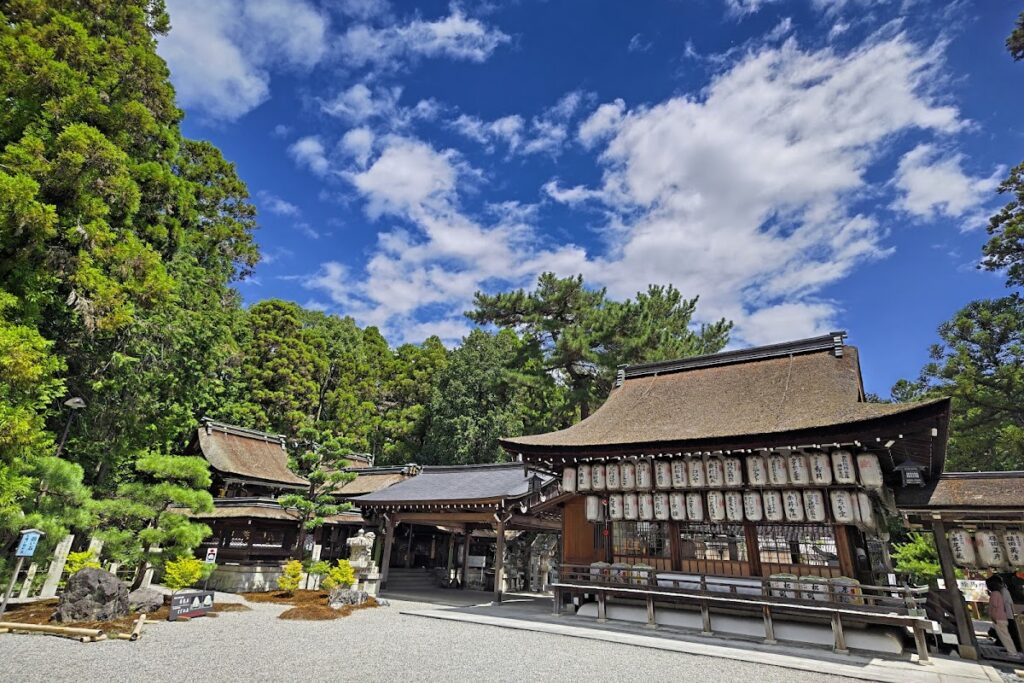
The grounds of Takebe Taisha Shrine contain numerous buildings and cultural properties of high historical value.
Main Hall
The main hall of Takebe Taisha Shrine is an important building that showcases the characteristics of shrine architecture in the Omi region. It is known for being featured on the 1,000 yen banknote issued in 1945, and its majestic appearance captivates many visitors.
The main hall is built in the Sangensha Nagare-zukuri style, characterized by its cypress bark roof. Regular restorations are carried out, preserving its original appearance.
Worship Hall and Shrine Gate
The worship hall, where worshippers offer their prayers, is located in front of the main hall. The spacious grounds allow for the arrival of many worshippers. The main gate, a grand structure serving as the entrance to the shrine grounds, conveys a sense of respect for the sacred area.
Important Cultural Properties: Stone Lantern and Goddess Statue
Takebe Taisha Shrine houses a stone lantern and a goddess statue designated as important cultural properties of Japan.
The stone lantern, donated during the Kamakura period, is highly regarded as an excellent example of stone art from that era. It features intricate carvings and is a culturally significant artifact of high historical value.
The goddess statue is a wooden statue believed to date from the late Heian period, characterized by its graceful form. It is carefully preserved as a valuable cultural asset passed down through the shrine.
Subsidiary Shrines
Several subsidiary shrines are located within the grounds of Takebe Taisha Shrine. Each offers unique blessings, and many worshippers visit them in conjunction with their visit to the main shrine.
The main subsidiary shrines include Gonden, Omandokoro-sha, and Hijiri-no-miya-sha, each attracting its own unique devotions.
Nature of the Shrine Grounds and Precincts
The grounds of Takebe Taisha are surrounded by abundant nature, allowing visitors to enjoy beautiful scenery throughout the seasons. Cherry blossoms in spring, fresh greenery in early summer, and vibrant autumn leaves create different expressions with each season.
In particular, the clear stream flowing through the grounds and the ancient grove of trees exude a sacred atmosphere, providing tranquility to visitors.
Annual Festivals of Takebe Taisha | Traditional Rituals
Throughout the year, various festivals are held at Takebe Taisha. These festivals are traditions passed down through a long history and hold significant meaning as part of the local culture.
Annual Festival (April 15th)
The annual festival, the most important event at Takebe Shrine, is held every year on April 15th. This festival celebrates the divine virtues of Yamato Takeru and prays for a bountiful harvest and national peace. A solemn ceremony is performed by Shinto priests, attracting many worshippers.
Boat Procession Festival (August 17th)
The Boat Procession Festival, a summer tradition at Takebe Shrine, is held every year on August 17th. Officially called the “Cooling Boat Procession Festival,” it is a magnificent festival where the portable shrine is carried across the Setagawa River by boat.
The festival, which begins in the evening, is enchanting as the boat carrying the portable shrine, illuminated by lanterns, moves along the Setagawa River, attracting many spectators. The reflection of the lanterns on the river surface and the cool summer night breeze create a refreshing atmosphere, making it a representative festival of Takebe Shrine.
Grand Festival (Second Sunday of October)
The Autumn Grand Festival is a festival to express gratitude for the harvest and pray for a bountiful harvest in the coming year. Kagura (sacred dance and music) performances and traditional local arts are showcased, making it a day to express gratitude for divine blessings together with the worshippers.
Other Major Festivals
- Saitansai (January 1st): A festival to celebrate the New Year and pray for peace throughout the year.
- Setsubunsai (February 3rd): A festival to ward off evil spirits and invite good fortune through bean-throwing.
- Oharai (June 30th, December 31st): A Shinto ritual to cleanse away the sins and impurities accumulated over the past six months.
- Niinamesai (November 23rd): A festival to offer new grain to the gods and express gratitude for the harvest.
These festivals are valuable opportunities to pass on traditional Japanese beliefs and culture, attracting many worshippers not only from the local area but also from far away.
How to Visit and Etiquette at Takebe Taisha Shrine
When visiting Takebe Taisha Shrine, it is important to observe basic shrine etiquette.
Flow of Worship
- Passing Through the Torii Gate: Bow before passing through the torii gate. Walk away from the center of the path.
- Purifying at the Water Basin: Purify your hands and mouth at the water basin. Purify your left hand, then your right hand, then your mouth, and finally your left hand.
- Worship at the Main Hall: Worship in front of the main hall using the two bows, two claps, and one bow ritual.
- Visiting the Subsidiary Shrines: If time permits, visit the subsidiary shrines within the grounds.
How to Receive Prayers
Takebe Taisha Shrine accepts prayers from individuals and groups. If you wish to receive prayers, please apply at the shrine office. There are various types of prayers, including those for warding off evil, bringing good fortune, business prosperity, traffic safety, and family safety.
Prayers are not by reservation; registration is generally on the day of your visit. However, for groups or special prayers, it is recommended to contact the shrine in advance.
Items Offered
At Takebe Taisha Shrine, items such as amulets, goshuin (stamped seals), and ema (votive tablets) are available at the shrine office. The “Omi no Kuni Ichi no Mamori” (Omi Province’s First Shrine Amulet) is particularly popular as an amulet from the Ichinomiya (first-ranked shrine) of Omi Province.
Goshuin are given as proof of your visit. If you bring your goshuincho (stamp book), it will be carefully inscribed in ink.
Visiting Hours and Shrine Office Hours
While the shrine grounds are generally open all day, the shrine office is open from 9:00 AM to 5:00 PM. If you wish to receive prayers or items, you must visit within these hours.
Access to Takebe Taisha Shrine | Transportation and Parking Information
Takebe Taisha Shrine is located in Jinryo, Otsu City, Shiga Prefecture, near the Seta Karahashi Bridge. It is easily accessible by both public transport and car.
Access by Train and Bus
By JR
- Get off at Ishiyama Station on the JR Tokaido Main Line, then take the Omi Railway bus to Takebe Taisha-mae bus stop, approximately a 3-minute walk.
- Get off at Seta Station on the JR Tokaido Main Line, approximately a 20-minute walk.
By Keihan Railway
- Get off at Karahashi-mae Station on the Keihan Ishiyama-Sakamoto Line, approximately a 15-minute walk.
Taking a bus from Ishiyama Station is the most convenient option. Buses run approximately 2-3 times per hour, so it is recommended to check the timetable in advance.
Access by Car
Using Expressways
- Approximately 5 minutes from the Meishin Expressway’s “Seta-Nishi IC” or “Seta-Higashi IC”
- Approximately 15 minutes from the Shin-Meishin Expressway’s “Kusatsu-Tanoue IC”
Using General Roads
- Take National Route 1 towards Seta-no-Karahashi Bridge
Parking
Takebe Taisha Shrine has a free parking lot for visitors. While it usually has ample space, congestion is expected during festivals such as New Year’s Day, the annual festival, and the Funakōsai (boat procession).
On festival days, parking restrictions and traffic regulations may be in place, so it is recommended to check the official website in advance. For large buses, it is advisable to contact the shrine office in advance to confirm parking availability.
Nearby Tourist Attractions
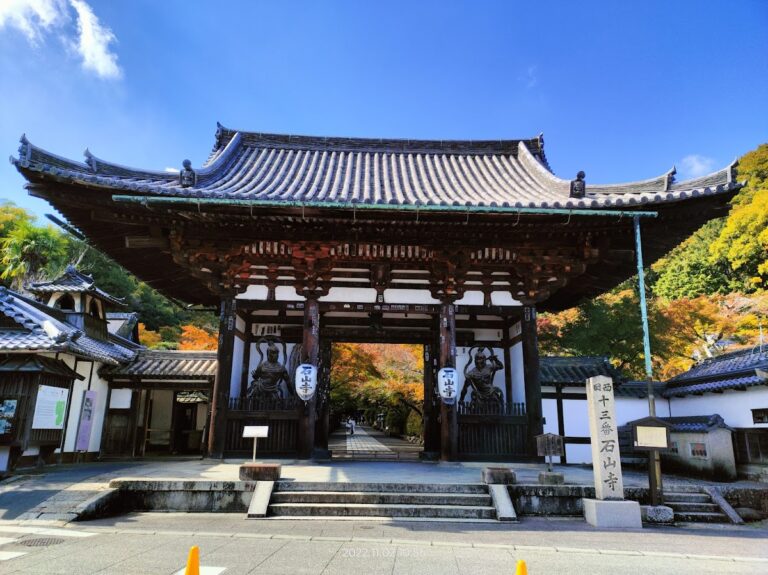
Around Takebe Taisha Shrine, there are numerous historical tourist spots, including Seta-no-Karahashi Bridge, Ishiyama-dera Temple, and Enryaku-ji Temple on Mount Hiei. A sightseeing plan that combines a visit to Takebe Taisha Shrine with a visit to these spots is highly recommended. ## Takebe Taisha Shrine and Seta no Karahashi Bridge | Historical Connection
When discussing the history of Takebe Taisha Shrine, its connection to Seta no Karahashi Bridge is indispensable. Seta no Karahashi Bridge has been a strategically important location since ancient times, to the point where it was said, “He who controls the bridge controls the world.”
Seta no Karahashi Bridge has been the stage for numerous historical battles, including the Jinshin War, the Jokyu War, and the Nanboku-cho period. Takebe Taisha Shrine, located at the eastern end of the bridge, has been revered by samurai warriors as a guardian shrine of this important transportation hub and as a place to pray for victory in battle.
While the current Seta no Karahashi Bridge has been replaced with a modern bridge, the surrounding area retains traces of the old highway, making it a popular spot for historical walks along with Takebe Taisha Shrine.
Takebe Taisha Shrine’s Seasonal Charms | Seasonal Attractions
Takebe Taisha Shrine is a shrine where you can enjoy the beauty of nature in each of the four seasons.
Spring (March-May)
In spring, the cherry blossoms in the shrine grounds are in full bloom, creating a vibrant atmosphere. Around the time of the annual festival on April 15th, the cherry blossoms are often at their peak, allowing visitors to enjoy both the festival and cherry blossom viewing simultaneously. The beauty of the fresh greenery is also exceptional, making for a refreshing visit.
Summer (June-August)
In summer, Takebe Taisha Shrine exudes a cool atmosphere with its lush green grounds. The Funakōsai festival on August 17th is a popular summer event, attracting many visitors seeking an evening stroll.
Autumn (September-November)
In autumn, the trees in the shrine grounds change color, offering a beautiful view of the autumn foliage. Around the time of the grand festival in October, visitors can feel the deepening of autumn while visiting the shrine. A rich atmosphere, befitting the harvest season, envelops the grounds.
Winter (December to February)
In winter, Takebe Taisha Shrine is enveloped in a tranquil atmosphere. Many worshippers visit for Hatsumode (first shrine visit of the year) to offer prayers for the new year. When it snows, the snow-covered grounds present a fantastical beauty.
Guidelines for Visiting Takebe Taisha Shrine | For a Deeper Visit
To make your visit to Takebe Taisha Shrine more meaningful, it is important to deepen your understanding of its history and enshrined deities.
Yamato Takeru is not merely a god of war, but a hero who dedicated himself to his nation and faced adversity head-on. His life embodies universal values such as courage, loyalty, and sacrifice. We, living in modern times, can learn from Yamato Takeru’s spirit and gain the courage to face the challenges in our own lives.
Ōkuninushi-no-Mikoto is a god of nation-building who dedicated himself to the happiness and prosperity of the people. His divine virtues extend not only to individual success, but also to the harmony and development of society as a whole.
Ōkuninushi-no-Mikoto is a god who worked for the happiness and prosperity of the people. His divine virtues extend not only to individual success, but also to the harmony and development of society as a whole. A visit to Takebe Taisha Shrine is not merely a place to make wishes; it is also an opportunity to connect with the divine virtues of the gods and reflect on one’s own way of life. By quietly calming your mind and facing the shrine, you may gain new insights and strength.
Summary | Experiencing History and Divine Virtue at Takebe Taisha Shrine
Takebe Taisha Shrine, with its 1900-year history, is the Ichinomiya (first-ranked shrine) of Omi Province and a representative ancient shrine of Shiga Prefecture. It enshrines two deities, Yamato Takeru and Ōkuninushi-no-Mikoto, and is believed to offer a wide range of blessings, including military success, good fortune, protection from evil, business prosperity, and victory.
Takebe Taisha Shrine has many attractions, including the history of Minamoto no Yoritomo praying there for the restoration of the Minamoto clan, its deep connection to the Seta no Karahashi Bridge, traditional festivals such as the Funakōsai (boat procession festival), and cultural properties within the shrine grounds, including important cultural properties.
The beauty of nature in each of the four seasons is also a major attraction, and there are new discoveries to be made with each visit. When you visit Shiga Prefecture, be sure to pay your respects at Takebe Taisha Shrine and experience its long history and the divine blessings of its gods. By praying there in quiet contemplation, you may gain new strength and guidance in your life.
Takebe Taisha Shrine, a place of faith that stretches from the past to the present and into the future, will continue to inspire hope and courage in many people.