Complete Guide to Tsukuyomi Shrines | A Thorough Explanation of the History, Blessings, and Visiting Methods of Tsukuyomi Shrines Nationwide
Tsukuyomi Shrines are shrines dedicated to Tsukuyomi-no-Mikoto, the moon god who appears in Japanese mythology. They are located throughout Japan, each with its own unique history and beliefs. This article thoroughly explains the appeal of major Tsukuyomi Shrines, focusing on the Tsukuyomi Shrine in Iki, considered the oldest in Japan, as well as those in Ise Grand Shrine, Kyoto, Kagoshima, and other locations.
What are Tsukuyomi Shrines? | Historic Shrines Dedicated to the Moon God
Tsukuyomi Shrines are a general term for shrines that enshrine Tsukuyomi-no-Mikoto, the younger brother of Amaterasu-Omikami, as their main deity. Tsukuyomi-no-Mikoto is one of the Three Noble Children appearing in the Kojiki and Nihon Shoki, and has been revered as the god who rules the night world.
Tsukuyomi-no-Mikoto is said to have been born when Izanagi-no-Mikoto washed his right eye during a purification ritual upon his return from the underworld. Along with Amaterasu-Omikami, the sun goddess, and Susanoo-no-Mikoto, the ruler of the seas, he is one of the most important deities in Japanese mythology.
Tsukuyomi Shrine is believed to govern all matters related to the moon, including the calendar and tides, and is said to offer blessings for safe voyages, abundant harvests, and safe childbirth. The shrine grounds, with their mystical atmosphere, are also popular as a power spot.
Tsukuyomi Shrine in Iki | Japan’s Oldest Shrine and the Birthplace of Ancient Shinto
Located in Ashibe-cho, Iki City, Nagasaki Prefecture, Tsukuyomi Shrine is a historically significant shrine considered the head shrine of all Tsukuyomi Shrines scattered throughout Japan. The Nihon Shoki (Chronicles of Japan) records that Oshimi no Sukune, an ancestor of the Iki provincial governor, enshrined a divided spirit at the Tsukuyomi Shrine within the Matsuo Taisha Shrine in Kyoto, making it known as Japan’s oldest shrine and the birthplace of ancient Shinto.
History and Origins of Iki Tsukuyomi Shrine
Iki Tsukuyomi Shrine holds a special position as the head shrine of all Tsukuyomi Shrines throughout Japan. The Nihon Shoki records that in the 3rd year of Emperor Kenzō’s reign (487 AD), Abe no Omi Kotoshiro received a divine oracle from the moon god and enshrined a divided spirit from Iki Tsukuyomi Shrine in Kyoto.
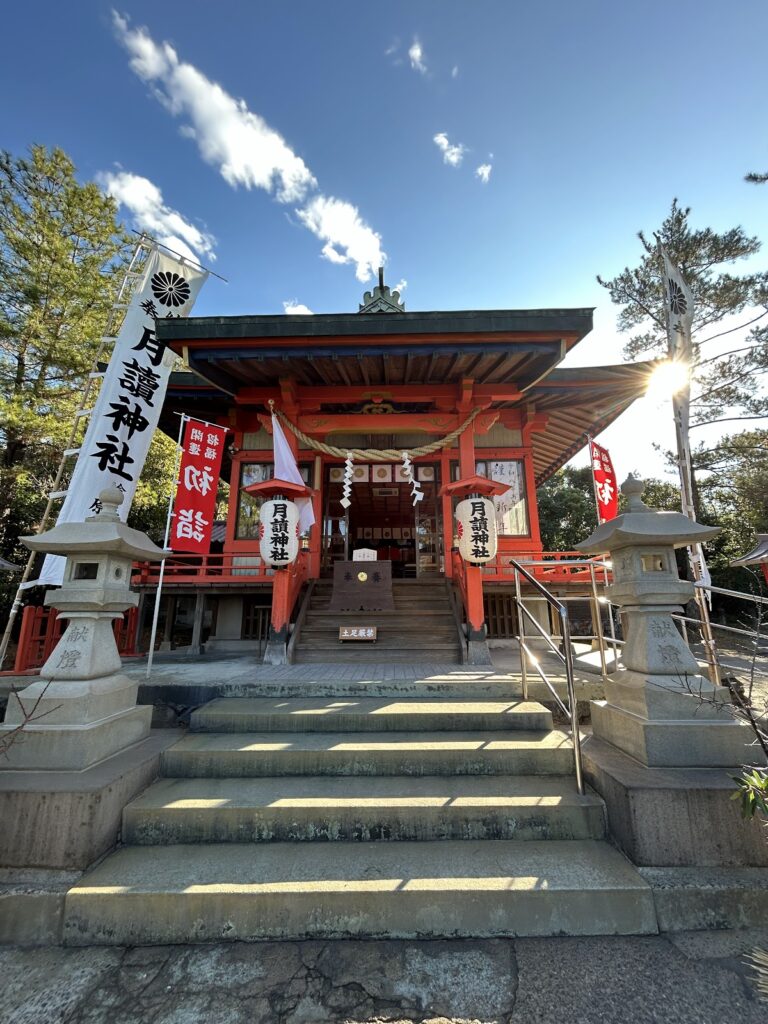
The shrine sits quietly amidst a lush forest of towering trees. Passing through the charming torii gate and climbing the steep stone steps, one is greeted by a shrine building exuding a mystical energy. The entire shrine grounds are enveloped in a sacred atmosphere, instilling a deep sense of reverence in visitors.
Iki Kagura and the Annual Grand Festival
At Tsukuyomi Shrine in Iki, the annual grand festival is held every year on the 23rd day of the 9th month of the lunar calendar, and Iki Kagura is performed. Iki Kagura is designated as an intangible folk cultural property of Nagasaki Prefecture and is a sacred dance that has been passed down since ancient times.
Iki Kagura is an expression of the faith of the people of Iki, who revere and hold awe for the gods. The sacred ritual, performed in a solemn atmosphere, deeply moves those who witness it. At the annual grand festival, local residents gather together to pray for a bountiful harvest and peace in the community.
Kunikatanushi Shrine, one of the seven shrines of Iki Island
Within the grounds of Tsukuyomi Shrine stands Kunikatanushi Shrine, one of the seven shrines of Iki Island. The seven shrines of Iki Island refer to the seven Shikinaisha (shrines listed in the Engishiki, an ancient Japanese legal code) of Iki Province, and have been revered as the center of faith in Iki since ancient times.
Kunikatanushi Shrine enshrines the guardian deity of the land and, together with Tsukuyomi Shrine, serves as a spiritual pillar of Iki Island. Visiting both shrines will allow you to feel a deeper spiritual presence.
Access and Visiting Information
Address: 464 Kokubu Higashifure, Ashibe-cho, Iki City, Nagasaki Prefecture
Access:
- Approximately 10 minutes by car from Ashibe Port
- Approximately 20 minutes by car from Gonoura Port
- Approximately 15 minutes by car from Iki Airport
Parking: Parking available for visitors on the shrine grounds
Tsukuyomi Shrine and Tsukuyomi-no-miya of Ise Grand Shrine
In Ise City, Mie Prefecture, there are two Tsukuyomi Shrines related to Ise Grand Shrine. These are Tsukuyomi-no-miya, a sub-shrine of the Inner Shrine, and Tsukuyomi-no-miya, a sub-shrine of the Outer Shrine.
Tsukuyomi-no-miya, a Sub-shrine of the Inner Shrine
Tsukuyomi-no-miya, a sub-shrine of the Grand Shrine of Ise (Inner Shrine), is located in Nakamura-cho, Ise City. The main deity is Tsukuyomi-no-Mikoto, revered as the younger brother of Amaterasu-Omikami. Within the grounds of Tsukuyomi-no-Miya, in addition to Tsukuyomi-no-Mikoto, four auxiliary shrines—Tsukuyomi-no-Mikoto’s rough spirit, Izanagi-no-Mikoto, and Izanami-no-Mikoto—are enshrined side by side, and visitors can pay their respects to each of them.
Outer Shrine Auxiliary Shrine: Tsukuyomi-no-Miya
Tsukuyomi-no-Miya, an auxiliary shrine of Toyouke-Daijingu (Outer Shrine), is located in Miyago, Ise City. It enshrines Tsukuyomi-no-Mikoto as its principal deity and is located approximately 500 meters north of the Outer Shrine.
The name “Tsukuyomi” refers to the same deity as “Tsukuyomi,” reflecting the deity’s characteristic of illuminating the night with moonlight. The tranquil atmosphere of the shrine grounds makes it a must-visit place during a pilgrimage to Ise.
Tsukuyomi Shrine in Kyoto | A Subsidiary Shrine of Matsuo Taisha
Tsukuyomi Shrine, located in Nishikyo-ku, Kyoto City, Kyoto Prefecture, is known as “Katsuno-ni-imasu Tsukuyomi Shrine,” a Shikinaisha (Myojin Taisha) shrine in Kadono-gun, Yamashiro Province, and is a subsidiary shrine of Matsuo Taisha.
History of Kyoto’s Tsukuyomi Shrine
The Nihon Shoki (Chronicles of Japan), in the entry for the 3rd year of Emperor Kenzo’s reign (487 AD), records that a divided spirit was brought to Kyoto from Tsukuyomi Shrine in Iki. Initially located near the summit of Mount Matsuo, it was later moved to its current location.
Kyoto’s Tsukuyomi Shrine is known for its blessings of safe childbirth and fertility, attracting many worshippers. Visiting it along with Matsuo Taisha will make for a more fulfilling Kyoto sightseeing experience.
Tsukuyomi Shrine in Kyotanabe City
There is also a Tsukuyomi Shrine located in Kyotanabe City, Kyoto Prefecture. As a Shikinaisha (Grand Shrine) in Tsuzuki District, Yamashiro Province, it has been revered since ancient times and is cherished as the local tutelary deity.
Tsukuyomi Shrine in Sakurajima, Kagoshima City | A Power Spot in Sakurajima
Tsukuyomi Shrine, located in Yokoyama-cho, Sakurajima, Kagoshima City, Kagoshima Prefecture, is a venerable shrine said to have a history of 1300 years. It is believed to have been founded as early as the Wado era (708-715 AD) and is revered as the principal tutelary deity of Sakurajima.
History of Sakurajima Tsukuyomi Shrine
Sakurajima’s Tsukuyomi Shrine enshrines not only the main deity, Tsukuyomi-no-Mikoto, but also Ninigi-no-Mikoto, Hikohodemi-no-Mikoto, Ugayafukiaezu-no-Mikoto, Toyotamahiko-no-Mikoto, and Konohanasakuya-hime-no-Mikoto.
In particular, Konohanasakuya-hime-no-Mikoto is said to be the origin of the name “Sakurajima” (there are various theories), and is deeply rooted in local faith. Although buried under lava during the Taisho eruption, it was relocated to its current location in 1940 (Showa 15), where it remains today.
Attractiveness as a Power Spot
The shrine, quietly standing amidst the surrounding nature, exudes a power unique to a power spot. Climbing the stairs next to the shrine grounds leads to a small observation deck, offering magnificent views of Sakurajima volcano, Kinko Bay, and the city of Kagoshima.
Located right next to Sakurajima Port, it’s a must-visit spot when arriving by ferry to Sakurajima.
Pigeon and Owl Fortune Slips
Sakurajima’s Tsukuyomi Shrine offers two types of fortune slips: “pigeon fortune slips” and “owl fortune slips,” both popular with visitors. These adorable bird-shaped fortune slips can be taken home as amulets.
Harvest Festival and Rituals
Every year on October 30th, the annual festival day, the Harvest Festival is held, featuring a grand procession of a portable shrine carried by young parishioners. A spectacular procession down to the beach takes place, and a prayer ceremony for the health of children is held at the temporary shrine.
Prayers are offered for a bountiful autumn harvest and family safety, with sacred dances and stick dances being performed. As the principal tutelary shrine for both eastern and western Sakurajima, it attracts many worshippers from Sakurajima Town and the surrounding Kagoshima City area.
Rokugatsu-to Festival
The Rokugatsu-to Festival, a summer tradition in Kagoshima, is also held at Tsukuyomi Shrine. Lanterns illuminate the shrine grounds, creating a magical atmosphere where local people gather.
Access Information
Address: 1722-8 Yokoyama-cho, Sakurajima, Kagoshima City, Kagoshima Prefecture
Access: Approximately 5 minutes on foot from Sakurajima Port, approximately 1 minute by car
Other Tsukuyomi Shrines Nationwide
Tsukuyomi Shrine in Kawasaki City, Kanagawa Prefecture
The Tsukuyomi Shrine, located in Asao Ward, Kawasaki City, Kanagawa Prefecture, was founded in 1534 (Tenbun 3) by Kojima Sado-no-kami, the lord of Asao village, who invited the deity from the Ise Tsukuyomi Shrine to pray for a bountiful harvest.
The shrine building was rebuilt twice, and after enshrining Kumano, Hie, and Hakusan shrines together, it became the Asao Shrine, the village shrine of Kakio village, but was later renamed Tsukuyomi Shrine again. It is cherished as the local tutelary deity.
Tsukuyomi Shrine in Kurume City, Fukuoka Prefecture
A Tsukuyomi Shrine is also located in Tanushimaru-machi, Kurume City, Fukuoka Prefecture. Situated in the agricultural area of the Chikugo River basin, it has been revered as the god of abundant harvests and safe water transport.
Tsukuyomi Shrine in Tsukuba City, Ibaraki Prefecture
Several Tsukuyomi Shrines are located in Tsukuba City, Ibaraki Prefecture. There are Tsukuyomi Shrines in Ichinodai and Hinosawa, attracting local devotion.
Tsukuyomi Shrine in Chosei District, Chiba Prefecture
A Tsukuyomi Shrine is also located in Chonan-machi, Chosei District, Chiba Prefecture, serving as a center of moon deity worship on the Boso Peninsula.
Benefits and Faith of Tsukuyomi Shrine
Tsukuyomi Shrine is believed to offer various benefits. Here are some of the main benefits:
Maritime Safety and Traffic Safety
Tsukuyomi-no-Mikoto is the god who governs the phases of the moon and controls the tides, and has been worshipped since ancient times as the god of maritime safety. In modern times, he is believed to offer blessings for general traffic safety.
Abundant Harvest and Business Prosperity
The phases of the moon have played an important role as an agricultural calendar. Tsukuyomi-no-Mikoto is revered as the god who brings bountiful harvests, and is believed to bring blessings for abundant harvests and business prosperity.
Safe Childbirth and Fertility
Due to the connection between the lunar cycle and a woman’s menstrual cycle, he is believed to offer blessings for safe childbirth and fertility. Tsukuyomi Shrine in Kyoto is particularly famous as a god of safe childbirth.
Protection from Evil and Good Fortune
The moonlight that illuminates the night is believed to have the power to dispel darkness, and is believed to offer blessings for protection from evil and good fortune. It is believed that visiting the shrine at important turning points in life will open up new paths.
How to Visit and Etiquette at Tsukuyomi Shrine
This section introduces the basic etiquette for visiting Tsukuyomi Shrine.
Basic Etiquette for Visiting
- Bow before passing through the torii gate: Bow before entering the sacred area, in front of the torii gate.
- Purify yourself at the water basin: Purify your left hand, then your right hand, then your mouth.
- Walk along the edge of the path: The center of the path is considered the path of the gods.
- Pray at the main hall: The basic procedure is two bows, two claps, and one bow.
- Quietly exit: After leaving the torii gate, turn around and bow.
Prayers and Exorcisms
At each Tsukuyomi Shrine, you can receive various prayers and exorcisms. Prayers can be received for various aspects of life, such as safe childbirth, protection from evil, traffic safety, and business prosperity. It is recommended to contact the shrine in advance to make a reservation.
About Goshuin (Shrine Seals)
Many Tsukuyomi Shrines offer Goshuin. Bringing a Goshuincho (stamp book) is recommended as a memento of your visit and to deepen your connection with the shrine.
Festivals and Annual Events at Tsukuyomi Shrines
Tsukuyomi Shrines hold various festivals throughout the year. Here are some of the main festivals:
Monthly Festival (Tsukinami-sai)
This festival, held on a designated day each month, expresses gratitude to Tsukuyomi-no-Mikoto, the god of the moon, and prays for national peace and a bountiful harvest.
Grand Festival
This is the most important festival at each shrine. At Tsukuyomi Shrine in Iki, it is held on the 23rd day of the 9th month of the lunar calendar, and at Tsukuyomi Shrine in Sakurajima, it is held on the 30th of October. Grand rituals, including the dedication of Kagura (sacred dance) and the procession of the portable shrine, are held.
New Year’s Eve Festival and Great Purification Ceremony
The New Year’s Eve Festival, held on December 31st, includes the Great Purification Ceremony, which cleanses away the impurities of the past year. It is an important Shinto ritual for welcoming the new year with a refreshed heart.
Niiname-sai (Harvest Festival)
The Niiname-sai, held on November 23rd, is a festival to give thanks for the year’s harvest and to offer the new grain to the gods. It is a way of expressing gratitude to Tsukuyomi-no-Mikoto, the god who presides over abundant harvests.
Tsukuyomi-no-Mikoto and Japanese Mythology
Tsukuyomi-no-Mikoto is a god who holds an important position in Japanese mythology. Let’s take a closer look at his mythology and beliefs.
Tsukuyomi-no-Mikoto as one of the Three Noble Children
Tsukuyomi-no-Mikoto, along with Amaterasu-Omikami and Susanoo-no-Mikoto, is known as one of the Three Noble Children. Born during the purification ritual upon Izanagi-no-Mikoto’s return from the underworld, Tsukuyomi-no-Mikoto was given the role of ruling the night world.
While there are slight differences in the account of Tsukuyomi-no-Mikoto’s birth between the Kojiki and the Nihon Shoki, both depict him as a noble deity.
The Myth of Uke-mochi-no-Kami
The Nihon Shoki recounts a myth where Tsukuyomi-no-Mikoto, acting on Amaterasu-Omikami’s orders, visited Uke-mochi-no-Kami. Enraged by Uke-mochi-no-Kami offering him food from her mouth, Tsukuyomi-no-Mikoto killed her.
This myth is interpreted as demonstrating the deep connection between the moon and agriculture/food, as well as symbolizing the separation of the worlds of day and night.
Characteristics as a Moon God
Tsukuyomi-no-Mikoto is the god who governs the phases of the moon and controls the calendar. For ancient people, the moon was an important indicator for measuring time, and its movements were referenced in all aspects of life, including agriculture, fishing, and navigation.
The worship of Tsukuyomi-no-Mikoto is thought to have been a practical faith closely intertwined with daily life.
Points to Know When Visiting Tsukuyomi Shrines
Here are some points to know when visiting Tsukuyomi Shrines.
Enjoying the Serene Atmosphere
Many Tsukuyomi Shrines are surrounded by lush forests, enveloped in a mystical atmosphere. The path leading to the shrine, with its steep stone steps and passage through giant trees, is an entrance to a sacred space far removed from everyday life.
By quietly praying and showing reverence and awe to the gods, you will be able to feel a deeper spiritual connection.
Visiting Multiple Tsukuyomi Shrines
“Tsukuyomi Shrine Pilgrimages,” visiting Tsukuyomi Shrines located throughout Japan, are also popular. Experiencing the unique history and atmosphere of each shrine will deepen your understanding of Tsukuyomi-no-Mikoto.
Combine your visit with sightseeing in the surrounding area
Tsukuyomi Shrines are often located near tourist attractions, making it highly recommended to combine your visit with sightseeing. You can fully enjoy the charms of each area, such as visiting Ise Grand Shrine, sightseeing in Kyoto, visiting Sakurajima, or exploring Iki Island.
Summary | Receive the blessings of the moon god at Tsukuyomi Shrine
Tsukuyomi Shrines are venerable shrines located throughout Japan, each with its own unique history and beliefs. From the head shrine on Iki Island, considered the oldest shrine in Japan and the birthplace of ancient Shinto, to a sub-shrine of Ise Grand Shrine, a Shikinaisha in Kyoto, and a power spot on Sakurajima, Tsukuyomi Shrines throughout the country provide deep inspiration and spiritual blessings to visitors.
Tsukuyomi-no-Mikoto has been revered since ancient times as a god who brings various blessings closely related to daily life, such as the calendar, tides, safe voyages, abundant harvests, and safe childbirth. Why not quietly pray in the mystical grounds and feel the blessing of the moon god?
Various festivals are held throughout the year at each Tsukuyomi Shrine. By participating in special rituals such as the annual grand festival and the dedication of Kagura (sacred dance), you can gain a deeper religious experience. Please visit the Tsukuyomi Shrine that has a personal connection to you and feel your connection with the moon god.