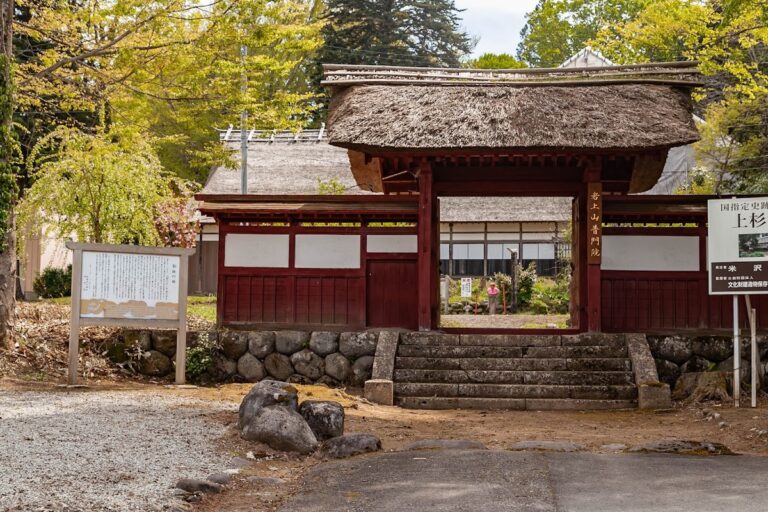
Complete Guide to Uesugi Shrine | History and Blessings of the Shrine Dedicated to Kenshin, Located on the Site of Yonezawa Castle, a Sacred Site of the Sengoku Period
Located within Matsugamisaki Park in Yonezawa City, Yamagata Prefecture, on the former site of Yonezawa Castle’s main keep, Uesugi Shrine is a shrine dedicated to Uesugi Kenshin, a famous general representing the Sengoku period. Inspired by Kenshin, known as the “Dragon of Echigo” and the “God of War,” visitors from all over Japan come seeking various blessings, including good fortune, fulfillment of wishes, academic success, and business prosperity, making it a sacred site of the Sengoku period.
This article comprehensively introduces information you should know before visiting Uesugi Shrine, including its detailed history, highlights within the grounds, how to worship, annual events, and access information.
History and Origins of Uesugi Shrine
Founding and Construction in the Meiji Era
Uesugi Shrine was founded in 1876 (Meiji 9). At the time, Uesugi Kenshin, revered as the founder of the Yonezawa Domain, and Uesugi Yozan, a renowned lord known for his domain reforms, were enshrined as the deities of this shrine, which was built on the site of the former main keep of Yonezawa Castle. From the late Edo period to the early Meiji period, there was a trend of establishing shrines throughout Japan to enshrine the founders of various domains, and Uesugi Shrine is one of those shrines that emerged within this trend.
In 1902 (Meiji 35), it was designated a Special Imperial Shrine by the Meiji government. A Special Imperial Shrine is a shrine that enshrines individuals who have made significant contributions to the nation. Following this designation, the enshrined deity became solely Uesugi Kenshin, while Uesugi Yozan was enshrined in the subsidiary Matsugasaki Shrine. This status reflects the importance of Uesugi Kenshin’s role in Japanese history.
The Deep Connection Between Yonezawa Castle and the Uesugi Family
Yonezawa Castle, where Uesugi Shrine is located, was originally the residence of the Date clan. However, after Uesugi Kagekatsu was transferred from Aizu to Yonezawa in 1601, it functioned as the residence of the Uesugi family until the Meiji Restoration. While Lord Kenshin himself was based at Kasugayama Castle in Echigo, his adopted son Kagekatsu moved to Yonezawa, making Yonezawa the spiritual center of the Uesugi family.
After the Meiji Restoration, Yonezawa Castle was abandoned, and much of the castle structure was dismantled. However, the site of the main keep was developed into Matsugamisaki Park, a place of relaxation for citizens. The presence of Uesugi Shrine at its center creates a special space where the depth of history harmonizes with modern daily life.
History of Fire and Reconstruction
Uesugi Shrine was struck by fire in 1919, destroying its main buildings, including the main hall and worship hall. The current shrine building was rebuilt in 1938 (Showa 13). While retaining the characteristics of pre-war shrine architecture, the current building exhibits a robust and dignified presence.
The history of its reconstruction after overcoming fire demonstrates the irreplaceable importance of Uesugi Shrine to the local people. This strength in overcoming difficulties truly embodies the spirit of Lord Kenshin.
Deity Enshrined: Lord Uesugi Kenshin and His Blessings
The Life of Uesugi Kenshin, “The Dragon of Echigo”
Uesugi Kenshin (1530-1578) was a Sengoku period daimyo of Echigo Province (present-day Niigata Prefecture). He is said to have participated in over 70 battles throughout his life, achieving victory in almost all of them, making him one of the strongest warlords of the Sengoku period. He was known as “The Dragon of Echigo” and “The God of War,” and his Battle of Kawanakajima against Takeda Shingen is particularly famous as one of the most iconic battles in Japanese history.
Lord Kenshin was not merely a warrior; he was also known as a person of great character who deeply revered Bishamonten (Vaisravana) and valued “justice.” His stance of fighting for justice, not for personal gain, earned him the respect of many, and he continues to fascinate many fans even today.
Benefits of Visiting Uesugi Shrine
At Uesugi Shrine, it is believed that one can receive the following benefits by drawing on Lord Kenshin’s bravery, strategic brilliance, and noble character:
Good Fortune and Prosperity: It is believed that one can receive good fortune in all aspects of life by drawing on Lord Kenshin’s strong luck.
Fulfillment of Wishes: It is believed that one can have various wishes granted by drawing on Lord Kenshin’s strength in overcoming numerous difficulties.
Academic Success: Lord Kenshin excelled in both military and literary arts, and was particularly skilled in military strategy and tactics, so he is also worshipped as a god of learning. Many students preparing for entrance exams and qualification tests visit the shrine.
Business Prosperity: Due to Lord Kenshin’s governing ability and economic policy skills, it is believed that the shrine also brings blessings for business success and prosperity.
Good Fortune in Competitions and Victory: Associated with Lord Kenshin, known as the strongest warlord of the Sengoku period, many people visit the shrine to pray for victory in sports, competitions, and business endeavors.
Shrine Grounds Highlights and Facilities
Main Hall and Worship Hall
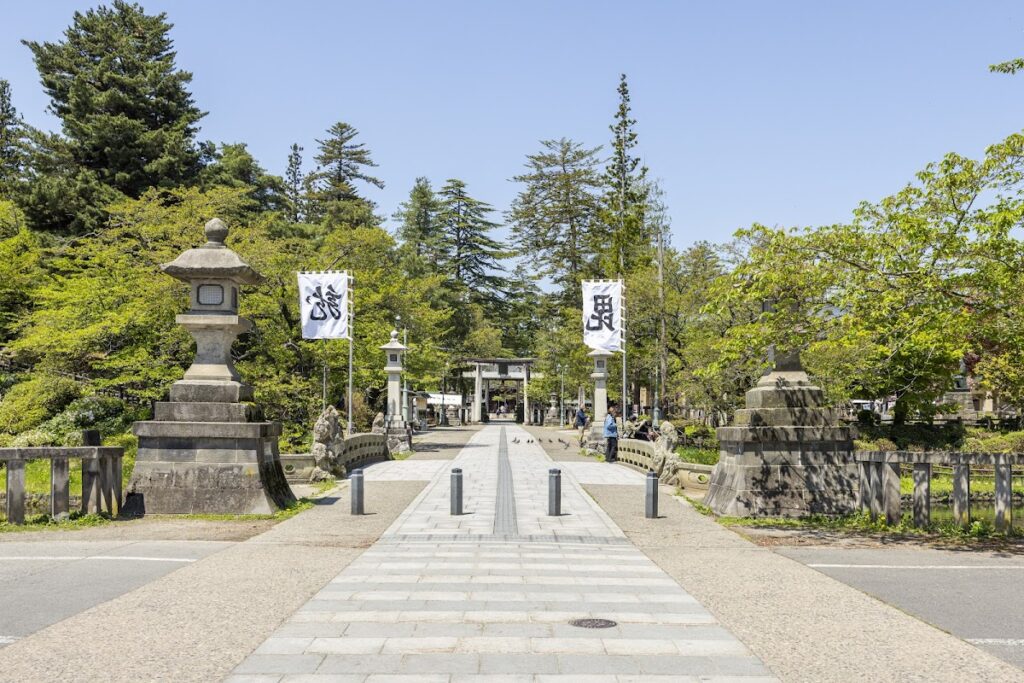
The main hall and worship hall of Uesugi Shrine were rebuilt in 1938, and they still convey the beauty of dignified shrine architecture. A spacious approach leads to the worship hall, and a solemn atmosphere surrounded by nature in all four seasons welcomes visitors.
In front of the worship hall, there is a decoration featuring the banner of Lord Kenshin’s famous word “Bi,” representing the shrine’s characteristic as a shrine dedicated to a Sengoku warlord. When visiting, you can calm your mind and offer your prayers in this historical space.
Statue of Uesugi Kenshin
Within the shrine grounds stands a dignified bronze statue of Uesugi Kenshin. This statue is a popular spot for commemorative photos, attracting many history buffs and tourists. Standing before the statue, you can feel the noble spirit of Kenshin.
Keishoden – The Uesugi Family Treasure Hall
Within the grounds of Uesugi Shrine is the Keishoden treasure hall. The Keishoden was built when Uesugi Shrine was restored, and its design is said to be that of the renowned architect, Ito Chuta.
Although constructed of reinforced concrete, it faithfully reproduces a Japanese-style exterior, featuring a distinctive architectural style with a two-tiered copper roof and a balustrade on the second floor. The building itself is valued as a precious example of modern architecture.
The Keishoden houses and displays numerous valuable cultural artifacts passed down through the Uesugi family. This is a valuable facility where you can directly experience the spirit of the Sengoku period, as you can see items related to the Uesugi family, including National Treasures and Important Cultural Properties, as well as weapons, armor, swords, and letters used by Lord Kenshin and Lord Kagekatsu. It’s a must-see spot for history enthusiasts.
Matsugasaki Shrine (Subsidiary Shrine)
As a subsidiary shrine of Uesugi Shrine, there is Matsugasaki Shrine. Matsugasaki Shrine enshrines Uesugi Yozan, renowned as the restorer of the Yonezawa Domain, as well as successive lords and retainers of the Uesugi family.
Uesugi Yozan is known as a wise ruler who rebuilt the Yonezawa Domain, which was on the verge of financial collapse, through reforms. He left behind the famous words, “If you try, you can succeed; if you don’t try, you can’t succeed. Failure is only due to lack of effort.” This spirit is highly regarded by modern business people and managers, and many worshippers visit Matsugasaki Shrine.
Matsugasaki Shrine is unattended year-round, so Goshuin (shrine stamps) are handled at the Uesugi Shrine office. Visiting both shrines will allow you to gain a deeper understanding of the history of the Uesugi family.
Matsugasaki Park and Yonezawa Castle Ruins
Matsugasaki Park, where Uesugi Shrine is located, is a park developed around the site of the main keep of Yonezawa Castle and is famous as a cherry blossom viewing spot. In spring, approximately 200 Somei Yoshino cherry trees bloom, and the beauty of the cherry blossoms reflected on the surface of the moat is breathtaking.
The moat and stone walls of Yonezawa Castle remain within the park, allowing you to feel the remnants of the former castle. In 2017, Yonezawa Castle was selected as one of the “Continued Top 100 Japanese Castles,” attracting attention from castle enthusiasts.
A stroll through the park allows you to feel firsthand the history of Yonezawa, from the Sengoku period to the Edo period and into the present day. Because you can enjoy the scenery of each season, you’ll likely discover something new every time you visit.
Guide and Manners for Visiting
Visiting Hours and Shrine Office Hours
The grounds of Uesugi Shrine are generally open all day, and you can visit at any time. However, the shrine office is usually open from 9:00 AM to around 5:00 PM. Those wishing to receive a Goshuin (shrine stamp) or amulet are advised to visit during these hours.
During busy periods such as New Year’s Day or the annual festival, Goshuin may only be available as pre-printed stamps. Please be aware of this in advance.
Correct Way to Visit
Visiting Uesugi Shrine follows the same etiquette as visiting any other shrine.
- Bow before passing through the torii gate: Before entering the shrine grounds, bow before the torii gate.
- Purify yourself at the water basin: Proceed along the path and purify your hands and mouth at the water basin.
- Walk along the edge of the approach to the shrine: The center of the approach is considered the path for the gods, so walk along the edge.
- Worship at the main hall: Place your offering in front of the main hall and worship using the two bows, two claps, and one bow ritual.
- Don’t forget to be grateful: Express not only your wishes but also your gratitude for everyday blessings.
Goshuin (Shrine Seals) and Amulets
Uesugi Shrine offers Goshuin as a memento of your visit. Goshuin are available at the shrine office, and the offering fee is usually around 300 yen. If you bring your Goshuincho (seal book), they will write it directly for you (except during peak seasons).
A variety of amulets are also available, including those for academic success, good fortune, traffic safety, and victory. Amulets bearing the character “毘” (Bi), associated with Kenshin, are particularly popular.
About Prayers and Blessings
Uesugi Shrine accepts various types of prayers and blessings. We offer prayers for protection against misfortune, family safety, business prosperity, success in examinations, victory in competitions, and more. If you wish to have a prayer or blessing performed, we recommend contacting the shrine office in advance to make a reservation.
The offering fee for prayers varies depending on the content of the prayer; please check the official website or call for details.
Annual Events and Festivals
Uesugi Festival (April 29th – May 3rd)
The grandest of Uesugi Shrine’s annual events is the Uesugi Festival, held every year during Golden Week. This festival is the largest event in Yonezawa City, held to commemorate and honor the virtues of Lord Uesugi Kenshin.
The highlight of the festival is the “Reenactment of the Battle of Kawanakajima.” Hundreds of armored warriors, divided into Takeda and Uesugi armies, recreate a magnificent battle scene throughout the city. This awe-inspiring spectacle offers an experience as if you’ve traveled back in time to the Sengoku period.
In addition, a variety of events are held, including a warrior procession, folk song performances, and martial arts demonstrations, attracting many tourists from all over Japan during the period. Since it coincides with cherry blossom season, it’s a luxurious time to enjoy both the full bloom of cherry blossoms and the Sengoku period spectacle simultaneously.
Uesugi Snow Lantern Festival (Second Saturday and Sunday of February)
A beloved winter tradition is the Uesugi Snow Lantern Festival. Hundreds of snow lanterns and snow sculptures line the Matsugamisaki Park area, and the candlelight creates a fantastical atmosphere.
In the silence covered in snow, the sight of Uesugi Shrine illuminated by the soft light is truly a scene befitting the phrase, “In the white silence, the spirit of the warrior resides.” This festival, held amidst the harsh winter cold, conveys the warm hearts and resilience of the people of Yonezawa in the face of adversity.
Annual Grand Festival (May 24th)
The annual grand festival of Uesugi Shrine is held on May 24th, the anniversary of Lord Kenshin’s death. This is the most important festival for the shrine, and a solemn Shinto ritual is performed. Because it falls within the period of the Uesugi Festival, it attracts many worshippers.
Other Annual Events
Uesugi Shrine holds various festivals and events throughout the year, including New Year’s Day visits, Setsubun festivals, and Shichi-Go-San (a traditional rite of passage for children). These seasonal rituals are deeply rooted in the lives of the local people, demonstrating that the shrine is not merely a tourist destination but a place of worship.
Access and Surrounding Area Information
Location and Basic Information
Location: 1-4-13 Marunouchi, Yonezawa City, Yamagata Prefecture
Contact Information: Uesugi Shrine Office (Confirmable on the official website)
Access by Train
From JR Yonezawa Station:
- Take the Yamagata Kotsu bus bound for “Shirabu Onsen” or the “City Loop Bus” and get off at the “Uesugi Shrine” bus stop (approx. 10 minutes)
- Walking: approx. 25-30 minutes
- Taxi: approx. 10 minutes
From Tokyo, take the Tohoku Shinkansen to Fukushima Station, then transfer to the JR Ou Main Line (Yamagata Line) to Yonezawa Station (approx. 50 minutes from Fukushima Station). Alternatively, you can access Yonezawa Station directly via the Yamagata Shinkansen.
Access by Car
Tohoku Chuo Expressway:
- Approximately 10 minutes from Yonezawa Chuo Interchange
Parking Information:
While Uesugi Shrine does not have a dedicated parking lot for visitors, you can use the “Omatsuri Hiroba Parking Lot” (municipal) located north of the park’s moat. This parking lot is free and can accommodate approximately 200 cars. However, congestion is expected during peak seasons such as the Uesugi Festival and cherry blossom season, so please consider using public transportation.
Nearby Tourist Attractions
When visiting Uesugi Shrine, we recommend also visiting nearby tourist attractions.
Uesugi Family Mausoleum: The burial ground of successive heads of the Uesugi family, designated as a national historic site. It is a tranquil space surrounded by cedar trees.
Yonezawa City Uesugi Museum: A museum where you can learn in detail about the history and culture of the Uesugi family. Exhibits include the national treasure “Uesugi-bon Rakuchu Rakugai-zu Byobu” (a replica).
Yonezawa Beef Cuisine: Yonezawa is the production area of “Yonezawa Beef,” a nationally renowned brand of beef. After visiting the shrine, we recommend enjoying Yonezawa beef at a local restaurant.
Denkoku no Mori: A cultural facility including the Yonezawa City Uesugi Museum, where special exhibitions and events are held.
Points to Note When Visiting Uesugi Shrine
Seasonal Charms
Uesugi Shrine shows a different face in each of the four seasons.
Spring (Late March – May): Known as a famous cherry blossom viewing spot, the entire Matsugamisaki Park is dyed in light pink. It is especially lively when the Uesugi Festival coincides with the cherry blossom season.
Summer (June – August): The shrine grounds, surrounded by greenery, are cool and refreshing, and the beauty of the fresh green leaves stands out.
Autumn (September – November): The autumn leaves are beautiful, and a stroll around the moat is especially recommended.
Winter (December-February): The snow-covered shrine grounds are enveloped in silence, and the Uesugi Snow Lantern Festival creates a fantastical scene.
A Must-See Spot for History and Sengoku Fans
Uesugi Shrine is a “holy site” for fans of the Sengoku period and Uesugi Kenshin. Due to the recent history boom and the increase in “history-loving women,” many fans from all over Japan visit.
Within the shrine grounds, you can feel the spirit and way of life of Lord Kenshin, experiencing a sense of presence that you can’t find in history textbooks. Visiting in conjunction with viewing the treasures at the Keishoden will allow you to delve even deeper into the world of the Sengoku period.
Balancing Worship and Sightseeing
While Uesugi Shrine has aspects of a tourist destination, it’s crucial to remember that it is above all a place of worship. Please observe proper worship etiquette and cherish the time for quiet prayer.
Photography is generally permitted, but consideration should be given to avoid disturbing festivals or other visitors. Within the shrine grounds, please refrain from loud conversations and respect the sacred atmosphere.
Summary: Uesugi Shrine, which conveys the spirit of the Sengoku period to the present day
Uesugi Shrine is a special place of historical value and spiritual depth, dedicated to Uesugi Kenshin, the strongest warlord of the Sengoku period. Situated on the historical site of Yonezawa Castle, surrounded by the beautiful nature of the four seasons, it conveys the spirit of Kenshin’s “righteousness” to the present day.
Welcoming a diverse range of people, including worshippers seeking various blessings such as good fortune, academic success, and business prosperity, history buffs reflecting on the history of the Sengoku period, and tourists enjoying the beauty of cherry blossoms and snow lanterns, Uesugi Shrine continues to be loved as a “sacred place of the Sengoku period.”
When you visit Yonezawa, be sure to visit Uesugi Shrine and experience the noble spirit of Kenshin. The time spent offering prayers amidst the depth of history will surely be a special and memorable experience. In the tranquil grounds, where time flows gently, feel the presence of ancient memories.