Complete Guide to Usa Hachiman Shrines: A Thorough Explanation from the Head Shrine to Branch Shrines Nationwide
What are Usa Hachiman Shrines?
Usa Hachiman Shrines are a group of shrines symbolizing the Hachiman faith, which comprises approximately 44,000 shrines throughout Japan. At its center is the “Usa Jingu Shrine,” the head shrine of Hachiman, located in Usa City, Oita Prefecture, from which the Hachiman faith spread throughout the country. Shrines bearing the name “Usa Hachiman Shrine” are scattered throughout Japan, each revered as a guardian deity of its region.
Hachiman, whose principal deity is Emperor Ojin, is known for his divine virtues of military fortune and national protection, but in some regions, he is worshipped for various blessings such as safe childbirth, fertility, and abundant harvests. This article will provide a detailed explanation of the history and characteristics of Usa Hachiman Shrines throughout Japan, focusing on Usa Jingu Shrine, the head shrine of Hachiman faith.
History and Origins of Usa Shrine, the Head Shrine of Hachiman
History of Founding and Development
Usa Shrine is an ancient shrine boasting a history of approximately 1,300 years, founded in 725 AD (Shinki 2). However, the worship of Hachiman itself existed even earlier, with a legend that Hachiman Daishin manifested in Usa in 571 AD (Kinmei 32).
During the Nara period, its ties with the imperial court strengthened, and a divine oracle was given stating that Hachiman cooperated in the construction of the Great Buddha of Todai-ji Temple. This deepened the syncretism of Hachiman with Buddhism, making it a symbolic figure of Shinto-Buddhist syncretism. During the Heian period, it was revered by the imperial family as the “second most important shrine” after Ise Grand Shrine, and received deep faith from the court, including being granted the rank of Junior Fourth Rank in 866 AD (Jogan 8).
Characteristics of the Deities and Beliefs
Usa Shrine enshrines three deities:
First Sanctuary: Hachiman-no-Okami (Emperor Ojin)
Second Sanctuary: Hime-no-Okami (Munakata Three Goddesses)
Third Sanctuary: Empress Jingu
Emperor Ojin was the 15th emperor and was deeply revered by samurai families as the god of military fortune and victory. Hime-no-Okami is a local deity worshipped in the Usa area since ancient times, and Empress Jingu is known as the mother of Emperor Ojin. This combination of three deities forms the basic form of Hachiman worship and is passed down to Hachiman shrines throughout Japan.
Architecture and National Treasure Designation
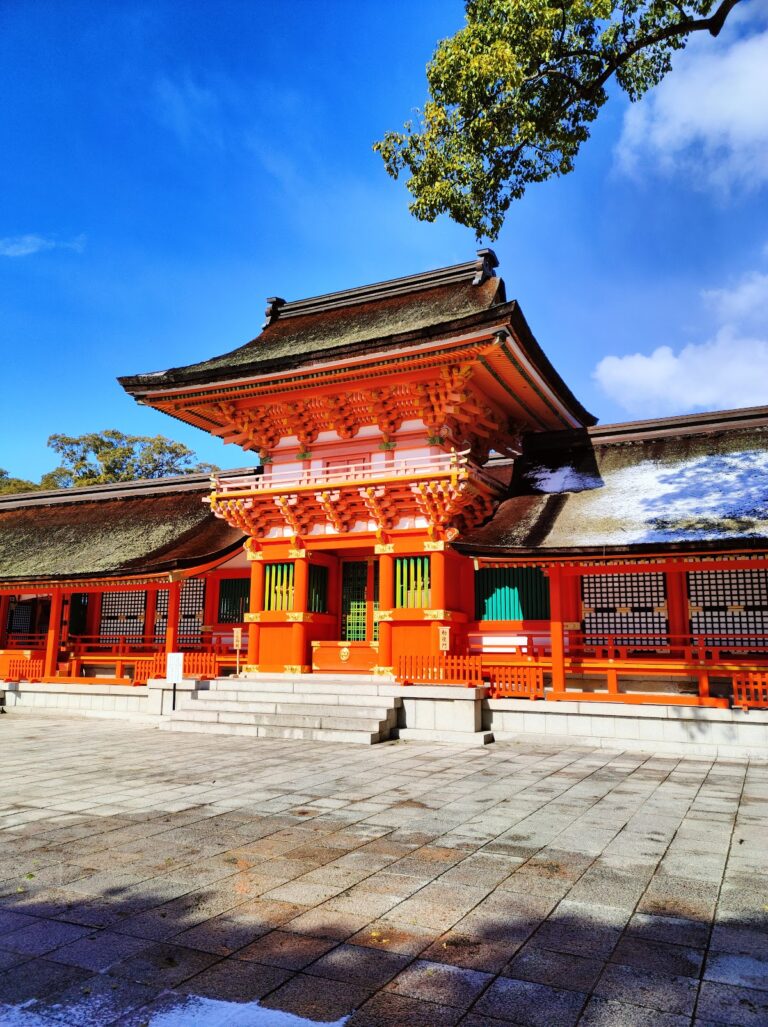
The main hall of Usa Shrine is known for its unique architectural style called “Hachiman-zukuri.” This structure integrates two buildings, front and back, and is designated as a National Treasure. The current main shrine was rebuilt during the Bunsei era (1818-1830) in the late Edo period. Beautiful vermilion-lacquered shrine buildings are scattered throughout the grounds, creating a solemn atmosphere.
Besides the main shrine, the grounds contain many important structures, including the Imperial Messenger Gate and the Treasure Hall. Hundreds of years old trees flourish on the vast grounds, conveying the dignity of a sacred place.
Usa Hachiman Shrines throughout Japan
Usa Hachiman Shrine, Naruto City, Tokushima Prefecture
Located in Kurosaki, Muya-cho, Naruto City, Tokushima Prefecture, Usa Hachiman Shrine is particularly known for prayers for fertility and safe childbirth. Since its founding, it has been affectionately known as “Usa no Hachiman-san” by local residents, and is characterized by its deep faith as a guardian deity for women.
The most distinctive feature of this shrine is the “Omikoshi Shinji” ritual, held annually on October 13th. This Shinto ritual is a rare festival in which only women can participate, and it is designated as a folk cultural property of Tokushima Prefecture. This traditional event, expressing gratitude for the divine blessings of fertility and safe childbirth, has been passed down through generations by local women.
The shrine grounds are filled with votive tablets and offerings that demonstrate beliefs related to safe childbirth and child-rearing, and even today, many pregnant women and women praying for children visit the shrine.
Usa Hachiman Shrine, Nonoichi City, Ishikawa Prefecture
Located in Yokomiya-cho, Nonoichi City, Ishikawa Prefecture, Usa Hachiman Shrine is a historical shrine whose founding date is unknown, but it flourished as the main shrine of Yokoe-go around 823 AD.
Records show that in April 866 AD, Minamoto no Ason Yoshiari, a Junior Fourth Rank official, was dispatched from the imperial court and offered ceremonial gifts, indicating the shrine’s reverence from the imperial court. In the late Heian period, Minamoto no Yoshinaka made a donation to Hakusan, and Yokoe Shichiro Motomitsu, a member of the Togashi clan, constructed the shrine and enshrined Usa Hachiman Okami.
This shrine, as its main shrine, also manages other shrines such as Arakawa Shrine (Futsukaichi, Nonoichi City) and Go Hachiman Shrine, playing a central role in the regional shrine network.
Usa Hachiman Shrine, Wakayama Prefecture
The Usa Hachiman Shrine, located in Wakayama Prefecture, is a historically significant shrine with records preserved in the “Kii Zoku Fudoki” (Continued Topography of Kii Province). According to the book, “This shrine was likely established in a place associated with Emperor Ojin. The name ‘Usa Hachiman’ likely originated when the shrine was moved to Yokohama and the Usa rituals were adopted.” It is believed that the shrine was founded in a place associated with Emperor Ojin, and later, when it was moved to Yokohama, the Usa rituals were adopted, leading to the name “Usa Hachiman.”
This history is a valuable record demonstrating that Hachiman shrines throughout Japan modeled their ritual practices after those of Usa Jingu Shrine.
Usa Hachiman Shrine, Miyaki Town, Saga Prefecture
Usa Hachiman Shrine, located in Miyaki Town, Saga Prefecture, was built in 811 AD (Kōnin 2) during the reign of Emperor Saga, by inviting the divine spirit of Usa Hachiman Shrine in Buzen Province (present-day Oita Prefecture). Records indicate that this area was a manor of Usa Hachiman Shrine at the time, demonstrating a deep connection with Usa Jingu Shrine both economically and religiously.
The spread of Hachiman worship through the manorial system is an interesting example illustrating the relationship between shrines and the economy in the medieval period. Local people revered Hachiman as the guardian deity of their manor, praying for abundant harvests and peace in the region.
Okayama Prefecture: Usa Hachiman Shrine
The Usa Hachiman Shrine, located in Okayama Prefecture, was established in 1523 (Daiei 3) by Takenoi Mitsutaka, the lord of Kurotada Village, who invited a divided spirit from Usa Jingu Shrine in Buzen Province. A sacred mirror bearing the inscription of 1536 (Tenbun 5) is enshrined there, making it a valuable cultural asset that conveys the faith of local lords during the Sengoku period (Warring States period).
During the Sengoku period, warlords devoutly worshipped Hachiman, praying for lasting military fortune. This shrine is also thought to have been founded by a local lord to pray for the safety of their territory and people during a time of war.
Ehime Prefecture: Usa Hachiman Shrine
Another Usa Hachiman Shrine is located in Ehime Prefecture, and it is revered as a guardian deity of the region. It is one of the shrines that demonstrates the spread of Hachiman worship in the Shikoku region, and plays a central role in local festivals and annual events.
The Spread of Hachiman Worship and the History of Invitation
What is Invitation?
“Invitation” refers to the act of enshrining a divided spirit of a deity from one shrine in another location. Hachiman worship spread throughout Japan through the invitation of Hachiman from Usa Shrine to various parts of the country.
The most famous examples of invitation are Iwashimizu Hachimangu (Kyoto Prefecture) and Tsurugaoka Hachimangu (Kamakura City, Kanagawa Prefecture). Iwashimizu Hachimangu was established in 859 (Jogan 1) from Usa Shrine and revered as the guardian deity of the imperial court. Tsurugaoka Hachimangu was developed by Minamoto no Yoritomo and garnered immense devotion as the guardian deity of the samurai government.
The Manor System and Hachiman Worship
From the Heian period to the Kamakura period, Usa Shrine owned many manors throughout Japan. Hachiman was invited to these manors and enshrined as the guardian deity of the region. The Usa Hachiman Shrine in Miyaki Town, Saga Prefecture, is a prime example.
The spread of Hachiman worship through manors reflects the characteristics of medieval society, where economic and religious activities were closely intertwined. The people of the manors paid their taxes while simultaneously deepening their faith in Hachiman.
Samurai Society and Hachiman Worship
From the Kamakura period onward, Hachiman held a special status as a “war god” in samurai society. Because the Minamoto clan revered Hachiman as their tutelary deity, samurai throughout the country also began to worship Hachiman.
During the Sengoku period (Warring States period), various daimyo (feudal lords) invited Hachiman shrines to their territories and prayed for lasting military success. Hachiman shrines founded by local lords, like the Usa Hachiman Shrine in Okayama Prefecture, can be found throughout Japan.
Benefits and Faith of Usa Hachiman Shrine
Military Fortune and Luck in Competitions
The basic benefits of Hachiman shrines, which enshrine Emperor Ōjin as their principal deity, are long-lasting military fortune and luck in competitions. Since ancient times, they have been deeply revered by the samurai class, and it was customary to visit Hachiman shrines before going into battle to pray for victory.
In modern times, worshippers visit to pray for success in various “competitive endeavors,” such as passing entrance exams, finding employment, and winning in sports.
Safe Childbirth and Fertility
Many Hachiman shrines, like Usa Hachiman Shrine in Naruto City, Tokushima Prefecture, are known for their benefits of safe childbirth and fertility. The belief in Hachiman shrines as gods of safe childbirth arose from the legend that Empress Jingū carried out the conquest of the Three Kingdoms of Korea while pregnant with Emperor Ōjin and gave birth safely.
Even today, many pregnant women and women praying for children visit the shrines, and prayers for safe childbirth and visits on the Day of the Dog (Inu no Hi) are performed.
National Protection and Protection from Evil
Usa Shrine has been revered by the Imperial Court since ancient times as a deity protecting the nation. During times of national crisis, imperial envoys were dispatched to pray for the peace and security of the country.
This faith spread to the local level, and Usa Hachiman Shrines throughout the country are worshipped as local guardian deities and deities that ward off evil.
Abundant Harvest and Business Prosperity
At Hachiman Shrines, which were enshrined as guardian deities of manors, the benefit of abundant harvests was also highly valued. In agricultural communities, praying for a bountiful harvest was one of the most important acts of faith.
In modern times, many worshippers pray for business prosperity and success, and the scope of Hachiman’s protection has expanded with the times.
Festivals and Annual Events of Usa Hachiman Shrine
Grand Festival
Many Usa Hachiman Shrines hold their Grand Festival in the autumn. The festival features a portable shrine procession, devotional performances, and numerous stalls, making it the largest and most lively festival in the region. The annual festival at Usa Shrine in October is particularly grand, attracting many worshippers from all over Japan.
Omikuri Shinto Ritual (Naruto City, Tokushima Prefecture)
The Omikuri Shinto Ritual, held annually on October 13th at Usa Hachiman Shrine in Naruto City, Tokushima Prefecture, is a rare festival in which only women can participate. Designated as a folk cultural property of Tokushima Prefecture, it is a traditional event passed down through generations to express gratitude for the divine blessings of fertility and safe childbirth.
In this ritual, women wear special attire and offer sacrifices and prayers before the gods. It also serves a social function of strengthening the bonds among women in the region.
New Year’s Visit and Annual Events
At the start of the new year, many worshippers visit the shrine for their first visit of the year, praying for safety and prosperity throughout the year. Furthermore, various Shinto rituals such as the Setsubun Festival, the Summer Purification Ceremony, and the Shichi-Go-San Festival are held throughout the year, closely intertwined with the lives of the local residents.
Etiquette and Manners for Visiting a Shrine
Basic Etiquette for Visiting a Shrine
The basic etiquette for visiting a Hachiman Shrine is as follows:
- Bow before passing through the torii gate: As a sign of respect before entering the sacred area.
- Purify yourself at the water basin: Purify your left hand, then your right hand, then your mouth, and finally wash your left hand.
- Walk along the edge of the path: The center is considered the path of the gods.
- Bow twice, clap twice, and bow once in front of the main hall: Bow deeply twice, clap twice, and finally bow once.
- Bow once at the torii gate on your way out: As a sign of gratitude when leaving the sacred area.
Special Ways of Visiting
Usa Shrine has a unique torii gate style called “Usa Torii,” and its main hall architecture is in the “Hachiman-zukuri” style, among other features that differentiate it from other shrines. Understanding these unique characteristics will lead to a deeper religious experience during your visit.
Access and Visiting Information for Usa Hachiman Shrine
Usa Jingu Shrine, the Head Shrine of Hachiman
Location: 2859 Minami-Usa, Usa City, Oita Prefecture
Access: Approximately 10 minutes by bus from JR Nippo Main Line “Usa Station”
Parking: Free parking available (approximately 400 cars)
Visiting Hours: 6:00-21:00 (may vary depending on the season)
Admission Fee: Free entry to the grounds (Treasure Hall is charged)
Usa Jingu Shrine has vast grounds, and a leisurely visit will take approximately 2-3 hours. There are many sights to see, including the National Treasure Main Hall, Treasure Hall, and Sacred Bridge, so it is recommended to visit with ample time.
Usa Hachiman Shrines in Various Locations
Access information for Usa Hachiman Shrines throughout Japan can be found on each shrine’s official website or through local tourism associations. Many shrines have parking facilities, making access by car convenient.
Visiting hours vary by shrine, but generally, visits are possible from sunrise to sunset. The issuance of Goshuin (shrine stamps) and amulets is limited to the shrine office’s opening hours (usually 9:00-17:00).
Summary: The Modern Significance of Usa Hachiman Faith
Usa Hachiman shrines form a network of approximately 44,000 Hachiman shrines nationwide, with Usa Jingu, the head shrine of Hachiman, at its apex. Hachiman faith, with Emperor Ojin as its principal deity, has a history of over 1,300 years and has attracted people’s faith for its diverse blessings, including military success, safe childbirth, and national protection.
Each Usa Hachiman shrine throughout Japan possesses its own unique characteristics, reflecting the history and culture of its region, while continuing to uphold the tradition of Hachiman faith inherited from Usa Jingu. From the women-only festivals in Naruto City, Tokushima Prefecture, to the central role in the regional shrine network in Nonoichi City, Ishikawa Prefecture, and historical ties with various manors and feudal lords, each shrine has played a vital role in its local community.
Even today, Usa Hachiman Shrine remains a beloved place of worship for many people at important life events, such as New Year’s visits, prayers for safe childbirth, protection from evil, and prayers for success in exams. The continued vitality of this ancient faith in modern society demonstrates the richness and sustainability of Japanese religious culture.
Visiting Usa Hachiman Shrine is more than just sightseeing or making a wish; it’s a valuable opportunity to experience the deep connection between Japanese history, culture, and local communities. By visiting Usa Jingu, the head shrine, and the various Usa Hachiman shrines throughout Japan, you can truly appreciate the depth and diversity of Hachiman faith.