Complete Guide to Yahiko Shrine | A Thorough Explanation of Deities, Blessings, Access, and Highlights
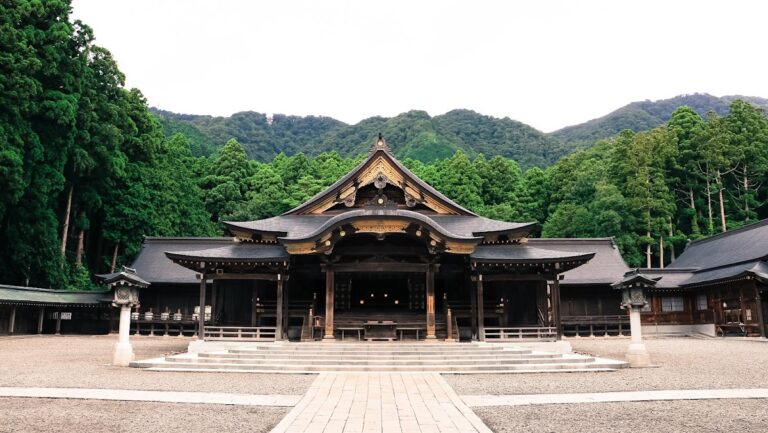
Yahiko Shrine, located in Yahiko Village, Nishikanbara District, Niigata Prefecture, is a historic shrine that has long attracted the faith of people as the Ichinomiya (first-ranked shrine) of Echigo Province. Surrounded by magnificent shrine buildings and abundant nature at the foot of Mount Yahiko, this shrine is known as a power spot that attracts many visitors throughout the year.
This article comprehensively explains everything you need to know before visiting Yahiko Shrine, including its history, enshrined deities, blessings, worship methods, access information, and highlights.
What is Yahiko Shrine?
Status as the Ichinomiya of Echigo Province
Yahiko Shrine has been considered the most prestigious shrine in Echigo Province (present-day Niigata Prefecture) since ancient times. “Ichinomiya” refers to the shrine with the highest rank in its region, revered by the imperial court and samurai families.
Mount Yahiko is considered the sacred mountain, and in ancient times it was also written as “Iyahiko Shrine” or “Iyahiko Shrine.” Currently, “Yahiko Shrine” is the official name, but locally it is affectionately called “Oyahiko-sama.”
History of Founding
Yahiko Shrine has a very long history, and according to shrine tradition, it is even mentioned in the Manyoshu (an ancient collection of Japanese poetry). The exact founding date is unknown, but it is listed in the Engishiki Jinmyocho (a list of shrines compiled in 927 AD), confirming its existence at least before the Heian period.
As a shrine dedicated to the ancestral deity of the development of Echigo Province, it has been worshipped as the guardian deity of agriculture, fishing, and industry.
Deity and Divine Virtues
Amenokagoyama-no-Mikoto
The deity enshrined at Yahiko Shrine is Amenokagoyama-no-Mikoto. This deity is a great-grandson of Amaterasu Omikami and is also known as Takakuraji no Mikoto.
According to the Kojiki and Nihon Shoki, Ame-no-Kaguyama no Mikoto is known as a deity who distinguished himself during Emperor Jimmu’s eastern expedition. Afterward, he is said to have descended to Echigo Province and taught the people of the region techniques for fishing, salt production, agriculture, and sericulture, laying the foundation for local industries.
Benefits and Divine Virtues
Yahiko Shrine is said to offer the following benefits:
- Industrial Promotion and Business Prosperity: As the deity who opened up industry in Echigo Province, many worshippers visit to pray for business prosperity and success.
- Family Safety: As the guardian deity of the region, it protects the safety and happiness of families.
- Traffic Safety: It is worshipped as a deity that watches over safe journeys.
- Matchmaking and Successful Relationships: It is believed to bring good fortune in forming relationships.
- Good Fortune and Prosperity: Many people visit when starting a new chapter or turning point in their lives.
- Abundant Harvest: As the deity of agriculture, the belief in praying for a bountiful harvest continues.
Highlights of the Shrine Grounds
From the First Torii Gate to the Main Hall
The grounds of Yahiko Shrine boast a vast area of approximately 130,000 tsubo (about 430,000 square meters) at the foot of Mount Yahiko.
The First Torii Gate is within walking distance of JR Yahiko Station, and the approach to the shrine begins here. The approach to the shrine is a tranquil space surrounded by cedar trees, creating an atmosphere that cleanses the soul just by walking along it.
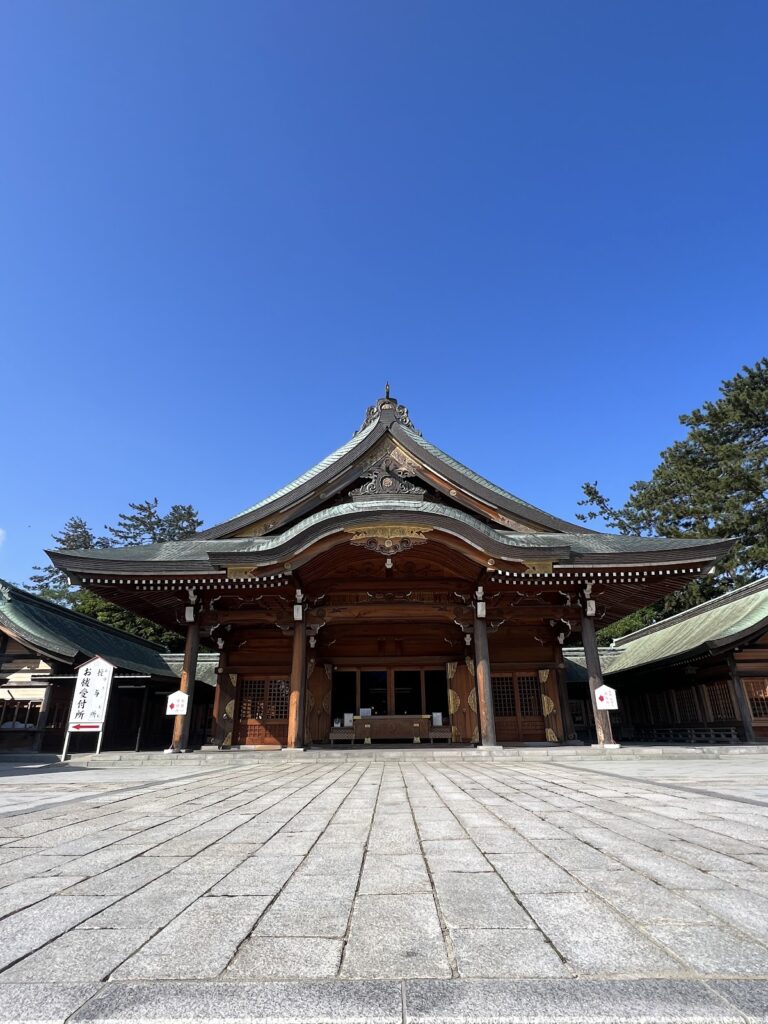
Passing through the Zuishinmon Gate, the magnificent Haiden (worship hall) comes into view. The current shrine building was rebuilt in 1916 (Taisho 5), and is characterized by its imposing hip-and-gable roof style.
Okumiya (Inner Shrine)
At the summit of Mt. Yahiko (634m above sea level) is the Okumiya, the inner shrine of Yahiko Shrine. It can be reached by taking the ropeway or by hiking the mountain trail in about an hour.
From the summit, a spectacular view unfolds, stretching from the Sea of Japan to the Echigo Plain and Sado Island. On clear days, Mt. Fuji can sometimes be seen in the distance. It is also a popular power spot, and many visitors extend their trip to the Okumiya after visiting the main shrine.
Subsidiary Shrines
There are several subsidiary shrines within the grounds, each offering different blessings.
- Jūhashira Shrine: Dedicated to the ten children of Amenokaguyama-no-Mikoto
- Katsu Shrine: Offers blessings for long-lasting military fortune and success in competitions
- Kusanagi Shrine: Dedicated to Yamato Takeru
- Otoko Shrine: Dedicated to the consort of Amenokaguyama-no-Mikoto and worshipped as a guardian deity of women
Treasure Hall
The treasure hall on the temple grounds displays numerous valuable treasures, including the Shida no Ōtachi, a nationally designated Important Cultural Property.
The Shida no Ōtachi is one of the largest Ōtachi swords in Japan, with a blade length exceeding 2.2 meters, and is believed to have been made during the Nanboku-chō period. Its impressive appearance is well worth seeing.
Fireball Stone
The Fireball Stone on the temple grounds is a power stone with a legend that says if you lift it while making a wish and it feels light, your wish will come true; if it feels heavy, your wish will not come true. It is a popular spot that many visitors try.
How to Worship and Manners
Correct Worship Etiquette
Worship at Yahiko Shrine should be performed using the following steps:
- Purifying at the Water Basin: Hold the ladle in your right hand and purify your left hand, then hold the ladle in your left hand and purify your right hand. Again, hold the ladle in your right hand, receive water in your left hand, and rinse your mouth. Finally, hold the ladle upright and purify the handle.
- Etiquette in Front of the Main Hall: The formal etiquette at Yahiko Shrine is “two bows, four claps, one bow.” Please note that this differs from the typical “two bows, two claps, one bow” ritual at most shrines.
- Bow deeply twice
- Clap your hands four times
- Pray with all your heart
- Finally, bow deeply once
- Receiving Goshuin (Shrine Seals) and Amulets: After your visit, you can receive Goshuin and amulets at the reception area.
Clothing and Belongings
There are no specific dress code requirements, but since shrines are sacred places, clean and subdued attire is preferred. Remember to take precautions against insects in the summer and warm clothing in the winter. If you plan to visit the inner shrine, wear comfortable walking shoes.
Annual Events and Festivals
Yahiko Shrine holds various festivals throughout the year.
Main Annual Events
- Saitansai (January 1st): A festival celebrating the New Year
- Tōrō Oshi and Hadaka Oshiai Taisai (Lunar Calendar February 1st-3rd): Yahiko Shrine’s largest festival. The “Naked Pushing” on the 2nd is particularly known as a magnificent Shinto ritual.
- Spring Grand Festival (April): A festival celebrating the arrival of spring.
- Chrysanthemum Festival (November 1st-24th): An autumn tradition where the shrine grounds are adorned with approximately 4,000 chrysanthemum pots.
- Autumn Grand Festival (November): A festival giving thanks for the harvest.
- Great Purification Ceremony on New Year’s Eve (December 31st): A Shinto ritual to purify and cleanse away the impurities of the year.
Lantern Pushing and Naked Pushing Grand Festival
Of particular note is the Lantern Pushing and Naked Pushing Grand Festival in February. This festival, the largest festival of Yahiko Shrine, is held from the 1st to the 3rd of the 2nd month of the lunar calendar. The “Naked Pushing” on the 2nd features a magnificent Shinto ritual where men in white robes fiercely push against each other over the sacred fire.
There’s a legend that the Kamigata (upper) and Shimogata (lower) teams compete in a pushing contest. A victory for the Kamigata team signifies a bountiful harvest, while a victory for the Shimogata team indicates a rich fishing season.
Chrysanthemum Festival
The autumn Chrysanthemum Festival is another famous event at Yahiko Shrine. Held from November 1st to 24th, the shrine grounds are adorned with approximately 4,000 pots of beautiful chrysanthemums. Various types of chrysanthemums, including large, small, and cascading chrysanthemums, are on display, and the chrysanthemum doll display, in particular, attracts many tourists every year.
Access Information
Access by Train
The most convenient way to get there is by using the JR Yahiko Line.
- Approximately 15 minutes on foot from JR Yahiko Station
- From Tokyo: Take the Joetsu Shinkansen to Tsubame-Sanjo Station, transfer to the JR Yahiko Line (approximately 40 minutes)
- From Niigata Station: Take the JR Echigo Line, transfer at Yoshida Station, then take the JR Yahiko Line (approximately 60 minutes)
Access by Car
- Approximately 30 minutes from the Sanjo-Tsubame IC on the Hokuriku Expressway
- Approximately 50 minutes from the Nagaoka IC on the Kan-Etsu Expressway
- Approximately 40 minutes from the Niitsu IC on the Ban-Etsu Expressway
Parking: There are several free parking lots around the temple grounds, with a total capacity of approximately 1000 cars. However, it gets very crowded during New Year’s and the Chrysanthemum Festival, so we recommend using public transportation.
Yahiko Mountain Ropeway
The Yahiko Mountain Ropeway is convenient for visiting the inner shrine and enjoying the spectacular views from the mountaintop.
- Operating Hours: 9:00 AM – 5:00 PM (Subject to change depending on the season)
- Travel Time: Approximately 5 minutes
- Fare: Adult Round Trip 1,500 yen, One Way 750 yen (As of 2024)
- The base station is approximately a 15-minute walk from Yahiko Shrine.
Nearby Tourist Attractions
Yahiko Onsen
Yahiko Onsenkyo spreads out in front of the gates of Yahiko Shrine. It is recommended to relax and soothe your fatigue in the hot springs after visiting the shrine. Day-trip bathing facilities are also available, allowing you to easily enjoy the hot springs.
The spring water is alkaline simple hot spring water, gentle on the skin, and known as a “beauty spring.”
Yahiko Mountain Skyline
Yahiko Mountain Skyline is a scenic road that allows you to access the area near the summit of Mt. Yahiko by car. Along the approximately 16km route, you can enjoy magnificent views of the Sea of Japan and the Echigo Plain.
From the mountaintop observation deck, a 360-degree panoramic view unfolds, making it a popular spot, especially for its beautiful sunsets and nighttime scenery.
Hospitality Plaza
At the Hospitality Plaza in front of Yahiko Station, you can purchase local specialties and souvenirs. A variety of Niigata-specific products are available, including Yahiko’s famous “Panda-yaki” (panda-shaped sweets), local sake, and edamame products.
Yahiko Park and Momiji Valley
Yahiko Park is a Japanese-style garden park within walking distance of Yahiko Shrine. Momiji Valley, in particular, is known as a famous spot for autumn foliage, where you can enjoy the beauty of the valley dyed crimson in autumn.
From late April to early May, the “Yahiko Mountain Tulip Festival” is held, featuring approximately 150,000 tulip bulbs in full bloom.
The Appeal of Yahiko Shrine as a Power Spot
The Spiritual Power of Mount Yahiko
One reason why Yahiko Shrine is attracting attention as a power spot is the presence of Mount Yahiko, the sacred mountain. Since ancient times, it has been an object of mountain worship, and the entire mountain has been considered a sacred realm.
Mount Yahiko is 634m high, coincidentally the same height as the Tokyo Skytree. It is said that climbing this mountain allows one to feel the energy of the earth.
Dragon Veins and Zero Magnetic Fields
From a feng shui perspective, Mount Yahiko is considered to be located on an important dragon vein on the Sea of Japan side. Furthermore, it is said to be an energy spot with a “zero magnetic field,” and is believed to have the effect of balancing the mind and body.
Voices of Visitors
Many people who have actually visited Yahiko Shrine say things like, “The air changes when you enter the grounds,” “My mind becomes calm,” and “My wish came true.” While it hasn’t been scientifically proven, many people seem to feel a special energy.
Goshuin and Amulet Information
Goshuin (Shrine Seal)
At Yahiko Shrine, you can receive a goshuin at the office to the right of the main hall. The offering fee is 500 yen. There are both pre-printed and hand-written goshuin available, and the method varies depending on how busy the shrine is.
You can also receive a different goshuin at the inner shrine, and many visitors collect both.
Popular Amulets
Yahiko Shrine offers a variety of amulets.
- Good Fortune Amulet: An amulet for wishing for overall good fortune.
- Matchmaking Amulet: Popular with those wishing for a good match.
- Traffic Safety Amulet: Also available in a type that can be attached to cars and motorcycles.
- Work Amulet: An amulet for wishing for business prosperity and success.
- Academic Success Amulet: Popular with students and those taking exams.
Particularly popular is the Wooden Amulet made from the sacred tree of Mt. Yahiko, which is said to be imbued with the energy of nature.
Points to Note and Q&A for Visitors
Points to Note for Visitors
- Photography: Photography is generally permitted within the shrine grounds, but photography inside the main hall and during Shinto rituals is prohibited. Please refrain from using tripods.
- Pets: Bringing pets to the shrine is generally discouraged.
- Eating and Drinking: Please refrain from eating and drinking outside of designated areas within the shrine grounds.
- Smoking: Smoking is prohibited throughout the shrine grounds.
- Attire: Please avoid excessive exposure and dress appropriately for a sacred place.
How to Avoid Crowds
Yahiko Shrine is particularly crowded during the following times:
- The first three days of the New Year (January 1st-3rd)
- The Lantern Pushing and Naked Pushing Festival (February 1st-3rd in the lunar calendar)
- Weekends during the Chrysanthemum Festival (November)
- Golden Week
If you wish to avoid crowds, visiting on weekday mornings or evenings is recommended. Especially in the early morning, there are few visitors, allowing for a peaceful and tranquil visit.
Further Exploration of Yahiko Shrine’s History
Connection to the Manyoshu
Yahiko Shrine is mentioned in the Manyoshu, Japan’s oldest anthology of poetry.
“Iyahiko, you are a sacred mountain, even on days when blue clouds drift over it, a light rain falls.”
This poem describes the divine nature of Mount Yahiko and the scene of clouds drifting over the mountain and a light rain falling, indicating that Yahiko has been revered as a sacred mountain since ancient times.
The Faith of Warlords
Historically, many warlords revered Yahiko Shrine.
Uesugi Kenshin deeply revered Yahiko Shrine as the guardian deity of Echigo Province, and it is said that he always visited it before going into battle. He is also said to have prayed for victory at the Battle of Kawanakajima.
During the Edo period, Tokugawa Ieyasu also donated land to the shrine, and it received the patronage of the shogunate.
Changes since the Meiji era
In 1871 (Meiji 4), it was ranked as a National Shrine of the Second Rank under the modern shrine ranking system. In 1885 (Meiji 18), it was promoted to a National Shrine of the Third Rank, and in 1915 (Taisho 4), it was promoted to a National Shrine of the Second Rank.
The current shrine building was rebuilt in 1916 (Taisho 5), and is characterized by its magnificent hip-and-gable roof style. After major repairs in the Heisei era, it still maintains its beautiful appearance.
Yahiko Shrine in the Four Seasons
Spring (March-May)
In spring, Yahiko Shrine is adorned with cherry blossoms and tulips. The cherry trees lining the approach to the shrine are magnificent, and the best time to see them is from early to mid-April. At Yahiko Park, approximately 150,000 tulip bulbs bloom from late April to early May.
In the season of fresh greenery, the cedar trees lining the shrine grounds are beautiful, and visitors can enjoy a refreshing atmosphere during their visit.
Summer (June-August)
In summer, the lush green grounds create a cool and refreshing atmosphere. The summit of Mount Yahiko is cooler than the lowlands, making it ideal for escaping the summer heat.
From late July to early August, it is sometimes possible to see fireflies at the foot of Mount Yahiko.
Autumn (September-November)
Autumn is one of the most beautiful seasons for Yahiko Shrine. From late October to mid-November, the autumn leaves are at their peak, and the Momiji Valley in Yahiko Park is particularly known as a spectacular spot.
During the Chrysanthemum Festival in November, the shrine grounds are adorned with approximately 4,000 pots of chrysanthemums, allowing visitors to enjoy the autumn scenery.
Winter (December-February)
In winter, Yahiko Shrine presents a fantastical beauty with its snow-covered grounds. Especially during the New Year’s visit period, the scene of worshippers praying amidst the snow is truly picturesque.
The Lantern Pushing and Naked Pushing Festival in February is a winter tradition that attracts many visitors.
Local Tips for Enjoying the Shrine
Early Morning Visit Recommended
Early morning visits are popular among locals. You can pray peacefully in the quiet shrine grounds amidst the refreshing morning air. It’s especially cool in summer and offers beautiful snowy scenery in winter.
Yahiko Cuisine
After your visit, enjoy some of Yahiko’s famous local cuisine.
- Yahiko Musume Pork: Dishes using locally branded pork
- Hegi Soba: Niigata specialty soba noodles made with seaweed as a binder
- Panda Yaki: Yahiko’s specialty taiyaki-style sweet
- Local Sake: Yahiko Brewery’s sake is highly regarded nationwide
The temple town is lined with long-established soba restaurants and eateries, where you can enjoy a meal after visiting the shrine.
Hiking Mount Yahiko
If you have time, hiking Mount Yahiko is also recommended. The hiking trail is well-maintained, making it safe even for beginners. The climb takes about 1 hour, and the descent about 50 minutes.
The view from the summit is magnificent, especially the sunset and night view. However, be sure to plan your descent time accordingly.
Summary: The Charm of Yahiko Shrine
Yahiko Shrine is not just a tourist spot; it is a place of worship that has continued since ancient times and is a spiritual anchor for the people of Echigo.
The spiritual power of Mount Yahiko, the sacred mountain; the divine virtues of Amenokaguyama-no-Mikoto, the ancestral deity of Echigo Province’s development; the beautiful nature that changes with the seasons; and the warmth of the local people—all of these elements combine to create the unique charm of Yahiko Shrine.
Whether you visit seeking blessings for industrial development, family safety, matchmaking, or good fortune, or simply to refresh your mind and body as a power spot, or to immerse yourself in history and culture, Yahiko Shrine offers different values to each visitor.
When you visit Niigata, be sure to stop by Yahiko Shrine. It’s sure to be a memorable experience.
When praying, remember the proper etiquette of “two bows, four claps, one bow,” and offer your prayers with sincerity. And don’t forget to fully enjoy the surrounding attractions, such as the nature of Mount Yahiko, the hot springs, and the local cuisine.
We hope that Yahiko Shrine, the Ichinomiya (first-ranked shrine) of Echigo Province, will bring you wonderful blessings and memories.