Complete Guide to Yaizu Shrine | A Thorough Explanation of 1600 Years of History, the Legend of Yamato Takeru, and the Wildest Festival in the Tokai Region
Yaizu Shrine, located in Yaizu City, Shizuoka Prefecture, is an ancient shrine boasting a history of over 1600 years, said to have been founded in the 4th year of Emperor Hanzei’s reign (409 AD). It enshrines Yamato Takeru no Mikoto as its main deity and is known as the setting for the fire disaster legend recorded in the Kojiki and Nihon Shoki. The annual grand festival held in August is nationally famous as the “wildest festival in the Tokai region,” and continues to attract deep faith from the citizens of Yaizu, serving as a spiritual anchor for them.
History and Origin of Yaizu Shrine
Origin of Yamato Takeru and the Place Name Yaizu
The history of Yaizu Shrine dates back to the eastern expedition of Yamato Takeru no Mikoto in the 40th year of Emperor Keiko’s reign (around 110 AD). According to the Kojiki and Nihon Shoki, while Yamato Takeru was pacifying the eastern provinces, he encountered a crisis near present-day Yaizu, surrounded by a wildfire set by his enemy. It is said that at this time, Yamato Takeru used the Ame-no-Murakumo-no-Tsurugi (later known as the Kusanagi-no-Tsurugi) to cut down the grass and set a counter-fire, thus escaping the danger.
This legend of the fire is said to be the origin of the place name “Yaizu” and the name of the Kusanagi-no-Tsurugi. In honor of Yamato Takeru’s wisdom, courage, and kindness, later generations built a shrine in this area, marking the beginning of Yaizu Shrine.
Founded in the 4th year of Emperor Hanzei’s reign
Yaizu Shrine is said to have been founded in the 4th year of Emperor Hanzei’s reign (409 AD), more than 1600 years ago. The origin of Yaizu Shrine is said to be the reverence for Yamato Takeru’s virtues and his enshrinement as the guardian deity of Yaizu. Since then, in Yaizu, a town that has flourished as a fishing village, the shrine has received fervent devotion from the fishing industry and the general public alike, who pray for safety at sea and abundant catches.
Tokugawa Ieyasu and the Construction of the Main Hall
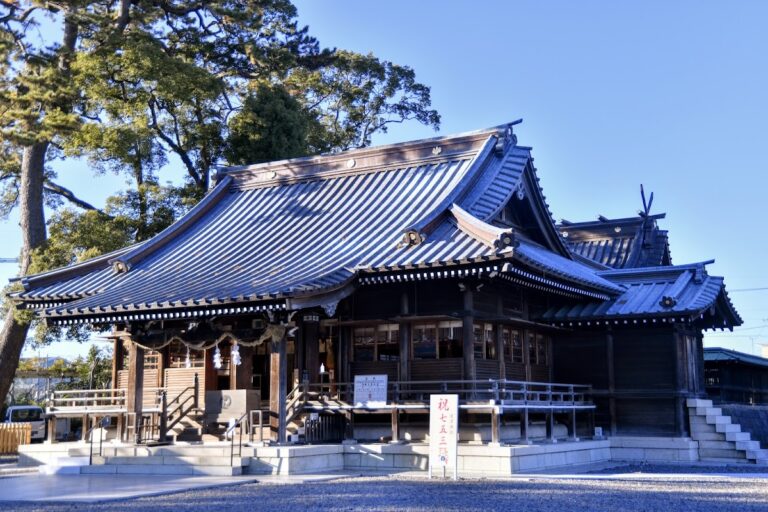
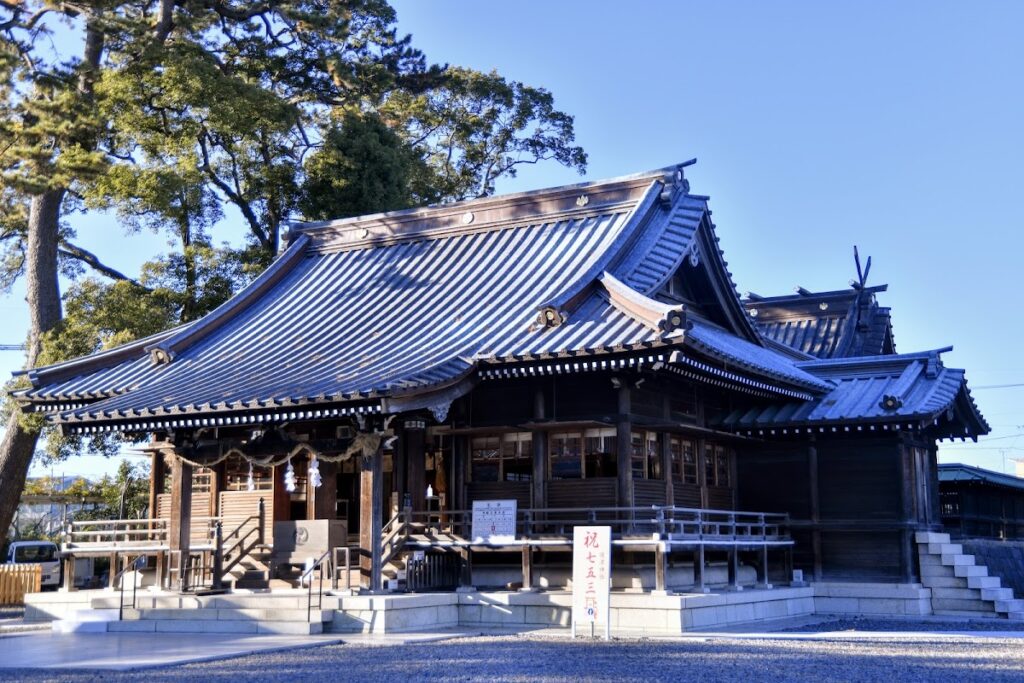
The current main hall of Yaizu Shrine is said to have been built by order of Tokugawa Ieyasu. Throughout the Edo period, Yaizu Shrine played an important role as the guardian deity of the region and developed as a shrine with deep ties to the Tokugawa family. Despite undergoing several renovations throughout its long history, its dignified appearance has been preserved to this day.
Deities and Divine Virtues
Main Deity: Yamato Takeru no Mikoto
The main deity of Yaizu Shrine is Yamato Takeru no Mikoto. Born as a prince of the 12th Emperor Keiko, he is a legendary hero who, at his father’s command, dedicated himself to pacifying the western and eastern provinces. His bravery, wisdom, and compassion for the people have earned him the reverence of many people since ancient times.
Divine Virtues of Yaizu Shrine
Yaizu Shrine, which enshrines Yamato Takeru, is believed to possess the following divine virtues:
- Protection from Misfortune and Disaster: Based on the legend of Yamato Takeru escaping fire, it is believed to offer protection from all kinds of calamities.
- Safety at Sea and Abundant Catch: As the guardian deity of Yaizu, a fishing town, prayers are offered for safety at sea and abundant catches.
- Long-lasting Military Fortune and Good Luck in Competitions: Thanks to the power of Yamato Takeru, who excelled in military prowess, prayers are offered for success in competitions and contests.
- Good Fortune and Family Safety: As the guardian deity of the region, prayers are offered for the happiness and prosperity of families.
- Safe Travel: In honor of Yamato Takeru, who completed his eastern expedition, prayers are offered for safe travels.
The Wildest Festival in the Tokai Region: Yaizu Shrine Grand Festival
Annual Grand Festival on August 12th and 13th
The most important festival at Yaizu Shrine is the annual grand festival held on August 12th and 13th. This grand festival is known as the “wildest festival in the Tokai region” and is one of the festivals that the people of Yaizu look forward to most each year. During the festival, the streets of Yaizu are transformed, enveloped in a feverish excitement.
The “An-etton” Chant
The most distinctive feature of the Yaizu Shrine Grand Festival is the unique chant, “An-etton, An-etton.” As this chant resonates, the portable shrines and floats parade through the town, and the entire city of Yaizu is immersed in the festival atmosphere. There are various theories about the origin of this chant, but it is a unique Yaizu tradition that has been passed down for generations.
The Origin and Characteristics of the Wild Festival
The reason it is called a “wild festival” lies in its magnificent and intense nature. The bearers of the portable shrines shake them with all their might, sometimes even violently colliding with them. This ferocity is said to recreate the fierce battle in which Yamato Takeru overcame a fire.
The festival features numerous portable shrines and floats from various neighborhoods within Yaizu City and is celebrated grandly over two days. Many citizens, including local fishermen, participate, making it an important cultural event that fosters a sense of unity in Yaizu.
Highlights of the Shrine Grounds
Approach and Statue of Yamato Takeru
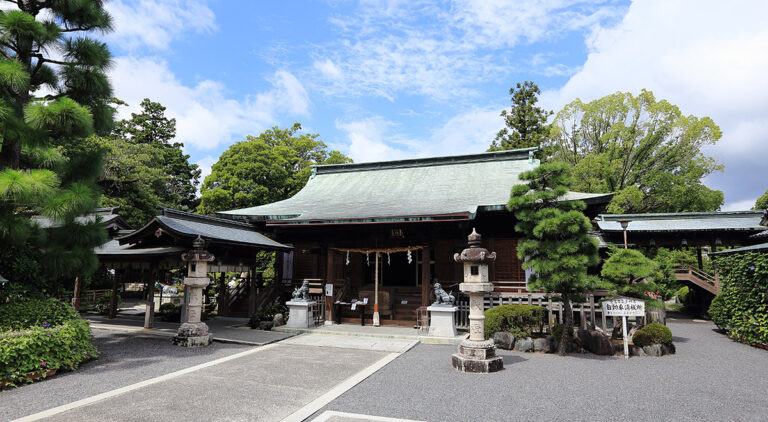
The entrance to the Yaizu Shrine grounds is on the south side. Passing through the torii gate reveals a spacious precinct. Along the approximately 100-meter approach, a magnificent bronze statue of Yamato Takeru, the enshrined deity, stands, seemingly watching over worshippers. This statue depicts Yamato Takeru in his valiant pose, holding the Kusanagi-no-Tsurugi sword, and is one of the symbols of Yaizu Shrine.
Main Hall and Worship Hall
Located at the back of the approach, the shrine buildings are historical structures said to have been built by order of Tokugawa Ieyasu. The main hall is built in the traditional shrine architectural style, and its majestic presence conveys the weight of over 1600 years of history. At the main hall, many worshippers visit daily, offering prayers and making their own wishes.
Subsidiary Shrines and Auxiliary Shrines
Within the grounds of Yaizu Shrine, in addition to the main hall, there are several subsidiary shrines. Each shrine enshrines a different deity, and worshippers can receive various divine blessings. Visiting these subsidiary shrines as well will make your pilgrimage more fulfilling.
Annual Events and Festivals
Main Annual Events
At Yaizu Shrine, various festivals are held throughout the year in addition to the Grand Festival:
- January 1st: Saitansai (New Year’s Day Festival)
- February (Setsubun Festival): Setsubun Festival (Prayer for warding off evil)
- Spring Festival: Festival celebrating the arrival of spring
- July: Natsukoshi no Oharae (Purification of impurities accumulated over the past six months)
- August 12th & 13th: Reitaisai (Grand Festival) (Tokai’s most boisterous festival)
- November: Shichi-Go-San (7-5-3 Festival)
- December 31st: Oharae-shiki (Great Purification Ceremony) and Joya-sai (New Year’s Eve Festival)
New Year’s Prayers and Company Prayers
At Yaizu Shrine, various prayers are accepted throughout the year, starting with the first shrine visit of the New Year. Especially in the New Year, many worshippers visit to pray for family safety, business prosperity, and maritime safety. The shrine also accepts New Year’s prayers for companies and organizations; please inquire in advance.
Individual prayers are offered for various life milestones and everyday wishes, including protection from misfortune, safe childbirth, first shrine visit for a newborn, Shichi-Go-San (a traditional Japanese rite of passage for children), and traffic safety.
Goshuin (Shrine Seals) and Amulets
Goshuin of Yaizu Shrine
At Yaizu Shrine, you can receive a goshuin as a memento of your visit. The goshuin features the calligraphy and red seal of “Yaizu Shrine,” serving as proof of the shrine’s history of over 1600 years. If you bring your goshuincho (seal book), the shrine office will carefully write it for you.
Amulets and Charms
Yaizu Shrine offers a variety of amulets and charms:
- Maritime Safety Charm: Popular among fishermen and sailors
- Exorcism Charm: A charm commemorating the divine protection of Yamato Takeru, who escaped fire.
- Traffic Safety Charm: For safe driving and cycling.
- Academic Success Charm: For students and those taking exams.
- Family Safety Charm: For the happiness of the family.
In addition, seasonal limited-edition items may be available.
Access and Basic Information
Location
Address: 2-7-2 Yaizu, Yaizu City, Shizuoka Prefecture 425-0026
Access by Train
- Approximately 15 minutes on foot from JR Tokaido Main Line “Yaizu Station” (approximately 500 meters southwest)
- Approximately 5 minutes by taxi from Yaizu Station
Yaizu Station is easily accessible from both Tokyo and Nagoya, and is served by local and rapid trains on the Tokaido Main Line. The path from the station to the shrine is flat, allowing you to enjoy the scenery of Yaizu while walking.
Access by Car
- Approximately 15 minutes from Tomei Expressway “Yaizu IC”
- Approximately 20 minutes from Shin-Tomei Expressway “Fujieda Okabe IC”
Yaizu Shrine has a parking lot for visitors, but congestion is expected during major festivals such as the annual grand festival, so the use of public transportation is recommended.
Visiting Hours and Prayer Requests
- Shrine Grounds Visiting: Generally free (however, consideration is needed during early mornings and late nights)
- Shrine Office Reception Hours: Approximately 9:00 AM to 4:00 PM (may vary depending on the season)
- Prayer Requests: It is recommended to check the official website or inquire by phone in advance.
If you wish to request special prayers, such as New Year’s prayers for companies or organizations, it is recommended to inquire with the shrine in advance.
Relationship between Yaizu Shrine and Kusanagi Shrine
Like Yaizu Shrine, Kusanagi Shrine, located in Shimizu Ward, Shizuoka City, also enshrines Yamato Takeru as its main deity. Both shrines are closely related as shrines deeply involved in the legend of Yamato Takeru’s escape from fire.
According to the traditions of Kusanagi Shrine, after escaping the fire, Yamato Takeru renamed the Ame-no-Murakumo-no-Tsurugi (Heavenly Cloud-Gathering Sword) to “Kusanagi-no-Tsurugi” (Grass-Cutting Sword) and left it in this place. Yaizu Shrine and Kusanagi Shrine are both important shrines that preserve the legends from the Kojiki and Nihon Shoki, and thus possess historical and cultural value.
When visiting Shizuoka Prefecture, visiting both Yaizu Shrine and Kusanagi Shrine will allow you to gain a deeper understanding of the story of Yamato Takeru’s eastern expedition.
Spots to Visit Alongside Yaizu City Sightseeing
Yaizu Fishing Port
Yaizu City is known as one of Japan’s leading fishing port towns. Yaizu Fishing Port is a hub for landings of tuna, bonito, and other seafood, allowing you to enjoy fresh seafood. It’s recommended to enjoy fresh seafood dishes at restaurants and markets around Yaizu Fishing Port before or after visiting Yaizu Shrine.
Yaizu Fish Center
The “Yaizu Fish Center,” where Yaizu’s seafood is gathered in one place, is a popular spot for tourists. Not only can you purchase fresh seafood, but you can also enjoy seafood bowls and sashimi set meals on the spot. It’s about a 10-minute drive from Yaizu Shrine.
Lafcadio Hearn Memorial Museum
Lafcadio Hearn, a renowned writer of the Meiji era, loved Yaizu and often stayed there. At the Lafcadio Hearn Memorial Museum, you can learn about his life and works in Yaizu.
Points to Remember When Visiting Yaizu Shrine
Shrine Visit Etiquette
When visiting Yaizu Shrine, please observe the following basic shrine visit etiquette:
- Bow before passing through the torii gate: A courtesy before entering the sacred area.
- Walk along the edge of the path: The center is considered the path of the gods.
- Purify yourself at the water basin: Purify in the order of left hand → right hand → mouth → left hand.
- Worship at the main hall: Two bows, two claps, one bow is the basic form.
Recommended Times to Visit
- August 12th & 13th: The best time to experience the Tokai region’s most spectacular festival.
- First three days of the New Year: For New Year’s prayers and first shrine visit of the year.
- Spring and Autumn with pleasant weather: You can stroll around the shrine grounds at your leisure.
The shrine is extremely crowded during the annual festival, but it is an excellent opportunity to experience the true essence of Yaizu Shrine. On the other hand, for those who wish to visit in peace, weekday mornings are recommended.
Cultural Value of Yaizu Shrine
Center of the Local Community
Yaizu Shrine has functioned as the center of the Yaizu local community for over 1600 years. Especially for those involved in the fishing industry, it is an important place of worship where they pray for safety at sea and a bountiful catch, and is deeply intertwined with Yaizu’s fishing culture.
Inheritance of Japanese Mythology and History
Yaizu Shrine, which preserves the legend of Yamato Takeru as recorded in the Kojiki and Nihon Shoki, is a valuable place where one can experience Japanese mythology and history. As the setting for the dramatic story of the fire disaster legend, it attracts many history enthusiasts and researchers.
Cultural Significance of the Tokai’s No. 1 Wild Festival
The “Tokai’s No. 1 Wild Festival,” held every August, is more than just a religious event; it has become an important cultural event that shapes the identity of the citizens of Yaizu. The “An-etton” chant and the spirited way the portable shrine is carried, passed down through generations, are valuable intangible cultural assets unique to Yaizu.
Summary: The Charm of Yaizu Shrine
Yaizu Shrine boasts a history of over 1600 years and is a venerable shrine that served as the setting for an important episode in Japanese mythology: the legend of Yamato Takeru’s fire disaster. It also has deep ties to Tokugawa Ieyasu and has been revered as the guardian deity of the region throughout its long history.
The annual grand festival in August, “Tokai’s No. 1 Wild Festival,” is known for its spirit and the unique “An-etton” chant, and is an important festival that unites the hearts of the citizens of Yaizu. As the guardian deity of Yaizu, a fishing town, it is believed to grant blessings for maritime safety and abundant catches, and continues to attract deep faith from many fishermen and citizens.
Its convenient location within walking distance of JR Yaizu Station is also a major attraction, making it a shrine you should definitely visit when visiting Shizuoka Prefecture. Be sure to visit Yaizu Shrine, where you can experience the culture and traditions of Yaizu while immersing yourself in the world of Japanese mythology and feeling its 1600-year history.