
Complete Guide to Eimeiji Temple: A Thorough Explanation of History, Highlights, and Access
There are several temples named Eimeiji throughout Japan, each with its own unique history and cultural value. This article provides a comprehensive explanation of the particularly famous Eimeiji temples, covering their historical background, cultural assets, highlights, and access methods.
What is Eimeiji Temple?
Eimeiji is a name primarily used for temples belonging to various Buddhist sects, such as the Soto Zen and Jodo Shinshu schools. The name “Eimei” means eternal light, or the eternal illumination of Buddha’s compassion, making it a fitting name for a Buddhist temple. Eimeiji temples scattered throughout Japan have played important religious and cultural roles in their respective regions.
Eimeiji Temple in Tsuwano Town, Shimane Prefecture
History and Founding
Located in Tsuwano Town, Kanoashi District, Shimane Prefecture, Eimeiji Temple is known as an ancient temple of the Soto Zen sect. The temple’s mountain name is Kakuōzan, and it was founded in 1420 (Ōei 27) by Yoshimi Yorihiro, the fifth head of the Yoshimi clan, lords of Tsuwano Castle. The founding priest was Getsuin, a Dharma descendant of Dōgen Zenji, the founder of the Sōtō Zen sect.
During the Edo period, it flourished as a Sōtō Zen temple and served as the family temple for successive generations of the Tsuwano domain. It housed the tombs of the Kamei family, the lords of the Tsuwano domain, and was an important place where memorial services for the lords and their families were held. It also had close ties with the shogunate and functioned as the domain’s religious center.
Cultural Properties and Highlights
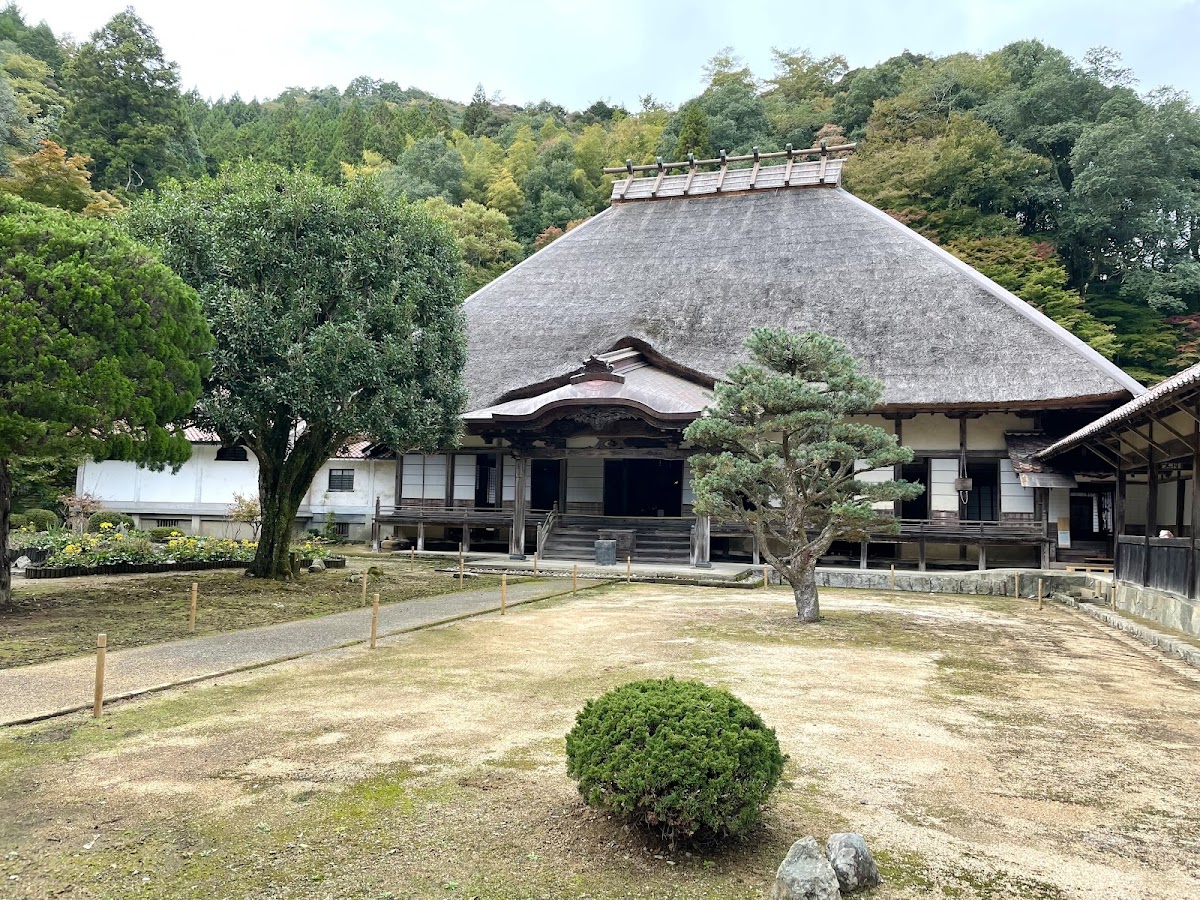
The Thatched-Roof Main Hall
The most noteworthy feature of Eimeiji Temple in Tsuwano is its thatched-roof main hall. This architectural style is a valuable legacy that conveys the beauty of traditional Japanese temple architecture to the present day. Thatched roofs require periodic re-thatching and are important cultural assets from the perspective of preserving traditional techniques.
Temple Gate and Waterway
The temple gate of Eimeiji Temple is similar in form to that of Eiheiji Temple, the head temple of the Soto Zen sect, and has a unique structure with waterways on both sides of the gate. While water does not usually flow, this arrangement faithfully reproduces the traditional style of Zen temples.
Garden and Autumn Leaves
The garden of Eimeiji Temple displays beauty in all four seasons, but many visitors come especially during the autumn foliage season. The contrast between the thatched main hall and the colorful autumn leaves is magnificent, making it one of the representative landscapes of Tsuwano. The garden exudes a tranquil atmosphere befitting a Zen temple, providing peace of mind to visitors.
Tsuwano Domain Lord Kamei Family Mausoleum
Within the temple grounds is the mausoleum of the Kamei family, the lords of the Tsuwano domain, and a portion of it is designated as a cultural property. This is an important historical site that tells the story of the Kamei family, who ruled Tsuwano throughout the Edo period.
Connection to Mori Ogai
The grave of Mori Ogai (Rintaro Mori), a literary giant from Tsuwano, is also located at Eimeiji Temple. It is said that Mori Ogai wished for a simple grave according to his will, and a tombstone reflecting his wishes has been erected. Known as “Rintaro Mori’s Grave,” this grave is an important pilgrimage site for literature fans.
Access Methods
Access by Train
- Approximately 15-20 minutes on foot from JR Yamaguchi Line Tsuwano Station
- Approximately 5 minutes by taxi from the station
Access by Car
- Approximately 40 minutes from Rokukaichi IC on the Chugoku Expressway
- Approximately 5 minutes by car from the center of Tsuwano town
- Parking available (for visitors)
Location
Ushiroda, Tsuwano-cho, Kanoashi-gun, Shimane Prefecture
Tsuwano is a tourist destination with a historical townscape that remains, sometimes called the “Little Kyoto of San’in.” We recommend exploring the entire town in conjunction with Eimeiji Temple.
Eimeiji Temple in Fuji City, Shizuoka Prefecture
History and Changes
There is also an Eimeiji Temple in Fuji City, Shizuoka Prefecture. This temple began as the Shingon Buddhist temple “Daifuzan Kinrin-in” and converted to the Soto Zen sect in Bunmei 4 (1472). For a time, it was called “Tomikinzan Eimeiji,” but later it became “Daitomizan Eimeiji,” which it remains to this day.
This historical change is an interesting example illustrating the shifts in Buddhist sects and their relationship with local communities in the history of Japanese Buddhism. The conversion from Shingon Buddhism to Soto Zen Buddhism is thought to reflect the social conditions and changes in local beliefs at the time.
Highlights and Access
Eimeiji Temple in Fuji City is located overlooking Mount Fuji and is an important temple that conveys the Buddhist culture of the Fuji region.
Access
- Take a bus or taxi from JR Tokaido Main Line Fuji Station or Shin-Fuji Station
- Approximately 15 minutes by car from Tomei Expressway Fuji IC
Eimeiji Temple in Minamiboso City, Chiba Prefecture
History and Founder
Chiba Prefecture also has Eijizan Eimeiji Temple, which was founded in 1279 (Koan 2) by Tojo Saemon-no-jo Kingo Minamoto Kagenobu (Hoshoji-dono Dogo Kagenobu Daizenmon).
The Tojo clan has a history of assisting Minamoto no Yoritomo when he fled to this area after his defeat at the Battle of Ishibashiyama in 1180. It is said that Tojo Shichiro Akinori assisted Yoritomo in this service. For this service, he was later granted Nagasa District, establishing Muroto Castle in Izumi Province as his main castle and Kanayama Castle in Uchizumi as a subsidiary castle.
This Yongming Temple is of high historical value as a temple with a history connected to the important turning points in Japanese history: Minamoto no Yoritomo’s uprising and the establishment of the Kamakura Shogunate.
Yongming Temple in Taipei, Taiwan
Overview
There is also a Yongming Temple in Shilin District, Taipei City, Taiwan. Its address is No. 20, Lane 100, Section 2, Yangde Boulevard, Taipei City, and its main deity is Shakyamuni Buddha. It functions as one of the centers of Buddhist faith in Taiwan.
Basic Information
- Address: No. 20, Lane 100, Section 2, Yangde Boulevard, Taipei City
- Phone: 02-28616651
- Sect: Buddhism (Shakyamuni Buddha as principal deity)
Yongming Temple in Taiwan is a temple that has developed a unique Taiwanese Buddhist culture while also being influenced by the Japanese colonial era.
Yongming Temple of the Jodo Shinshu Honganji School
Yongming Temple in Kitakyushu City, Fukuoka Prefecture
Yongming Temple, located in Kawabuchi-cho, Yahatahigashi-ku, Kitakyushu City, Fukuoka Prefecture, is a temple belonging to the Jodo Shinshu Honganji School. Jodo Shinshu is a sect founded by Shinran Shonin, which preaches the teachings of nembutsu (recitation of Amida Buddha’s name) based on the original vow of Amida Buddha.
Location
3-23 Kawabuchi-cho, Yahatahigashi-ku, Kitakyushu City, Fukuoka Prefecture
Eimeiji Temple actively disseminates information about memorial services and events, and acts as a center of faith in the local community. Based on the teachings of Jodo Shinshu Buddhism, it conducts sermons for its followers, performs Buddhist rites, and manages the ossuary.
Teachings of Jodo Shinshu Buddhism
Eimeiji Temple, of the Jodo Shinshu Honganji sect, transmits the concept of “other-power vows,” a teaching of Shinran Shonin. This is the teaching that ordinary people who cannot attain enlightenment through their own efforts are saved by the power of Amida Buddha’s vow.
Points to Note When Visiting Eimeiji Temple
Etiquette for Visiting
When visiting Eimeiji Temple, please observe the following basic etiquette:
- Bow at the Temple Gate: Bow before passing through the temple gate and maintain a reverent attitude when entering the temple grounds.
- Be Quiet: Act quietly within the temple grounds and be considerate of other visitors.
- Photography: Photography of cultural properties and the interior of the main hall may require permission; please check in advance.
- Attire: Avoid flashy clothing and aim for calm attire appropriate for a temple.
Visiting Hours and Admission Fees
Visiting hours and admission fees vary depending on the Eimeiji Temple. It is recommended to check the official website or call before visiting. Generally:
- Visiting Hours: 9:00 AM – 5:00 PM (Varies by temple)
- Admission Fee: Free to approximately 500 yen (Special viewings may incur additional charges)
- Closed Days: Irregular closures or New Year’s holidays
Seasonal Highlights
Spring: The season of fresh greenery, with trees budding in the gardens, creating a refreshing atmosphere.
Summer: Enjoy the coolness of the lush temple grounds. Early morning visits are recommended.
Autumn: The autumn foliage season is the most beautiful, and the contrast between the thatched roof and the autumn leaves at Eimeiji Temple in Tsuwano is particularly stunning.
Winter: Temples amidst snowscapes are fantastical, offering a tranquil atmosphere to soothe the soul.
Tourist Spots Around Eimeiji Temple
In the case of Tsuwano
When visiting Eimeiji Temple in Tsuwano, we recommend also visiting the following tourist spots:
Tsuwano Castle Ruins: From the castle ruins remaining on the mountaintop, you can enjoy a panoramic view of the town of Tsuwano.
Tonomachi Street: A historical street lined with white-walled samurai residences, where you can enjoy the atmosphere of “Little Kyoto of San’in.”
Tsuwano Catholic Church: A beautiful church built during the Meiji era, which tells the history of Christian persecution.
Taikodani Inari Shrine: One of Japan’s five major Inari shrines, the approach lined with vermilion torii gates is impressive.
Mori Ogai Memorial Museum: A memorial museum introducing the life and works of Mori Ogai, a literary giant from Tsuwano.
In the case of Fuji City
Around Eimeiji Temple in Fuji City:
Mount Fuji: On clear days, you can enjoy a magnificent view of Mount Fuji.
Fujisan Hongu Sengen Taisha Shrine: A shrine that is the center of Mount Fuji worship.
Tanuki Lake: A beautiful lake that reflects Mount Fuji, and is also famous as a spot for photographing Diamond Fuji.
Cultural Significance of Eimeiji Temple
Connection with the Local Community
Eimeiji Temple is not merely a religious facility; it has played an important role as a cultural and spiritual pillar of the local community. During the Edo period, it functioned as the family temple of the feudal lord and a place of worship for ordinary people, playing a role in strengthening the bonds of the local community.
Even today, Eimeiji Temple contributes to the formation of local identity as a center for traditional local events and cultural activities.
Architectural Style and Zen Culture
Eimeiji Temple, of the Soto Zen sect, preserves the architectural style unique to Zen Buddhist temples. The layout of the temple gate, main hall, and living quarters reflects its function as a Zen training ground and is historically significant from an architectural perspective.
The main hall, with its thatched roof, embodies the pinnacle of traditional Japanese architectural techniques and is an important cultural heritage site from the standpoint of the transmission of craftsmanship.
Relationship with Literature
Eimeiji Temple in Tsuwano, where Mori Ogai’s grave is located, is an important place in the history of modern Japanese literature. Ogai’s simple grave, built according to his will, expresses his view of life and death, making it a pilgrimage site of profound meaning for literature enthusiasts.
Training and Experiences at Eimeiji Temple
Zen Meditation Experience
Some Eimeiji temples offer Zen meditation experiences for the general public. Soto Zen meditation is called “Shikantaza,” emphasizing simply sitting. In today’s stressful society, it offers a valuable opportunity to calm the mind.
Sutra Copying Experience
Sutra copying, the practice of transcribing Buddhist scriptures, is a method of meditation that calms the mind and enhances concentration. Some temples, such as Eimeiji, offer sutra copying experiences, with programs available for beginners.
Dharma Talks
Dharma talks by the head priest explain Buddhist teachings in an easy-to-understand manner. You can learn Buddhist wisdom that can be applied to daily life.
Preservation and Future of Eimeiji Temple
Cultural Property Protection Efforts
Regular restoration and preservation activities are carried out to pass on the cultural properties of Eimeiji Temple to future generations. In particular, re-thatching the thatched roof requires significant expense and specialized skills, highlighting the importance of cultural property protection.
Utilization as a Tourism Resource
Eimeiji Temple is also an important tourist resource for the region. Sustainable tourism development is being promoted, leveraging its historical value and beautiful scenery. Tourism revenue is used for the maintenance of the temple, creating a positive cycle of cultural property protection and tourism promotion.
Passing on the Legacy to the Next Generation
To pass on the history and culture of Eimeiji Temple to future generations, its use as a site for educational programs and local learning is progressing. By providing children with opportunities to experience local history and culture, it contributes to fostering a love for their hometown.
Summary
Eimeiji Temples are historical temples located throughout Japan, each possessing its own unique history and cultural value. The Soto Zen temple of Eimeiji in Tsuwano, Shimane Prefecture, has played an important role as the family temple of the Tsuwano domain since its founding in 1420, and boasts many attractions, including its thatched-roof main hall, beautiful gardens, and the grave of Mori Ogai.
Eimeiji temples in various locations, such as Fuji City in Shizuoka Prefecture, Minamiboso City in Chiba Prefecture, Taipei City in Taiwan, and Kitakyushu City in Fukuoka Prefecture, also play important religious and cultural roles in their respective regions. Although they belong to different sects, such as Soto Zen and Jodo Shinshu, they have all functioned as spiritual pillars for their local communities.
Eimeiji temples in other locations, such as Fuji City in Shizuoka Prefecture, Minamiboso City in Chiba Prefecture, Taipei City in Taiwan, and Kitakyushu City in Fukuoka Prefecture, also play important religious and cultural roles in their respective areas. When visiting Eimeiji Temple, it is important to understand its historical background, recognize its cultural value, and offer a quiet and respectful visit. Enjoying the beauty of the four seasons, it will be a valuable opportunity to experience traditional Japanese culture and Buddhist teachings.
Access methods and visiting hours vary by temple, so it is recommended to check official information before visiting. Exploring Eimeiji Temple and the surrounding tourist spots will allow you to gain a deeper understanding of Japanese history and culture.


