Complete Guide to Yuki Shrine | A Historic Shrine in Tsu City, Mie Prefecture, Famous for its Weeping Plum Blossoms and Dedicated to a Hero of the Kenmu Restoration
Yuki Shrine, located in the Fujikata district of Tsu City, Mie Prefecture, is a historical shrine dedicated to Yuki Munehiro, a military commander of the Nanboku-cho period. Known as one of the fifteen shrines of the Kenmu Restoration, it is also widely popular as a famous spot for plum blossoms, boasting approximately 300 magnificent weeping plum trees. This article provides a detailed explanation of everything you need to know before visiting Yuki Shrine, from its historical background and highlights to access information.
What is Yuki Shrine? | A Historic Shrine Dedicated to a Meritorious Retainer of the Kenmu Restoration
Yuki Shrine is a shrine dedicated to Yuki Munehiro (Yuki Uenosuke Fujiwara Munehiro), who contributed to the overthrow of the Kamakura Shogunate and the establishment of the Kenmu Restoration. It is located at 2341 Fujikata, Tsu City, Mie Prefecture, approximately 1 km southeast of Akogi Station.
The Life and Achievements of Lord Yuki Munehiro
Lord Yuki Munehiro was originally a samurai who served as the lord of Shirakawa Castle in Mutsu Province, as a retainer of the Hojo family. He later became a Buddhist monk, taking the name Dochu, but in 1333, he received an imperial decree from Emperor Go-Daigo to overthrow the shogunate. He collaborated with Nitta Yoshisada to achieve the historic feat of defeating the Kamakura shogunate.
His contributions to the Kenmu Restoration were significant, and he played a crucial role in the establishment of the Kenmu Restoration. During the subsequent Nanboku-cho period, he was active as a samurai on the Southern Court side, known as a loyal figure who continued to fight for Emperor Go-Daigo.
He met his end in Tsu City and was buried here. Lord Yuki Munehiro’s tombstone still stands proudly on the temple grounds, and its historical value is highly regarded.
Positioning as one of the Fifteen Shrines of the Kenmu Restoration
Yuki Shrine holds a significant position as one of the Fifteen Shrines of the Kenmu Restoration. The Fifteen Shrines of the Kenmu Restoration are a collective term for shrines dedicated to individuals who made significant contributions to the Kenmu Restoration, and Yuki Shrine is the only one among them dedicated to Yuki Munehiro of the Shirakawa Yuki clan.
Due to this historical background, Yuki Shrine is recognized not merely as a local shrine, but as a nationally significant shrine dedicated to an important figure who shaped Japanese history.
History of Yuki Shrine | From Yuki Mound to Shrine
The land where Yuki Shrine now stands has long been known as “Yuki no Mori” (Yuki Forest) and has been revered as “Yuki Mound” or “Yuki Myojin.”
Circumstances of the Shrine’s Founding
This site, where Lord Yuki Munehiro passed away, originally had a Yuki Mound. This mound was carefully preserved by the local people and became an object of worship as Yuki Myojin.
The shrine was officially established in 1824 (Bunsei 7). Todo Takamasa, the tenth lord of the Tsu Domain, erected the shrine on this site to honor and pass on the achievements of Lord Yuki Munehiro to future generations. This marks the beginning of the present-day Yuki Shrine.
A History of Faith Rooted in the Community
Since its founding, Yuki Shrine has attracted the deep faith of the local people. Lord Yuki Munehiro, a general who suffered misfortune during the Nanboku-cho period and a hero who contributed to the historically significant Kenmu Restoration, continues to be revered by the local residents.
Today, in addition to its historical value, it is widely known as a famous spot for plum blossoms and plays an important role as a representative tourist spot in the region.
A Famous Spot for Weeping Plum Blossoms | A Magnificent Plum Grove of Approximately 300 Trees
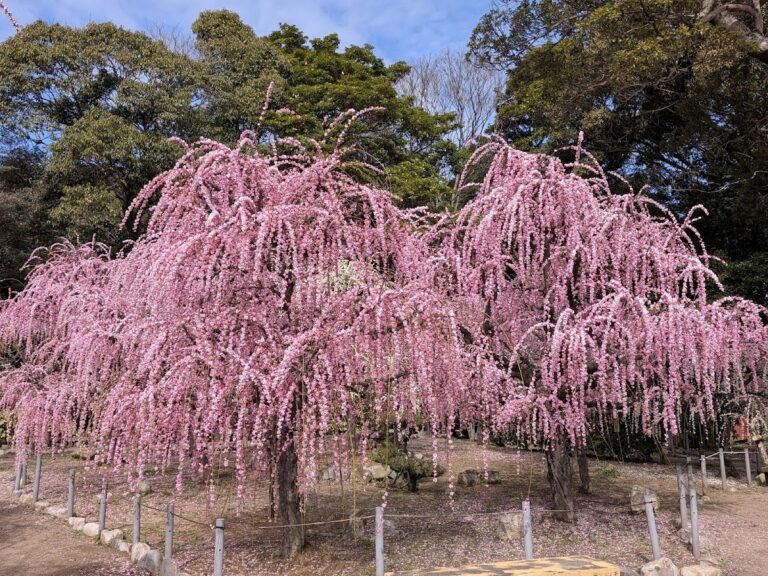
An indispensable part of discussing Yuki Shrine is the approximately 300 weeping plum trees that spread across the shrine grounds. This plum grove is one of the largest in Mie Prefecture and attracts many tourists during the plum blossom season.
Characteristics and Charm of Weeping Plum Trees
The weeping plum trees at Yuki Shrine are known for their elegant form and the beauty of their magnificent blossoms. Their branches hang down close to the ground, creating a fantastical scene of a curtain of plum blossoms when in full bloom.
In addition to approximately 300 weeping plum trees, the shrine grounds also contain about 80 trees of 10 different varieties, allowing visitors to enjoy the diverse colors and shapes of the blossoms. The sight of the white, pink, and crimson plum blossoms competing for attention is breathtaking.
Best Time to See Plum Blossoms and Blooming Status
The plum blossoms at Yuki Shrine typically begin blooming around mid-February and can be enjoyed until mid-March. The peak blooming season is from late February to early March, during which time the entire shrine grounds are adorned with plum blossoms.
Because the blooming period varies from year to year depending on weather conditions, it is recommended to check the latest blooming status on the Tsu City Tourism Association or the Tourism Mie website before visiting. During the peak blooming season, the “Weeping Plum Blossom Festival” is held, attracting many visitors.
Information on the Weeping Plum Blossom Festival
Every year, the “Weeping Plum Blossom Festival” is held at Yuki Shrine to coincide with the peak blooming season of the weeping plum blossoms. During the festival, the shrine grounds are open to the public, allowing visitors to freely stroll through the plum grove.
While the shrine grounds, normally free, become paid during the festival, the plum grove is meticulously maintained and managed, allowing visitors to appreciate the blossoms in their best condition. Opening hours are also extended from the usual 4 PM to 5 PM, allowing for a leisurely enjoyment of the plum blossoms.
It is also a popular photography spot, attracting many photography enthusiasts. The plum grove, which shows different expressions depending on the time of day—from the plums illuminated by the early morning light to the magical atmosphere at dusk—is a place you can visit again and again without getting bored.
Highlights of the Shrine Grounds | Historical and Cultural Assets and Buildings
Besides the plum grove, there are many other noteworthy sights within the grounds of Yuki Shrine.
Tombstone of Yuki Munehiro
A magnificent tombstone of Yuki Munehiro remains on the shrine grounds. This tombstone was erected at the site of Munehiro’s death and is a cultural asset of extremely high historical value. Standing before the tombstone, one can reflect on the life of a warrior who survived the turbulent Nanboku-cho period.
This place, cherished by the local people since ancient times as Yukizuka, still maintains a tranquil atmosphere and deeply moves visitors.
Japan’s Largest Bronze Komainu (Guardian Lion-Dog)
Visitors to Yuki Shrine are often surprised by the gigantic komainu (guardian lion-dogs) on the grounds. These komainu are said to be the largest bronze komainu in Japan, and their imposing presence overwhelms visitors.
The sight of the large guardian lion-dogs welcoming visitors is impressive and they have become a symbol of Yuki Shrine. It’s a popular photo spot, and many tourists take commemorative photos in front of them.
Atmosphere of the Shrine and Grounds
The shrine building, constructed in 1824 by the lord of the Tsu domain, exudes a sense of historical weight. The spacious grounds are well-maintained, and simply strolling around is a calming experience.
Upon passing through the torii gate and entering the grounds, a tranquil space unfolds, far removed from the hustle and bustle of the city, allowing visitors to pray with peace of mind. Even outside of plum blossom season, the lush green grounds are well worth a visit.
Access Information | How to Get to Yuki Shrine
Here’s how to get to Yuki Shrine.
Address and Basic Information
- Address: 2341 Fujikata, Tsu City, Mie Prefecture 514-0815
- Phone: 059-228-4806
- Opening Hours: 9:00 AM – 4:00 PM (Normal Hours)
- During the Weeping Plum Blossom Festival: 9:00 AM – 5:00 PM
- Admission Fee: Normally Free (Charged only during the Weeping Plum Blossom Festival)
Access by Train
The nearest station is Akogi Station on the JR Kisei Main Line and Ise Railway. Yuki Shrine is approximately 1 km southeast of Akogi Station, about a 15-minute walk.
The path from the station to the shrine is relatively flat, and there are signs, so even first-time visitors can arrive without getting lost. During the plum blossom season, there is a flow of people from the station to the shrine, so following them is a good option.
Access by Car and Parking
If you are visiting by car, it is about a 15-minute drive from the Tsu Interchange on the Ise Expressway. It is also easily accessible from National Route 23.
Parking is available adjacent to the shrine grounds, but it gets very crowded during the Weeping Plum Blossom Festival. Early arrival is recommended, especially on weekends and during peak blooming season. If the parking lot is full, you may be directed to a nearby temporary parking lot.
Access by Bus
If you are taking the bus from Tsu Station, it is convenient to get off at the “Yuki Shrine” bus stop on the Mie Kotsu bus. The shrine is a short distance from the bus stop. However, since the number of buses is limited, it is recommended to check the timetable in advance.
Tourist Attractions Around Yuki Shrine
When visiting Yuki Shrine, exploring the surrounding tourist attractions will allow you to experience the charm of Tsu City more deeply.
Akogiura Coast
Akogiura Coast, close to Yuki Shrine, is a beautiful coastline facing Ise Bay. This scenic spot, known as “Akogigaura” since ancient times and celebrated in waka poetry, is perfect for strolling and driving.
Historical Spots in Tsu City
Tsu City is dotted with historical tourist spots, including the Tsu Castle ruins, Tsu Kannon Temple, and Shitennoji Temple. Combining these with a visit to Yuki Shrine to create a historical tour is highly recommended.
Gourmet Spots
Tsu City is rich in seafood. “Tsu Gyoza” in particular is a famous local delicacy; these large fried dumplings are definitely worth trying. Enjoying local cuisine after visiting Yuki Shrine is a highlight of any trip.
Manners and Precautions for Visiting Shrines
When visiting Yuki Shrine, please observe the following points:
Basic Manners for Visiting Shrines
Please observe basic manners for visiting shrines. Bow before passing through the torii gate, and purify your hands and mouth at the water basin before praying. At the main hall, worship is performed using the ritual of two bows, two claps, and one bow.
Precautions during the Plum Blossom Festival
The Plum Blossom Festival is crowded with many visitors. Please be considerate of others and enjoy the plum blossoms at your leisure. Using tripods for photography may inconvenience other visitors, so please be mindful of the situation.
Breaking plum branches or entering restricted areas is strictly prohibited. To preserve the beautiful plum grove for future generations, please observe proper etiquette while viewing the blossoms.
Clothing and Belongings
Some parts of the shrine grounds are unpaved, so comfortable shoes are recommended. Since the plum blossom season is still cold, don’t forget to dress warmly.
A camera is a must-have item. Many visitors bring not only smartphones but also SLR cameras to capture beautiful photos of the weeping plum blossoms.
Annual Events and Activities at Yuki Shrine
Yuki Shrine holds various events throughout the year.
Weeping Plum Blossom Festival (Mid-February to Mid-March)
The most famous event is the “Weeping Plum Blossom Festival,” held to coincide with the peak blooming season of the plum blossoms. During this period, many tourists visit, and the shrine grounds are enveloped in a vibrant atmosphere.
Annual Grand Festival
The annual grand festival, commemorating Lord Yuki Munehiro, is also an important annual event. A solemn Shinto ritual is performed, honoring Lord Munehiro’s achievements.
Seasonal Appearances of the Shrine Grounds
Besides the plum blossom season, you can enjoy the changing seasons, including the fresh greenery of spring and the vibrant autumn foliage. Yuki Shrine, with its different appearances in each season, offers new discoveries with every visit.
Yuki Shrine’s Goshuin (Shrine Seal) and Amulets
About Goshuin (Shrine Seals)
Yuki Shrine offers Goshuin. You can apply at the shrine office and receive a valuable Goshuin as one of the fifteen shrines of the Kenmu Restoration. Bringing your Goshuincho (seal book) is a good idea to receive one as a memento.
Amulets and Souvenirs
At the shrine office on the grounds, you can receive various amulets and souvenirs. Amulets are available to fulfill various wishes, such as success in exams, traffic safety, and family safety.
Reasons to Visit Yuki Shrine
Yuki Shrine is a representative tourist spot in Mie Prefecture, where historical value and natural beauty harmonize.
Value for History Enthusiasts
As a shrine dedicated to Yuki Munehiro, who played an active role during the crucial turning point in Japanese history known as the Nanboku-cho period, it is a must-see spot for history lovers. You can reflect on the great historical undertaking of the Kenmu Restoration.
Attraction for Nature Lovers
The sight of approximately 300 weeping plum trees in full bloom will captivate those who love the beauty of nature. During plum blossom season, you can have a fantastical experience as if you’ve wandered into another world.
As a Photography Spot
With its elegant weeping plum trees, Japan’s largest bronze guardian lion statues, and historic shrine buildings, Yuki Shrine offers no shortage of subjects to photograph, making it a treasure trove for photography enthusiasts. Especially during plum blossom season, many photographers, both professional and amateur, visit the shrine.
Seeking Healing for the Soul
Away from the hustle and bustle of the city, you can find peace of mind in the quiet grounds. A stroll surrounded by the fragrance of plum blossoms will be a healing time that will make you forget the stresses of everyday life.
Summary | Experiencing the Harmony of History and Nature at Yuki Shrine
Yuki Shrine is a historical shrine dedicated to Yuki Munehiro, a meritorious retainer of the Kenmu Restoration, and is one of Mie Prefecture’s leading plum blossom viewing spots, boasting approximately 300 weeping plum trees. Located in the Fujikata district of Tsu City, Mie Prefecture, its easy accessibility—about a 15-minute walk from Akogi Station—is also a major draw.
The “Weeping Plum Blossom Festival,” held annually from mid-February to mid-March, offers a spectacular view of the magnificent weeping plum blossoms and attracts many tourists. Even outside of plum blossom season, there are plenty of other attractions, including historically valuable tombstones and Japan’s largest bronze guardian lion-dogs.
This is a tourist spot recommended for a wide range of people, from those interested in history and those who love the beauty of nature to photography enthusiasts and those seeking spiritual healing. When you visit Tsu City, be sure to stop by Yuki Shrine and experience this special space where history and nature harmonize.
Strolling through the shrine grounds, surrounded by beautiful weeping plum trees, while remembering the achievements of Yuki Munehiro, who served Emperor Go-Daigo and contributed to the establishment of the Kenmu Restoration, will surely create an unforgettable memory.