
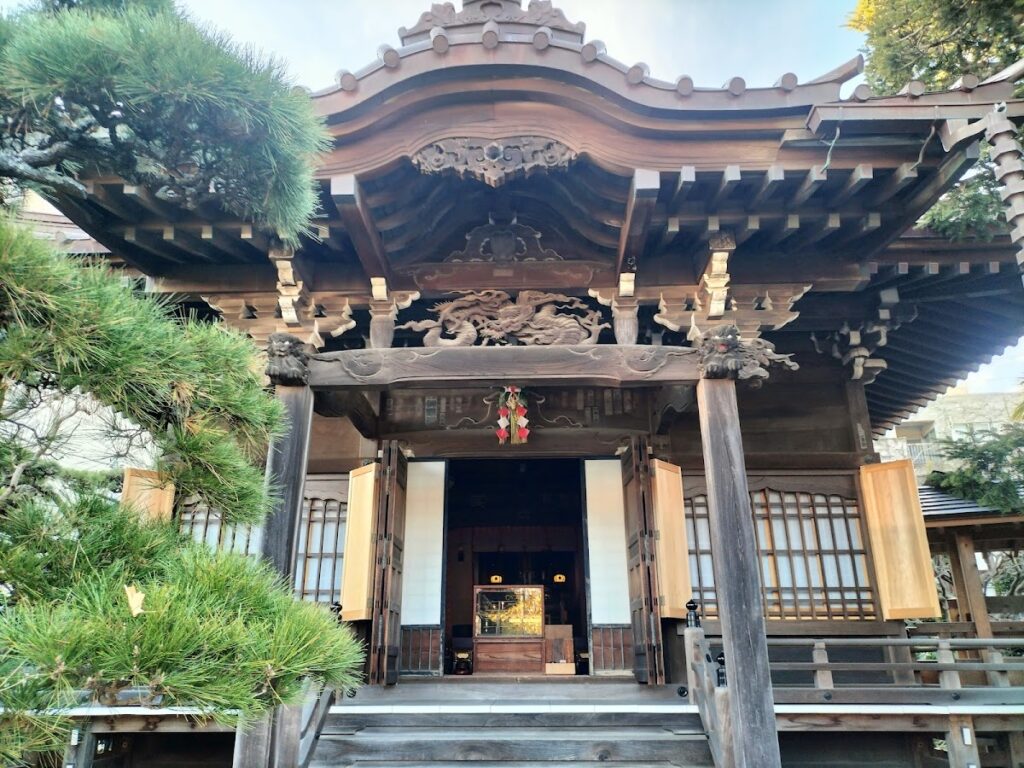
Daigyoji Temple Complete Guide | Kamakura’s “Onme-sama”: History, Access, and Flower Highlights for Safe Childbirth Prayers
Located just a 3-minute walk from Kamakura Station, Daigyoji Temple, affectionately known as “Onme-sama,” is a special temple visited by pregnant women from all over Japan praying for safe childbirth. As a temple specializing in prayers for safe childbirth without a parishioner base, it attracts visitors not only from across Japan but also from overseas. Visitors are greeted by history related to Minamoto no Yoritomo, the legend of the goddess of childbirth, and seasonal flowers.
This article comprehensively introduces everything you need to know before visiting Daigyoji Temple, from its historical background to how to worship, access information, and highlights within the temple grounds.
What is Daigyoji Temple? The Origin and Characteristics of “Onme-sama”
Daigyo-ji Temple is an independent Nichiren Buddhist temple located in Komachi, Kamakura City, Kanagawa Prefecture. The most distinctive feature of Daikoji Temple is that it does not have a specific group of parishioners and specializes in prayers for safe childbirth. This type of temple is extremely rare nationwide, highlighting Daikoji’s unique character.
The friendly nickname “Onme-sama” is a corruption of “Oubume-sama” (a woman who gives birth). This name itself speaks to the long history of Daikoji Temple being cherished by the local community as a guardian deity of safe childbirth.
The temple grounds are not particularly large, but the cozy space is filled with a warm and gentle atmosphere, enveloped in a happy aura that envelops expectant mothers and their families. People seeking safe childbirth amulets and maternity belts constantly visit, and the maternity belt amulet distribution area on the temple grounds is always bustling with activity.
History of Daikoji Temple | Deep Connection with Minamoto no Yoritomo and the Origin of the Temple Name
From Daigyoji Temple to Daikoji Temple | Renaming in Remembrance of Minamoto no Yoritomo’s Great Victory
The history of Daikoji Temple dates back to the Kamakura period. Originally, this temple was located in the Juniso area of Kamakura and existed as a Shingon Buddhist temple called “Daigyoji.”
The temple’s name changed to “Daikoji” due to a historical episode involving Minamoto no Yoritomo. It is said that Yoritomo held a military council (strategy meeting) at Daigyoji and achieved a great victory in the subsequent battle, and therefore, the temple was renamed “Daikoji” in recognition of this auspicious event. The character “Takumi” (巧) implies the successful execution of a strategy or plan, and also serves to praise Yoritomo’s skills as a military commander.
Relocation to the Current Location and Conversion to the Nichiren Sect
Later, in 1320 (Gen’ō 2), Daikoji relocated to its current location in Komachi, Kamakura City. Its current location, nestled between Wakamiya-oji and Komachi-oji, is an excellent spot along the approach to Tsurugaoka Hachimangu Shrine from Kamakura Station.
The temple is believed to have been founded by Nichijō, and it is thought to have converted to the Nichiren sect around this time. Its former head temple was Myōhonji in Hikigaya, and it played a vital role in the network of Nichiren sect temples in Kamakura.
The Legend of Onme-sama, the Goddess of Childbirth | The Origin of Safe Childbirth Beliefs
There is a moving legend behind Daikōji Temple’s reputation as a temple for prayers for safe childbirth.
The 5th Chief Priest, Nichitō Shōnin, and the Spirit of the Childbirthed Woman
During the time of Nichitō Shōnin, the 5th chief priest of Daikōji Temple, a woman lost her life in childbirth. Nichitō Shōnin deeply pityed the spirit of this woman who met such an unfortunate end and performed a lavish memorial service. To prevent similar tragedies from happening again, he enshrined the woman’s spirit as the Goddess of Childbirth on the temple grounds.
This Goddess of Childbirth is the origin of “Onme-sama,” and since then, Daikōji Temple has attracted people’s faith as a guardian deity of safe childbirth. The compassionate actions of Nichito Shonin, who comforted the spirit of a woman who died in childbirth and transformed her into a guardian of safe delivery, form the foundation of the faith in safe childbirth that continues to this day.
Pregnant Women Visiting from All Over Japan
Currently, Daikoji Temple receives requests for prayers for safe childbirth not only from all over Japan but also from Japanese pregnant women living overseas. For those unable to visit in person, the temple also offers services such as mailing out maternity belts, continuing to receive the wishes for safe childbirth from many people across generations.
Visiting the temple grounds, you’ll constantly see pregnant women with large bellies, their families, and those offering thanks after a safe delivery, creating a unique atmosphere filled with the joy of new life’s arrival.
Highlights of Daikoji Temple | Seasonal Flowers and Strolling Through the Temple Grounds
A Hidden Flower Spot in Kamakura
While Daikoji Temple is famous as a temple for prayers for safe childbirth, it is also known as a hidden flower spot in Kamakura. In the quaint temple grounds, a wide variety of flowers, lovingly cultivated by the head priest, bloom throughout the four seasons.
In addition to classic flowering trees such as camellias, hydrangeas, and beautyberry, various wildflowers are planted depending on the season, delighting the eyes of visitors. While it lacks the grandeur of a large temple, its small size allows for an intimate appreciation of each individual flower.
Spring Flowers
In spring, camellias and plum blossoms adorn the temple grounds. The camellias, in particular, come in many varieties, blooming one after another from early to late spring. In contrast to the hustle and bustle around Kamakura Station during cherry blossom season, the temple grounds offer a quiet space to feel the arrival of spring.
Colors of Early Summer and Summer
In early summer, hydrangeas and other hydrangeas are in full bloom. While Kamakura is known for its hydrangeas, the hydrangeas at Daikoji Temple possess a simple beauty that is not commercialized. In summer, crape myrtle trees also bloom.
Autumn Scenery
In autumn, the purple berries of the Japanese beautyberry are beautiful, and you can also enjoy the seven autumn flowers. During the autumn foliage season, the trees in the temple grounds change color, creating a tranquil autumn atmosphere.
Winter Serenity
Winter is a season with few flowers, but winter camellias and daffodils bloom, adding color to the quiet temple grounds. These flowers, which convey a sense of vitality even amidst the winter barrenness, give hope to worshippers praying for a safe delivery.
How to Pray for a Safe Delivery | About the Distribution of Amulets and Maternity Belts
Distribution at the Safe Delivery Maternity Belt Amulet Distribution Center
Prayers for a safe delivery at Daikoji Temple are conducted at the safe delivery maternity belt amulet distribution center located within the temple grounds. Here, you can receive safe delivery amulets and maternity belts.
It is customary to start wearing the maternity belt on the Day of the Dog in the fifth month of pregnancy. Dogs are considered a symbol of safe childbirth because they are prolific yet give birth easily. The maternity belts at Daikoji Temple are believed to be blessed by the goddess of childbirth and are revered by many pregnant women.
Etiquette for Visiting
When visiting, first, clasp your hands together in the main hall and pray for a safe delivery. Afterward, you will receive a charm and maternity belt at the maternity belt distribution office. No special reservations are required, but it can get crowded on the Day of the Dog and on weekends.
Custom of Giving Thanks
After a safe delivery, it is customary to visit the temple to give thanks. Visiting with your baby and offering gratitude to the goddess of childbirth is a common sight at Daikoji Temple. This culture of giving thanks is one of the factors that fills Daikoji Temple with a warm and happy aura.
Access and Basic Information | Conveniently located a 3-minute walk from Kamakura Station
Access by Train
One of the greatest attractions of Daikoji Temple is its easy accessibility. Approximately 3 minutes on foot from the East Exit of Kamakura Station on the JR Yokosuka Line and Shonan Shinjuku Line
Approximately 3 minutes on foot from Kamakura Station on the Enoshima Electric Railway
After exiting the East Exit of Kamakura Station, walk a short distance towards Wakamiya-oji Street, and you will find the entrance to Daikoji Temple near the entrance to Komachi Street. Its convenient location makes it easy to incorporate into a Kamakura sightseeing itinerary, as it can be visited on the way to Tsurugaoka Hachimangu Shrine.
Location
1-9-28 Komachi, Kamakura City, Kanagawa Prefecture 248-0006
Visiting Hours
The temple grounds are generally open for free visits during the daytime. The opening hours for the maternity belt amulet are generally from 9:00 AM to around 4:00 PM, but it is recommended to check the details in advance.
Admission Fee
Entry to the temple grounds is free. There is a separate fee for amulets and maternity belts.
Parking
There is no dedicated parking lot for Daikoji Temple. If you are coming by car, you will need to use a paid parking lot near Kamakura Station. However, the area around Kamakura Station gets very crowded during tourist season and on weekends, so we recommend using public transportation.
Considering the health of pregnant women, the location close to the station is a major advantage. The short walking distance and reduced physical strain allow for a worry-free visit.
Nearby Tourist Spots | Kamakura Landmarks to Visit Along with Daikoji Temple
Komachi Street
Just a short walk from Daikoji Temple is Komachi Street, one of Kamakura’s representative shopping streets. Lined with food stalls and souvenir shops, it’s a bustling hub for Kamakura tourism. A visit before or after your temple visit will allow you to fully enjoy the Kamakura atmosphere.
Tsurugaoka Hachimangu Shrine
Approximately a 10-minute walk north from Daikoji Temple along Wakamiya-oji Street will take you to Tsurugaoka Hachimangu Shrine, one of Kamakura’s representative shrines. As a shrine associated with Minamoto no Yoritomo, visiting both Daikoji Temple and Tsurugaoka Hachimangu Shrine will allow you to experience Kamakura’s history more deeply.
Honkaku-ji Temple
This Nichiren Buddhist temple is located about a 5-minute walk from Daiko-ji Temple. It houses the Ebisu Hall, known as the “God of Business Prosperity,” and is bustling with many visitors during the New Year’s Ebisu festival.
Myohon-ji Temple
Myohon-ji Temple, the former head temple of Daiko-ji Temple, is about a 15-minute walk away. It is a temple associated with the Hiki clan and is a hidden gem with a quiet grounds and beautiful nature that changes with the seasons.
Points to Note and Manners When Visiting Daiko-ji Temple
Consideration for Pregnant Women
Daiko-ji Temple is a temple for prayers for safe childbirth, so many pregnant women visit the grounds. When visiting, please be considerate of pregnant women. It is important to be kind and considerate, such as yielding the right of way during crowded times and moving at a slow pace.
Regarding Photography
Photography is generally permitted on the temple grounds, but please be considerate of the privacy of other visitors. In particular, be careful not to include pregnant women or their families in your photos. Also, please follow the signs as photography is prohibited in some areas, such as inside the main hall.
Respectful Worship
The temple grounds are small and sound easily echoes. Please refrain from loud conversations and noisy behavior, and pray quietly. Be mindful that this is a sacred place for praying for safe childbirth.
Annual Events and Special Days at Daikoji Temple
Visiting on the Day of the Dog
The most important day for praying for safe childbirth is the “Day of the Dog.” Many pregnant women visit the temple on the Day of the Dog, which occurs once every 12 days. Because it is customary to start wearing a maternity belt on the Day of the Dog in the fifth month of pregnancy, the area where safe childbirth belts and amulets are given out is especially crowded on this day.
We recommend visiting with plenty of time to spare. Also, prayers for safe childbirth are possible on days other than the Day of the Dog, so you can choose a day to visit according to your physical condition and convenience.
Seasonal Buddhist Services
Daikoji Temple holds various Buddhist services throughout the year. For detailed schedules, please check the official website or contact the temple directly.
Enjoying the Charms of Daikoji Temple to the Fullest
Weekday Mornings Recommended
If you want to avoid crowds and visit at a leisurely pace, weekday mornings are recommended. Especially on the Day of the Dog, weekends, and during peak tourist seasons, it gets crowded, so those who want to enjoy a quiet atmosphere should choose weekdays.
Different Views with Seasonal Visits
Daikoji Temple is a temple where you can enjoy flowers of all four seasons. Visiting not just once, but in different seasons, allows you to enjoy different views. Camellias in spring, hydrangeas in early summer, and purple beautyberry in autumn—each season has its own unique beauty.
As a Starting Point for Kamakura Exploration
Taking advantage of its convenient location near Kamakura Station, Daikoji Temple is also recommended as a starting point for exploring Kamakura. After calming your mind here, heading to Tsurugaoka Hachimangu Shrine or Komachi Street will make for a more fulfilling Kamakura sightseeing experience.
Summary | Daikoji Temple: A Warm Temple Watching Over the Birth of Life
Daikoji Temple, conveniently located just a 3-minute walk from Kamakura Station, offers a special, tranquil, and warm space away from the hustle and bustle of the city.
With a history connected to Minamoto no Yoritomo, it has served as a place of worship for centuries, receiving the prayers of many people for safe childbirth as “Onme-sama,” the goddess of childbirth. Its unique form, specializing solely in prayers for safe childbirth without having parishioners, clearly demonstrates the temple’s individuality and mission.
The temple grounds, adorned with seasonal flowers, soothe the hearts of visitors and bloom beautifully as if to celebrate the birth of new life. Though small, it is filled with great love and compassion, gently enveloping all who visit.
Daikoji Temple is a temple worth visiting not only for pregnant women praying for a safe delivery, but also for those interested in Kamakura’s history and culture, flower lovers, and anyone seeking a peaceful retreat.
When you visit Kamakura, be sure to stop by Daikoji Temple and experience the warm protection of Ubume-no-Reijin and the beauty of the flowers blooming on its grounds. There, a special space awaits you, where the preciousness of life and the kindness of people breathe life into the atmosphere.

