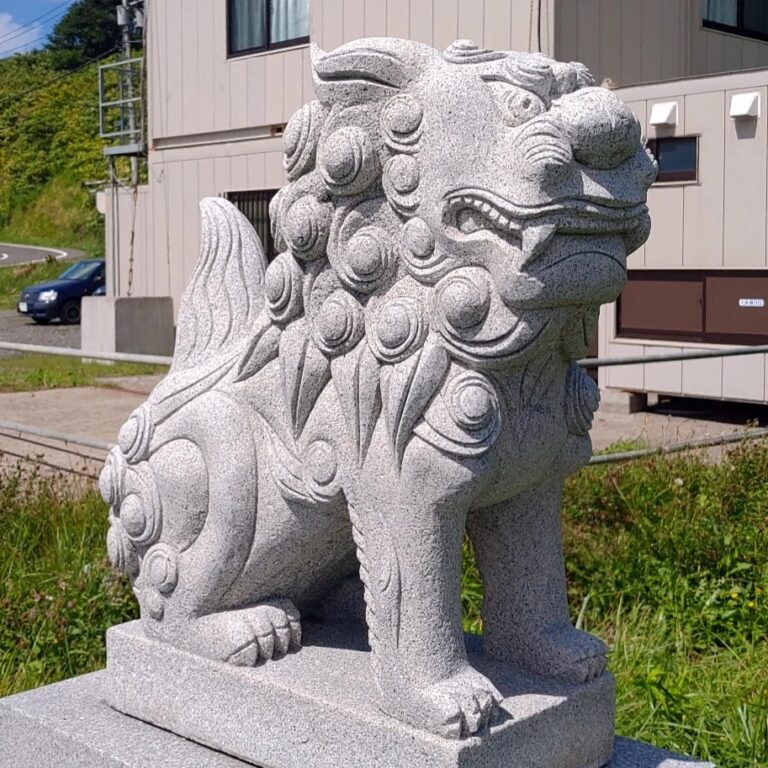
Ebisu Shrine (Tomari Village, Koyu District, Hokkaido) Complete Guide | History, Deities, Access, and Visiting Information
Located in Tomari Village, Koyu District, under the jurisdiction of the Shiribeshi General Subprefectural Bureau of Hokkaido, Ebisu Shrine is a historic shrine that has protected the Kayanuma district, which flourished as a fishing town. It enshrines Kotoshironushi-no-kami and attracts the faith of local people praying for business prosperity and maritime safety. This article provides a thorough explanation of Ebisu Shrine, including detailed information, historical background, and points to consider when visiting.
Basic Information on Ebisu Shrine
Ebisu Shrine is a shrine belonging to the Shiribeshi Branch of the Hokkaido Shrine Association and is located in the Kayanuma district of Tomari Village.
Location and Contact Information
- Location: 140 Kayanuma, Tomari-mura, Koyu-gun, Hokkaido (Registered address with the Hokkaido Shrine Association)
- Alternative Address: 468 Kayanuma-mura, Tomari-mura, Koyu-gun, Hokkaido (Information from visitors)
- Telephone Number: 0135-75-2145
- Former Shrine Rank: Village Shrine
Shrine Building and Grounds Size
- Shrine Building Style: Shinmei-zukuri
- Shrine Building Area: 35 tsubo (approx. 115.7 square meters)
- Grounds Area: 200 tsubo (approx. 661.2 square meters)
- Number of Parishioner Households: Approximately 200 households
- Number of Worshippers: Approximately 250 people
Currently, the shrine is operated unmanned, and daily management is carried out by local parishioners.
Deity and Divine Virtues
Kotoshironushi-no-Kami
The deity enshrined at Ebisu Shrine is Kotoshironushi-no-Kami. In Japanese mythology, Kotoshironushi-no-Kami is considered a son of Ōkuninushi-no-Kami and is known for playing a crucial role in the transfer of the land.
He is commonly known as “Ebisu-sama” and is worshipped as one of the Seven Lucky Gods. Kotoshironushi-no-Kami is often depicted holding a fishing rod and a sea bream, and is believed to possess the following divine virtues:
Main Divine Virtues
- Business Prosperity: As the god of commerce, he protects businesses and ensures success.
- Protection of Fisheries: As the god of the sea, he prays for abundant catches and safety at sea.
- Abundant Harvest: He prays for agricultural development and bountiful harvests.
- Family Safety: He prays for peace and prosperity in the home.
- Good Fortune and Prosperity: He brings good luck and blessings.
Tomari Village is a fishing town facing the Sea of Japan, and Ebisu Shrine has long been revered by local fishermen and businesspeople.
History of Ebisu Shrine and the Kayanuma District of Tomari Village
Origins of Tomari Village
The name of Tomari Village originates from the Ainu words “Moire-Tomari” (quiet anchorage). This region, with its natural harbor, has long developed as a key point for fishing and maritime transport.
The Kayanuma district was one of the central areas of Tomari Village and flourished greatly from the Meiji to Taisho periods, when herring fishing was thriving. The Ebisu Shrine was the center of faith that supported this prosperity.
Ebisu Faith and Hokkaido Development
Ebisu faith in Hokkaido was brought by immigrants from Honshu. In particular, many Ebisu shrines were built in areas where many people involved in fishing migrated, to pray for safety at sea and abundant catches.
The fact that the Ebisu Shrine was ranked as a village shrine indicates its important role in the local community as the center of faith in the Kayanuma district. A village shrine was a rank recognized as the central shrine of a village under the old shrine ranking system.
Changes Since the Modern Era
Although the population of the Kayanuma district decreased with the decline of herring fishing from the 1950s onward, the Ebisu Shrine is still carefully preserved as a part of the community’s identity. Currently, it is an unmanned shrine, but it continues to be maintained by local parishioners.
Annual Festival and Regular Events
Annual Festival Date
The Annual Festival of Ebisu Shrine is held every year on June 20th.
The annual festival is the most important festival for the shrine, a Shinto ritual held once a year to express gratitude to the enshrined deity and to pray for peace and prosperity in the region. Parishioners and worshippers from the Kayanuma district gather for the traditional festival.
Other Shinto Rituals
In addition to the annual festival, the following Shinto rituals may be held at Ebisu Shrine.
- New Year’s Day Festival (January 1st): Celebrating the New Year and praying for peace throughout the year
- Spring Festival: Praying for a bountiful spring catch and safety
- Autumn Festival: Giving thanks for the harvest and praying for safety in winter
- Great Purification Ceremony: A Shinto ritual to cleanse away the sins and impurities accumulated over the past six months
As this is an unmanned shrine, it is recommended to check with the Hokkaido Shrine Association Shiribeshi Branch or the local parishioners’ representative in advance regarding the status of the rituals.
Visiting Information and Manners
Visiting Hours
Ebisu Shrine is an unmanned shrine, so 24-hour visiting is possible. However, consideration for surrounding residents is necessary when visiting at night or in the early morning. Visiting during daylight hours is recommended.
Visiting Etiquette
We will introduce the basic etiquette for visiting a shrine.
- Bow before the torii gate: Bow lightly before entering the sacred area.
- Walking along the approach to the shrine: Walk along the sides, as the center is considered the path of the gods.
- Purification at the water basin: If there is a water basin, purify your hands and mouth.
- Worship at the main hall:
- Place your offering in the offering box.
- Ring the bell if there is one.
- Perform the two bows, two claps, one bow (bowing twice, clapping twice, bowing once).
- Bow after leaving the torii gate: Express your gratitude.
About Goshuin (Shrine Seals)
Ebisu Shrine is an unmanned shrine, therefore there are no resident priests, and Goshuin are not usually issued.
If you wish to receive a Goshuin, we recommend contacting the Hokkaido Shrine Association Shiribeshi Branch or checking with a nearby shrine that may be managed by the same priest. However, policies vary by shrine, so prior confirmation is essential. ### About Amulets and Talismans
As this is an unmanned shrine, there is no permanent office for distributing amulets or talismans. They may be distributed during special Shinto rituals, so it’s best to visit during festivals or other special occasions.
Access Information
Location
140 Kayanuma, Tomari-mura, Koyu-gun, Hokkaido (or 468 Kayanuma-mura)
Access by Public Transportation
Using Chuo Bus:
- Take the Chuo Bus bound for “Kayanuma” from Iwanai Bus Terminal
- Get off at the “Kayanuma” bus stop and walk for a few minutes
- Travel time: Approximately 30 minutes
Since bus service is limited, we strongly recommend checking the timetable in advance. Service may be reduced, especially during winter.
Access by Car
From Sapporo:
- From Otaru IC on the Sapporo-Otaru Expressway, take National Route 5 and National Route 229.
- Travel time: Approximately 2 hours 30 minutes.
- Distance: Approximately 120 km.
From Hakodate:
- Via National Route 5 and National Route 229.
- Travel time: Approximately 4 hours.
From Otaru/Iwanai:
- Take National Route 229 towards Tomari Village.
- Approximately 30 minutes from Iwanai.
Parking
There is no clear information regarding a dedicated parking lot for the shrine. When visiting, please be considerate and park in a location that does not inconvenience the neighbors. Please also consider using the public parking spaces in the Kayanuma area.
Tips for Setting Your Car Navigation System
Please search using the phone number “0135-75-2145” or the address “140 Kayanuma, Tomari Village, Koyu District, Hokkaido”. However, older address formats may not display the exact location, so it is recommended to check the location on a map app beforehand.
Nearby Attractions and Tourist Spots
Tourist Facilities in Tomari Village
Tomarin-kan (Tomari Village Community Center): A hub for disseminating cultural and tourist information about Tomari Village. You can learn about the local history and culture.
Sakazuki Onsenkyo: A hot spring resort located within Tomari Village. Known for its spectacular views of the Sea of Japan.
Bentenjima: A small island near the coast of the Kayanuma area. Known as a scenic spot.
Nearby Shrines and Temples
There are many other historical shrines scattered throughout Tomari Village and surrounding municipalities. Those who enjoy visiting shrines should check the information on shrines in the Shiribeshi branch on the Hokkaido Shrine Association website.
Tomari Nuclear Power Plant PR Facility “Tomarin-kan”
Tomari Village is known as the only village in Hokkaido with a nuclear power plant. You can learn about energy at the PR facility.
Climate of Tomari Village and Clothing for Visiting the Shrine
Seasonal Climate
Spring (April-June):
- Temperature: Around 5°C-15°C
- Snowmelt progresses, and it gradually becomes warmer
- June, when the annual festival is held, is a relatively pleasant time.
Summer (July-September):
- Temperature: Around 15°C-25°C
- A refreshing summer typical of Hokkaido
- A season when the sea breeze is pleasant.
Autumn (October-November):
- Temperature: Around 5°C-15°C
- A time when the autumn leaves are beautiful
- There is a possibility of the first snow in November.
Winter (December-March):
- Temperature: Around -5°C-5°C
- Heavy snowfall and severe cold
- Strong seasonal winds from the Sea of Japan
Clothing Advice for Visiting the Shrine
- Spring/Autumn: A thick jacket is necessary. Because it can be windy, a windbreaker is useful.
- Summer: Short sleeves are fine during the day, but it gets chilly in the mornings and evenings, so bring something to wear over your clothes.
- Winter: Complete cold weather protection is essential. Wear warm clothing, gloves, a hat, and non-slip shoes.
About the Hokkaido Shrine Association and its Shiribeshi Branch
Role of the Hokkaido Shrine Association
The Hokkaido Shrine Association is a religious corporation that encompasses shrines throughout Hokkaido and functions as a local branch of the Association of Shinto Shrines. It oversees approximately 600 shrines in Hokkaido and carries out the following activities:
- Support for the operation and management of shrines
- Training and education of Shinto priests
- Guidance on Shinto rituals and festivals
- Promotion of Shinto culture
- Collaboration with local communities
Shrines of the Shiribeshi Branch
The Shiribeshi Branch to which Ebisu Shrine belongs has jurisdiction over shrines within the jurisdiction of the Shiribeshi General Subprefectural Bureau. Many shrines belong to this region, mainly along the Sea of Japan coast, including Iwanai Town, Kyowa Town, Tomari Village, Kaminai Village, and Shakotan Town.
The Shiribeshi region is characterized by a large number of shrines dedicated to sea gods, such as Ebisu Shrine, due to its thriving fishing industry.
Significance of Visiting Ebisu Shrine
Inheritance of Local Beliefs
Ebisu Shrine is a valuable presence that conveys the history and culture of the Kayama district of Tomari Village. From the era when herring fishing prospered to the present day, it has been protected as the center of faith for the local people.
Even though it is now an unmanned shrine, it is carefully maintained by the local parishioners. Visiting the shrine provides an opportunity to connect with the history and culture of this region and reflect on the lives of our ancestors.
Prayers for Business Prosperity and Maritime Safety
Ebisu Shrine, which enshrines Kotoshironushi-no-kami, holds special significance for those who pray for business prosperity and maritime safety. This is a place of spiritual support for those involved in the fishing industry, as well as business owners and those starting new ventures.
A Quiet Space for Prayer
The tranquility unique to an unmanned shrine, and the environment surrounded by the natural beauty of the Sea of Japan, are ideal for calming the mind and offering prayers. It allows you to escape the hustle and bustle and have time to reflect on yourself.
Precautions and Manners for Visiting
Guidelines for Visiting an Unmanned Shrine
- Keep it Clean: Always take your trash with you.
- Be Quiet: Refrain from loud conversations and noise.
- Photography Manners: Photography is permitted, but remember that this is a sacred place.
- Consideration for Private Property: The area around the shrine is a residential area. Please be considerate of residents.
- Protection of Facilities: Please be careful not to damage the buildings or equipment.
Visiting in Winter
Hokkaido winters bring heavy snowfall, and Tomari Village, in particular, is a heavy snowfall area unique to the Sea of Japan side. Please note the following points when visiting in winter.
- Check road conditions in advance
- Wear non-slip winter boots
- Access to the shrine grounds may be difficult depending on snow removal conditions
- Avoid visiting on blizzard days
- Studded tires are essential when visiting by car
Summary: Visiting Ebisu Shrine
Ebisu Shrine in Tomari Village, Koyu District, Hokkaido, is a shrine deeply rooted in the community, dedicated to Kotoshironushi-no-kami and revered as the guardian deity of business prosperity and maritime safety. It holds the status of a former village shrine and is a valuable presence that conveys the history and culture of the Kayanuma area.
Although it is an unmanned shrine, the Shinto-style shrine building is carefully preserved by local parishioners, welcoming visitors to a quiet space for prayer. The annual festival is held on June 20th, and it continues to function as a center of local faith.
While access by public transport is somewhat inconvenient, it can be reached by car in about 2 hours and 30 minutes from Sapporo, enjoying the beautiful scenery of the Sea of Japan along the way. Visiting Ebisu Shrine in conjunction with sightseeing in Tomari Village will make for a more fulfilling experience.
For those who enjoy visiting shrines in Hokkaido, those interested in Ebisu worship, and those who want to experience the history and culture of Tomari Village, Ebisu Shrine is well worth a visit. Why not offer a peaceful visit while feeling the breeze of the Sea of Japan?