Enmanji Temple (Fuki-no-mon Gate) Complete Guide | Visiting the Valuable Remains of Kakegawa Castle [Kakegawa City, Shizuoka Prefecture]
Enmanji Temple, located in the heart of Kakegawa City, Shizuoka Prefecture, is a historic temple that boasts the “Fuki-no-mon Gate,” one of the few remaining structures of Kakegawa Castle, as its main gate. This gate, which conveys the architecture of an Edo-period castle, is protected as a Kakegawa City designated cultural property and attracts attention from history enthusiasts and castle fans.
This article comprehensively introduces information you should know before visiting, including the historical background, architectural features, access methods, and surrounding tourist spots of Enmanji Temple and the Fuki-no-mon Gate.
About Enmanji Temple (Fuki-no-mon Gate)
Basic Information about Enmanji Temple
Enmanji Temple belongs to the Jodo Shinshu Otani sect, and its principal image is Amida Buddha. It is located in the Kakegawa district of Kakegawa City, and is conveniently located about a 10-minute walk from JR Kakegawa Station. The temple itself has a long history and has long been cherished as a center of local faith.
The Origin and Historical Value of the Fuki-no-mon Gate
The “Fuki-no-mon Gate,” currently used as the main gate of Enmanji Temple, was originally a castle gate located within Kakegawa Castle. It is said that the gate’s name originates from its location on the edge of the lotus pond, the inner moat of Kakegawa Castle, in an area where butterbur (fuki) grew abundantly.
Kakegawa Castle played an important role as a strategic point on the Tokaido road from the Sengoku period to the Edo period, but it was abolished in 1872 (Meiji 5) due to the castle demolition decree following the Meiji Restoration. While many castle buildings were demolished or sold at that time, Enmanji Temple purchased the Fuki-no-mon Gate and relocated it to its current location.
Very few remains of Kakegawa Castle still exist, and the Fuki-no-mon Gate is a valuable cultural asset that conveys the castle architecture of that time, and is designated as a cultural property of Kakegawa City.
Architectural Features of Fuki-no-mon Gate
Structure as a Four-Legged Gate
Fuki-no-mon Gate is a gate of the “four-legged gate” type. A four-legged gate refers to a gate composed of a total of six pillars: two main pillars and two supporting pillars on each side. Although a relatively small gate with one bay and one entrance, it was a highly formal style used in castles and temple architecture.
Roof and Architectural Style
The roof is a gable roof covered with flat tiles, presenting a simple yet dignified appearance. The gable roof is one of the most basic roof styles in Japanese architecture, characterized by its triangular shape where two sloping surfaces meet at the ridge.
The detailed design, which conveys the architectural techniques of the late Edo period, is also a highlight. The timber framing techniques and decorative styles demonstrate the high skill level of the craftsmen of that time.
Role within Kakegawa Castle
When it was located within Kakegawa Castle, the Fuki Gate was situated at the southeastern corner of the lotus pond, which was the inner moat on the east side of the second bailey. It was located on a route leading from major gates such as the Otemon Gate and Nitomon Gate to key areas of the castle, including the main bailey, second bailey, and third bailey. Though small, it played a crucial defensive role.
Because it was positioned on a route leading from the samurai district outside the castle to the central area inside, it is believed to have functioned as a means of monitoring and managing the comings and goings of samurai and officials.
Highlights of Enmanji Temple
Main Hall and Temple Grounds
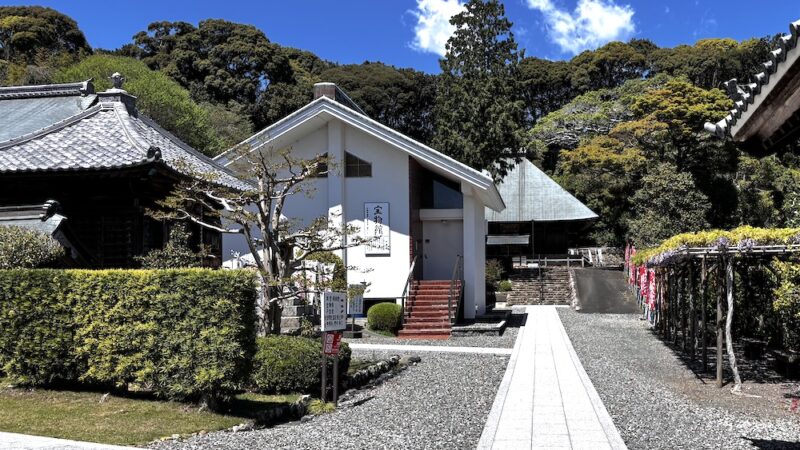
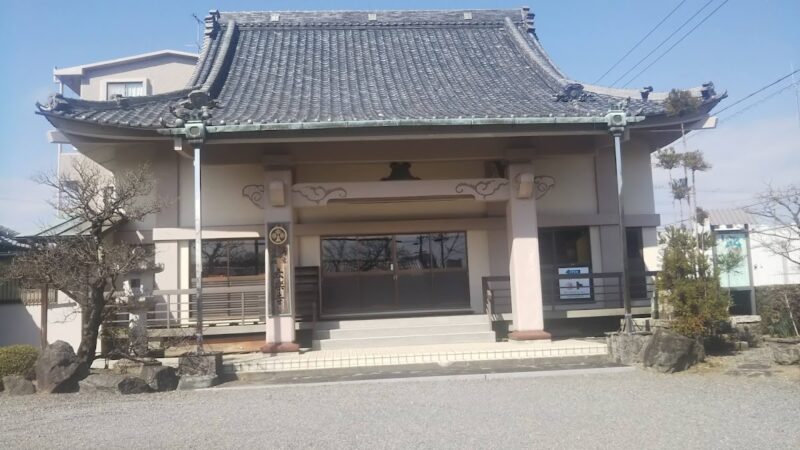
Passing through the Fuki Gate, you enter a temple grounds enveloped in a tranquil atmosphere. The main hall has a calm appearance typical of a Jodo Shinshu Buddhist temple, and enshrines Amida Buddha as its principal image. The temple grounds are meticulously maintained, providing a peaceful space for visitors.
Historical Stone Monuments and Information Boards
Within the temple grounds, there are information boards explaining the origin and history of the Fuki Gate, allowing visitors to learn in detail about the gate’s historical background and architectural features. Stone monuments indicating its connection to Kakegawa Castle are also placed throughout the grounds, conveying the weight of history in this area.
Seasonal Scenery
The grounds of Enmanji Temple show different expressions with each season. Cherry blossoms bloom in spring, the greenery deepens in summer, and autumn leaves color the grounds. The temple grounds, enveloped in the silence of winter, are also deeply atmospheric, making it worth visiting throughout the year.
Access and Basic Information
Access by Train
Approximately 10 minutes on foot from JR Kakegawa Station
The nearest station is JR Kakegawa Station, where the Tokaido Shinkansen and Tokaido Main Line stop. Exit from the north exit of the station and follow the road towards Kakegawa Castle to reach Enmanji Temple. Visiting Kakegawa Castle together is recommended.
Access by Car
Approximately 10 minutes from Kakegawa IC on the Tomei Expressway
After exiting the Kakegawa IC, proceed towards National Route 1 and head towards Kakegawa city center. There are several paid parking lots around Kakegawa Castle, from which you can access the temple on foot.
Parking Information
Since parking for Enmanji Temple is limited, it is convenient to use public parking lots around Kakegawa Castle. Kakegawa Castle Park Parking Lot and municipal parking lots are available.
Visiting Information
- Address: Kakegawa, Kakegawa City, Shizuoka Prefecture
- Visiting Hours: Grounds are freely accessible (please check for viewing the interior of the main hall)
- Admission Fee: Free (viewing of the grounds and Fuki-no-mon Gate)
- Closed Days: None
- Inquiries: Kakegawa City Tourism Association or Enmanji Temple
*Please note that visits may be closed due to temple events, etc. It is recommended to check in advance.
Nearby Tourist Attractions
Kakegawa Castle
Approximately 5 minutes on foot
Kakegawa Castle is the closest tourist attraction to Enmanji Temple. Restored in 1994 as Japan’s first “authentic wooden castle tower,” Kakegawa Castle’s keep is a representative castle of the Tokai area and attracts many tourists. It is also the original location of the Fuki-no-mon Gate, and visiting both together allows for a deeper understanding of Kakegawa Castle’s history.
Kakegawa Castle Palace (National Important Cultural Property)
Approximately 5 minutes on foot
The palace located within the grounds of Kakegawa Castle is one of the few remaining castle palaces and is designated as a National Important Cultural Property. Built in the late Edo period, it served as the lord’s official residence and government office. Visitors can tour the interior and experience what a samurai residence of that time was like.
Kakegawa City Ninomaru Museum
Approximately 3 minutes on foot
This museum, built on the site of Kakegawa Castle’s Ninomaru (second bailey), exhibits a collection primarily focused on modern Japanese paintings. You can admire works by Kinoshita Seiu, known for his meticulous depictions, as well as works by local artists.
Kakegawa City Stained Glass Museum
Approximately 10 minutes on foot
This museum primarily exhibits 19th-century British stained glass. Enjoy the beautiful world of stained glass in a space utilizing a historical building.
Kakegawa Flower and Bird Park
Approximately 15 minutes by car
This theme park offers opportunities to enjoy colorful flowers and various birds. A popular spot for families, it’s often included in standard Kakegawa sightseeing itineraries.
History and Culture of Kakegawa City
As a Post Town on the Tokaido Road
Kakegawa City flourished as a post town on the Tokaido Road during the Edo period. Kakegawa-juku was the 26th post town on the Tokaido, a vital transportation hub where many travelers passed through. Even today, buildings and historical sites that retain the atmosphere of that time are scattered along the old Tokaido Road.
Atmosphere of a Castle Town
The town layout of the castle town, which developed around Kakegawa Castle, forms the basis of the current Kakegawa city center. Around Enmanji Temple, remnants of samurai residences and merchant houses can still be seen, making it an ideal area for historical walks.
Kakegawa Tea Producing Area
Kakegawa City is known as one of Japan’s leading tea producing areas. “Kakegawa Tea” is highly regarded as a representative of deep-steamed tea, and tea plantations stretch across the city. When sightseeing, tasting local tea is highly recommended.
Points and Manners for Visiting
Manners for Visiting
Enmanji Temple is an active temple and a place of worship for the local community. Please observe the following manners when visiting:
- Behave quietly within the temple grounds
- Obtain permission before taking photographs inside the main hall
- Be considerate if a memorial service or event is taking place
- Take your trash with you
Photography Points
Photography of the exterior of the Fuki Gate is permitted. The following angles are especially recommended for photography:
- Frontal view: Clearly shows the structure of the four-legged gate
- Diagonal angle: Creates depth and a sense of three-dimensionality
- Roof details: Captures the beauty of the gable roof
- View of the gate from within the temple grounds: Expresses the imposing presence of a historical building
Estimated time required
If you are only visiting Enmanji Temple and the Fuki-no-mon Gate, 20-30 minutes is a good estimate. If you want to carefully observe the architecture or spend time quietly within the temple grounds, allow about an hour. If you are visiting Kakegawa Castle as well, we recommend allocating a total of 2-3 hours for sightseeing.
Value as a Kakegawa Castle Ruins
One of the few remaining ruins
Due to the castle demolition order after the Meiji Restoration, many castles throughout Japan were dismantled. Kakegawa Castle was no exception, and many structures, including the keep, were lost. Currently, the surviving structures of Kakegawa Castle from the Edo period are extremely limited, consisting mainly of the main palace, the drum tower, and this Fuki-no-mon Gate.
Contribution to Castle Architecture Research
The Fuki-no-mon Gate is considered important in the fields of architectural history and castle research as a valuable resource that conveys the castle architecture techniques of the late Edo period. Its four-legged gate structure, the woodworking techniques of the time, and its design characteristics provide clues to inferring the scale, status, and construction date of Kakegawa Castle.
Protection of Local Cultural Properties
Kakegawa City is actively working to protect and utilize cultural properties. The city has designated the Fuki-no-mon Gate as a city-designated cultural property and continues its efforts to properly maintain and pass it on to future generations. Furthermore, the city is also focusing on regional development utilizing cultural properties, such as installing information boards and incorporating them into tourist routes.
Castle Tours in the Tokai Area
Castles in Shizuoka Prefecture
Besides Kakegawa Castle, Shizuoka Prefecture boasts numerous castle historical sites, including Hamamatsu Castle, Sunpu Castle, and Oyama Castle. A “castle tour” visiting these castles scattered along the Tokaido Road is a popular route for history enthusiasts.
Comparison of Relocated Castle Gates
Across Japan, many castle gates, like the Fuki Gate of Kakegawa Castle, were relocated to temples and shrines after the castles were abandoned. Comparing these gates allows you to learn about the characteristics of each castle and the differences in architectural techniques of the time.
The Charm of Strolling Through the Castle Town
The castle town area of Kakegawa, including the area around Enmanji Temple, is attractive for its historically preserved streetscape. A leisurely stroll, searching for Edo-period town layouts and buildings, is one way to enjoy the area.
Year-Round Enjoyment
Spring (March-May)
Cherry blossoms bloom profusely around Kakegawa Castle, making it a popular spot for cherry blossom viewing. Spring flowers bloom within the grounds of Enmanji Temple, creating a beautiful contrast between the Fuki-no-mon Gate and cherry blossoms, perfect for taking stunning photographs.
Summer (June-August)
This season is beautiful with its fresh greenery. New tea leaves are harvested in the tea fields of Kakegawa City, offering a unique tea-producing landscape. Events are sometimes held at Kakegawa Castle during the summer holidays.
Autumn (September-November)
During the autumn foliage season, the trees within the temple grounds change color, creating a beautiful landscape in harmony with the historical buildings. The weather is mild, making it an ideal season for strolling.
Winter (December-February)
With relatively few tourists, this season allows for quiet contemplation of history. The dignified presence of the Fuki-no-mon Gate stands out in the crisp winter air.
Summary: A Valuable Historical Relic
The Fuki-no-mon Gate, relocated and preserved as the main gate of Enmanji Temple, is a valuable cultural asset that conveys the Edo period castle architecture as one of the few remaining structures of Kakegawa Castle. It boasts many points of interest, including its dignified four-legged gate structure, its beautiful gabled roof with tiled roofing, and its historical significance within Kakegawa Castle.
Its convenient location, approximately a 10-minute walk from JR Kakegawa Station, makes it easily accessible in conjunction with nearby tourist attractions such as Kakegawa Castle and the Goten Palace. When visiting Kakegawa City, Shizuoka Prefecture, be sure to pass through this historic gate and experience the atmosphere of an Edo-period castle town.
This spot is recommended not only for history buffs, but also for those interested in architecture and those seeking tranquility in a peaceful temple. Why not visit Enmanji Temple (Fuki-no-mon Gate) as part of your journey to experience Kakegawa’s history and culture?