Enryuji Temple Complete Guide | History, Characteristics, and Access Information for Temples with the Same Name Nationwide
Enryuji is the name of several temples located throughout Japan. Each has its own unique history and characteristics, and has played an important role as a center of local faith. This article provides a detailed explanation of the major Enryuji temples, including their origins, sects, points of interest, and access information.
What is Enryuji Temple?
The temple name Enryuji combines the symbolic meanings of “perfection” and “dragon” in Buddhism. Dragons have long been revered as protectors of Buddhist law, and this name has been adopted by many temples. The existence of temples with the same name throughout Japan indicates that each has developed uniquely in its respective region.
Major Enryu-ji temples include Kitamukiyama Enryu-ji (Jodo Shinshu Honganji sect) in Sakai City, Osaka Prefecture; Kuramanzan Enryu-ji (Naka Ward, Hiroshima City, Hiroshima Prefecture); Ryuzuzan Enryu-ji (Yamaguchi City, Yamaguchi Prefecture); Enryu-ji (Kitakyushu City, Fukuoka Prefecture); and Enryu-ji (Kyoto City, Kyoto Prefecture). Each belongs to a different sect and possesses its own unique history and culture.
Kitamukiyama Enryu-ji (Sakai City, Osaka Prefecture)
History and Origin of Kitamukiyama Enryu-ji
Kitamukiyama Enryu-ji, located in Sakai City, Osaka Prefecture, is a temple belonging to the Jodo Shinshu Honganji sect. This temple has a long history; in the past, it was a Tendai sect temple called “Imaichi-in.”
In 1551 (Tenbun 20), it converted to Jodo Shinshu Buddhism and changed its name to “Kosetsu-ji.” This indicates that the wave of religious reform during the Sengoku period (Warring States period) reached this region. Later, in 1603 (Keicho 8), the temple’s name was changed to “Enryuji” by Shakuryoju, the restorer of the temple, and the main hall and living quarters were rebuilt.
This reconstruction in the early Edo period coincided with the establishment of the Tokugawa shogunate and marked a crucial turning point in redefining the role of temples in the new era.
Temple Initiatives
Kitamukiyama Enryuji continues to engage in activities that emphasize its connection with the local community. Particularly noteworthy is the operation of “Goen Shokudo,” a children’s cafeteria. This initiative, which embodies the Buddhist spirit of compassion in a modern form, has garnered much support.
Goen Shokudo not only provides warm meals to local children but also functions as a place for intergenerational interaction. It is a prime example of a temple acting not merely as a religious institution, but as a central hub for the local community.
Furthermore, regular memorial services and Buddhist lectures are held, and efforts to transmit the teachings of Jodo Shinshu Buddhism to the modern age continue.
Facility Information and Access
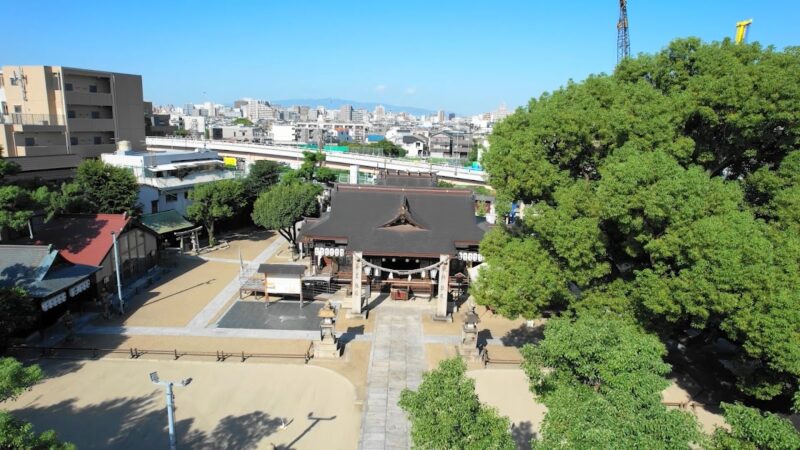
Kitamukiyama Enryuji Temple features traditional temple architecture including a main hall, priest’s quarters, and study hall. The temple grounds are enveloped in a quiet and peaceful atmosphere, providing a calming space despite its urban location.
Kuramanzan Enryuji Temple (Naka-ku, Hiroshima City, Hiroshima Prefecture)
Overview of Hiroshima Enryuji Temple
Located in Naka-ku, Hiroshima City, Hiroshima Prefecture, Kuramanzan Enryuji Temple is a Jodo Shinshu Honganji-ha temple deeply intertwined with Hiroshima’s history. This temple is an important religious facility that developed alongside the formation of Hiroshima’s castle town.
History of Enryuji Temple
The founding date of Kuramanzan Enryuji Temple is unknown, but it is said to have originally been founded as a Jishu sect temple. The temple’s original location was in Kuramitsu, Minamiya, Kami-An Village, Asa District, and this place name is the origin of the temple’s mountain name, “Kuramitsu-san.”
During the Kansho and Onin eras (1460-1469), the head priest, Kaizen, traveled to Kyoto and became a disciple of Rennyo Shonin, the restorer of the Jodo Shinshu sect. This encounter marked a turning point, and the temple converted from the Jishu sect to the Jodo Shinshu sect. Rennyo Shonin was a high-ranking priest who spread the teachings of Jodo Shinshu throughout Japan, and Kaizen becoming his direct disciple held great significance for this temple.
The Origin of Enryu-ji Temple According to “Hiroshima City History of Temples and Shrines”
According to “Hiroshima City History of Temples and Shrines,” when the Mori clan established Hiroshima, Enryu-ji Temple received land in Hirose. The construction of Hiroshima Castle by Mori Terumoto (1589) marked the beginning of Hiroshima’s urban development, and Enryu-ji Temple gained a new base during this historical turning point. Later, during the time when Fukushima Masanori became the lord of the Hiroshima domain (1600-1619), the temple was relocated to its current location. Fukushima Masanori was a samurai known as a retainer of Toyotomi Hideyoshi, and became the lord of the Hiroshima domain after the Battle of Sekigahara. This relocation is thought to have been part of a plan to develop the castle town.
The relocation of the temple was not merely a change of location, but reflected the role of temples in urban planning—namely, their defensive function and their position as a spiritual pillar for the community.
Characteristics of Enryuji Temple, Hiroshima
Enryuji Temple, located on Mount Kuramanzan, welcomes many visitors as a temple embodying the history of Hiroshima. In Hiroshima, which experienced the unprecedented tragedy of the atomic bombing, the temple has also functioned as a place of prayer for reconstruction and peace.
Regular religious services are held in the main hall, making it a place of faith for local residents. Furthermore, various activities based on the teachings of Jodo Shinshu Buddhism are carried out, and the temple continues to explore the role of temples in modern society.
Ryuzan Enryuji Temple (Yamaguchi City, Yamaguchi Prefecture)
History of Yamaguchi Enryuji Temple
Located along the Sekishu Kaido road in Miwa-cho, Yamaguchi City, Yamaguchi Prefecture, Ryuzan Enryuji Temple is a Jodo Shinshu Honganji sect temple. Its mountain name is Ryuzan, its principal image is Amida Buddha, and its head temple is Nishi Honganji Temple in Kyoto.
The temple was founded by Myojo-ni (childhood name: Haruko), the sister of Ouchi Norihiro, the 28th head of the Ouchi clan. The Ouchi clan was a powerful daimyo family that ruled Suo and Nagato provinces from the Muromachi period to the Sengoku period, developing Yamaguchi into a cultural city known as the Kyoto of western Japan.
The fact that Myojo-ni founded the temple indicates that the Ouchi clan deeply believed in Buddhism and managed their domain through the construction of temples. The fact that it was founded by a woman is also noteworthy, making it a valuable example for understanding the social roles and religious practices of women at that time.
The Sekishu Road and Enryuji Temple
The Sekishu Road, which Ryuzusan Enryuji Temple faces, was an important road connecting Yamaguchi and Iwami (present-day Shimane Prefecture). The establishment of temples along this road speaks to the role of religious facilities at important transportation hubs.
Temples along the road also functioned as rest stops and lodging facilities for travelers, and served as places for information exchange. Enryuji Temple is also believed to have played such a role, contributing to the local community.
Enryuji Temple (Kokura Minami-ku, Kitakyushu City, Fukuoka Prefecture)
Overview of Kitakyushu Enryuji Temple
Located in Kokura Minami-ku, Kitakyushu City, Fukuoka Prefecture, Enryuji Temple is a temple under the jurisdiction of the Honganji Chinzei Branch Temple of the Jodo Shinshu Honganji sect. It plays an important role as one of the centers of Jodo Shinshu Buddhism in Kyushu.
Honganji Chinzei Betsuin, as a branch temple of Nishi Honganji in Kyushu, oversees the Jodo Shinshu temples in this region. Enryuji Temple is under its umbrella and plays a vital role in supporting local faith.
Development of Jodo Shinshu in Kyushu
The spread of Jodo Shinshu in Kyushu intensified from the Sengoku period to the Edo period. The strong faith organization of Jodo Shinshu, known for events like the Ikko-ikki uprisings, exerted significant influence in Kyushu.
Kitakyushu Enryuji Temple developed within this historical context and continues to function as a center of local faith even today.
Enryuji Temple (Kamigyo-ku, Kyoto City, Kyoto Prefecture)
Characteristics of Kyoto Enryuji Temple
Located in Ubagadera-mae-cho, Nishi-iri, Senbon-dori Teranouchi-agaru, Kamigyo-ku, Kyoto City, Enryuji Temple belongs to the Jodo sect. Unlike the aforementioned Enryuji Temple of the Jodo Shinshu Honganji sect, it transmits the teachings of the Jodo sect.
Located in Kyoto, a center of Buddhist culture, Enryuji Temple is known for its long history. The area around Senbon-dori is home to many temples and is an important area that forms Kyoto’s religious landscape.
Role as a Jodo Sect Temple
The Jodo sect, founded by Honen Shonin, preaches the doctrine of attaining rebirth in paradise through the recitation of “Namu Amida Butsu.” Kyoto’s Enryuji Temple, as a temple that preserves and transmits the teachings of the Jodo sect, regularly holds memorial services and Buddhist ceremonies.
Other Enryuji Temples
Enryuji Temple (Nakatsu City, Oita Prefecture)
Located in Nakatsu City, Oita Prefecture, Enryuji Temple belongs to the Jodo sect. According to oral tradition and other documents, its founding is said to have occurred during the Kan’ei era, after 1632 (Kan’ei 9), when Lord Ogasawara Nagatsugu entered the Nakatsu domain from Tatsuno in Banshu.
To the left of the main hall are the Kannon Hall (dedicated to the Bodhisattva of Kannon for safe childbirth) and the Enma Hall, both beloved objects of folk worship. Every year on August 9th, the “Teramachi Seven Kannon’s Thousand-Day Pilgrimage” is held, preserving this ancient folk belief to this day. This day is bustling with many worshippers and is an important annual event for the region.
Enryuji Temple (Shibata-cho, Shibata-gun, Miyagi Prefecture)
Located in Shibata-cho, Shibata-gun, Miyagi Prefecture, Enryuji Temple belongs to the Soto Zen sect and is said to have been founded in 1594. The Soto Zen sect is a branch of Zen Buddhism that emphasizes zazen (seated meditation) practice.
Interestingly, since April 2022, Enryuji Temple has been offering illustrated goshuin (temple stamps), donating the proceeds to “Goen Shokudo,” a restaurant run by Kitamukiyama Enryuji Temple of the Jodo Shinshu Honganji sect in Sakai City, Osaka Prefecture. The collaboration and social contribution activities between temples transcending sectarian boundaries can be considered examples of a new model for Buddhist temples in the modern era.
Enryuji Temple (Higashimurayama City, Tokyo)
In Higashimurayama City, Tokyo, there is Enryuji Temple, which belongs to the Jodo Shinshu sect. As a Jodo Shinshu temple in the Tokyo metropolitan area, it has many parishioners and embodies the challenges and possibilities of temple management in urban areas.
Nearby are cemeteries and burial grounds such as Kokuheiji Indoor Cemetery, Tokyo Metropolitan Kodaira Cemetery, and Kodaira Memorial Garden “Alveage,” and it is also connected to modern forms of memorial services.
Kamifuyama Enryuji Temple (Aichi Prefecture)
Located in Kaminoshinden, Aichi Prefecture, Kamifuyama Enryuji Temple is a temple of the Shinshu Otani sect. This temple was donated by the Kamino and Tomita families of Nagoya, who pioneered Kaminoshinden, as a spiritual center for the residents.
Land reclamation and temple construction were typical patterns of regional development during the Edo period. The pioneers recognized the need not only for a material foundation but also for temples that would provide spiritual support. The temple’s mountain name, Kamitomiyama, is thought to be a combination of the names of the donors, the Kaminno and Tomita families.
Characteristics of Enryuji Temple by Sect
Enryuji Temple of the Jodo Shinshu Honganji School
Enryuji Temple, belonging to the Jodo Shinshu Honganji School (Nishi Honganji School), considers Shinran Shonin as its founder and preaches salvation through the vow of Amida Buddha. It teaches that all people are equally saved by chanting “Namu Amida Butsu.”
Enryuji temples in Sakai City, Osaka Prefecture; Hiroshima City, Hiroshima Prefecture; Yamaguchi City, Yamaguchi Prefecture; and Kitakyushu City, Fukuoka Prefecture belong to this sect, each functioning as a center of Jodo Shinshu Buddhism in its respective region.
Enryu-ji Temple of the Jodo Sect
Enryu-ji Temple, belonging to the Jodo sect, is a sect founded by Honen Shonin and preaches rebirth in paradise through chanting the Buddha’s name. While it shares similar teachings with Jodo Shinshu, there are differences in its approach to ascetic practices and precepts.
Enryu-ji Temples in Kyoto City, Kyoto Prefecture, and Nakatsu City, Oita Prefecture, belong to the Jodo sect, preserving and transmitting the teachings of Honen Shonin in their respective regions.
Enryu-ji Temples of the Soto Zen and Shinshu Otani Schools
Enryu-ji Temple in Shibata Town, Miyagi Prefecture, belongs to the Soto Zen sect, while Enryu-ji Temple on Mt. Shintomi in Aichi Prefecture belongs to the Shinshu Otani school. These temples engage in activities that reflect the characteristics of their respective sects.
The Soto Zen sect emphasizes seated meditation, while the Shinshu Otani school (Higashi Honganji school) is another major branch of Jodo Shinshu. Even temples bearing the same name, “Enryuji,” exhibit differences in doctrine and practice depending on the sect, demonstrating the diversity of Japanese Buddhism.
Significance of Visiting Enryuji Temples
Guidelines for Temple Visits
When visiting Enryuji temples, understanding the sect and history of each temple will lead to a deeper experience. In Jodo Shinshu and Jodo sect temples, chanting the Nembutsu (invocation of Amida Buddha) is a fundamental practice. Soto Zen temples may offer Zen meditation experiences.
When visiting, join your hands in prayer at the main hall and offer your prayers quietly. Offer a monetary donation and, if there is a bell, ring it quietly. Some temples offer Goshuin (temple stamps).
The Role of Temples in Modern Times
Enryuji temples throughout Japan play important roles in their respective communities. Beyond religious functions, they engage in diverse activities such as cultural property preservation, community building, and social welfare activities.
In particular, social contribution activities such as the “Goen Shokudo” (Goen Restaurant) operated by Kitamukiyama Enryuji Temple in Sakai City, Osaka Prefecture, are excellent examples of putting the Buddhist spirit of compassion into practice in a modern form. Also noteworthy is the initiative by Enryuji Temple in Shibata Town, Miyagi Prefecture, to donate the proceeds from temple stamp sales, as an example of social contribution through collaboration between temples.
Access and Visitor Information for Enryuji Temples
Access information for various Enryuji temples can be found on each temple’s official website or in local tourist information. Many temples hold regular memorial services and events, and also welcome general visitors.
Visiting hours vary by temple, but daytime hours are generally recommended. If you wish to participate in a special event or memorial service, it is recommended to inquire with the temple in advance.
Parking availability and public transportation access also vary by temple, so it is advisable to check before visiting.
Summary
There are multiple temples throughout Japan bearing the name Enryuji, each with its own unique history and characteristics. Enryuji temples belonging to various Buddhist sects, including the Jodo Shinshu Honganji sect, Jodo sect, Soto sect, and Shinshu Otani sect, have played a vital role as centers of faith in their respective regions.
Kitamukiyama Enryuji in Sakai City, Osaka Prefecture, has a history of conversion from the Tendai sect to the Jodo Shinshu sect and is now known for its social contribution activities, such as the “Goen Shokudo” (Goen Restaurant). Kuramanzan Enryuji in Hiroshima City, Hiroshima Prefecture, has a history that spans through the eras of the Mori clan and Fukushima Masanori, and has been closely involved in the urban development of Hiroshima. Ryuzusan Enryuji in Yamaguchi City, Yamaguchi Prefecture, has a distinguished history, having been founded by a member of the Ouchi clan.
These temples are not merely religious institutions; they embody regional history, transmit culture, and support communities—multifaceted entities. Even today, they continue to develop activities that adapt to the new era while preserving tradition, demonstrating the potential of Buddhist temples.
Visiting an Enryuji temple will provide a valuable opportunity to reflect on the history of Japanese Buddhism, regional history, and the role of religion in modern society. Please visit each Enryu-ji Temple to discover its unique charm and find peace of mind.