Complete Guide to Fudaraku-ji Temple (Kamakura City, Kanagawa Prefecture) | History and Highlights of “Tatsumaki-ji Temple” Associated with Minamoto no Yoritomo
Fudaraku-ji Temple, nestled in a quiet residential area of Zaimokuza, Kamakura City, Kanagawa Prefecture, is a historic temple founded by Minamoto no Yoritomo, the founder of the Kamakura Shogunate. Also known as “Tatsumaki-ji Temple,” it is the 17th temple on the Kamakura Thirty-Three Kannon Pilgrimage, attracting many visitors. This article provides a detailed overview of Fudaraku-ji Temple, including its history, highlights, access methods, and surrounding tourist attractions.
History and Origin of Fudaraku-ji Temple
Founded by Minamoto no Yoritomo
Fudaraku-ji Temple was founded in 1181 (Yowa 1) by Minamoto no Yoritomo. The founding priest was Mongaku Shonin, a high-ranking Shingon Buddhist priest who was active from the late Heian period to the early Kamakura period. Monk Mongaku is also known for advising Yoritomo to overthrow the Taira clan, and his deep relationship with Yoritomo led to the founding of this temple.
In its early days, Fudaraku-ji Temple was a magnificent temple complex with seven main halls. It was positioned as a place of prayer for Minamoto no Yoritomo and is said to have played an important role in performing memorial services for him. Yoritomo had a very strong faith in Kannon (the Goddess of Mercy), and it is said that he carried a personal image of Kannon Bodhisattva with him even during battles; Fudaraku-ji Temple was one of the centers of his faith.
Origin of the alternative name “Tornado-ji Temple”
Fudaraku-ji Temple is also widely known by the alternative name “Tornado-ji Temple.” This stems from its history of being frequently struck by tornadoes and fires since its founding. From the Kamakura period to the Edo period, records show that it suffered damage from tornadoes multiple times, and it was rebuilt each time.
It is believed that its location near the sea in Zaimokuza made it particularly susceptible to tornado damage. However, despite repeated disasters, the temple has continued to survive thanks to the support of local people and believers, and continues to exist to this day. This indomitable history is embodied in the name “Tatsumaki-ji” (Tornado Temple).
The Meaning of the Temple Name and the Concept of Fudaraku
“Fudaraku” originates from “Mount Potalaka,” a sacred site where Kannon Bodhisattva is said to reside. In Buddhist tradition, Mount Potalaka is considered a pure land beyond the southern sea and has been worshipped as the ideal paradise of Kannon Bodhisattva.
Built in Zaimokuza, near the sea, Fudaraku-ji Temple was chosen as a place that perfectly embodies this concept of Fudaraku. Its location overlooking the sea of Yuigahama symbolizes the longing for Kannon’s pure land beyond the sea, and it served as a spiritual anchor for people in the Middle Ages.
Highlights of Fudaraku-ji Temple
Principal Image: Eleven-Faced Kannon Bodhisattva
The principal image of Fudaraku-ji Temple is the Eleven-Faced Kannon Bodhisattva. The Eleven-Faced Kannon is a Kannon Bodhisattva with eleven faces on its head, symbolizing compassion and the salvation of all sentient beings by looking in all directions. As the 17th temple of the Kamakura Thirty-Three Kannon Pilgrimage, many pilgrims offer prayers to this Kannon.
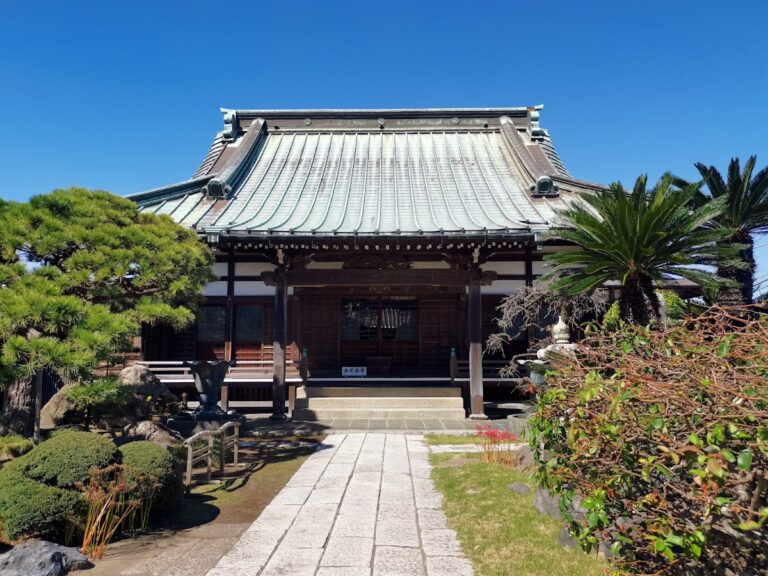
The main hall exudes a solemn atmosphere, reflecting the history of faith passed down since the time of Minamoto no Yoritomo. As you pray in the quiet temple grounds, you will feel the weight of the Kannon faith that has continued since the Kamakura period.
Temple Treasures Associated with Minamoto no Yoritomo
Fudaraku-ji Temple houses many valuable temple treasures associated with Minamoto no Yoritomo. Of particular note is the red flag of the Taira clan. This flag is said to have been held by Taira no Munemori, the commander-in-chief of the Taira clan, until the end of the Battle of Dan-no-ura, and was later donated to this temple by Yoritomo.
This red flag, a symbol of the downfall of the Taira clan, is a valuable historical artifact that conveys the history of the Genpei War. While usually not open to the public, it is sometimes displayed on special occasions. In addition, the temple carefully preserves other historically valuable treasures, including items said to have been used by Yoritomo and materials related to the monk Mongaku.
Atmosphere and Architecture of the Temple Grounds
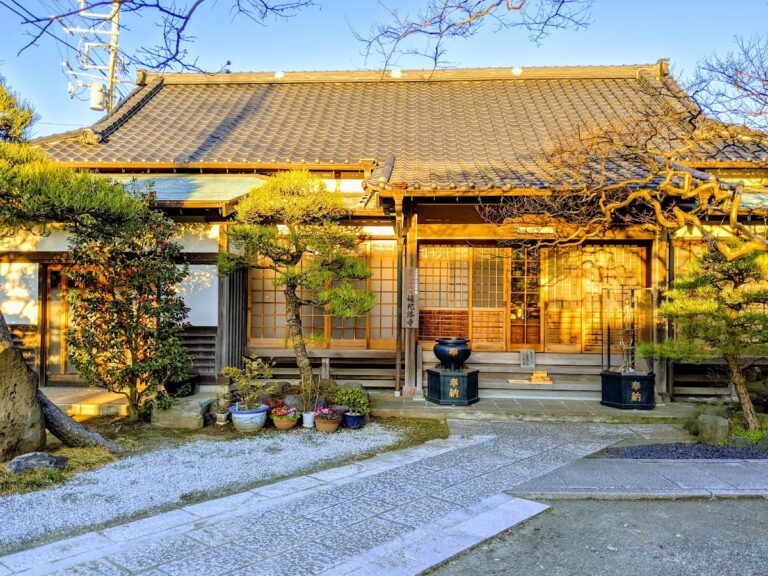
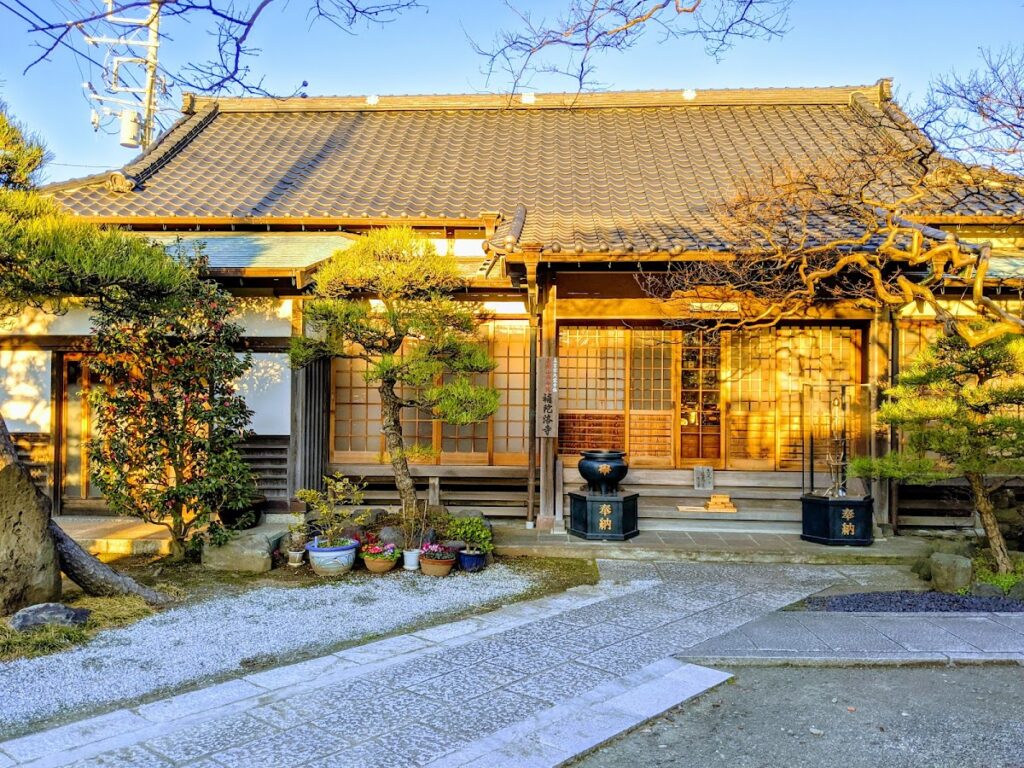
The current Fudaraku-ji Temple, rebuilt after numerous disasters, possesses a modest yet historically significant presence. Its mountain name is Nankozan, and it belongs to the Daikaku-ji branch of the Shingon sect.
Despite being located in a residential area, the temple grounds maintain a tranquil atmosphere, allowing visitors to escape the hustle and bustle of the city and find peace of mind. The main hall, though simple, possesses a dignified presence, exuding the charm of an ancient temple in Kamakura. The temple grounds, with their ever-changing seasonal landscaping, also delight visitors.
Basic Information and Access to Fudaraku-ji Temple
Location and Visiting Hours
Location: 6-7-31 Zaimokuza, Kamakura City, Kanagawa Prefecture
Postal Code: 248-0013
Sect: Shingon-shu Daikaku-ji School
Mountain Name: Nankozan
Principal Image: Eleven-faced Kannon Bodhisattva
Visiting Hours: 9:00 AM – 5:00 PM (Visiting possible until sunset)
Admission Fee: Free entry to the grounds (Please check for entry to the main hall)
Parking: None (Use nearby coin parking)
Access Method
Access by Train and Bus
From JR Kamakura Station:
- Take the Keikyu Bus “Kyuhonji Loop” or “Kama 40/Kama 41” from the Kamakura Station East Exit Bus Terminal
- Get off at the “Kuhonji” bus stop, approximately 3 minutes on foot.
- Travel time: Approximately 7 minutes by bus + 3 minutes on foot
Access on foot:
- Approximately 25 minutes on foot from the East Exit of JR Kamakura Station
- Approximately 15 minutes on foot from Enoshima Electric Railway “Wadazuka Station”
It is recommended to enjoy the scenery of Kamakura as you walk towards Zaimokuza Beach. It’s also a good idea to visit the temple when you are visiting Yuigahama or Zaimokuza Beach.
Access by car
Approximately 20 minutes from the Asahina IC on the Yokohama-Yokosuka Expressway. However, Fudarakuji Temple does not have its own parking lot, so you will need to use a nearby coin parking lot. Kamakura city can be crowded on holidays and during tourist seasons, so using public transportation is recommended.
As the 17th temple of the Kamakura Thirty-Three Kannon Pilgrimage
Fudarakuji Temple is designated as the 17th temple of the Kamakura Thirty-Three Kannon Pilgrimage. The Kamakura Thirty-Three Kannon Pilgrimage is a pilgrimage to 33 temples in and around Kamakura, a path of faith that has continued since the Middle Ages.
Those undertaking the pilgrimage can receive a Goshuin (temple stamp) at each temple. At Fudaraku-ji Temple, you can also receive a Goshuin as a memento of your visit, so please ask if you have a pilgrimage notebook. The time spent quietly contemplating Kannon in the peaceful temple grounds will be a precious experience that allows you to forget the hustle and bustle of everyday life.
Recommended Tourist Spots near Fudaraku-ji Temple
Kuhon-ji Temple
Located about a 5-minute walk from Fudaraku-ji Temple, Kuhon-ji Temple was built by Nitta Yoshisada to commemorate the samurai who died in battle during the attack on Kamakura. Beautiful flowers bloom on the temple grounds, and the trumpet vines in summer are particularly magnificent. It is an ideal temple to visit in conjunction with Fudaraku-ji Temple.
Zaimokuza Beach and Yuigahama Beach
Zaimokuza Beach and Yuigahama Beach are about a 10-minute walk from Fudaraku-ji Temple. These are representative coastlines of Kamakura, bustling with people swimming in the summer and enjoying walks and surfing in other seasons. Recommended for a stroll after visiting the temple, as it offers a tangible experience of the “Pure Land beyond the Sea” of Fudaraku philosophy.
Komyoji Temple
Komyoji Temple, located near Zaimokuza Beach, is a major temple of the Jodo sect, boasting one of Kamakura’s largest main gates (Sanmon). The vast grounds include the main hall and the founder’s hall, allowing visitors to deeply experience Kamakura’s history. It’s about a 15-minute walk from Fudaraku-ji Temple.
Kamakura-gu Shrine (Daito-gu Shrine)
On the way back towards Kamakura Station, you’ll find Kamakura-gu Shrine, dedicated to Prince Moriyoshi, son of Emperor Go-Daigo. This shrine offers a glimpse into the history of the Nanboku-cho period and is also known for its blessings of warding off evil.
Points and ways to enjoy visiting Fudaraku-ji Temple
Visiting during quiet times is recommended
Fudaraku-ji Temple is a relatively less crowded temple in Kamakura, making it a hidden gem for quiet worship. Especially on weekday mornings and late afternoons, it is enveloped in even greater tranquility, allowing for a meditative experience.
As part of the Kamakura Thirty-Three Kannon Pilgrimage
Those undertaking a full pilgrimage should bring their pilgrimage notebook and stamp book. Fudaraku-ji Temple, the 17th temple on the pilgrimage, is efficiently visited in conjunction with other temples in the Zaimokuza area (such as Komyoji Temple).
A plan combining a visit with a beach stroll
After visiting Fudaraku-ji Temple, a stroll along Zaimokuza Beach or Yuigahama Beach is recommended. The beach is particularly beautiful at sunset, offering a perfect opportunity to experience the Fudaraku concept of “the Pure Land beyond the sea.” Taking a break at a cafe or restaurant along the coast is also a good idea.
Enjoying the Seasonal Scenery
Fudaraku-ji Temple displays different expressions throughout the seasons: fresh greenery in spring, lush greenery in summer, vibrant autumn leaves, and tranquility in winter. Especially during the autumn foliage season, the trees within the temple grounds change color, creating a serene beauty.
Gourmet Spots Around Fudaraku-ji Temple
Cafes in the Zaimokuza and Yuigahama Area
Stylish cafes with ocean views are scattered around Zaimokuza Beach. Enjoying coffee or lunch while gazing at the sea after visiting the temple is a highlight of Kamakura sightseeing. “OXYMORON” and “Cafe Vivant Dimanche” are popular choices.
Local Diners and Japanese Restaurants
The Zaimokuza area also has many diners and Japanese restaurants loved by locals. You can enjoy local flavors, such as set meals featuring fresh seafood and dishes made with Kamakura vegetables.
Restaurants around Kamakura Station
The area around Kamakura Station boasts a wealth of restaurants and cafes catering to tourists. You can enjoy Kamakura’s unique cuisine, including restaurants specializing in shirasu (whitebait) rice bowls and Kamakura vegetables, as well as long-established Japanese confectionery shops.
Annual Events and Festivals at Fudaraku-ji Temple
As a Shingon Buddhist temple, Fudaraku-ji Temple holds various Buddhist ceremonies throughout the year. In particular, special services are sometimes held on the 18th of each month, which is the auspicious day of Kannon (Goddess of Mercy).
Furthermore, as a pilgrimage site for the 33 Kannon temples of Kamakura, the number of group pilgrimages increases in spring and autumn. Visiting in conjunction with local festivals and summer events at Zaimokuza Beach will allow you to experience Kamakura’s culture more deeply.
Notes and Manners When Visiting Fudaraku-ji Temple
Visiting Manners
- Please be quiet within the temple grounds and be considerate of other visitors.
- Photography is permitted, but permission may be required to photograph the interior of the main hall or Buddha statues.
- Please offer your donation carefully, and ring any bells or chimes quietly.
- When receiving a Goshuin (temple stamp), please request it politely and offer your donation.
Clothing and Belongings
There are no specific dress code requirements, but appropriate and modest attire for visiting a temple is desirable. In summer, the sun is strong, so we recommend bringing a hat, parasol, and water. In winter, the sea breeze is cold, so please take precautions against the cold.
Understanding the Charms of Fudaraku-ji Temple
Minamoto no Yoritomo and Kamakura Buddhism
To deeply understand Fudaraku-ji Temple, it is important to know the relationship between Minamoto no Yoritomo and Kamakura Buddhism. While Yoritomo established a samurai government, he also placed great importance on Buddhism as a political and spiritual pillar. Fudaraku-ji Temple is a symbolic representation of this, conveying the connection between the samurai government and Buddhism to this day.
The Life of Monk Mongaku
The temple’s founder, Monk Mongaku, was originally a samurai but became a Shingon Buddhist monk. Known for his intense asceticism and passionate personality, he influenced Emperor Go-Shirakawa and Minamoto no Yoritomo. When visiting Fudaraku-ji Temple, please also reflect on the turbulent life of Monk Mongaku.
Medieval Fudaraku Belief
In medieval Japan, the belief in Fudaraku, the Pure Land of Kannon beyond the sea, was widespread. A practice called “Fudaraku Crossing,” involving actually rowing a small boat out to sea, was also performed. Fudaraku-ji Temple, overlooking the sea in Zaimokuza, serves as a concrete stage for this belief, conveying the spiritual world of the people of that time.
Summary: Experiencing Kamakura’s History and Faith at Fudaraku-ji Temple
Fudaraku-ji Temple, located in Zaimokuza, Kamakura City, Kanagawa Prefecture, is a historic temple founded by Minamoto no Yoritomo and is affectionately known as “Tatsumaki-ji” (Tornado Temple). With the Eleven-Faced Kannon Bodhisattva as its principal image, it is the 17th temple on the Kamakura Thirty-Three Kannon Pilgrimage and continues to welcome many worshippers.
Despite being struck by numerous tornadoes and fires, Fudaraku-ji Temple has maintained its faith for over 800 years. Standing on its grounds, one can feel the weight of the Kannon faith that has continued since the time of Minamoto no Yoritomo and the longing for the Pure Land across the sea.
When sightseeing in Kamakura, be sure to visit not only the bustling tourist spots but also quiet, ancient temples like this one. Fudaraku-ji Temple is a hidden gem where you can deeply experience Kamakura’s history and spirituality. Why not visit it in conjunction with a stroll along Zaimokuza Beach?