Gokurakuji Temple (Kamakura City, Kanagawa Prefecture) Complete Guide: History, Highlights, and Access Explained in Detail
Located in Gokurakuji, Kamakura City, Kanagawa Prefecture, Gokurakuji Temple is an ancient Shingon Ritsu sect temple that flourished as a center of charitable activities during the Kamakura period. Despite its convenient location just a 2-minute walk from Gokurakuji Station on the Enoshima Electric Railway, the temple grounds are enveloped in a tranquil atmosphere, offering peace of mind to visitors. This article will fully convey the charm of this ancient temple, from its history and cultural assets to its highlights and access information.
Basic Information about Gokurakuji Temple
Official Name and Sect
The official name of Gokurakuji Temple is “Ryūjusan Kannōin Gokuraku Ritsuji.” It belongs to the Shingon Ritsu sect and is known as a rare Ritsu sect temple in Kamakura. The principal image is Shakyamuni Buddha, the founder was Hojo Shigetoki, the third son of Hojo Yoshitoki, the second regent of the Kamakura Shogunate, and the founding priest was the renowned monk Ninsho.
Location and Basic Data
- Address: 3-6-7 Gokurakuji, Kamakura City, Kanagawa Prefecture
- Visiting Hours: 9:00 AM – 4:30 PM
- Admission Fee: Free for the temple grounds (Treasure Hall: 300 yen)
- Treasure Hall Opening Hours: Tuesdays, Thursdays, Saturdays, and Sundays only from April 25th to May 25th, and from October 25th to November 25th (10:00 AM – 4:00 PM)
- Telephone: 0467-22-3402
- Corporate Number: 3021005001921
History of Gokurakuji Temple
Circumstances of Founding and Hojo Shigetoki
Gokurakuji Temple is said to have been founded in the first year of Shogen (1259). Hojo Shigetoki, the founder of Gokuraku-ji Temple, was born the third son of Hojo Yoshitoki, the second regent of the Kamakura Shogunate, and held an important position in the shogunate as a Rensho (assistant to the regent). Shigetoki was a devout Buddhist and particularly interested in the relief of the common people, which led him to decide to build a temple in this area.
Initially, Shigetoki invited Ninsho, a high-ranking monk from Yamato Province (present-day Nara Prefecture), to be the founding abbot. Ninsho studied the precepts under Eison of Saidai-ji Temple and was known as a monk who dedicated himself to the relief of the poor and the treatment of the sick.
Development of Charitable Activities by Ninsho
Ninsho, the founding abbot, developed Gokuraku-ji Temple not merely as a religious institution, but as a center of social welfare. In Kamakura, he built a pharmacy to provide medicine to those suffering from illness, and in Kuwagaya, he built a hospital for patients. He also opened a Jōshiin to provide meals to the poor and revived the Hiden-in to protect those without families, among other wide-ranging charitable activities. Ninshō’s activities provided great relief to the people of the Kamakura period, and Gokuraku-ji Temple became a temple that played an important role not only religiously but also socially.
Temple Layout at its Peak
From the late Kamakura period to the Nanboku-chō period, Gokuraku-ji Temple reached its peak. The temple complex at that time was magnificent, boasting major buildings such as the main hall, lecture hall, and thirteen-story pagoda, as well as 49 sub-temples (tatchū). The temple grounds were several times larger than they are today, and it flourished as one of the largest temples in Kamakura.
It is said that many monks devoted themselves to training at Gokuraku-ji Temple, and that it was a center for the relief of the people, attracting many visitors daily. The temple’s economic base was stable, and it received patronage from powerful samurai families, including the Hōjō clan.
Decline Due to Fire and Earthquake
However, Gokuraku-ji Temple’s prosperity did not last forever. From the late Kamakura period to the Muromachi period, many of the temple buildings were lost due to repeated fires, wars, and earthquakes. The temple suffered particularly severe damage from the fighting during the fall of the Kamakura Shogunate in 1333, the Great Fire of 1405, and the Eikyo Rebellion of 1438.
During the Edo period, under the patronage of the Tokugawa Shogunate, some degree of reconstruction was achieved, but the magnificent temple complex of the past was never fully restored. The current main hall is the former Kichijoin sub-temple, now used as the main hall, allowing us to imagine its former glory.
Gokuraku-ji Temple in Modern Times
Despite the impact of the anti-Buddhist movement of the Meiji era, Gokuraku-ji Temple survived as a center of local faith. In the Showa era, with the development of Kamakura as a tourist destination, its historical value began to be re-evaluated.
In 2015, it was designated a Japan Heritage site as part of the “Let’s Go to Kamakura” – A Town of History and Culture – establishing its status as an important cultural heritage site in Kamakura. Even today, it continues to uphold traditional Buddhist ceremonies as a Shingon Ritsu sect temple.
Highlights of the Temple Grounds
Main Gate (Red Gate)
Climbing the slope from Gokurakuji Station, you’ll see the serene main gate on the other side of the railway tracks. This gate, also known as the “Red Gate,” is a symbolic presence of Gokurakuji Temple. Its simple yet dignified construction exudes the atmosphere of an ancient Kamakura temple.
Stone steps lead up to the main gate, quietly welcoming visitors. Cherry blossoms in spring, fresh greenery in early summer, and autumn leaves adorn the gate, allowing visitors to enjoy the beautiful scenery of each season. Passing through the main gate, you enter a tranquil space far removed from the hustle and bustle of the secular world.
Main Hall (Former Kichijoin Temple)
The current main hall is a repurposed building from Kichijoin Temple, one of the 49 sub-temples that once existed. Rebuilt during the Edo period, it is a simple yet charming structure. The main hall houses the principal image, a statue of Shakyamuni Buddha, and offers a peaceful place for worship.
In front of the main hall is a well-maintained garden where seasonal flowers delight visitors. The crape myrtle (Lagerstroemia indica) in summer is particularly magnificent, its vibrant blossoms adorning the temple grounds. Photography is prohibited around the main hall, so we recommend that visitors capture its beauty in their minds.
Ninsho Pagoda (Five-Ring Pagoda)
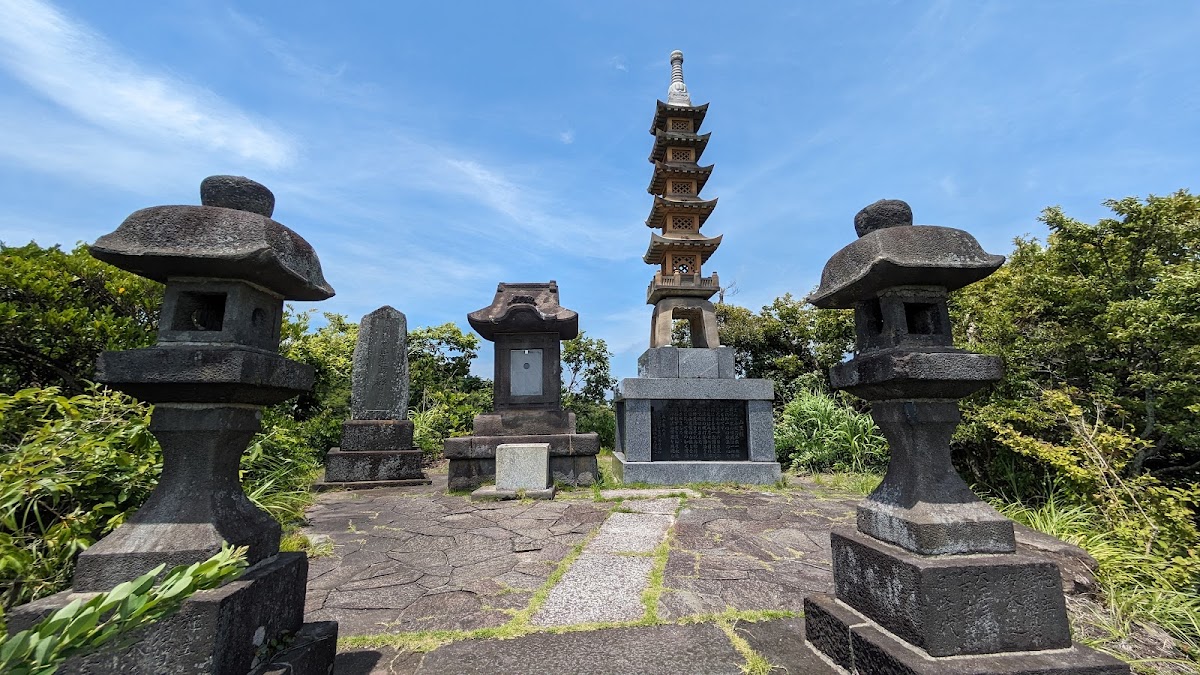
Within the temple grounds is a five-ring pagoda commemorating the temple’s founder, Ninsho. This pagoda was erected by people who admired Ninsho’s virtues and is known as a fine example of Kamakura period stone art. The Gorinto (five-ring pagoda) is a Buddhist memorial tower representing the five elements of earth, water, fire, wind, and void, and is a valuable historical structure that conveys the virtues of Ninshō.
The area around the Gorinto is a tranquil space, allowing visitors to quietly offer prayers while reflecting on Ninshō’s compassionate heart.
Seasonal Flowers
One of the great attractions of Gokuraku-ji Temple is the flowers that can be enjoyed throughout the seasons. Although the temple grounds are not particularly large, they show a different face each season.
In spring, cherry blossoms bloom profusely, dyeing the area around the temple gate pink. Plum blossoms and daphne also release their fragrance, announcing the arrival of spring.
From early summer to summer, hydrangeas color the temple grounds. Kamakura is known as a famous spot for hydrangeas, but Gokuraku-ji’s hydrangeas are appealing because they can be enjoyed in peace and quiet compared to other temples that are crowded with tourists. The vibrant red flowers of the crape myrtle are also a highlight in summer.
In autumn, spider lilies (Lycoris radiata) bloom in the temple grounds, their red blossoms adding a touch of beauty. The autumn foliage is also stunning, evoking the deepening of the season.
In winter, plum blossoms and daphne flowers announce the arrival of early spring, adding color to the quiet winter grounds.
Treasure Hall
Gokuraku-ji Temple has a treasure hall housing valuable cultural artifacts. It is open only twice a year, from April 25th to May 25th and from October 25th to November 25th, on Tuesdays, Thursdays, Saturdays, and Sundays. Opening hours are 10:00 AM to 4:00 PM. Admission is 300 yen.
The treasure hall displays Buddhist statues, ancient documents, and paintings designated as important cultural properties. Of particular note are the numerous excellent Buddhist art pieces from the Kamakura period, which speak to the temple’s former prosperity. Since it is only open for a limited time, it is recommended to check the opening dates in advance before visiting.
Cultural Properties of Gokuraku-ji Temple
Important Cultural Properties
Gokuraku-ji Temple houses several nationally designated Important Cultural Properties.
Wooden Standing Statue of Shakyamuni Buddha: This Kamakura period Buddha statue, enshrined as the principal image, boasts exceptional sculptural beauty.
Wooden Standing Statues of the Ten Great Disciples: This group of Buddha statues depicts the main disciples of Shakyamuni Buddha, demonstrating the high level of sculptural technique during the Kamakura period.
Wooden Standing Statue of Fudo Myoo: This statue of Fudo Myoo, an important deity in Shingon Esoteric Buddhism, is characterized by its powerful expression.
These Buddha statues can be viewed during the period when the Treasure Hall is open. As valuable cultural properties representing the pinnacle of Kamakura period Buddhist art, they attract many researchers and Buddhist art enthusiasts.
Ancient Documents and Historical Materials
Gokuraku-ji Temple also houses numerous ancient documents and historical materials dating from the Kamakura period to the Edo period. These documents are invaluable historical sources for studying social welfare activities, temple management, and the relationship between the Hojo clan and temples during the Kamakura period.
In particular, records concerning Ninshō’s activities and documents related to the management of Gokuraku-ji Temple are highly valued academically as important sources for understanding the history of Buddhism and social history in medieval Japan.
Gokuraku-ji Temple as a Pilgrimage Site
Gokuraku-ji Temple is designated as a pilgrimage site for several sacred sites.
22nd Temple of the Kamakura Thirty-Three Kannon Pilgrimage
The Kamakura Thirty-Three Kannon Pilgrimage is a pilgrimage route visiting temples in Kamakura City that enshrine Kannon Bodhisattva. Gokuraku-ji Temple is the 22nd temple on this route, attracting many pilgrims. Kannon Bodhisattva is revered as a symbol of compassion, and the Kannon statue at Gokuraku-ji Temple has received the wishes of many people.
Kamakura Twenty-Four Jizo Pilgrimage Sites, Temples No. 20 & 21
This temple is the 20th and 21st temples of the Kamakura Twenty-Four Jizo Pilgrimage. Jizo Bodhisattva is widely worshipped as the guardian deity of children and travelers, and the Jizo statue at Gokuraku-ji Temple attracts many worshippers.
Visiting these pilgrimage sites is a great opportunity to gain a deeper understanding of Kamakura’s history and culture. Collecting temple stamps (Goshuin) while on the pilgrimage allows you to truly appreciate the diversity and historical depth of Kamakura’s temples.
Attractions around Gokuraku-ji Temple
Gokuraku-ji Station
Gokuraku-ji Station on the Enoshima Electric Railway is a charming station selected as one of the “100 Best Stations in the Kanto Region.” The wooden station building, retaining the atmosphere of the Taisho era, exudes a retro feel, attracting many railway enthusiasts and photography lovers. The main gate of Gokuraku-ji Temple can be seen from the station platform, making it an excellent photo spot.
The area around the station is a quiet residential area, retaining the atmosphere of old Kamakura. The short walk from the station to the temple is also enjoyable for a stroll.
Gokurakuji-zaka Pass
Near Gokurakuji Temple is Gokurakuji-zaka Pass, one of the seven main passes of Kamakura. The seven passes of Kamakura were seven major roads opened into the mountains surrounding Kamakura, serving as strategic points for the defense of Kamakura. Gokurakuji-zaka Pass was an important road connecting Kamakura and Fujisawa, and it still retains its historical character.
The area around the pass retains a strong atmosphere of medieval Kamakura, making it ideal for a historical walk. We highly recommend visiting it when you visit Gokurakuji Temple.
Joju-in Temple
Joju-in Temple, located about a 5-minute walk from Gokurakuji Station, is also a temple worth visiting. It is a Shingon sect Daikaku-ji temple and is known for its hydrangeas. Because it is located on a hill, it also offers a spectacular view of Yuigahama Beach.
Visiting Gokurakuji Temple along with other temples will make your Kamakura temple tour even more fulfilling.
Access to Hase and Enoshima
Gokurakuji Station is on the Enoshima Electric Railway, making it convenient for accessing Hase-dera Temple, Kotoku-in Temple (Kamakura Daibutsu), and Enoshima. Using Gokurakuji Temple as a base, you can enjoy sightseeing in western Kamakura and the Shonan area.
Access and Transportation
Access by Train
Using the Enoshima Electric Railway (Enoden)
- Get off at Gokurakuji Station, approximately 2 minutes on foot
- Approximately 9 minutes by Enoden from Kamakura Station
- Approximately 17 minutes by Enoden from Fujisawa Station
The Enoden is a popular route for Kamakura sightseeing, and you can enjoy the scenery from the train windows. Gokurakuji Station is an unmanned station, so using transportation IC cards such as Suica is convenient.
If using JR
- Get off at Kamakura Station on the JR Yokosuka Line or Shonan Shinjuku Line and transfer to the Enoden Line.
- Get off at Fujisawa Station on the JR Tokaido Line and transfer to the Enoden Line.
From the Tokyo area, it is common to transfer to the Enoden Line at either Kamakura Station or Fujisawa Station.
Access by Car and Parking
Access by Car
- Approximately 20 minutes from Asahina IC on the Yokohama-Yokosuka Expressway.
- Accessible via National Route 134.
Regarding Parking
Gokurakuji Temple does not have a dedicated visitor parking lot. There are few coin-operated parking lots in the surrounding area, so we strongly recommend using public transportation. If you come by car, it is practical to park in a parking lot near Kamakura Station and take the Enoden Line.
Kamakura has narrow roads and heavy traffic during tourist season, so access by train is especially comfortable on weekends and holidays.
Access on Foot or by Bicycle
If visiting on foot from Kamakura Station, it takes approximately 30-40 minutes via Yuigahama Beach. The walking route along the coast offers beautiful scenery, making for an enjoyable stroll.
If using a rental bicycle, you can rent one near Kamakura Station and arrive in approximately 15-20 minutes. However, since there are many hills around Gokurakuji Temple, an electric-assist bicycle is recommended.
Manners and Precautions During Visits
Visiting Manners
Gokurakuji Temple is a temple where religious activities are still conducted. Please observe the following manners when visiting.
- Maintain Silence: Please be quiet on the temple grounds and refrain from loud conversations.
- Photography Restrictions: Photography is prohibited around the main hall. Photography is permitted at the temple gate and in some parts of the grounds, but please be considerate of other visitors.
- No Smoking or Eating: Smoking and eating are prohibited on the temple grounds.
- Pets Allowed: Pets are generally not allowed on the temple grounds.
Clothing and Items to Bring
There are no specific dress code requirements, but modest attire appropriate for a religious site is desirable.
- Comfortable shoes: Since there are stone steps and slopes within the temple grounds, comfortable shoes are recommended.
- Seasonal clothing: In summer, there is little shade, so don’t forget a hat or parasol. In winter, bring warm clothing.
- Rain gear: A folding umbrella is useful during periods of unpredictable weather.
Estimated Visiting Time
If you only wish to view the temple grounds, it will take about 15-20 minutes. If you plan to visit the treasure hall or stroll around taking photos at a leisurely pace, allow 30-40 minutes.
If you plan to visit Gokurakuji-zaka Pass or Joju-in Temple in addition, it is recommended to allocate 1-2 hours.
Best Season to Visit Gokurakuji Temple
Spring (March-May)
In spring, cherry blossoms and plum blossoms bloom, creating a vibrant atmosphere within the temple grounds. The temple is particularly beautiful during the cherry blossom season from late March to early April, attracting many visitors. The treasure hall opens to the public from late April, allowing visitors to enjoy cultural artifacts.
The weather is mild, making it an ideal season for strolling. However, it gets crowded during Golden Week, so visiting on a weekday is recommended.
Early Summer to Summer (June to August)
June, the hydrangea season, sees Kamakura bustling with tourists. Gokurakuji Temple’s hydrangeas are less crowded than those at other famous temples, making it a good choice for those who want to enjoy the flowers in peace.
From July to August, crape myrtle blossoms are in full bloom. Summer sunshine is strong, so visiting in the early morning or evening is recommended.
Autumn (September to November)
From late September to early October, spider lilies are in full bloom. The sight of the red flowers coloring the temple grounds is impressive. The treasure hall reopens in late October, and it’s also a season to enjoy the autumn foliage. Autumn is the peak season for sightseeing in Kamakura, but Gokuraku-ji Temple offers a relatively peaceful atmosphere for worship. The autumn foliage season in November is particularly beautiful and highly recommended.
Winter (December-February)
Winter is a quiet season for worship, with fewer tourists. Plum blossoms and daphne flowers herald the arrival of early spring, allowing for a peaceful and serene experience in the crisp air.
While the cold isn’t severe, the proximity to the sea can make the wind feel chilly. We recommend dressing warmly.
The Charm of Gokuraku-ji Temple: Why You Should Visit
Serene Atmosphere
Many of Kamakura’s famous temples are bustling with tourists, but Gokuraku-ji Temple maintains a relatively quiet and peaceful atmosphere. It’s an ideal temple for those seeking a peaceful retreat from the hustle and bustle.
Historical Value
Gokuraku-ji Temple, which played a crucial role as a center of social welfare activities during the Kamakura period, possesses historical significance beyond that of a mere religious institution. Ninsho’s charitable work can be considered the origin of modern social welfare.
Beauty of the Seasons
Despite its compact grounds, Gokurakuji Temple’s charm lies in the enjoyment of seasonal flowers and plants. The temple grounds, which display different expressions with each season, offer new discoveries with every visit.
Easy Access
Its convenient location, just a 2-minute walk from Gokurakuji Station on the Enoden Line, makes it easy to incorporate into a Kamakura sightseeing itinerary. It can be easily visited on the way to Hase or Enoshima.
Value of Cultural Assets
The important cultural properties housed in the treasure hall represent the finest examples of Buddhist art from the Kamakura period. Although only open to the public for a limited time, the opportunity to view these valuable cultural assets up close is precious.
Gokurakuji Temple and the Ruins of Buppoji Temple
Near Gokurakuji Temple was once a temple called Buppoji. Buppoji was a temple that flourished during the Kamakura period and is believed to have had a close relationship with Gokurakuji. Only the ruins remain today, allowing visitors to reflect on its history.
The site of Buppōji Temple is within walking distance of Gokurakuji Temple, making it a worthwhile visit for those interested in Kamakura’s history. It’s an interesting historical site for understanding the layout of temples and religious activities in medieval Kamakura.
Summary: Finding Peace of Mind at Gokurakuji Temple
Gokurakuji Temple flourished as a center of charitable activities during the Kamakura period and remains a tranquil temple welcoming visitors today. The compassionate spirit of its founder, Ninshō, still lives on within the temple grounds.
Although the magnificent temple complex is gone, the compact grounds are filled with seasonal flowers, offering peace of mind to visitors. The Buddhist statues and ancient documents designated as Important Cultural Properties are valuable legacies that convey the history and culture of the Kamakura period.
Despite its convenient location just a 2-minute walk from Gokurakuji Station on the Enoden Line, it offers a quiet space away from the hustle and bustle, allowing you to slowly calm your mind. When visiting Kamakura, be sure to stop by Gokuraku-ji Temple and reflect on the compassionate spirit of Ninsho and the history of Kamakura.
Admission is free, making it easy to drop by. If you visit during the period when the treasure hall is open, you can admire valuable cultural artifacts. Beautiful scenery awaits you in every season: cherry blossoms in spring, hydrangeas in early summer, crape myrtle in summer, spider lilies and autumn leaves in fall, and plum blossoms in winter.
Step through the gates of Gokuraku-ji Temple in search of inner peace. You will surely forget the hustle and bustle of everyday life and enjoy a peaceful time.