Goshōji Temple (Temple No. 78) Complete Guide | Exorcism, History, Cultural Properties, and Access Information
Gōshōji Temple, located in Utazu-cho, Ayauta-gun, Kagawa Prefecture, is a historic temple that attracts many worshippers from all over Japan as the 78th temple of the Shikoku 88 Temple Pilgrimage and as “Utazu Daishi for Exorcism.” Its formal name is Bukkōzan Kōtokuin, and its principal image is Amida Buddha. It is known as the only temple on the Shikoku Pilgrimage that adheres to both the Jishū and Shingon Buddhist sects.
This article comprehensively explains everything you need to know before visiting Gōshōji Temple, from its history and temple buildings to its cultural properties, points of interest for worshippers, and transportation access.
History of Gōshōji Temple
From its Founding to Ancient History
Gōshōji Temple’s founding dates back to the Nara period. In 725 AD (Shinki 2), the temple’s origins are said to date back to the founding of “Dojo-ji” by the eminent monk Gyoki Bodhisattva. Gyoki was a prominent monk of the Nara period, known for his dedication to spreading Buddhism among the common people and for his social work, building temples, bridges, and reservoirs throughout Japan.
In 807 AD (Daido 2) during the Heian period, Kobo Daishi Kukai, at the age of 42 (a year considered unlucky), is said to have visited this temple, carved a statue of himself, and made a vow to ward off evil. This story is the origin of Goshoji Temple becoming widely revered as “Yakuyoke Utazu Daishi” (the Great Master of Evil Removal). The statue of the Great Master carved by Kukai himself still attracts many worshippers as the principal image for warding off evil.
Conversion to the Jishu Sect and Renaming to Goshoji Temple
In 1288 AD (Shoo 1) during the Kamakura period, Ippen Shonin, the founder of the Jishu sect, visited this area. Ippen Shonin was a Buddhist monk who founded the Jishu sect, known for its dancing nenbutsu (chanting of Amida Buddha’s name). He traveled throughout Japan, spreading the teachings of nenbutsu. Ippen Shonin designated this temple as a training ground for dancing nenbutsu and changed its name from “Dojo-ji” to “Gosho-ji.”
From this time, Gosho-ji became a Jishu temple, adopting the unique form of a temple that adhered to both the Jishu and Shingon sects. Among the 88 temples of the Shikoku Pilgrimage, Gosho-ji is the only Jishu temple, which is a significant characteristic.
Suffering in the Sengoku Period and Restoration in the Edo Period
During the Tensho era (1573-1592) of the Sengoku period, Gosho-ji suffered the misfortune of being destroyed by fire during wartime. Many temples were damaged by the conflicts of the time, and Gosho-ji was no exception.
In the Edo period, in 1664 (Kanbun 4), Gosho-ji was restored by Matsudaira Yorishige, the first lord of the Takamatsu Domain. Matsudaira Yorishige was the elder brother of Tokugawa Mitsukuni, known as Mito Kōmon, and was also enthusiastic about cultural projects. This restoration laid the foundation for the current form of Gōshōji Temple.
Gōshōji Temple in the Modern Era
Despite the impact of the anti-Buddhist movement of the Meiji era, Gōshōji Temple survived as a center of local faith. Even after the Showa era, it continued to welcome many worshippers as the 78th temple of the Shikoku Pilgrimage and as a temple for warding off evil.
Today, it is known for its beautiful scenery, offering views of the Seto Ohashi Bridge from its grounds, making it a popular spot not only for Shikoku pilgrims but also for tourists. In 2015, the “Shikoku Pilgrimage” was designated a Japan Heritage site, and Gōshōji Temple was registered as one of its constituent cultural properties.
Highlights of the Temple Grounds and Precincts
Main Hall
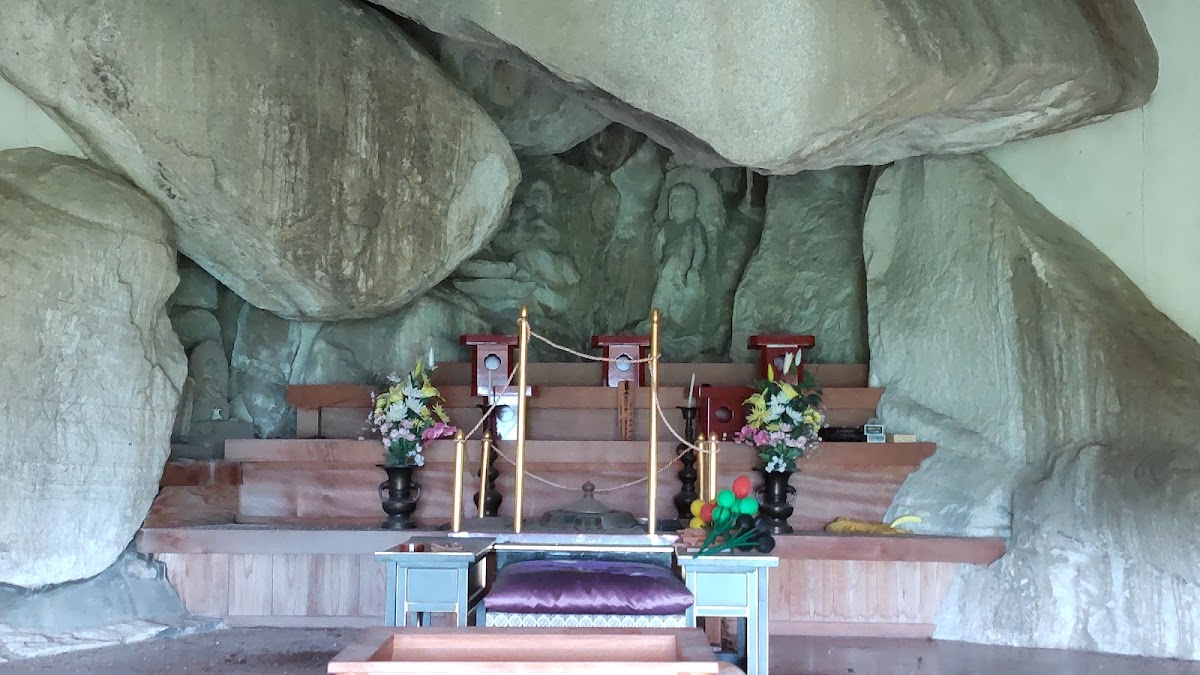
The main hall of Gōshōji Temple is the central building housing the principal image, Amida Buddha. Amida Buddha, the principal deity of the Western Pure Land, is believed to save those who chant the Buddha’s name and is central to the faith of the Jishu sect. Inside the main hall, one can worship in a solemn atmosphere.
In front of the main hall is the sutra copying office, where you can receive a Goshuin (temple stamp) and a sacred image. For pilgrims on the Shikoku pilgrimage, copying the sutras is an important ritual.
Daishido Hall
The Daishido Hall houses a statue of Kobo Daishi Kukai, said to have been carved by Kukai himself. This statue embodies a vow for protection against misfortune and is worshipped as “Yakuyoke Utazu Daishi” (Master of Misfortune). Many visitors, especially those in their unlucky years or those seeking protection from misfortune, come here.
Worshipping at the Daishido Hall is an important ritual on the Shikoku pilgrimage, alongside visiting the main hall. Many pilgrims chant sutras here, praying for protection from misfortune and safe travels.
Stroll Garden
Within the grounds of Goshōji Temple lies a beautiful stroll garden. Believed to have been restored during the Edo period, this garden offers beautiful scenery throughout the seasons. Centered around a pond, the garden embodies the spirit of Zen, creating a tranquil space that soothes the hearts of visitors.
With cherry blossoms in spring, lush greenery in early summer, and vibrant autumn leaves, the garden displays different expressions with each season, making it a popular spot for photography enthusiasts.
View from the Temple Grounds
Goshōji Temple is located on a hill in Utazu Town, offering panoramic views of the Seto Inland Sea and the Seto Ohashi Bridge from its grounds. On clear days, you can even see the townscape of Sakaide and the islands of the Seto Inland Sea, captivating visitors with its breathtaking scenery.
This view is one of Goshōji Temple’s unique attractions, and many people visit not only for worship but also to enjoy the scenery. The view of the Seto Ohashi Bridge at sunset is particularly spectacular.
Other Structures
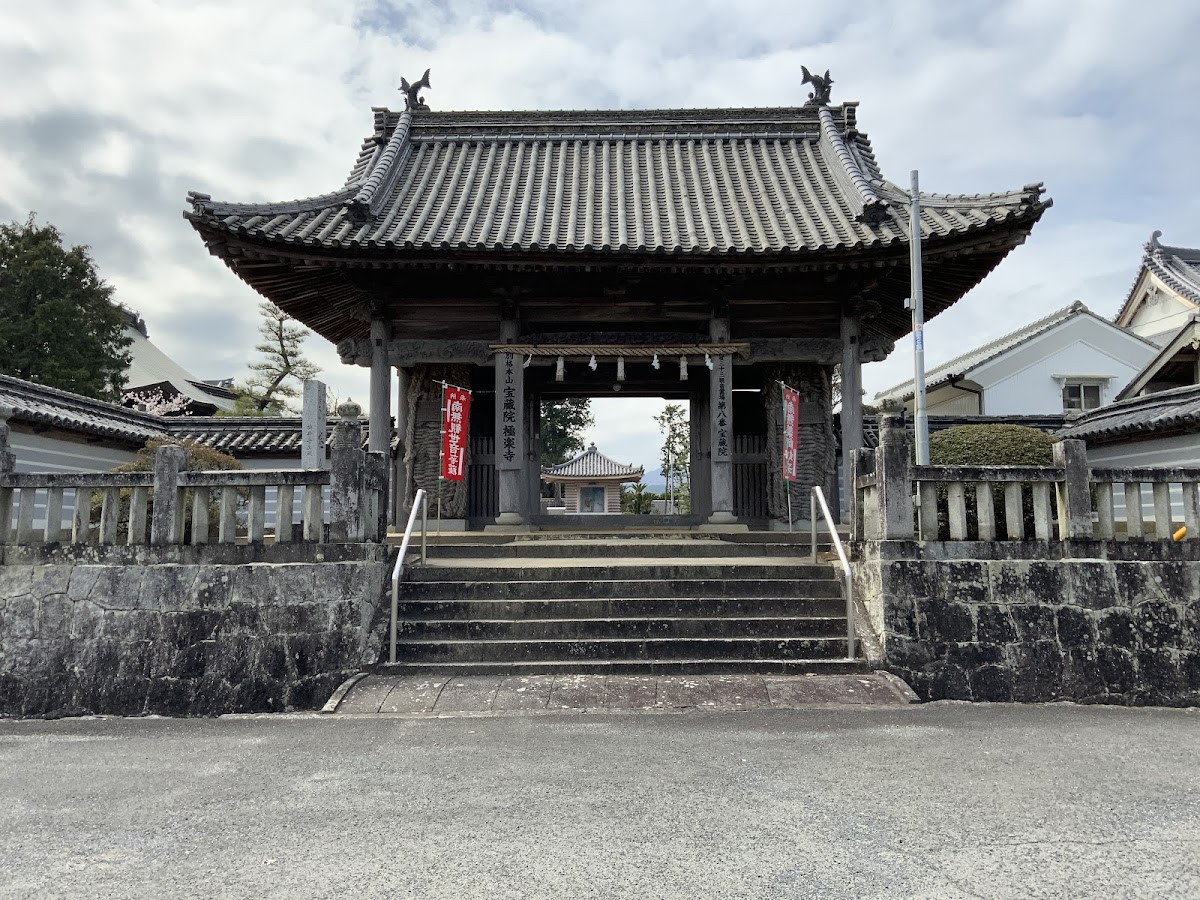
Within the temple grounds are essential structures for a temple, such as a bell tower, a water basin, and a main gate. Each building was renovated during the Edo period or later, and they convey the beauty of traditional temple architecture to this day.
Cultural Properties
Wooden Seated Amida Buddha Statue
The wooden seated Amida Buddha statue, the principal image of Goshoji Temple, is preserved as an important cultural property. Believed to be a work from the late Heian period to the early Kamakura period, its graceful mudra (hand gesture) speaks to the depth of Amida faith.
This Buddha statue symbolizes the faith of rebirth through chanting the Buddha’s name, a teaching of the Jishu sect, and is central to the history and faith of Goshoji Temple.
Statue Carved by Kobo Daishi
The statue of Kobo Daishi enshrined in the Daishido Hall is a precious statue said to have been carved by Kukai himself during his 42nd year, a year considered unlucky. This statue, imbued with a vow for protection against misfortune, has attracted the faith of people for over 1200 years.
While there is academic debate as to whether Kukai actually carved the statue, its historical value as a statue with miraculous powers for warding off evil has been highly regarded since ancient times.
Ancient Documents and Records
Goshoji Temple preserves many historical materials, including documents related to its restoration during the Edo period, records of successive chief priests, and offerings from worshippers. These materials are valuable historical resources for studying the history of Utazu Town and the Shikoku Pilgrimage.
Garden
The strolling garden itself is an important asset with cultural value. This garden, which conveys Edo period landscape gardening techniques to the present day, is valued as one of the precious historical gardens in Kagawa Prefecture.
Worship of Evil Removal and Annual Events
Faith as the Evil-Removing Utazu Daishi
Goshoji Temple is widely known as the “Evil-Removing Utazu Daishi,” particularly as a sacred site for warding off evil. According to legend, Kobo Daishi made a vow to ward off evil during his own unlucky year, and as a result, people from all over Japan who are facing their unlucky years visit the temple.
Many men and women in their unlucky years (25, 42, 61) and 19, 33, 37) visit to pray for protection against evil. The temple is especially crowded in the year before (the year before the main unlucky year) and during the main unlucky year itself.
Main Annual Events
Goshoji Temple holds various Buddhist services and events throughout the year.
- First three days of the New Year: The temple is bustling with visitors for their first shrine visit of the year, and prayers for protection against evil are offered.
- Setsubun Festival: A Setsubun memorial service is held around February 3rd, where prayers for protection against evil are offered.
- Spring and Autumn Equinox Festivals: Memorial services for ancestors are held.
- Kobo Daishi Memorial Service: A memorial service commemorating Kobo Daishi is held on the 21st of each month.
Special Goshuin (temple stamps) are sometimes given out during these events, making them popular with pilgrims and visitors.
Goshoji Temple as one of the 88 Shikoku Temples
Positioning as the 78th Temple
Goshoji Temple is the 78th temple of the 88 Shikoku Temples, and one of the temples in Sanuki Province (Kagawa Prefecture), the training ground for Nirvana. It is located approximately 7 km from Dōryūji Temple (Temple No. 77) and approximately 7 km from Tennōji Temple (Kōshōin Temple), Temple No. 79.
The Nirvana Dojo is the final stage of the Shikoku Pilgrimage and is considered an important section for approaching enlightenment. Visiting Kōshōji Temple is an important step toward completing the pilgrimage.
Proper Worship Etiquette
The formal worship etiquette for the Shikoku Pilgrimage is as follows:
- Bow at the Temple Gate: Bow and clasp your hands together before entering the temple grounds.
- Purify at the Water Basin: Cleanse your hands and mouth.
- Ring the Bell at the Bell Tower: Ring the bell before worshiping (do not ring it on your return).
- Worship at the Main Hall: Offer a lamp, incense, votive slips, and coins, and recite sutras.
- Worship at the Daishi Hall: Worship in the same way as at the Main Hall.
- Receive a Sutra at the Sutra Office: Receive a Goshuin (temple stamp).
At Goshoji Temple, both worshipping the principal image, Amida Buddha, and worshipping Kobo Daishi at the Daishi Hall are important.
About the Jishu and Shingon Sects
The most distinctive feature of Goshoji Temple is that it adheres to both the Jishu and Shingon sects. This is a unique form among the Shikoku Pilgrimage sites.
Shingon Buddhism is a sect of esoteric Buddhism founded by Kobo Daishi Kukai, and preaches attaining Buddhahood in this lifetime. The majority of the Shikoku 88 Temple Pilgrimage sites are Shingon temples.
Ji-shu Buddhism is a Pure Land Buddhist sect founded by Ippen Shonin, and preaches that everyone can attain rebirth in paradise equally through dancing nenbutsu and chanting “Namu Amida Butsu.”
Goshoji Temple, where these two sects coexist, is a rare existence in the history of Japanese Buddhism and is a temple of great interest from a religious studies perspective.
Transportation Access
Access by Public Transportation
By Train
- Approximately 20 minutes on foot (approx. 1.5 km) from JR Yosan Line “Utazu Station”
- Utazu Station is approximately 20 minutes from Takamatsu Station by rapid train and approximately 50 minutes from Okayama Station by limited express train.
- If taking a taxi from the station, it takes about 5 minutes and costs around 1,000 yen.
By Bus
- The community bus “Utazu Town Welfare Bus” is available (please check the operating days and times).
- A few minutes’ walk from the nearest bus stop.
Access by Car
Using Expressways
- Approximately 10 minutes (approx. 5 km) from Seto-Chuo Expressway “Sakaide IC”
- Approximately 20 minutes (approx. 12 km) from Takamatsu Expressway “Zentsuji IC”
Using General Roads
- Accessible via National Route 11 and Prefectural Road 33.
- Enter “Goshōji Temple” or the address “1435 Utazu-cho, Ayauta-gun, Kagawa Prefecture” into your car navigation system.
Parking Information
Goshōji Temple has a free parking lot for visitors. It can accommodate approximately 30 regular cars. There is also space for large buses, but it is recommended to contact the temple in advance.
During peak seasons (the first three days of the New Year, long holidays, etc.), it can get crowded, so please consider using public transportation.
Access via the Pilgrimage Route
From the Previous Temple (Temple No. 77, Doryuji)
- Distance: Approximately 7km
- Walking Time: Approximately 1 hour 40 minutes
- The pilgrimage route is a relatively flat path leading from Tadotsu Town to Utazu Town.
To the Next Temple (Temple No. 79, Tennoji)
- Distance: Approximately 7km
- Walking Time: Approximately 1 hour 40 minutes
- This is the road towards Sakaide City, with Shōtsūjiyama Mountain along the way.
Nearby Attractions
Ubushina Shrine
An ancient shrine located very close to Gōshōji Temple, it is worshipped as the local guardian deity. Many people visit this shrine when visiting Gōshōji Temple. It is also a place where you can feel the history of Shinto-Buddhist syncretism.
Jōsenji Temple
A Jōdo sect temple located in Utazu Town, known for its beautiful garden. It is within walking distance from Gōshōji Temple and is worth visiting if you have time.
Utazu Townscape
Utazu is a historic town that has flourished as a port town on the Seto Inland Sea since ancient times. Areas with old townscapes remain, making it a pleasant place to stroll. In recent years, new commercial facilities have also increased, creating a town where tradition and modernity coexist.
Seto Ohashi Bridge
The Seto Ohashi Bridge, visible from the grounds of Goshoji Temple, is a magnificent bridge connecting Honshu and Shikoku. Nearby is the Seto Ohashi Memorial Park, where you can enjoy a panoramic view of the bridge.
Gold Tower
This 158-meter-tall observation tower is a landmark of Utazu Town. From the observation room on the top floor, you can enjoy a 360-degree view of the Seto Inland Sea and the Sanuki Plain. It is approximately a 5-minute drive from Goshoji Temple.
Notes and Manners for Visiting the Temple
Visiting Hours
- Reception hours for the temple office: Usually 7:00 AM to 5:00 PM (may vary depending on the season)
- Entry to the temple grounds is generally free, but please refrain from visiting early in the morning or late at night.
Clothing and Belongings
- While wearing pilgrim attire is the formal way to visit, everyday clothes are also acceptable.
- However, please avoid revealing or flashy clothing.
- As the temple is located on a hill, comfortable walking shoes are recommended.
Photography
- Photography is generally permitted on the temple grounds, but it may be prohibited inside the main hall, etc.
- Please be considerate of other visitors.
- Permission is required in advance for commercial use.
Other Manners
- Smoking is prohibited on the temple grounds.
- Pets are generally not allowed (except for assistance dogs such as guide dogs).
- Please refrain from loud conversations and pray quietly.
- Please take your trash with you.
Preceding and Following Temples
Temple No. 77: Doryuji Temple
- Location: 1-3-30 Kitakamo, Tadotsu-cho, Nakatado-gun, Kagawa Prefecture
- Principal Image: Yakushi Nyorai (Medicine Buddha)
- Sect: Shingon-shu Daigo-ha
- Distance: Approximately 7km from Goshoji Temple
A beautiful temple with a main hall in the Momoyama style, known for its faith in healing eye diseases.
Temple No. 79: Tennoji Temple (Tennoji) Koshoin
- Location: 1713 Nishisho-cho, Sakaide City, Kagawa Prefecture
- Principal Image: Eleven-faced Kannon Bodhisattva
- Sect: Shingon-shu Omuro-ha
- Distance: Approximately 7km from Goshoji Temple
A temple associated with Emperor Sutoku, known, along with Shiramineji Temple, as a temple that comforts the spirit of Emperor Sutoku.
Summary
Goshōji Temple is a venerable temple with a history of nearly 1300 years, serving as the 78th temple of the Shikoku 88 Temple Pilgrimage and known as “Yakuyoke Utazu Daishi” (a temple for warding off evil). It is a rare temple deeply connected to three prominent figures in Japanese Buddhist history: its founding by Gyōki, the vow of protection against evil made by Kōbō Daishi, and its conversion to the Jishū sect by Ippen Shōnin.
As the only temple on the Shikoku Pilgrimage that adheres to both the Jishū and Shingon sects, Goshōji Temple boasts a beautiful strolling garden and a spectacular view of the Seto Ohashi Bridge from its grounds. Combining historical value and scenic beauty, Goshōji Temple is a place worth visiting not only for Shikoku pilgrims but also for general tourists.
Located on a hill in Utazu town, its convenient location within walking distance of JR Utazu Station is another attractive feature. Situated along the pilgrimage route from the 77th temple, Dōryūji, to the 79th temple, Tennōji, it is an important temple on the Shikoku pilgrimage itinerary. Whether you’re seeking protection from misfortune, aspiring to the Shikoku Pilgrimage, want to visit a historic temple, or simply want to enjoy the beautiful scenery of the Seto Inland Sea, why not visit Goshoji Temple for whatever purpose you have? It’s sure to be a memorable pilgrimage experience.