
Gozen Hachimangu Shrine (Tamano City, Okayama Prefecture) Complete Guide | History, Deities, Annual Events, and Access Information
Gozen Hachimangu Shrine, located in Misaki, Tamano City, Okayama Prefecture, is a historic shrine situated north of Hibi Port overlooking the Seto Inland Sea. Established in 1943 through the merger of three shrines, it remains a central hub of local faith, carefully preserved by its parishioners. This article provides a detailed overview of Gozen Hachimangu Shrine, including its history, deities, annual events, treasures, and visiting information.
About Gozen Hachimangu Shrine
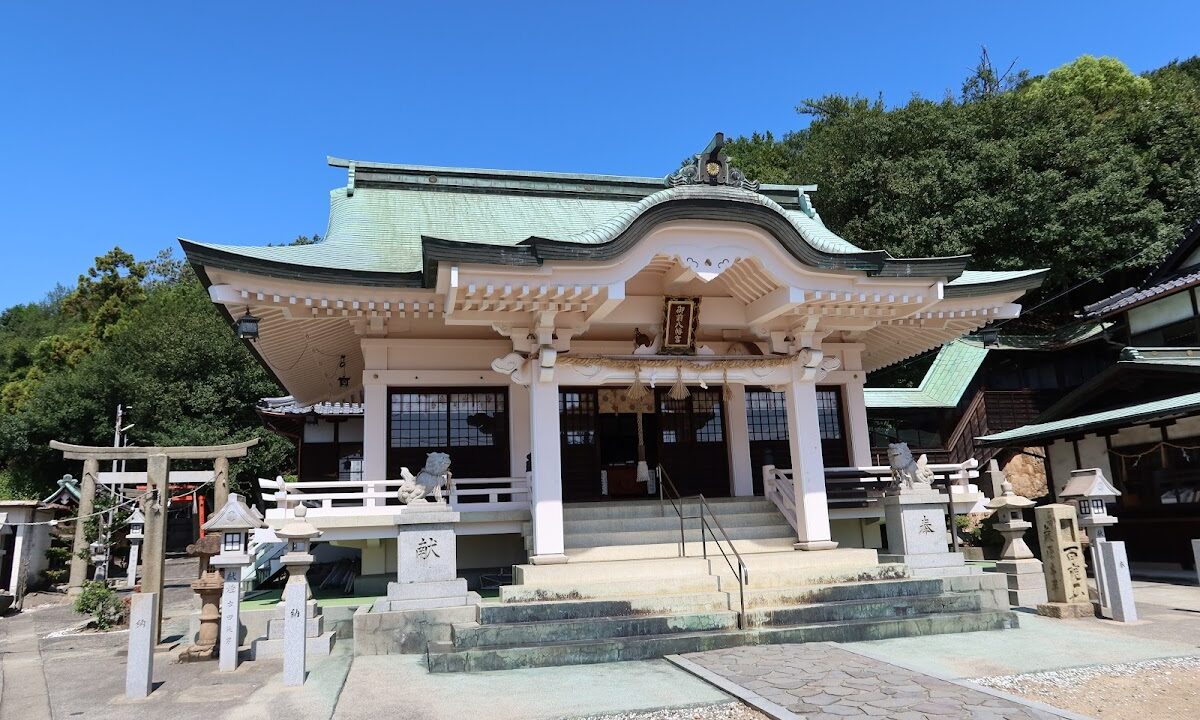
Gozen Hachimangu Shrine is located at 2-2-3 Misaki, Tamano City, Okayama Prefecture. It occupies a spacious grounds north of Hibi Kindergarten, across the road, and is set against a small hill. The well-maintained grounds exude a sacred atmosphere, reflecting the deep reverence of its parishioners.
The current Gozen Hachimangu Shrine is a relatively new shrine, established on September 20, 1943, through the merger of three shrines. However, its origins are ancient and deeply intertwined with the local history. Located approximately 600 meters north of Hibi Port, it has a close relationship with the maritime culture of the Seto Inland Sea.
History of Gozen Hachimangu Shrine
History of the Merger of Three Shrines
The establishment of Gozen Hachimangu Shrine dates back to September 20, 1943. At this time, the following three shrines were merged:
Hachiman Shrine in Hibi
- Deities: Emperor Chuai, Emperor Ojin, and Empress Jingu
- A Hachiman shrine that has been located in the Hibi area since ancient times.
Hachiman Shrine in Mukaihi
- Deities: Emperor Chuai, Emperor Ojin, and Empress Jingu
- Also known as Wada Hachiman Shrine, a Hachiman shrine that was located in the Mukaihi area.
Gozen Shrine
- Deities: Yamato Takeru and Sarutahiko
- A shrine that was revered as an ancient local shrine.
These three shrines were moved to their current location, and the name was changed to “Gozen Hachiman Shrine,” resulting in its current form.
Historical Background of Each Shrine
History of Hibi Hachiman Shrine
It is said that the Hachiman shrine that was located in Hibi was moved to the mountaintop during the Kenmu era (1334-1338). Later, during the Tenbun era (1532-1555), it was relocated to its former site in Hibinai, and for a long time it was revered as the guardian deity of the region.
Records of it remain in historical documents such as “Kibi Onko” and “Biyo Kokushi,” suggesting that it was a central figure in Hachiman worship in this region.
History of Wada Hachiman Shrine (Mukaihi Hachiman Shrine)
The Hachiman shrine located in the Mukaihi area, like the Hibi Hachiman Shrine, enshrined Emperor Chuai, Emperor Ojin, and Empress Jingu, and attracted the faith of the local people. Located around Hibi Port, a key point for maritime transport, it played an important role as a place to pray for safe voyages and regional prosperity.
History of Gozen Shrine
Gozen Shrine was an ancient shrine dedicated to Yamato Takeru and Sarutahiko. Yamato Takeru is known as a hero of the eastern expedition, and Sarutahiko is known as the god of opening roads. They were objects of worship for regional development, progress, and safe travels.
Background of the Merger
The year 1943 (Showa 18) was a time of wartime under the Second World War, a period of nationwide consolidation and merger of shrines. The establishment of Gozen Hachimangu Shrine is thought to have occurred within this historical context, with the aim of integrating local shrines and creating a stronger center of faith.
Deities Enshrined
Gozen Hachimangu Shrine enshrines all the deities of the three shrines that were merged.
Hachiman Gods (Emperor Ōjin, Emperor Chūai, Empress Jingū)
Emperor Ōjin
- 15th Emperor
- Central figure of the Hachiman Gods
- God of military fortune, national protection, and industrial development
Emperor Chūai
- 14th Emperor
- Father of Emperor Ōjin
- God of martial prowess and integrity
Empress Jingū
- Empress of Emperor Chūai, mother of Emperor Ōjin
- Known for the legend of the conquest of the Three Kingdoms of Korea
- God of safe childbirth, child-rearing, and victory
These three deities are enshrined as the “Three Hachiman Gods” in Hachiman shrines throughout Japan and are widely worshipped as gods of long-lasting military fortune, national peace and security, and industrial development.
Yamato Takeru no Mikoto
- Son of Emperor Keiko, the 12th Emperor of Japan
- Hero of the Eastern and Western Expeditions
- God of Valor, Pioneering, and Protection Against Evil
- Known for the Legend of the Kusanagi Sword
Yamato Takeru no Mikoto is a representative heroic deity in Japanese mythology, revered as a symbol of the power to overcome difficulties and the pioneering spirit.
Sarutahiko no Mikoto
- Kunitsukami (earthly deity) who guided the descent of the heavenly grandchild
- God of opening paths, traffic safety, and protection against misfortune
- God of guidance and good fortune
Sarutahiko no Mikoto is a god who guides all things in a positive direction, and is prayed to at crossroads in life and when starting new businesses.
List of Annual Events and Rituals at Gozen Hachimangu Shrine
Gozen Hachimangu Shrine holds various rituals throughout the year.
Setsubun Festival (February 3rd)
A traditional event held the day before the beginning of spring, where evil spirits are driven away by bean-throwing and prayers are made for good health throughout the year. The local community gathers, chanting “Demons out, fortune in!” creating a lively atmosphere.
Summer Purification Festival (July 29th)
A Shinto ritual to cleanse away the impurities accumulated over the past six months and pray for good health for the remaining half. This is an important event, equivalent to the summer purification ceremony held at many shrines, and sometimes includes activities such as passing through a ring of reeds.
Autumn Festival (Third Saturday and Sunday of October)
One of the most important annual events at Gozen Hachimangu Shrine. Thanks are given for a bountiful harvest and the prosperity of the community, with a portable shrine procession and offerings. The entire parish area is enveloped in a festive atmosphere, and it serves as a place for the transmission of traditional culture.
The festival is celebrated grandly over two days, with the eve of the festival held on Saturday and the main festival on Sunday. It is a significant opportunity to deepen community ties and attracts many worshippers.
Treasures of Gozen Hachimangu Shrine
Gozen Hachimangu Shrine is not usually open to the public, but it houses valuable treasures.
A Single Sword
This sword has historical value and is an important treasure that tells the story of the shrine’s origins. It is carefully preserved as a sacred treasure befitting a Hachimangu shrine dedicated to the god of war.
Go-o (Cattle Stone)
This is a gallstone formed in the gallbladder of a cow, and has been treasured since ancient times for its medicinal and protective properties. It is an extremely rare treasure.
Horse Horn
This is a rare treasure—a horse horn—and is thought to have been dedicated to the shrine as a sign of good fortune.
Lower Jaw of a Giant Snake
This is an extremely rare treasure—the lower jaw of a giant snake—and is presumed to be related to local legends and beliefs. Connections to dragon god worship and water god worship are also possible.
These treasures are carefully preserved as valuable cultural assets that demonstrate the history of the shrine and the depth of local faith.
Highlights of the Shrine Grounds
Shrine Building
The shrine building, built against a small hill, is meticulously maintained and exudes a solemn atmosphere. It exhibits a typical shrine architectural style, consisting of a worship hall and main sanctuary, and quietly welcomes visitors.
Shrine Grounds Environment
The shrine grounds are quite spacious, creating a tranquil space surrounded by trees. Located adjacent to Hibi Kindergarten across the road, it harmonizes with local educational facilities.
The grounds are carefully cleaned and maintained by the parishioners, creating a sacred space that inspires a sense of reverence in visitors.
Komainu (Guardian Dogs)
Komainu are placed within the shrine grounds, watching over visitors. Their sculptures, reflecting the local stonemasonry culture, are well worth seeing.
Access and Basic Information to Gozen Hachimangu Shrine
Location
2-2-3 Misaki, Tamano City, Okayama Prefecture 706-0024
Phone Number
0863-81-6373
Transportation Access
Access by Train
- Approximately 53 minutes on foot (approx. 4.2 km) from JR Uno Line “Uno Station”
- Taking a taxi from Uno Station is convenient
Access by Bus
- Approximately 1 minute on foot (approx. 34 m) from the “Misaki” bus stop
- Very close to the bus stop, making it easily accessible by public transport
Access by Car
- Approximately 30 minutes from Seto-Chuo Expressway “Mizushima IC”
- Head towards Hibi Port, using Hibi Kindergarten as a landmark
- Parking: Parking space available on the shrine grounds
Visiting Hours
The shrine grounds are generally open for free visits. However, it is recommended to refrain from visiting at night. If you wish to receive a Goshuin (temple/shrine stamp) or prayer, we recommend calling ahead to confirm.
About Goshuin
Goshuin are available at Gozen Hachimangu Shrine. Those wishing to receive a Goshuin should inquire at the shrine office. However, staff may be absent, so if you are certain you will receive a Goshuin, we recommend calling ahead to confirm.
A Goshuin is proof of your visit and a record of your connection with the deity. Please handle it carefully and keep it safely in your Goshuincho (stamp book).
Manners and Etiquette for Visiting a Shrine
Basic Visiting Etiquette
- Bow Before Passing Through the Torii Gate
As a sign of respect before entering the sacred area, bow before the torii gate.
- Purify Your Body and Mind at the Water Basin
Purify your left hand, then your right hand, rinse your mouth, and finally purify your left hand.
- Worship at the Main Hall
Worship is performed using the two bows, two claps, and one bow ritual.
- Bow deeply twice
- Clap your hands twice
- Bow deeply once
- Bow at the Torii Gate Upon Departure
When leaving the sacred area, turn around and bow once.
Points to Note During Worship
- Worship quietly and be considerate of other worshippers.
- Refrain from eating, drinking, or smoking on the shrine grounds.
- Refrain from bringing pets to the shrine, or carry them if necessary.
- Photography is permitted, but refrain from taking pictures inside the main hall or during religious ceremonies.
Nearby Tourist Attractions
Hibi Port
Located approximately 600 meters south of Gozen Hachimangu Shrine, this port offers beautiful views of the Seto Inland Sea. Enjoy the atmosphere of a fishing port and the calm waters of the Seto Inland Sea.
Uno Port
The central port of Tamano City, also known as one of the venues for the Setouchi Triennale. Art installations are scattered throughout the area, and there are unique cafes and shops around the ferry terminal.
Shibukawa Coast
A beautiful coast selected as one of “Japan’s Top 100 Beaches,” featuring a landscape of white sand and green pine trees. It’s bustling with swimmers in the summer and enjoyable for walks throughout the year.
The Connection Between Gozen Hachimangu Shrine and the Community
Gozen Hachimangu Shrine plays a central role in the local community as the tutelary shrine of the Misaki district of Tamano City. Annual events, including the autumn festival, provide important opportunities for local people to gather and deepen their bonds.
Located next to Hibi Kindergarten, it’s also a familiar shrine for children. Many people visit for life’s milestones such as Shichi-Go-San (a traditional rite of passage for children) and Hatsumiyamairi (a first shrine visit for newborns), deeply connecting it to the lives of local residents.
The careful maintenance of the shrine grounds by parishioners and the continuation of traditional events are important activities that connect the local culture to the next generation. ## Summary
Gozen Hachimangu Shrine, while established in 1943 through the merger of three shrines, inherits the long history and traditions of each individual shrine. It enshrines five deities—Emperor Ojin, Emperor Chuai, Empress Jingu, Yamato Takeru, and Sarutahiko-no-Mikoto—and is a shrine offering diverse blessings, including military success, good fortune, traffic safety, and child-rearing.
With its well-maintained grounds, precious treasures, and locally rooted annual events, it offers many reasons to visit. When visiting Tamano City, surrounded by the beautiful scenery of the Seto Inland Sea, we highly recommend visiting Gozen Hachimangu Shrine and spending some time in quiet prayer.
Gozen Hachimangu Shrine, cherished and protected by the local community, will undoubtedly continue to be a spiritual pillar of the Misaki district of Tamano City and a source of comfort for many people.


