
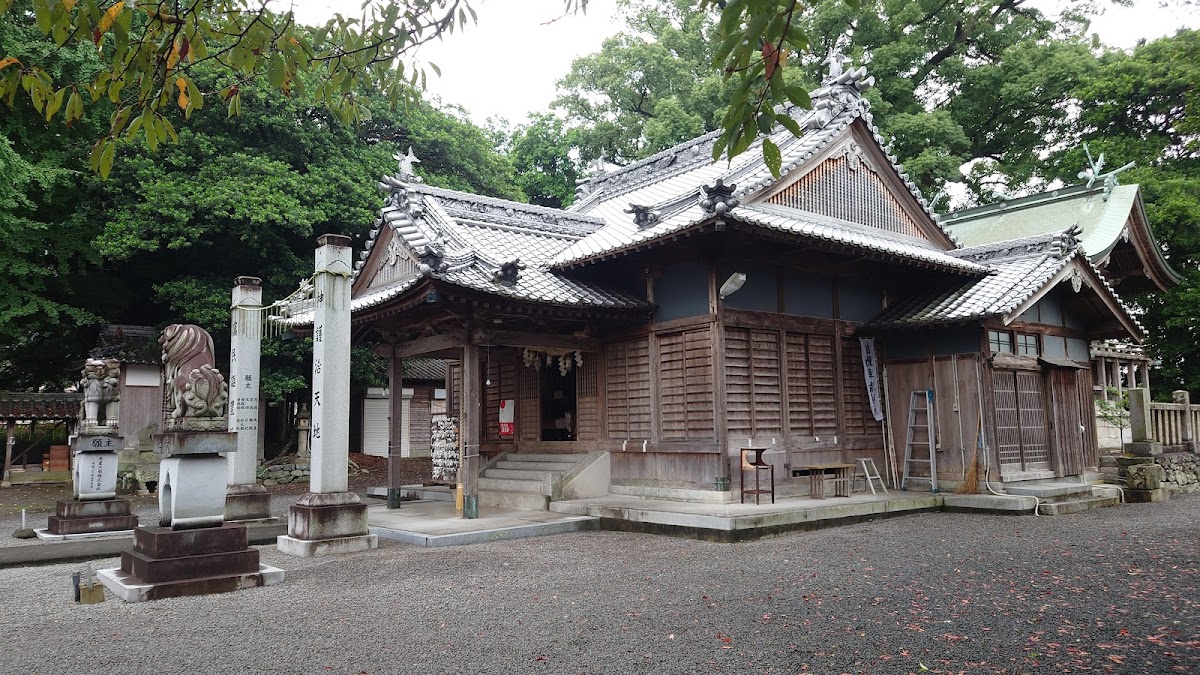
Hachiman Daijingu Shrine (Noda-ko, Doi-cho, Shikokuchuo City, Ehime Prefecture) Complete Guide | Exploring the Sacred Camphor Tree and History
Hachiman Daijingu Shrine, located in Noda-ko, Doi-cho, Shikokuchuo City, Ehime Prefecture, is a historic shrine that attracts the faith of the local community. The sacred camphor tree towering over the shrine grounds, said to be several hundred years old, far surpasses the size of the main hall, overwhelming visitors. This article provides the most detailed information about Hachiman Daijingu Shrine, from basic information and history to highlights and access methods.
Basic Information about Hachiman Daijinja Shrine
Location and Contact Information
Shrine Name: Hachiman Daijinja Shrine
Location: 1203 Noda-ko, Doi-cho, Shikokuchuo City, Ehime Prefecture 799-0705
Phone Number: 0896-74-4062
Jurisdiction: Ehime Prefectural Shrine Association
Hachiman Daijinja Shrine is located in the Noda district of Doi-cho, Shikokuchuo City, and is affectionately known as “Noda no Hachiman-san” by local residents. While the shrine’s name is written as “Hachiman Daijinja Shrine,” it is sometimes referred to as “Hachiman Shrine” locally.
Deities Enshrined
The deities enshrined at Hachiman Daijinja Shrine, like those of other Hachiman-related shrines throughout Japan, are the following:
- Emperor Ōjin
- Empress Jingū
- Hime Ōkami
These deities are believed to possess a wide range of divine virtues, including military fortune, national protection, safe childbirth, child-rearing, agriculture, and fishing, and have been revered as guardian deities of the region.
Shrine Rank and History
While there are no clear records of the founding date of Hachiman Daijinja Shrine, local traditions suggest that it was worshipped as the tutelary deity of the Noda area from the medieval to the early modern period. During the Edo period, it became one of the influential shrines in the Doi region, deeply rooted in the local community, and played an important role as a place to pray for abundant harvests in agriculture and fishing.
Even during the Meiji era’s shrine system reforms, it was positioned as a central shrine in the region, and to this day, it remains a center of faith for the Noda area and surrounding regions.
Highlights of Hachiman Daijingu Shrine
The Sacred Camphor Tree – Town-Designated Natural Monument
The most impressive sight when visiting Hachiman Daijingu Shrine is the gigantic camphor tree towering over the grounds. This sacred tree was designated a natural monument of Doi Town (at the time) on June 29, 1981, and is protected as a valuable cultural asset of the region.
Characteristics of the Great Camphor Tree:
- Estimated age: several hundred years
- Height: more than twice the height of the main shrine building, visible from afar
- Trunk circumference: so thick that several people holding hands cannot reach around it
- Wide branch spread, providing ample shade in summer
- Revered as a sacred tree by local residents
This great camphor tree is not merely a tree; it is a living witness to history, having watched over the shrine for many years. The tree’s appearance changes with the seasons, allowing visitors to feel the mystery and vitality of nature.
Atmosphere of the Shrine Grounds
The grounds of Hachiman Daijingu Shrine maintain a tranquil atmosphere befitting a local shrine. Passing through the torii gate, a path leads to the shrine buildings. The grounds are meticulously cleaned and maintained by local residents, creating a peaceful and serene atmosphere.
The main hall is built in a traditional shrine architectural style, showcasing the craftsmanship of artisans in every detail. The worship hall is where daily prayers and festivals are held, functioning as the spiritual center of the local community.
Annual Events and Festivals
Hachiman Daijingu Shrine holds various festivals throughout the year. The autumn grand festival, in particular, is known as the largest event in the region, attracting many worshippers. The festival includes a procession of portable shrines and offering ceremonies, serving as a venue for the transmission of traditional culture.
How to Access Hachiman Daijingu Shrine
Access by Train
Nearest Station: JR Yosan Line “Akahoshi Station”
While Hachiman Daijingu Shrine is within walking distance from Akahoshi Station, it is recommended to use a car or taxi due to the distance. There is a taxi stand near the station, and the shrine is approximately 5 minutes away.
Access by Car
From the Expressway:
- Approximately 10 minutes from Matsuyama Expressway “Doi IC”
- Convenient access from National Route 11
Parking: There is parking space for visitors within or around the shrine grounds (spaces are limited, so caution is advised during festivals).
How to Search Using Car Navigation/Map Apps
When searching using car navigation or smartphone map apps, please enter the following information.
- Address: 1203 Noda-ko, Doi-cho, Shikokuchuo City, Ehime Prefecture
- Phone Number: 0896-74-4062
- Facility Name: Hachiman Daijinja Shrine
Using major map services such as Google Maps and Yahoo! Maps, searching for “Hachiman Daijinja Shrine Doi-cho” will display the accurate location.
Information about the area around Hachiman Daijinja Shrine
About Doi-cho, Shikokuchuo City
Shikokuchuo City is located at the eastern edge of Ehime Prefecture, close to the borders of Kagawa, Tokushima, and Kochi Prefectures. The Doi-cho area is known as a region with a thriving paper industry, where rich nature and industry coexist.
Characteristics of Doi Town:
- A naturally rich environment with the clear waters of the Dozan River.
- An industrial area with a concentration of paper-related industries.
- Agriculture is also thriving, with rice and vegetable cultivation.
- A cultural area with numerous historical shrines and temples.
Nearby Shrines and Temples
Besides Hachiman Daijingu Shrine, there are many other shrines in Shikokuchuo City. The following shrines are located around Doi Town:
- Shrine in Irino, Doi-cho
- Shrine in Ueno, Doi-cho
- Shrine in Kaburazaki, Doi-cho
- Shrine in Kitano, Doi-cho
- Shrine in Kobayashi, Doi-cho
- Shrine in Tsune, Doi-cho
- Shrine in Tenma, Doi-cho
- Shrine in Doi, Doi-cho
- Shrine in Nakamura, Doi-cho
- Shrine in Hatano, Doi-cho
- Shrine in Fujiwara, Doi-cho
Visiting these shrines on a “shrine pilgrimage” is a great opportunity to learn about the charm of the region.
Nearby Tourist Spots
Dozan River: Known for its clear waters, the Dozan River is a beautiful river flowing through Doi-cho. A promenade is maintained along the river, making it ideal for a stroll.
Gusada Observatory: An observatory offering panoramic views of Shikokuchuo City, with a spectacular view stretching all the way to the Seto Inland Sea.
Suiha Plateau: A plateau where rapeseed flowers bloom in spring and cosmos flowers bloom in autumn, making it a popular tourist destination for families.
Historical Background of Hachiman Daijinja Shrine
What is Hachiman Faith?
Hachiman faith is one of Japan’s indigenous Shinto beliefs, a belief system that enshrines Emperor Ojin as its principal deity. With approximately 44,000 Hachiman shrines and Hachiman-gu shrines nationwide, it is the second most numerous type of shrine after Inari shrines.
Characteristics of Hachiman Faith:
- Strong character as a god of war
- Also worshipped as a god of agriculture and fishing
- Revered as a guardian deity of the region
- Attracted widespread faith from commoners to the samurai class
Hachiman Faith in the Doi Region
In the Doi region of eastern Ehime Prefecture, Hachiman faith has been deeply rooted since ancient times. Because it was a region where agriculture flourished, Hachiman Daijin was revered as a god for praying for bountiful harvests and rain. Furthermore, due to its location near the Seto Inland Sea, it also attracted worshippers as a guardian deity of maritime safety and fishing.
The Hachiman Grand Shrine in the Noda district is thought to have developed by consolidating these local beliefs. According to Edo period records, regular festivals were held, and many worshippers from surrounding settlements visited the shrine.
Changes Since the Meiji Era
Due to the Meiji era’s shrine consolidation policy, many small shrines throughout the country were merged, but the Hachiman Grand Shrine survived as a central shrine in the region. In the Showa era, the shrine grounds were renovated and the shrine buildings were repaired, taking on its current form.
Even after the Heisei-era mergers, which made Doi Town part of Shikokuchuo City, the Hachiman Grand Shrine continues to attract unwavering worshippers as the tutelary deity of the Noda district.
Manners and Etiquette for Worship
Basic Worship Etiquette
When visiting a shrine, please observe the following basic etiquette.
1. How to Pass Through the Torii Gate
- Bow before passing through the torii gate.
- Walk along the edge of the path, as the center is the path for the gods.
2. How to Wash Your Hands
- Hold the ladle in your right hand and wash your left hand.
- Switch the ladle to your left hand and wash your right hand.
- Switch the ladle back to your right hand, receive water in your left hand, and rinse your mouth.
- Finally, hold the ladle upright and wash the handle.
3. Worship at the Main Hall
- Quietly place your offering in the offering box.
- Ring the bell if there is one.
- Perform the two bows, two claps, and one bow (two deep bows, two claps, one deep bow).
Regarding Photography
Photography is generally permitted on the shrine grounds, but please note the following:
- Please refrain from taking photos inside the main shrine.
- Please be considerate of other worshippers.
- Please be mindful of the sacred nature of the place and take photos with respect.
- The sacred camphor tree is a popular photo spot, but please be careful not to damage the tree.
About the Shrine Office and Goshuin (Shrine Seals)
Shrine Office Services
At Hachiman Daijingu Shrine, the shrine office may not always be staffed. If you wish to obtain a goshuin or amulet, it is recommended to call in advance to confirm.
Contact Information: 0896-74-4062
At local shrines, the chief priest often serves multiple shrines, and may only be able to provide services on specific dates and times. For guaranteed service, it is best to contact in advance.
About Goshuin (Shrine Seals)
Goshuin are popular as souvenirs of shrine visits, but it is necessary to check in advance about availability at Hachiman Daijingu Shrine. It is important to bring your goshuincho (seal book) and make your request politely.
Other Hachiman Shrines in Shikokuchuo City
Besides Hachiman Daijingu Shrine (Doi-cho Noda-ko), there are other Hachiman shrines in Shikokuchuo City.
Hachiman Daijingu Shrine (Tomisato-cho Kangawa-yama): This is another Hachiman Daijingu Shrine located at 239-2 Kangawa-yama, Tomisato-cho, Shikokuchuo City, Ehime Prefecture 799-0643. Since there are multiple shrines with the same name in the same city, be sure to carefully check the address when searching or visiting.
As such, Hachiman worship is widespread throughout Shikokuchuo City, and each region has cultivated its own unique history and beliefs.
Connections to the Community
Center of the Local Community
Hachiman Daijingu Shrine is not merely a religious facility; it functions as a spiritual pillar of the local community. During festivals, local residents participate wholeheartedly in preparation and operation, creating a place for intergenerational exchange.
Community Involvement:
- Community interaction through annual events
- Volunteer activities such as cleaning
- Preservation of traditional culture
- Local history education for children
- Creating a sense of purpose for the elderly
Cultural Property Protection Activities
The cultural properties within the shrine grounds, including the sacred camphor tree, are protected with the cooperation of local residents. The camphor tree, designated as a natural monument, undergoes regular health checks by arborists, and appropriate conservation measures are taken.
How to Use with Smartphones
Utilizing QR Codes
Nowadays, information about shrines can be easily obtained using smartphones. When visiting Hachiman Daijingu Shrine, you can use QR codes in the following ways:
Using Map Apps:
- Search for “Hachiman Daijinja Shrine, Doi-cho Noda” on Google Maps
- Use the route guidance function from your current location
- You can also check nearby parking information.
Information Gathering:
- Check detailed information on the official website of the Ehime Prefectural Shrine Association
- Check the latest information on visitor review sites (such as Hotokami)
- Search for hashtags such as “#HachimanDaijinja” and “#Doi-cho” on social media.
Photography Recording:
- Photograph the sacred camphor tree from various angles
- Record the seasonal changes in the shrine grounds
- Share your visit memories on social media (with moderation)
Digital Goshuincho (Shrine Stamp Book)
Recently, “digital goshuincho,” which record and manage goshuin (shrine stamps) using smartphone apps, have become popular. Because you can save visit records and photos along with actual goshuin, it expands the enjoyment of visiting shrines.
Hachiman Daijingu Shrine Through the Seasons
Spring (March-May)
Spring at Hachiman Daijingu Shrine is a beautiful season of fresh greenery. The sacred camphor tree sprouts new leaves, displaying a vibrant and life-affirming appearance. Spring festivals are held, bringing renewed energy to the community.
Summer (June-August)
In summer, the shrine grounds are enveloped in deep green. The shade provided by the branches of the camphor tree is cool, making visits comfortable even on hot days. The sound of cicadas fills the grounds, evoking the quintessential Japanese summer scene.
Autumn (September-November)
Autumn is the busiest season at Hachiman Daijingu Shrine. The annual festival is held, attracting local residents. The trees in the grounds begin to change color, creating a beautiful contrast between the autumn leaves and the evergreen camphor tree.
Winter (December-February)
In winter, Hachiman Daijingu Shrine is enveloped in silence. While the number of visitors decreases, visiting the shrine in this serene atmosphere is a truly refreshing experience. During the New Year’s holiday, it becomes bustling with visitors for their first shrine visit of the year.
Points to Note When Visiting Hachiman Daijingu Shrine
Clothing
While no special attire is required for visiting the shrine, please consider the following:
- Avoid overly revealing clothing.
- Choose comfortable shoes as the grounds have gravel paths and stone steps.
- Insect repellent is recommended in summer.
- Don’t forget to dress warmly in winter.
Visiting Hours
While the shrine is generally open 24 hours for worship, the shrine office has limited operating hours. If you wish to receive a Goshuin (shrine stamp) or prayers, it is recommended to visit during daytime hours.
Observing Manners
- Please be quiet within the shrine grounds.
- Please take all your trash with you.
- Do not touch or damage the sacred trees or buildings.
- Please be considerate of other visitors.
- If you are bringing a pet, please follow the shrine’s rules.
Summary: The Charm of Hachiman Daijingu Shrine
Hachiman Daijingu Shrine, located in Noda-ko, Doi-cho, Shikokuchuo City, Ehime Prefecture, is a shrine with a rich history and tradition, symbolized by its sacred camphor tree, which is hundreds of years old. This shrine, which has gathered the faith of local people and functioned as a community center, allows visitors to feel the richness of Japanese spiritual culture.
The time spent calming the mind in the quiet shrine grounds, away from the hustle and bustle of the city, will be a valuable experience for modern people. When visiting Shikokuchuo City, be sure to visit Hachiman Daijingu Shrine and feel the weight of history and the power of nature in front of the sacred camphor tree.
It is easily accessible from Akahoshi Station, and there are other tourist spots scattered around, so it is recommended to visit as part of a shrine tour or local exploration. Please enjoy a peaceful moment in this place of faith nurtured by the warm hearts of the local people and a long history.
Frequently Asked Questions about Hachiman Daijingu Shrine in Shikokuchuo City, Ehime Prefecture
Q1: What is the address and postal code of Hachiman Daijingu Shrine?
A1: The address of Hachiman Daijingu Shrine is “1203 Noda-ko, Doi-cho, Shikokuchuo City, Ehime Prefecture,” and the postal code is “〒799-0705.” When searching using a car navigation system or smartphone map app, please enter this address or the phone number (0896-74-4062).
Q2: Please tell me more about the sacred tree of Hachiman Daijingu Shrine.
A2: Within the grounds of Hachiman Daijingu Shrine is a giant camphor tree said to be several hundred years old, which was designated a natural monument of Doi-cho (at the time) on June 29, 1981. This large camphor tree is more than twice the height of the main shrine building, and its trunk is extremely thick, giving it a presence that can be seen from afar. It is revered as a sacred tree by local residents and is one of the main attractions when visiting Hachiman Daijingu Shrine.
Q3: How do I get to Hachiman Daijingu Shrine?
A3: By train, the nearest station is Akahoshi Station on the JR Yosan Line. It’s within walking distance from the station, but it’s a bit of a distance, so taking a taxi is recommended (approximately 5 minutes). By car, it’s about 10 minutes from the Doi Interchange on the Matsuyama Expressway, and also accessible from National Route 11. There is parking available for visitors on or around the shrine grounds.
Q4: Can I get a Goshuin (shrine stamp)?
A4: The shrine office at Hachiman Daijingu Shrine may not always be staffed. If you wish to receive a Goshuin, we recommend checking in advance by phone (0896-74-4062). In many local shrines, the chief priest serves multiple shrines, and may only be available on specific dates and times.
Q5: When are the festivals held at Hachiman Daijingu Shrine?
A5: Hachiman Daijingu Shrine holds various festivals throughout the year, and the autumn grand festival is particularly well-known as the largest event in the region. For specific dates, please contact the Ehime Prefectural Shrine Association or the shrine directly. During the festival, there are processions of portable shrines and dedication ceremonies, attracting many worshippers.
Q6: Are there other Hachiman Daijingu Shrines in Shikokuchuo City?
A6: Yes, in addition to the Hachiman Daijingu Shrine in Noda-ko, Doi-cho, Shikokuchuo City, there is also a Hachiman Daijingu Shrine at 239-2, Kangawa-yama, Tomisato-cho. Since there are multiple shrines with the same name in the same city, it is important to carefully check the address when visiting or searching. Each is a separate shrine with its own unique history and beliefs.
Q7: Who are the deities enshrined at Hachiman Daijinja Shrine?
A7: The deities enshrined at Hachiman Daijinja Shrine are Emperor Ojin, Empress Jingu, and Hime Okami. These deities are believed to possess a wide range of divine virtues, including military fortune, national protection, safe childbirth, child-rearing, agriculture, and fishing, and are revered as guardian deities of the region. The deities enshrined are the same as those found at Hachiman-type shrines throughout Japan.
Q8: Is there a suitable time to visit?
A8: The shrine is generally open for worship 24 hours a day, but if you wish to be assisted by the shrine office, daytime hours (around 9:00 AM to 5:00 PM) are suitable. For those who wish to worship in peace, early morning is recommended. In summer, the cooler hours of the morning and evening are preferable to avoid the midday heat, and in winter, the warmer hours of the day are more comfortable.
Q9: Are there any tourist spots around Hachiman Daijinja Shrine?
A9: There are tourist spots around Hachiman Daijinja Shrine, such as the clear stream of the Dozan River, the Gujo Observatory, and the Suiha Plateau. Furthermore, there are many other shrines and temples scattered throughout Doi-cho, Shikokuchuo City, making it a great place to enjoy a shrine tour. There are also facilities where you can learn about the history of the paper industry, as well as direct sales outlets selling local specialties.
Q10: Is photography allowed at Hachiman Daijingu Shrine?
A10: Photography is generally permitted on the shrine grounds, but please refrain from taking photos inside the main hall and be considerate of other visitors. The sacred camphor tree is a popular photo spot, but please be careful not to damage the tree. It is important to be mindful of the sacred nature of the place and take photos with respect.


