Hachiman Shrine (Miyamae-cho, Kofu City, Yamanashi Prefecture) Complete Guide | History and Goshuin Information of the Kai Province’s Grand Shrine
About Hachiman Shrine (Miyamae-cho, Kofu City)
Hachiman Shrine, located at 6-47 Miyamae-cho, Kofu City, Yamanashi Prefecture, is a historically significant shrine also known as “Kai Grand Shrine Hachiman Shrine,” “Kai Province Grand Shrine,” and “Kokufu Hachiman Shrine.” It is located about a 14-minute walk from the north exit of Kofu Station, east of Takeda Street leading to Takeda Shrine. With its spacious, south-facing grounds, it is a shrine that commands the reverence of the local community.
Its former shrine rank was Prefectural Shrine, and as the Grand Shrine of Kai Province, it holds the status of the only Hachiman shrine in the province. Long worshipped as the tutelary deity of the Takeda family, it is a shrine deeply intertwined with the history of Kofu and continues to attract many worshippers today.
About the Enshrined Deities
The enshrined deities of Hachiman Shrine are the three gods central to Hachiman worship.
Hondawake-no-Mikoto
This deity is a deified version of Emperor Ōjin and is widely worshipped as Hachiman. He is revered as a god of military success, victory in competitions, and national protection, and is particularly revered by samurai families.
Okinagatarashihime-no-Mikoto
This refers to Empress Jingū, the mother of Emperor Ōjin. She is worshipped as a goddess of safe childbirth, child-rearing, and family safety.
Hime-Ōkami
Also known as one of the Munakata Three Goddesses, she is known as a goddess of maritime safety and traffic safety. In Hachiman worship, she is enshrined as a goddess who accompanies Hondawake-no-Mikoto.
These three deities are believed to grant a wide range of blessings, including not only military success, but also family prosperity, business success, and protection from misfortune and good fortune.
History and Changes of Hachiman Shrine
Origin of Founding and Relationship with the Takeda Family
The history of Hachiman Shrine dates back to the Jokyu era (1219-1222). It is said to have begun when Ishiwa Goro Takeda Nobumitsu, the fourth generation descendant of Shinra Saburo Yoshimitsu, the founder of the Kai Minamoto clan, invited a divided spirit from Tsurugaoka Hachiman Shrine in Kamakura to his residence in Ishiwa.
Initially, it was called “Kokuga Hachiman Shrine” and was deeply revered as the tutelary deity of the Takeda family. While located in Ishiwa, it was also called “Ishiwa Wakamiya Hachiman” and was an important shrine where the Takeda family prayed for continued military success.
Relocation to Kofu
In the early 16th century, when Takeda Nobutora, the 18th head of the Takeda family, moved his base from Ishiwa to Kofu, Hachiman Shrine was also relocated to Kofu. In 1519, Nobutora built Tsutsujigasaki Castle (the current site of Takeda Shrine) and established Kofu as his base of operations. Therefore, the Hachiman Shrine, his family’s tutelary shrine, was also moved.
This relocation led to the Hachiman Shrine becoming known as “Fuchu Hachiman” in Kofu, and it continued to watch over the prosperity of the Takeda family throughout the era of Takeda Shingen.
Construction of Kofu Castle and Relocation to Current Location
The relocation to the current location in Miyamae-cho, Kofu City, took place between the end of the Tensho era and the Bunroku era (1590s). It is believed that Asano Nagamasa (one of Toyotomi Hideyoshi’s Five Commissioners), who built Kofu Castle, relocated the Hachiman Shrine to its current location as part of the development of the castle town.
This relocation meant that the Hachiman Shrine was located on the north side of the Kofu castle town, and it came to play the role of the guardian deity of the entire region as the main shrine of Kai Province. Throughout the Edo period, it was revered by successive lords of Kofu Castle and their subjects, and in the Meiji era, it was ranked as a prefectural shrine.
Highlights and Cultural Assets of the Shrine Grounds
Shrine Buildings and Architectural Style
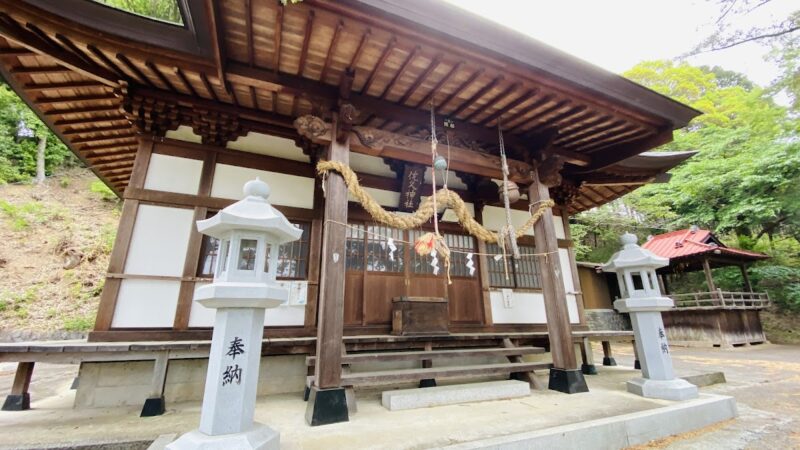
The grounds of Hachiman Shrine spread out facing south, and as you proceed along the approach, a magnificent shrine building appears. The shrine building inherits the traditional style of shrine architecture, with a structure consisting of the main hall, worship hall, and offering hall.
The construction of the shrine building is simple and sturdy, exuding a dignified atmosphere befitting a samurai family’s tutelary shrine. While the carvings and decorations are understated, they are meticulously crafted down to the smallest detail, showcasing the high level of skill of the craftsmen.
Atmosphere and Characteristics of the Shrine Grounds
The shrine grounds are spacious, and after passing through the large torii gate, an open space unfolds. The shrine name marker is inscribed with “Hachiman Shrine,” welcoming visitors.
A distinctive feature is the presence of a sports field adjacent to the shrine grounds. It is used for local sports activities, demonstrating the shrine’s function as a center of the local community.
Burial Mound Behind the Shrine
Behind the shrine is a small hill, believed to be a burial mound. Although overgrown with vegetation, climbing to the top reveals scattered large stones, creating a mystical atmosphere.
This hill suggests that this area may have been recognized as a sacred place since ancient times, and it may have been an object of worship even before the Hachiman Shrine was established. Its historical value is high, making it one of the important points of interest within the shrine grounds.
Subsidiary Shrines and Stone Monuments
In addition to the main shrine building, several subsidiary shrines and stone monuments are located within the grounds. Stone monuments such as the “Maintenance Monument” remain, indicating the history of the shrine’s repair and maintenance, telling the story of how the local people have carefully protected this shrine for generations.
Annual Festivals and Events
Various Shinto rituals are performed at Hachiman Shrine throughout the year.
Grand Festival
The Grand Festival, held every autumn, is the most important festival of Hachiman Shrine. Parishioners and local residents gather for the procession of the portable shrine and the dedication ceremonies. As a shrine associated with the Takeda family, traditional festivals praying for military success and regional prosperity are passed down.
Other Annual Events
Throughout the year, traditional Japanese Shinto rituals are performed, including the New Year’s Day festival, the Setsubun festival, and the summer purification ceremony. These rituals are closely intertwined with the lives of the local people and provide important opportunities to feel the changing seasons.
About Goshuin (Shrine Seals)
Issuance of Goshuin
Hachiman Shrine offers Goshuin (shrine seals). The Goshuin will have the calligraphy “Hachiman Shrine” or “Kai Sōsha Hachiman Shrine” and the shrine’s red seal.
Place and Time of Issuance
Goshuin are available at the shrine office. However, since there may not always be a resident priest, it is recommended to call ahead or visit during events such as the annual festival if you wish to be sure to receive a Goshuin.
Pre-printed goshuin (temple/shrine stamps) may be available, so please check the notices at the shrine office or the information provided at the reception area.
Manners for Receiving Goshuin
Goshuin are given as proof of your visit. First, complete your prayers at the main shrine, then request a goshuin at the shrine office. Bringing your goshuincho (stamp book) and having the offering fee (usually around 300-500 yen) ready will make the process smoother.
Access Information
Basic Information
- Address: 6-47 Miyamae-cho, Kofu City, Yamanashi Prefecture 400-0021
- Phone: Please inquire at the shrine office
- Visiting Hours: Grounds are open freely (shrine office hours are irregular)
- Parking: Available (limited spaces)
Access by Train
Approximately 13-14 minutes on foot (about 1km) from the north exit of JR Kofu Station. Exit Kofu Station’s North Exit, head north along Takeda Street, and turn east to reach Hachiman Shrine.
Since it’s located along the road to Takeda Shrine, many people visit both shrines together.
Access by Bus
If using Yamanashi Kotsu buses from Kofu Station’s North Exit, take a bus bound for Takeda Shrine and get off at the nearest bus stop. It’s a few minutes’ walk from there. Checking the bus timetable in advance is recommended.
Access by Car
It’s approximately 15 minutes from the Kofu-Showa Interchange on the Chuo Expressway. From Kofu city center, head towards Takeda Street and follow the signs.
If using a car navigation system, searching for “6-47 Miyamae-cho, Kofu City” or “Hachiman Shrine Kofu City” will display the destination.
Parking
There is parking space on the shrine grounds, but the number of spaces is limited. During busy periods such as festivals, please consider using nearby paid parking lots.
Nearby Tourist Attractions
Takeda Shrine
Located approximately 1.5 km north of Hachiman Shrine, Takeda Shrine is dedicated to Takeda Shingen. Built on the site of the former Tsutsujigasaki Mansion, it is a historical site associated with the Takeda family and attracts many tourists. Visiting both Hachiman Shrine and Takeda Shrine allows for a deeper appreciation of the Takeda family’s history.
Kofu Castle Ruins (Maizuru Castle Park)
Located a few minutes’ walk from the south exit of Kofu Station, Kofu Castle Ruins was built by Asano Nagamasa. Currently, it is maintained as Maizuru Castle Park, where visitors can see the stone walls and reconstructed turrets. As a place associated with Asano Nagamasa, who relocated Hachiman Shrine to its current location, it offers a sense of historical connection.
Kofu City Center
The area around Kofu Station is home to the Yamanashi Prefectural Government, Kofu City Hall, and shopping streets, making it the political, economic, and cultural center of Yamanashi. You can also enjoy local cuisine and souvenirs.
The Charm of Kai Province’s Grand Shrine, Hachiman Shrine
A Shrine Where You Can Feel the History of the Takeda Family
The greatest charm of Hachiman Shrine is that you can directly feel the history of the Takeda family. From its founding by Takeda Nobumitsu, through the eras of Takeda Nobutora and Takeda Shingen, to the present day, it has continued to exist as a witness to the history of Kai Province.
As the tutelary shrine of the Takeda family, it was a place where prayers for military success were offered, and it was also a spiritual pillar that supported the prosperity of Kai Province during the Sengoku period. Standing on the shrine grounds, you can imagine the Takeda family’s warriors offering prayers in this place.
The Status of Kai Province’s Grand Shrine
As the Grand Shrine of Kai Province, Hachiman Shrine holds the status of the one Hachiman shrine in the province. It is not merely a local shrine, but has played a role as the guardian deity of the entire Kai Province. Its former rank as a prefectural shrine also indicates its importance.
A Grand Shrine is a shrine that enshrines the deities of major shrines within a province, and was established so that the provincial governor could visit all the shrines in the province at once. The fact that Hachiman Shrine is the head shrine indicates its important position in Kai Province from ancient to medieval times.
A Quiet and Peaceful Worship Environment
Unlike touristy shrines, Hachiman Shrine is a quiet shrine deeply rooted in the community. The spacious grounds are open yet maintain a tranquil atmosphere, allowing for a peaceful worship experience.
It’s the perfect place for those seeking to escape the hustle and bustle of the city and find peace of mind in a historic shrine. The hill behind the shrine, believed to be an ancient burial mound, also exudes a mystical atmosphere and is attracting attention as a power spot.
Points and Manners for Worship
Worship Etiquette
The basic worship etiquette at a shrine is as follows:
- Bow before passing through the torii gate.
- Walk along the path, avoiding the center (the center is the path for the gods).
- Cleanse your hands and mouth at the purification fountain.
- Offer your donation in front of the main shrine, and pray with two bows, two claps, and one bow.
- Bow again at the torii gate when leaving.
Clothing and Items to Bring
No special attire is required for worship, but clean clothing that reflects the sacred nature of the place is desirable.
If you wish to receive a goshuin (shrine stamp), prepare a goshuincho (stamp book) and offering. Photography is permitted, but please be considerate of other worshippers.
Recommended Time to Visit
While you can freely visit the shrine grounds, visiting in the refreshing early morning air is especially recommended. Also, during events such as annual festivals, you can experience the lively atmosphere of the shrine.
Reviews and Reputation of Hachiman Shrine
Visitors to Hachiman Shrine have commented that it is “a shrine where you can feel history,” “a quiet and peaceful place to worship,” and “deeply moving as a place associated with the Takeda family.”
It has a high rating of 4.67 out of 5 on Yahoo! Maps, indicating the high level of satisfaction among visitors. It is particularly highly rated by history buffs and those interested in the Takeda family, and many recommend it as a hidden gem for sightseeing in Kofu.
Summary: The Value of Visiting Hachiman Shrine
Hachiman Shrine, located in Miyamae-cho, Kofu City, Yamanashi Prefecture, is a venerable shrine with a history of over 800 years as the tutelary shrine of the Takeda family. As the main shrine of Kai Province, it holds the status of the only Hachiman shrine in the province, and enshrines three deities: Homudawake-no-Mikoto, Okinagatarashihime-no-Mikoto, and Hime-no-Okami.
Since Takeda Nobumitsu invited the deities from Tsurugaoka Hachiman Shrine during the Jokyu era, it has been moved several times from Isawa to Kofu, watching over the prosperity of the Takeda family. The shrine’s relocation to its current location in Miyamae-cho was orchestrated by Asano Nagamasa, who built Kofu Castle, and it has continued to be revered by the local community since the Edo period.
The spacious grounds, the hill behind the shrine believed to be an ancient burial mound, and the quiet, peaceful atmosphere provide an environment where visitors can feel the history while offering their prayers at their own pace. Its convenient location, within walking distance of Kofu Station, is also a major draw.
Visiting it in conjunction with Takeda Shrine and the Kofu Castle ruins will allow you to gain a deeper understanding of the history of Kai Province. Goshuin (shrine stamps) are also available, making it a great choice for those collecting them.
When visiting Kofu, be sure to visit Hachiman Shrine and experience the history of the Takeda family and the spiritual culture of Kai Province.