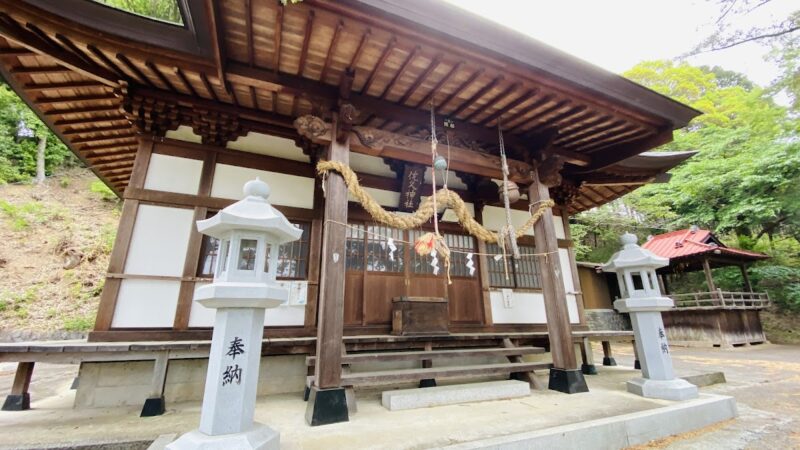
Hachiman Shrine (Furufuchu-cho, Kofu City, Yamanashi Prefecture) | The Complete Story of the Kai Province’s Grand Shrine, a History Intertwined with the Takeda Family
Hachiman Shrine, located in Furufuchu-cho, Kofu City, Yamanashi Prefecture, is a venerable shrine with a long history as the grand shrine of Kai Province and revered as the tutelary deity of the Takeda family. While the shrine building is currently located in Miyamae-cho, Kofu City, the former site remains in Furufuchu-cho as “Old Hachiman Shrine,” preserving traces of its history intertwined with the Takeda family. This article provides a comprehensive explanation of Hachiman Shrine’s detailed history, enshrined deities, the circumstances of its three relocations, and its current form.
History and Origins of Hachiman Shrine
Founding Circumstances and Deep Connection with the Kai Genji Clan
The founding of Hachiman Shrine dates back to the Jokyu era (1219-1222). The origins of the shrine are said to date back to Takeda Nobumitsu, the fourth generation descendant of Shinra Saburo Yoshimitsu, the founder of the Kai Minamoto clan, who invited a divided spirit from Tsurugaoka Hachimangu Shrine in Kamakura to his residence in Isawa. At this time, the shrine was called “Kokuga Hachimangu” (the present-day Isawa Wakamiya Hachimangu Shrine) and was revered as the tutelary deity of the Takeda family.
As a branch of the Minamoto clan, the Kai Minamoto clan particularly revered Hachiman, the guardian deity of samurai. The Takeda family lineage, continuing from Shinra Saburo Yoshimitsu, inherited this faith in Hachiman, and during the time of Takeda Nobumitsu, the formal acceptance of a divided spirit from Tsurugaoka Hachimangu Shrine solidified this belief.
First Relocation: Takeda Nobutora and Tsutsujigasaki Castle
In 1519 (Eisho 16), when Takeda Nobutora built a new castle at Tsutsujigasaki, Hachiman Shrine was relocated from Isawa to its current location in Kofu City, Minemoto-cho, Kofu. This was the first relocation. This location was situated west of Tsutsujigasaki Castle and occupied a crucial position protecting the Takeda family’s base.
Takeda Nobutora was a renowned general who unified Kai Province, and Tsutsujigasaki Castle later became the Takeda family’s base, inherited by Takeda Shingen and Takeda Katsuyori. During this period, Hachiman Shrine was also known as “Fuchu Hachiman” and functioned as a central shrine for praying for the Takeda family’s continued military success and the peace and security of their territory.
Currently, a small shrine called “Ko-Hachiman Shrine” remains on this former site and is carefully preserved by the local people. Ko-Hachiman Shrine is located at 1534 Kofuchu-cho, Kofu City, approximately 500 meters west of Takeda Shrine (the former site of Tsutsujigasaki Manor).
Second Relocation: Asano Nagamasa and the Construction of Kofu Castle
In 1584 (Tensho 12), Asano Nagamasa, a retainer of Toyotomi Hideyoshi, began construction of Kofu Castle. In 1595 (Bunroku 4), Hachiman Shrine was relocated to its current location in Miyamae-cho, Kofu City (formerly Kofuchu-cho). This was the second relocation, and it marks the current location of Hachiman Shrine.
When Asano Nagamasa built Kofu Castle, he also developed the surrounding castle town. Hachiman Shrine was positioned as the guardian shrine and prayer site for Kofu Castle and came to be revered as the principal shrine of Kai Province. Even after the fall of the Takeda clan, Hachiman Shrine continued to be a spiritual pillar of Kai Province, attracting unwavering devotion from successive lords and the people.
Deities and Divine Virtues
Main Deity: Homudawake-no-Mikoto (Emperor Ojin)
The main deity of Hachiman Shrine is Homudawake-no-Mikoto, also known as Emperor Ojin. Emperor Ojin was the 15th Emperor and is widely worshipped as Hachiman, a god of war and military prowess. He was particularly revered by samurai families, and for the Minamoto clan, he held the characteristics of their tutelary deity.
Homudawake-no-Mikoto is believed to possess divine virtues such as lasting military fortune, national peace and security, victory, and protection from evil, which is why the Takeda clan revered him as their tutelary deity. During the Sengoku period, it was customary for warlords to visit Hachiman Shrine before going into battle to pray for victory.
Deities Enshrined: Hime-Ōkami and Empress Jingū
Enshrined alongside Homutawake-no-Mikoto are Hime-Ōkami and Empress Jingū. Hime-Ōkami is considered the collective name for the three Munakata goddesses and is known as the goddess of maritime and traffic safety. Empress Jingū, the mother of Emperor Ōjin, is a brave woman known for the legend of her conquest of the Three Kingdoms of Korea and is worshipped as the goddess of safe childbirth and child-rearing.
These three deities are called the Hachiman Three Gods and are enshrined together in many Hachiman shrines. They are widely worshipped as gods who protect not only military fortune but also the lives of the people in general.
Role as the Grand Shrine of Kai Province
What is a Grand Shrine?
A Grand Shrine is a shrine established near the provincial capital of each province from ancient to medieval times, where the deities of the major shrines within that province were enshrined together. When a provincial governor took up their post or during important festivals, it was difficult for them to visit all the shrines in the province. Therefore, visiting the main shrine (Sōsha) allowed them to show reverence for the gods of the province.
In Kai Province, the Hachiman Shrine played the role of the main shrine and was called “Kai Province Sōsha” or “Kai Sōsha.” This signifies that it was not merely the tutelary deity of the Takeda family, but also the guardian deity of the entire Kai Province.
Reverence by Successive Lords
After the fall of the Takeda family, Kai Province came under the rule of Tokugawa Ieyasu, and various daimyo ruled the province afterward, but reverence for the Hachiman Shrine continued unabated. During the Edo period, the lords of the Kofu Domain undertook the construction and repair of the shrine buildings and held grand festivals.
In particular, when Yanagisawa Yoshiyasu became the lord of the Kofu Domain, a large-scale construction of the shrine buildings was undertaken, laying the foundation for the shrine buildings that remain today. During the Meiji era, it was ranked as a prefectural shrine and came to be recognized as one of Yamanashi Prefecture’s representative shrines.
About the Old Hachiman Shrine (Former Site)
The Current State of the Old Hachiman Shrine
The Old Hachiman Shrine, located at 1534 Furufuchu-cho, Kofu City, is the former site of the Hachiman Shrine that was relocated when Takeda Nobutora built the Tsutsujigasaki Mansion. Currently, a small shrine building remains and is managed by the local community association.
During the Showa era, the shrine grounds were donated to the city for the construction of an elementary school, resulting in the loss of its once vast grounds. However, it remains a cherished object of worship for the local people. The Old Hachiman Shrine is enshrined in an adjoining building of the community center, maintaining a simple yet historically significant appearance.
Location in Relation to Takeda Shrine
The Old Hachiman Shrine is located approximately 500 meters west of Takeda Shrine (the former site of Tsutsujigasaki Mansion). When visiting Takeda Shrine, we highly recommend also visiting the Old Hachiman Shrine to experience firsthand the history of the Takeda family’s faith.
The Old Hachiman Shrine is about a 7-10 minute walk from Takeda Shrine. It’s a small shrine nestled quietly in a residential area, but knowing that this was once revered as the Takeda family’s tutelary deity will evoke a profound sense of awe.
Current Hachiman Shrine (Miyamae-cho, Kofu City)
Shrine Buildings and Grounds
The current Hachiman Shrine is located in Miyamae-cho, Kofu City. It’s situated north of Kofu Castle and relatively close to Kofu Station. A magnificent shrine building stands within the grounds, and many subsidiary shrines are also enshrined within the spacious grounds.
The shrine building was constructed between the Edo and Meiji periods, and it still conveys the beauty of traditional shrine architecture. The carvings on the main hall, in particular, are magnificent and delight the eyes of visitors. Within the shrine grounds, there are ancient trees estimated to be several hundred years old, testifying to the shrine’s long history.
Annual Events and Festivals
Hachiman Shrine holds various festivals throughout the year. Particularly important is the annual grand festival, which is held with great fanfare every year. The grand festival includes a procession of portable shrines and the dedication of sacred dances, attracting many worshippers.
Furthermore, many people visit for life-changing rituals such as New Year’s visits, Shichi-Go-San (a traditional rite of passage for children), and exorcisms. For the local people, it remains an integral part of their lives, continuing to attract unwavering devotion.
Access and Visiting Information
Access to Hachiman Shrine (Miyamae-cho, Kofu City)
Location: Miyamae-cho, Kofu City, Yamanashi Prefecture (formerly Furufuchu-cho)
Access by Train:
- Approximately 20 minutes on foot from the North Exit of Kofu Station on the JR Chuo Main Line
- Buses are also available from the North Exit of Kofu Station
Access by Bus:
- Take the Yamanashi Kotsu bus bound for Sekisui-ji Temple or Takeda Shrine from the North Exit of Kofu Station
- A few minutes’ walk from the nearest bus stop
Access by Car:
- Approximately 15 minutes from the Kofu-Showa Interchange on the Chuo Expressway
- Parking available (limited spaces; public transportation is recommended during festivals)
Access to Furuhachiman Shrine (Furufuchu-cho, Kofu City)
Location: 1534 Furufuchu-cho, Kofu City, Yamanashi Prefecture
Access by Train and Bus:
- Take the bus bound for “Takeda Shrine” from the north exit of Kofu Station.
- Get off at the Takeda Shrine bus stop and walk for approximately 7-10 minutes.
Access by car:
- Approximately 500 meters west of Takeda Shrine.
- Parking space is limited as it is located in a residential area.
Notes on visiting
Furuhachiman Shrine is a small shrine located in a residential area and is managed by the local community association. Please be quiet when visiting and remember to be considerate of the nearby residents. Also, goshuin (shrine stamps) and other items are only available at the current Hachiman Shrine (Miyamae-cho).
Nearby tourist spots
Takeda Shrine
When visiting Furuhachiman Shrine, be sure to also visit Takeda Shrine. Takeda Shrine is a shrine dedicated to Takeda Shingen and is built on the site of the former Tsutsujigasaki Mansion. There is also a treasure hall where you can learn about the history of the Takeda family, making it a classic Kofu tourist spot.
Kofu Castle Ruins (Maizuru Castle Park)
Located within walking distance of Hachiman Shrine (Miyamae-cho), the Kofu Castle Ruins are a park containing the remains of a castle built by Asano Nagamasa. The stone walls and turrets have been restored, allowing visitors to experience Kofu’s history.
Yamanashi Prefectural Museum
A short trip from Kofu City will take you to the Yamanashi Prefectural Museum. Here, you can learn in detail about the history of the Takeda family and Kai Province, which will help you understand the historical background of Hachiman Shrine more deeply.
The Spiritual Connection Between Hachiman Shrine and the Takeda Family
The Takeda Family’s Deity Worship
For the Takeda family, Hachiman Shrine was not merely an object of worship, but a spiritual pillar of the clan. It was customary to visit Hachiman Shrine before battles to pray for victory. Prayers to Hachiman were likely offered during the numerous battles fought by Takeda Shingen under the banner of “Fūrin Kazan” (Wind, Forest, Fire, Mountain).
The Takeda clan’s retainers also shared a faith in Hachiman, pledging their loyalty before the shrine alongside their lord and praying for continued military success. This shared faith is believed to have been one of the sources of the Takeda clan’s strong unity.
The Historical Transformation Shown by Three Relocations
The three relocations of the Hachiman Shrine reflect the shifts in the political center of Kai Province. The moves from Isawa to Tsutsujigasaki, and then to Kofu Castle town, symbolize the expansion of the Takeda clan’s power and the subsequent changes in the Toyotomi regime’s rule over Kai Province.
However, throughout these periods, the Hachiman Shrine remained the spiritual center of Kai Province. Even with changes in government, faith in Hachiman was passed down, and its position as the principal shrine of Kai Province remained unshaken.
The Significance of Hachiman Shrine in Modern Times
As the Center of Local Communities
Even in modern times, Hachiman Shrine remains a central presence in local communities. Through festivals and events, local people gather, providing a place to pass on traditional culture to the next generation. Especially during the annual grand festival, many parishioners and devotees gather, deepening community bonds.
As a Place for Historical Education
Hachiman Shrine and Old Hachiman Shrine are important historical sites for learning about the history of Kofu City. Many children and students visit them as part of their local history studies, deepening their understanding of the region’s history.
The existence of Hachiman Shrine is indispensable when learning about the history of the Takeda family and Kai Province during the Sengoku period. Through the shrine, a place of worship, one can understand the spiritual world and values of the people of that time.
Value as a Tourism Resource
In recent years, with the growing interest in historical tourism, Hachiman Shrine has become an important tourist resource in Kofu City. Many tourists visit it in conjunction with Takeda Shrine, and it is attracting attention as a spot where one can experience Kofu’s history and culture.
Especially for history buffs and those who enjoy visiting shrines and temples, it holds high value as a shrine associated with the Takeda family. The fact that the former site of the old Hachiman Shrine remains is a valuable element that allows us to truly feel the passage of history.
Cultural Properties and Treasures of Hachiman Shrine
Value of the Shrine Architecture
The shrine buildings of Hachiman Shrine are valuable cultural properties that convey the architectural techniques from the Edo period to the Meiji period. The carvings and decorations of the main hall represent the culmination of the skills of the craftsmen of the time and have high architectural historical value.
In particular, the carvings of the main hall feature designs of dragons, lions, flowers and birds, clearly demonstrating the characteristics of Edo period shrine architecture. These carvings are not merely decorative, but have religious significance in order to adorn the sacred space.
Heirloom Treasures
Hachiman Shrine has preserved items related to the Takeda family and items donated by successive feudal lords. These treasures are not usually on public display, but are exhibited on special occasions.
Furthermore, the ancient documents and records preserved at the shrine are valuable historical materials for studying the history of Kai Province. These documents provide insights into the Takeda family’s religious beliefs and the management of shrines during the Edo period.
Hachiman Faith and Samurai Culture
The Relationship Between Hachiman and Samurai
Hachiman has been worshipped as a god of war since ancient times. For the Minamoto clan in particular, it held a strong character as their tutelary deity. Since Minamoto no Yoritomo established Tsurugaoka Hachimangu Shrine in Kamakura, Hachiman has established itself as a guardian deity of samurai.
The Takeda family, being descendants of the Kai Minamoto clan, also considered Hachiman an integral part of their family identity. Revering Hachiman also signified their legitimacy as the legitimate successors of the Minamoto clan.
Faith and Prayers in the Sengoku Period
During the Sengoku period, warlords always visited shrines before battle to pray for victory. Takeda Shingen was no exception; it is said that he visited Hachiman shrines before important battles to pray for continued military success and victory.
Furthermore, it was common practice to offer thanks and construct or repair shrine buildings after victories in battle. Such actions were not merely expressions of faith, but also had political significance, demonstrating to vassals and subjects that the ruler was a legitimate power blessed by the gods.
Summary: The History of Kai Province as Told by Hachiman Shrines
Hachiman Shrine, located in Furufuchu-cho, Kofu City, Yamanashi Prefecture, is a venerable shrine with a history of over 800 years since its founding during the Jokyu era. Beginning with the enshrinement of a divided spirit from Tsurugaoka Hachiman Shrine by Shinra Saburo Yoshimitsu, the founder of the Kai Minamoto clan, and his successor, Ishiwa Goro Takeda Nobumitsu, the fourth generation, it has been revered as the tutelary deity of the Takeda family and as the principal shrine of Kai Province.
The three relocations—from Ishiwa to Tsutsujigasaki (Furuhachiman), and then to the present-day Miyamae-cho—reflect the shifts in the political center of Kai Province and demonstrate that Hachiman Shrine remained a spiritual pillar throughout each era.
Currently, the former site of the Hachiman Shrine remains in Furufuchu-cho as the “Old Hachiman Shrine,” while the current Hachiman Shrine is located in Miyamae-cho. Visiting both will allow you to gain a comprehensive understanding of the history of the Hachiman Shrine, which has walked hand in hand with the Takeda family.
Even after the fall of the Takeda family, the Hachiman Shrine continued to attract unwavering reverence from successive lords and the people. Even today, it maintains its value as a central hub of the local community and an important historical heritage of Kofu City.
When visiting Kofu, be sure to visit both the Hachiman Shrine and the Old Hachiman Shrine to experience the history of the Takeda family’s faith and the shrine’s role as a spiritual pillar of Kai Province. There, you will find a living history that you cannot learn from textbooks.