Hachiman Shrine (Miyanotani, Hachiman-cho, Tokushima City, Tokushima Prefecture) Complete Guide | Exploring the Bronze Torii Gate and the History of Shinto-Buddhist Syncretism
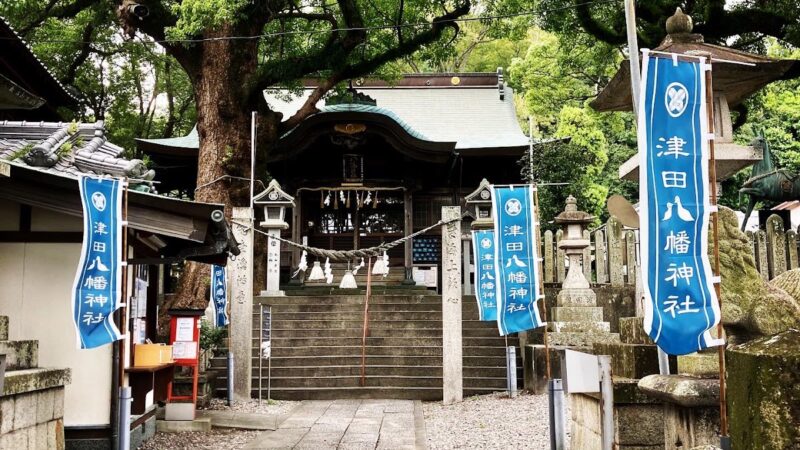
Hachiman Shrine, located in Miyanotani, Hachiman-cho, Tokushima City, is a historic shrine affectionately known as “Kane no Torii” (Bronze Torii Gate) by the locals. With its vast grounds spread across the mountainside, long approach and stairs, and a magnificent bell tower that strongly reflects the syncretism of Shinto and Buddhism, this shrine boasts many points of interest. This guide provides a detailed introduction to its history, enshrined deities, features of the grounds, and access methods.
History and Origins of Hachiman Shrine
Founding and Origins
The origins of Hachiman Shrine are deeply intertwined with the changing beliefs of Hachiman Village. The village of Hachiman was formerly parishioners of Asamiya Shrine (Hirota, Kami-Hachiman-cho). When the Enomiya shrine was established in Kami-Hachiman-cho, a shrine was built on Babayama in Shimo-Hachiman to enshrine Konpira Daigongen, which is considered the origin of this shrine.
Later, the Hachiman Shrine of Hashimoto was merged with this shrine, and it was moved to its current location during the Keicho era (1596-1615). It is said that the shrine building was constructed in Keicho 9 (1604), making it a shrine with a history of over 400 years.
Deep Connection with the Hachisuka Family
A noteworthy aspect of the history of Hachiman Shrine is its deep connection with Hachisuka Iemasa, the founder of the Awa Domain. Iemasa held the shrine in extremely high esteem, and the following donations were made to the shrine:
- Donation of 2 koku 4 to as offerings for Shinto rituals
- Donation of 1 cho 3 tan (approximately 1 hectare) of land adjacent to the shrine’s lawn area
Through these donations, Hachiman Shrine developed as a central shrine in the region throughout the Edo period.
Status as a Former Shrine Receiving Offerings of Sacred Food and Cloth
Hachiman Shrine was designated as a former shrine receiving offerings of sacred food and cloth. This means that, from the Meiji era onward, it was recognized by the prefecture as a shrine that could receive offerings of sacred food and cloth (expenses for offerings and cloth to the gods), demonstrating the importance and high status of the shrine in the region.
Deities and Benefits
Main Deity
Hachiman Shrine enshrines two deities.
Homudawake no Mikoto
This deity is a deified version of Emperor Ojin, the 15th emperor, and is worshipped as Hachiman-sama at Hachiman shrines throughout Japan. This deity is worshipped as a god of military fortune, victory in competitions, and national protection.
Ōnamuchi-no-Ōkami
Another name for Ōkuninushi-no-Mikoto, this gentle deity is known from the myth of “The White Rabbit of Inaba.” He is also the principal deity of Izumo Taisha Shrine.
Diverse Blessings
Due to the divine virtues of Ōnamuchi-no-Ōkami (Ōkuninushi-no-Mikoto), Hachiman Shrine is believed to offer a variety of blessings, including:
- Matchmaking: Forging good relationships
- Childbearing: Blessed with children
- Marital Harmony: A harmonious marriage
- Healing from Illness: Recovery from illness
- Business Prosperity: Business development
- Abundant Harvest: Abundant crops
- Traffic Safety: Safe travels
Because of these blessings, the shrine is a place that supports the lives of local people, and is visited by worshippers with various wishes.
Highlights of the Shrine Grounds
The “Copper Torii” – A Rare Torii Gate Wrapped in Copper Plates
The main reason why Hachiman Shrine is affectionately known as “Kane no Torii” (Copper Torii) is this rare torii gate. Unlike typical stone or wooden torii gates, this unique gate wrapped in copper plates is a rare sight even within Tokushima Prefecture.
This torii gate is in the Ryobu-torii style and possesses valuable cultural significance, preserving the remnants of the era of syncretism between Shinto and Buddhism. It is the first point of interest welcoming visitors and attracts the attention of many.
Vast Shrine Grounds and Long Approach
Located on the mountainside, Hachiman Shrine boasts vast grounds. From Tokushima city center, head southwest on National Route 438, then turn into the mountains before the Sonose River; the shrine is situated behind Chokyu-ji Temple.
Features of the approach to the shrine:
- A long approach lined with numerous stone lanterns
- A sacred atmosphere enveloped in a deep forest
- A long staircase leading up the mountainside
- An environment where you can feel the changing seasons
As you walk along the approach and ascend the stairs, a tranquil space unfolds, far removed from the hustle and bustle of the city, offering a sense of spiritual cleansing.
A magnificent bell tower retaining traces of Shinto-Buddhist syncretism
A particularly noteworthy structure within the shrine grounds is the magnificent bell tower, which strongly retains traces of Shinto-Buddhist syncretism. Before the Meiji-era separation of Shinto and Buddhism, shrines and temples were worshipped together in Japan (Shinto-Buddhist syncretism).
The bell tower of Hachiman Shrine is a relic from the Edo period, when Chokyu-ji Temple managed the shrine as its head temple. It is rare nationwide to find a bell tower remaining on shrine grounds today, making it a structure of high historical value.
Ema-do Hall and Zuishin-mon Gate
After ascending the long approach and stairs, visitors are greeted by the Ema-do Hall and Zuishin-mon Gate.
The Ema-do Hall displays various votive tablets donated by local people, offering a glimpse into the history of faith that has continued since the Edo period.
The Zuishin-mon Gate, guarding the entrance to the sacred area, exudes a solemn atmosphere.
Stone Monuments with Donor Names
Numerous stone monuments bearing the names of donors stand within the shrine grounds. These monuments are evidence of how local people have cherished and worshipped this shrine from the Edo period to the present day. The names and donations inscribed on the monuments reveal the significant role that Hachiman Shrine has played in the local community.
Shrine Building Renovated in 1967
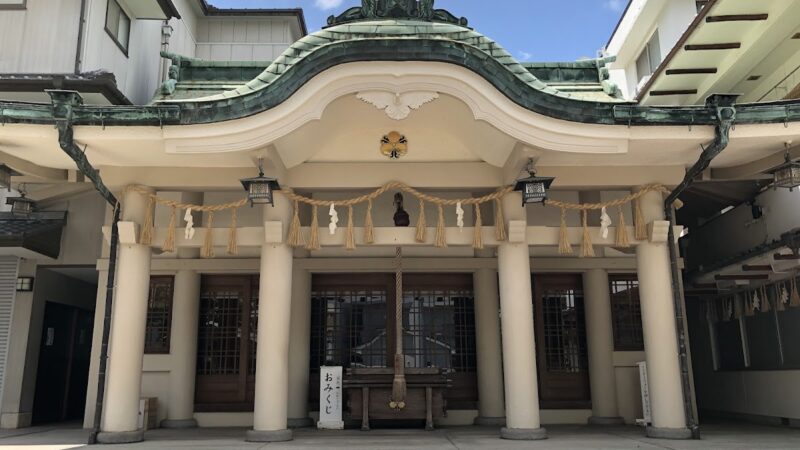
At the innermost part of the shrine grounds stands the shrine building, which was renovated in 1967. Since its founding in 1604 (Keicho 9), the shrine has maintained its traditional architectural style despite several restorations.
The shrine buildings are surrounded by a deep forest, creating a tranquil atmosphere for worship. Both the main hall and the worship hall are meticulously maintained, reflecting the deep faith of the local people.
Relationship with Chokyu-ji Temple – History of the Betto-ji Temple
An essential aspect of understanding Hachiman Shrine is its relationship with the adjacent Chokyu-ji Temple. During the Edo period, Chokyu-ji Temple served as the betto-ji temple of Hachiman Shrine, responsible for its management and rituals.
A betto-ji temple is a temple attached to a shrine based on the syncretic belief of Shinto and Buddhism. It performed Shinto rituals in the Buddhist style and was responsible for the management and operation of the shrine. Although the separation of Shinto and Buddhism occurred in the Meiji era, remnants of the syncretic era, such as the bell tower and Ryobu-style torii gate, remain strongly present within the grounds of Hachiman Shrine.
The current arrangement, with Hachiman Shrine situated behind Chōkyūji Temple, also speaks to the close relationship between the two in the past.
Access and Transportation Information
Basic Information
Location
3-4 Miyanotani, Hachiman-chō, Tokushima City, Tokushima Prefecture 770-8070 (Some sources list Miyanotani 1)
Phone Number
088-668-0192
Access by Public Transportation
Nearest Station
JR Shikoku Tokushima Line “Bunka-no-Mori Station”
- Approximately 27 minutes on foot from the Bunka-no-Mori Station exit
By Bus
Take a Tokushima City Bus or Tokushima Bus bound for Hachiman. It is accessible on foot from the nearest bus stop.
Access by Car
From Tokushima City Center
- Head southwest on National Route 438.
- Turn towards the mountains (east) before the Sonose River.
- Proceed towards Chokyu-ji Temple.
- The entrance to the Hachiman Shrine’s approach is behind Chokyu-ji Temple.
Parking
There is parking space for visitors within or around the shrine grounds, but it is recommended to check the details in advance.
Points to Note When Visiting
- As it is located on the mountainside, you will need to climb a long flight of stairs.
- We recommend wearing comfortable shoes.
- Due to the rich natural environment, insect repellent is recommended depending on the season.
- The approach is a charming path lined with lanterns, but caution is needed when visiting at night.
Life in Hachiman-cho and Hachiman Shrine
Role as a Community Center
Hachiman Shrine has played an important role not only as a place of worship, but also as the center of the Hachiman-cho community. Festivals and events held throughout the year provide opportunities for local residents to gather and deepen their bonds.
Education and Cultural Preservation
Cultural assets such as stone monuments, votive tablets, and bell towers remaining at the shrine serve as living teaching materials for local history education. Local schools provide opportunities for students to visit Hachiman Shrine as part of their local history studies to learn about the region’s history and culture.
Preservation of the Natural Environment
The vast shrine grounds and deep forest play a vital role in preserving a valuable natural environment in the increasingly urbanized city of Tokushima. The trees within the grounds display different expressions throughout the seasons, and the scenery is particularly beautiful during the autumn foliage and ginkgo seasons.
Manners and Etiquette for Worship
Basic Worship Etiquette
- Bow Before Passing Through the Torii Gate
Before passing through the unusual copper torii gate, bow slightly before entering the shrine grounds.
- Walk along the edge of the approach to the shrine
The center of the approach is considered the path for the gods, so it is polite to walk along the edge.
- Purify yourself at the water basin
If there is a water basin, purify your hands and mouth before praying.
- Pray at the main hall
- Place your offering
- Two bows, two claps, one bow (bowing deeply twice, clapping twice, bowing deeply once)
- Bow at the torii gate on your way out
When leaving the shrine grounds, turn around and bow after passing through the torii gate.
Nearby Attractions
Chokyu-ji Temple
Chokyu-ji Temple, located at the entrance to the approach to Hachiman Shrine, has a deep historical connection as a former temple associated with the shrine. Its temple architecture and gardens are impressive, and visiting it in conjunction with the shrine will allow you to gain a deeper understanding of the history of Shinto-Buddhist syncretism.
Tokushima Prefectural Cultural Forest Comprehensive Park
This facility, which gives its name to the nearest station, Bunka-no-Mori Station, is a cultural complex housing the Tokushima Prefectural Museum, Museum of Modern Art, Archives, Library, and 21st Century Hall. Combined with a visit to Hachiman Shrine, you can experience Tokushima’s history and culture.
Sonose River
The Sonose River, which flows along the way to Hachiman Shrine, is a clear stream that allows you to experience the nature of Tokushima City. Enjoy a stroll along the river.
Annual Events and Festivals
Hachiman Shrine holds various Shinto rituals and festivals throughout the year. These festivals, which preserve local traditions, are deeply rooted in the lives of the people of Hachiman-cho.
Main Events (Examples of typical Hachiman Shrine events):
- New Year’s Day Festival (January 1st)
- Spring Grand Festival
- Autumn Grand Festival
- Monthly Festival
For specific dates and details, we recommend contacting the shrine directly.
About Goshuin (Shrine Seals)
Please note that the issuance of Goshuin at Hachiman Shrine may not be available at all times. If you wish to receive a Goshuin, we recommend contacting the shrine in advance.
Phone number: 088-668-0192
Photography Tips
Hachiman Shrine is an attractive spot for photography.
Recommended Photography Spots
- Copper Torii Gate
The rare torii gate wrapped in copper plates is a symbolic subject of Hachiman Shrine.
- Lantern-lined Approach
The lanterns lining the long approach offer great depth in your photographs.
- Bell Tower
The magnificent bell tower, a remnant of the syncretism of Shinto and Buddhism, is a historically significant subject.
- Shrine Surrounded by a Deep Grove
The shrine, surrounded by trees, offers a sacred atmosphere to capture in photographs.
- Autumn Leaves and Ginkgo Season
In autumn, the autumn leaves and ginkgo trees turn beautiful colors, making it an excellent season for photography.
Precautions for Photography
- Be considerate of other worshippers.
- Do not take photos in areas where photography is prohibited, such as inside the main hall.
- Obtain permission in advance for commercial use.
- Be considerate of other worshippers when using a tripod.
Summary
Hachiman Shrine, located in Miyanotani, Hachiman-cho, Tokushima City, is a historic shrine with a history of over 400 years, featuring the unusual characteristic of a “copper torii gate.” With its vast grounds, long approach and stairs, and magnificent bell tower that retains traces of the syncretism of Shinto and Buddhism, it offers plenty to see, making it a valuable spot where you can enjoy history and nature simultaneously.
Hachiman Shrine, revered by the founder of the domain, Hachisuka Iemasa, flourished as a center of regional faith during the Edo period, along with its affiliated temple, Chokyu-ji. Even today, the shrine is cherished and protected by the local people, and worshippers visit seeking a variety of blessings, including matchmaking, fertility, and business prosperity.
When you visit Tokushima City, be sure to stop by this historic Hachiman Shrine. Calm your mind in the tranquil space surrounded by deep forest and experience this precious cultural heritage from the era of syncretism of Shinto and Buddhism. The majestic shrine building and the unique appearance of the “copper torii gate” awaiting you at the top of the long staircase will surely make for a memorable pilgrimage.