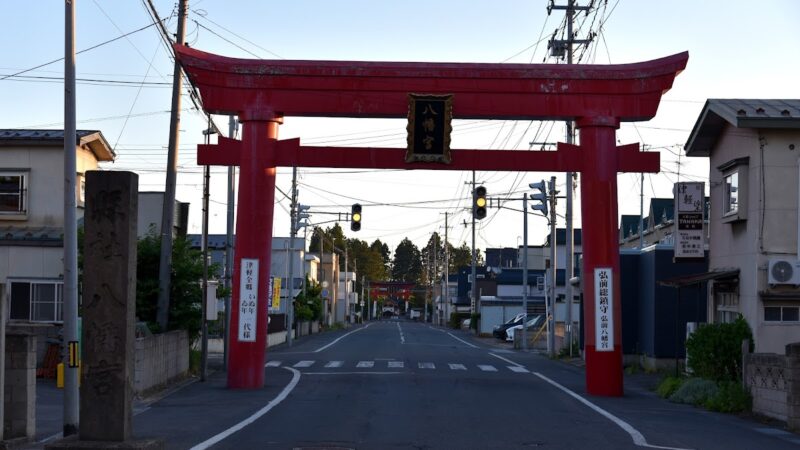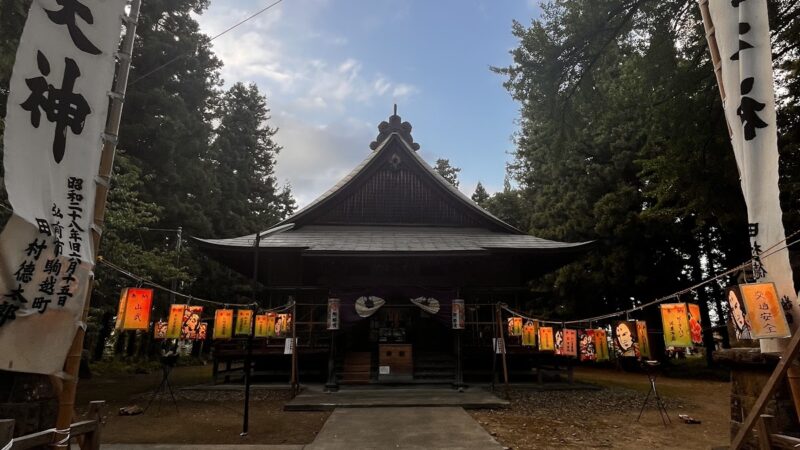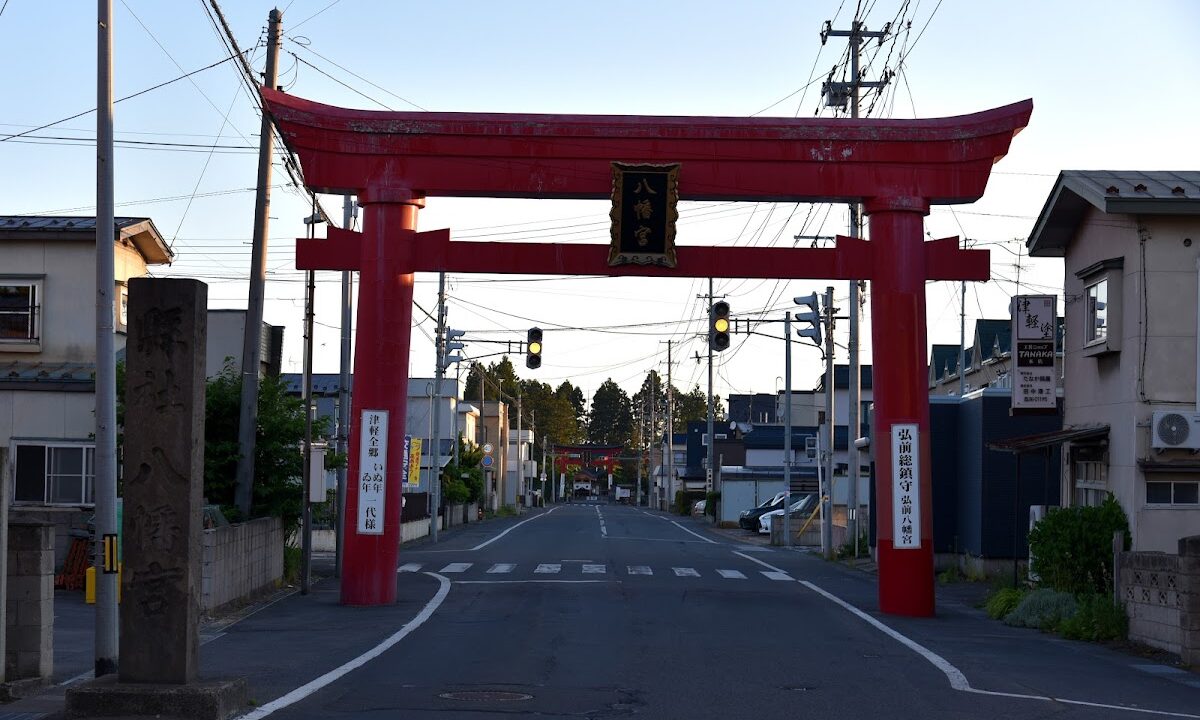
Hachimangu Shrine (Waseda, Ichimachi, Hirosaki City, Aomori Prefecture) Complete Guide
Hachimangu Shrine, located in Waseda, Ichimachi, Hirosaki City, Aomori Prefecture, is a shrine that has been cherished by the local people for centuries. This article provides detailed information useful for visiting Hachimangu Shrine, including its history, enshrined deities, blessings, highlights of the grounds, and access methods.
Basic Information about Hachimangu Shrine
Location: Waseda, Ichimachi, Hirosaki City, Aomori Prefecture
Enshrined Deity: Hondawake-no-Mikoto (Emperor Ojin)
Hachimangu Shrine is one of the approximately 44,000 Hachiman shrines throughout Japan. Located in the Ichimachi district of Hirosaki City, it has been revered as the local guardian deity for many years.
What is Hachiman Faith?
Hachiman is one of Japan’s representative deities, with Emperor Ojin as its principal deity. He has a strong character as a god of war and has received deep devotion from samurai families as the tutelary deity of the Minamoto clan. Furthermore, it is also worshipped as a god of agriculture and industrial development, and is widely cherished among ordinary people.
History of Hachiman Shrine
Origin of Founding
While detailed research based on local historical materials is needed to determine the exact founding date of Hachiman Shrine in Ichimachi, Hirosaki City, the spread of Hachiman worship in the Tsugaru region is deeply connected to the establishment of the Tsugaru Domain.
In the Tsugaru region, many shrines were established from the late Sengoku period, when Tsugaru Tamenobu unified Tsugaru, to the early Edo period. It is highly likely that Hachiman Shrine was also enshrined as a guardian deity of the region during this period.
Connection to the Community
The Ichimachi district is a rural area located in the southern part of Hirosaki City. Hachiman Shrine has functioned as a place to pray for abundant harvests in this region and as a center of the local community.
The festivals and religious ceremonies held throughout the year play an important role in deepening the bonds among local residents and are still carefully preserved by the people of the region today.
Deities and Benefits
Main Deity: Homudawake-no-Mikoto (Emperor Ojin)
Homudawake-no-Mikoto, the main deity of Hachiman Shrine, is Emperor Ojin, the 15th emperor of Japan. His mother was Empress Jingu, and he is known for his military prowess and contributions to cultural development.
Expected Benefits
At Hachiman Shrine, you can expect the following benefits:
Victory and Success
Due to his nature as a god of war, he is believed to grant blessings for success in competitions and exams.
Protection from Evil and Good Fortune
He is believed to ward off evil spirits and improve one’s luck.
Family Safety and Traffic Safety
He protects the health and safety of family members.
Abundant Harvest and Business Prosperity
He is also worshipped as a god who grants blessings for the development of agriculture and commerce.
Prayer for Safe Childbirth
Based on the legend of Empress Jingu, this shrine is believed to offer blessings for safe childbirth.
Highlights of the Shrine Grounds
Main Hall
The main hall of Hachiman Shrine is a building that preserves the style of traditional shrine architecture. Although not large in scale, it is carefully maintained as the center of local faith.
Subsidiary Shrines
Around the main hall, there may be subsidiary shrines that reflect local beliefs. Each of these small shrines embodies the history of the region and the wishes of its people.
Shrine Grove
The forest surrounding the shrine is also called the “guardian forest” and is a valuable space that preserves the ancient natural environment. The trees, which show different expressions in each season, provide peace to worshippers.
Annual Events and Festivals
Grand Festival
Many Hachiman Shrines hold their grand festivals in the autumn. It is highly likely that the Hachiman Shrine in Ichimachi, Hirosaki City, also holds its annual festival as an important local event. The annual festival offers an opportunity to experience local traditional culture, including a procession of portable shrines and devotional performances.
First Shrine Visit of the New Year
The first shrine visit of the New Year is when local people visit to pray for safety and prosperity in the new year.
Other Events
- Setsubun Festival: Includes bean-throwing to ward off evil spirits.
- Shichi-Go-San: Celebrates children’s growth and prays for their healthy development.
- Summer Purification Ceremony: A Shinto ritual to purify and cleanse away the impurities accumulated over the past six months.
*For specific dates, it is recommended to check with local information sources or the shrine in advance.
Etiquette for Worship
Basic Worship Method
- Bow Before Passing Through the Torii Gate
Bow slightly before entering the sacred area.
- Purifying at the Water Basin
- Hold the ladle in your right hand and purify your left hand.
- Switch the ladle to your left hand and purify your right hand.
- Switch the ladle back to your right hand, receive water in your left hand, and rinse your mouth.
- Finally, stand the ladle upright and purify the handle.
- Walk along the edge of the path
The center is considered the path of the gods.
- Mannerisms in front of the main hall
- Quietly place your offering in the offering box.
- Ring the bell if there is one.
- Two bows, two claps, one bow
- Bow deeply twice.
- Clap your hands twice.
- Finally, bow deeply once.
- Bow at the Torii Gate when leaving
When leaving the sacred area, turn around and bow once.
Access Information
Location
Waseda, Ichimachi, Hirosaki City, Aomori Prefecture
Access by Car
From Hirosaki City Center
- Approximately 15-20 minutes from Hirosaki Station
- Use National Route 7 or a prefectural road
From Tohoku Expressway
- Approximately 20-25 minutes from Owani-Hirosaki IC
*Since the area around the shrine is a residential and agricultural area, it is recommended to search for “Hachimangu Shrine, Ichimachi, Hirosaki City” on your car navigation system or smartphone map app.
Access by Public Transportation
While there may be some local buses such as Konan Bus operating towards Ichimachi, the number of services may be limited. It is recommended to check the Konan Bus timetable in advance.
Parking
As it is a small shrine, there may not be a large dedicated parking lot. When visiting, please be considerate of the neighbors. Temporary parking may be provided during events such as festivals.
Nearby Tourist Attractions
Major Tourist Attractions in Hirosaki City
Before or after visiting Hachimangu Shrine, why not visit other tourist attractions in Hirosaki City?
Hirosaki Castle and Hirosaki Park
- One of Japan’s leading cherry blossom viewing spots
- A valuable castle with an existing keep
- Located in the heart of Hirosaki City
Iwaki-yama Shrine
- Situated at the foot of Mt. Iwaki, also known as Tsugaru Fuji
- One of the most prestigious shrines in the Tsugaru region
Saishoin Five-Storied Pagoda
- The only five-storied pagoda in the Tohoku region
- A nationally important cultural property
Tsugaru Clan Neputa Village
- An exhibition facility for Hirosaki Neputa floats
- A place to experience traditional Tsugaru crafts
Nature around Ichimachi-da
The area around Ichimachi-da is a peaceful rural landscape. You can enjoy a relaxing time while appreciating the changing rural scenery with each season.
Hachiman Faith in Hirosaki City
Shrine Culture of the Tsugaru Region
The Tsugaru region is dotted with numerous shrines, including Hachiman shrines. These shrines reflect the history and culture of their respective areas, and visiting them allows you to experience the deep religious culture of Tsugaru.
As a Guardian Deity of the Region
The Hachiman shrine in Ichimachi, Hirosaki City, is not a large-scale tourist shrine, but it continues to attract devotion as a “guardian deity” deeply rooted in the lives of the local people.
These small, local shrines form the foundation of Japanese religious culture and are important for supporting the bonds of local communities.
Points to Note When Visiting
Please Observe Proper Manners When Visiting
- Be Quiet: Please refrain from speaking loudly or making noise in the sacred area.
- Be Clean: Please take your trash with you to avoid littering the shrine grounds.
- Photography: Photography is prohibited in some areas, such as inside the main hall.
- Consideration for Private Property: The area around the shrine is a residential area. Please be considerate of the local residents and avoid causing any inconvenience.
Appropriate Attire for Visiting the Shrine
While everyday attire is acceptable, please note the following:
- Avoid revealing clothing
- Wear shoes that are easy to put on and take off (if receiving prayers)
- Wear clothing appropriate for the season (take precautions against the cold in winter)
Seasonal Highlights
Spring (April-June)
- A beautiful season of fresh greenery
- The trees in the shrine grounds bud, creating a refreshing atmosphere
Summer (July-September)
- The lush green forest provides shade, offering a cool and refreshing feeling
- This is the time for summer festivals and annual ceremonies
Autumn (October-November)
- A season of beautiful autumn foliage
- A time to express gratitude for the harvest
Winter (December-March)
- A tranquil atmosphere amidst a snowy landscape
- Bustling with New Year’s visitors
- Take thorough precautions against the cold
Regarding Goshuin (Shrine Seals):
As this is a small shrine, there may not be a resident priest. Prior confirmation is necessary regarding the issuance of Goshuin.
Generally, small local shrines may have their priests also serving other nearby shrines. You may be able to obtain information by contacting major shrines in Hirosaki City.
About the Ichimachi-da District of Hirosaki City
Regional Characteristics
The Ichimachi-da district is a rural area located in the southern part of Hirosaki City. Agriculture, including apple cultivation, is thriving, and a peaceful rural landscape stretches across the area.
Origin of the Place Name
The place name “Ichimachi-da” may originate from the land division or history of land reclamation. The sub-district name “Waseda” suggests that there were rice paddies where early-ripening rice varieties called “Wase” were cultivated.
Summary
The Hachiman Shrine in Waseda, Ichimachi-da, Hirosaki City, Aomori Prefecture, is a small but historically significant shrine deeply rooted in the local community. While it may not have flashy tourist attractions, this is a place where local people have placed their faith, offering a peaceful setting for worship.
When sightseeing in Hirosaki, taking a short detour to visit the local guardian shrine will allow you to experience a different, more authentic side of Tsugaru than what you’d find in typical tourist spots.
We hope that your visit to Hachimangu Shrine will give you a deeper appreciation for Japan’s regional culture and faith.
Things to check before your visit
- Please check the schedule of events such as annual festivals in advance.
- Visiting may be difficult during winter due to snow.
- If you wish to receive prayers, you may need to contact the shrine in advance.
- We recommend contacting Hirosaki City or the local tourism association for the latest information.
We pray that your visit to Hachimangu Shrine will be fruitful.