
Hiei Shrine (Iwakuni City, Yamaguchi Prefecture) Complete Guide | The Charm of Sanno-gu, a Shrine with 1200 Years of History
Hiei Shrine, located in Yatsu, Kuga-cho, Iwakuni City, Yamaguchi Prefecture, is a venerable shrine boasting a history of over 1200 years, dating back to the early Heian period. Locally known as “Sanno-gu,” this shrine, quietly nestled at the foot of Mt. Kurakake and Mt. Renge, is known as a highly revered sacred site, worshipped by the Kikkawa clan, the lords of the Iwakuni domain, and Sugiyama Takayasu, the lord of Kurakake Castle.
This article will comprehensively cover the history, highlights, and visiting information of Hiei Shrine, as well as the Yatsu Kagura dance, designated as an intangible cultural property of Iwakuni City, revealing all the charms of this shrine.
History and Origins of Hiei Shrine
Founded in 805 AD
Hiei Shrine is said to have been founded in 805 AD (Enryaku 24). This was during the early Heian period, under the reign of Emperor Kanmu. It is believed to have been established by inviting a deity from Hiyoshi Taisha Shrine in Omi Province (present-day Shiga Prefecture), and as a shrine stemming from the Sanno faith, it has become a central place of worship in the region.
Reverence of Warlords
From the medieval to the early modern period, Hiei Shrine received deep reverence from many warlords. In particular, Sugiyama Takayasu, the lord of Kurakake Castle, and the Kikkawa clan, the lords of Iwakuni Domain during the Edo period, cherished Hiei Shrine as their tutelary deity, and records show that they dedicated themselves to the repair of the shrine buildings and the maintenance of festivals.
Thanks to the patronage of these samurai families, Hiei Shrine has survived the turbulent times of war and has continued to preserve the flame of faith to this day.
Relationship between Sanno Faith and Hiyoshi Taisha Shrine
At the heart of Hiei Shrine’s faith lies “Sanno faith.” Sanno faith is a form of worship centered around Hiyoshi Taisha Shrine, the guardian deity of Enryaku-ji Temple on Mount Hiei, and shrines bearing the names Hiyoshi, Hie, and Sanno are distributed throughout Japan. Iwakuni’s Hiei Shrine is one such example, and it is believed to have been founded by inviting a divided spirit from Hiyoshi Taisha Shrine in Omi Province.
Highlights of Hiei Shrine
222 Stone Steps and Approach
The first thing that greets visitors to Hiei Shrine is the 222 stone steps leading from the entrance to the main hall. These stone steps are a symbol of Hiei Shrine, and climbing them step by step allows you to escape the hustle and bustle of everyday life and cleanse your mind.
The approach to the shrine is surrounded by cedar groves, allowing you to appreciate the beauty of nature in every season. Especially in spring, the cherry blossoms bloom in profusion, and the tunnel of cherry blossoms adorning the approach is a beloved sight for locals. In autumn, the autumn leaves are beautiful, and in winter, a sacred atmosphere of silence permeates the area.
When climbing the stone steps, it is recommended to proceed slowly, taking in the surrounding nature. Climbing at your own pace without rushing is the secret to refreshing both mind and body.
The 1000-Year-Old Cedar
At the entrance to Hiei Shrine stands an ancient cedar tree said to be approximately 1000 years old. This “Thousand-Year-Old Cedar” is a giant tree reaching over 30 meters in height and 7 meters in circumference, a living witness that has watched over this land since the founding of Hiei Shrine. Standing before the thousand-year-old cedar tree, you’ll be left breathless by its overwhelming presence. Touching its trunk, you can feel the life force that has been passed down through a thousand years. This cedar is protected as a natural monument of Iwakuni City and is a must-see spot when visiting Hiei Shrine.
Since ancient times, it has been believed that gods reside in giant trees, and this thousand-year-old cedar has been revered as the sacred tree of Hiei Shrine. When you visit, be sure to offer your prayers to this thousand-year-old cedar and reflect on its long history.
Atmosphere of the Shrine and Grounds
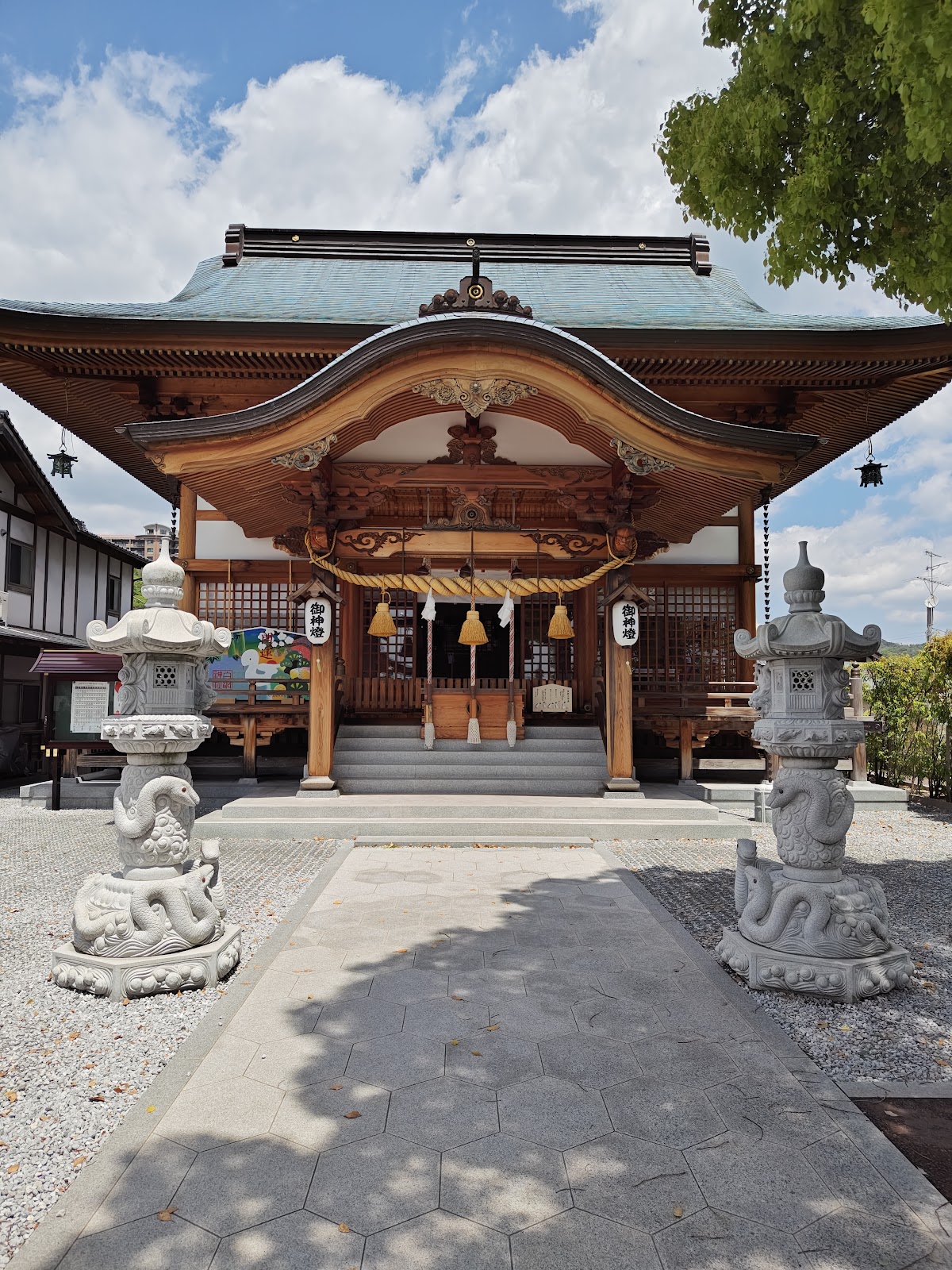
After climbing the 222 stone steps, the main hall of Hiei Shrine comes into view. The shrine is located on the mountainside, surrounded by lush nature, creating a tranquil space. The main hall maintains traditional shrine architecture while being properly maintained, creating an appearance that harmoniously blends the weight of history with a sense of freshness.
From the shrine grounds, you can overlook the townscape of Kuga, offering a magnificent view. Praying in the tranquil grounds will leave you with a pure and cleansing feeling.
Yatsu Kagura Dance | Iwakuni City Intangible Folk Cultural Property
What is Yatsu Kagura Dance?
The most significant cultural feature of Hiei Shrine is the “Yatsu Kagura Dance,” designated as an Iwakuni City Intangible Folk Cultural Property. Yatsu Kagura Dance is a traditional Kagura (sacred dance) dedicated to Hiei Shrine, a valuable folk art passed down through generations by the local people.
Kagura is a sacred dance and music performed to welcome, entertain, and share with the gods. Yatsu Kagura Dance consists of ancient and elegant dances and music, expressing the world of mythology.
Activities of the Yatsu Kagura Dance Preservation Society
Yatsu Kagura Dance is preserved by the “Yatsu Kagura Dance Preservation Society.” The preservation society is comprised of local volunteers who practice diligently to ensure the tradition continues, performing the dance annually at Hiei Shrine.
In recent years, they have also focused on training successors, passing on the techniques to younger generations. Opportunities are also provided for local children to experience Kagura, contributing to the continuation of the culture.
Kagura Performance Information
The Yatsu Kagura dance is performed several times a year, coinciding with the festivals of Hiei Shrine. The autumn grand festival, in particular, features a grand Kagura performance, attracting many worshippers and tourists.
During the Kagura performance, Kagura nabe (a warm dish made with local ingredients) and mochi-throwing are also held, enveloping the entire community in a festive atmosphere. Kagura nabe is a warm dish made with local ingredients, sometimes offered free of charge to worshippers. During the mochi-throwing, mochi, believed to bring good fortune, is scattered from the shrine grounds, creating an exciting atmosphere for participants hoping to catch the lucky charm.
The dates vary each year, so it’s recommended to check the Iwakuni City or local tourism information websites before visiting. Since it’s often held on weekends, those interested in folk performing arts should definitely consider visiting.
Basic Information and Access to Hiei Shrine
Location and Address
Address: 360 Yatsu, Kuga-cho, Iwakuni City, Yamaguchi Prefecture 742-0323
Hiei Shrine is located in the Kuga-cho area of Iwakuni City, in a naturally rich environment at the foot of Mt. Kurakake and Mt. Renge. Kuga-cho is located in the northeastern part of Iwakuni City and has flourished as a transportation hub since ancient times.
Access Methods
Access by Train:
Approximately 10 minutes by car or 30-40 minutes on foot from JR Sanyo Main Line “Kuga Station”. Taking a taxi from the station is convenient.
Access by Car:
Approximately 10 minutes from the Sanyo Expressway “Kuga Interchange.” Access is via National Route 2 and then a prefectural road. There is parking space for visitors near the shrine, but it can get crowded during festivals, so early arrival is recommended.
Visiting Hours and Precautions
While Hiei Shrine is generally open to visitors, the shrine office may not always be staffed. Those wishing to receive a Goshuin (shrine stamp) are advised to contact the shrine in advance or visit during a festival.
Since you will need to climb 222 stone steps, comfortable shoes and clothing are recommended. The steps can be particularly slippery during rainy weather and winter, so please be extra careful. Bringing insect repellent during the summer is advisable.
Tourist Attractions Around Hiei Shrine
Attractions of the Kuga-cho Area, Iwakuni City
The Kuga-cho area, where Hiei Shrine is located, also boasts numerous other historical sites. The townscape of Kuga retains old merchant houses and storehouses, allowing visitors to experience the atmosphere of yesteryear.
Kintaikyo Bridge and Iwakuni Castle
Kintaikyo Bridge, a representative tourist attraction of Iwakuni City, is located about 20 minutes by car from Hiei Shrine. This wooden arch bridge, considered one of Japan’s three most famous bridges, is well worth seeing. Beyond Kintaikyo Bridge is a ropeway leading to Iwakuni Castle, where you can enjoy a spectacular view stretching to the Seto Inland Sea from the castle hill.
Iwakuni White Snake Shrine
Iwakuni City is also home to the Iwakuni White Snake Shrine, which enshrines white snakes, a national natural monument. White snakes are considered symbols of good fortune and business prosperity, attracting many worshippers. As a shrine with a different form of worship than Hiei Shrine, visiting both is highly recommended.
Guidelines for Visiting Hiei Shrine
Basic Etiquette for Shrine Visits
When visiting Hiei Shrine, please observe the basic etiquette for shrine visits.
- Bow before passing through the torii gate: As a sign of respect before entering the sacred area, bow before the torii gate.
- Walk along the edge of the path: The center of the path is considered the path of the gods, so it is polite to walk along the edge.
- Purify yourself at the water basin: If there is a water basin, purify your left hand, then your right hand, then your mouth.
- Two bows, two claps, one bow: At the main hall, bow deeply twice, clap twice, and finally bow deeply once.
Mindset when climbing the 222 stone steps
The 222 stone steps of Hiei Shrine are not merely a physical journey, but also a place for spiritual training to calm the mind. As you climb, step by step, clear your mind of everyday worries and purify your spirit.
It’s important to climb at your own pace without rushing. Take breaks along the way, listen to the sounds of nature, and take deep breaths to refresh both your mind and body.
Seasonal Expressions of Hiei Shrine
Spring: Cherry Blossom Path
In spring, the path to Hiei Shrine is adorned with cherry blossoms. A tunnel of cherry blossoms covers the 222 stone steps, and the sight of the pale pink petals fluttering down is magical. The best time to see the cherry blossoms is usually from late March to early April, and during this time, many worshippers and cherry blossom viewers visit.
Summer: Deep Green Grounds
In summer, Hiei Shrine becomes a tranquil space enveloped in deep green. Trees, including the thousand-year-old cedar, grow lush green leaves, and their shade provides coolness. Visiting the shrine amidst the sound of cicadas offers a unique summer atmosphere.
Autumn: Season of Autumn Leaves and Kagura
Autumn is the busiest season at Hiei Shrine. Autumn leaves adorn the approach to the shrine, creating a beautiful contrast of red and yellow. Furthermore, the Yatsu Kagura dance is performed during the autumn festival, adding a cultural attraction.
Winter: A Sanctuary of Silence
In winter, Hiei Shrine is less crowded, becoming a sanctuary enveloped in silence. Snow sometimes falls, creating a mystical atmosphere as the grounds are enveloped in a world of white. Visiting the shrine in this crisp air will be a deeply purifying experience.
Benefits and Faith of Hiei Shrine
Benefits of Sanno Faith
Hiei Shrine, as a shrine of Sanno faith, is believed to offer various benefits. Sanno worship has long been believed to bring a wide range of blessings, including national peace and security, abundant harvests, family safety, business prosperity, and protection from evil.
In particular, it has played a role as a guardian deity of the region, watching over the safety and prosperity of the residents. In times when agriculture was thriving, many worshippers visited to pray for a bountiful harvest, and even today, it attracts the faith of people who pray for the peace and security of their community.
Center of the Local Community
Hiei Shrine is not merely a religious facility; it also serves as the center of the local community. During festivals, local residents gather, participate in religious ceremonies together, and deepen their relationships. The preservation of the Yatsu Kagura dance is also an important element in strengthening community bonds.
This form of faith, deeply rooted in the community, is a valuable place to maintain human connections that tend to become weaker in modern society.
How to Enjoy Your Visit to Hiei Shrine
Take Your Time to Visit
To fully appreciate the charm of Hiei Shrine, we recommend visiting with plenty of time to spare. Slowly ascend the 222 stone steps, stop before the thousand-year-old cedar tree, and quietly clasp your hands together in prayer within the shrine grounds. By carefully performing each of these actions, you will be able to feel the power of the shrine.
Photography Tips
Hiei Shrine is also a great spot for photography. The following points are especially recommended:
- Panoramic View of the Thousand-Year-Old Cedar: The sight of the thousand-year-old cedar tree viewed from the shrine grounds is breathtaking.
- Stone Steps and Approach: The beauty of the approach is particularly striking during cherry blossom and autumn foliage seasons.
- View from the Main Hall: The view of Kuga townscape from the shrine grounds is also spectacular.
When taking photographs, please be considerate of other visitors, remember that this is a sacred place, and photograph with moderation.
Enjoying Local Food and Culture
When visiting Hiei Shrine, be sure to enjoy the local cuisine around Kuga town. You can enjoy local delicacies such as Iwakuni sushi and lotus root dishes, which are specialties of Iwakuni. The Kagura nabe, served during Kagura performances, is another dish that embodies the warmth of the local people.
Summary: Experience the Charm of Hiei Shrine
Hiei Shrine, located in Kuga-cho, Iwakuni City, Yamaguchi Prefecture, is a venerable shrine with a history of over 1200 years. With its 222 stone steps, a 1000-year-old cedar tree, and the Yatsu Kagura dance (a designated intangible cultural property of Iwakuni City), it offers numerous sights that deeply impress visitors.
As a sacred site of Sanno worship and a center of the local community, Hiei Shrine remains a spiritual haven for people. Visiting this shrine, nestled quietly on the mountainside, allows you to forget the hustle and bustle of everyday life and spend a precious time purifying your soul.
When visiting Iwakuni City, be sure to visit Hiei Shrine along with Kintaikyo Bridge and Iwakuni Castle. This shrine, where history, nature, and the warmth of the local people harmonize, is sure to leave a deep impression on your heart.
As you ascend the approach to the shrine step by step, you will encounter a form of faith that has been passed down for over a thousand years, and be reminded of something important that we, living in the modern age, are in danger of forgetting. Hiei Shrine is a place that offers such a special experience.


