A Complete Guide to the History and Highlights of Jinshu-ji Temple (Chuo Ward, Chiba City, Chiba Prefecture)
Jinshu-ji Temple, located in Nitona-cho, Chuo Ward, Chiba City, Chiba Prefecture, is an ancient Soto Zen temple believed to have been founded in the early Muromachi period. With deep ties to the Chiba clan, this temple preserves valuable cultural assets. This guide provides a detailed overview of its history and highlights.
Basic Information on Jinshu-ji Temple
Jinshu-ji Temple is a Soto Zen temple located in a residential area of Chuo Ward, Chiba City. Officially belonging to the Soto Zen sect, it has a long history as a center of local faith.
Location and Access
Location: 194 Nitona-cho, Chuo-ku, Chiba City, Chiba Prefecture
Access to Jinmori-ji Temple is as follows:
- By Train: Approximately 10 minutes by car from JR Sotobo Line “Kamatori Station,” or approximately 20 minutes on foot from Keisei Chihara Line “Gakuenmae Station”
- By Bus: Approximately 5 minutes on foot from Chiba Chuo Bus “Nitona” bus stop
- By Car: Approximately 15 minutes from Keiyo Expressway “Soga IC”
Located in a residential area, it offers a quiet environment for worship. It is recommended to check with the temple in advance regarding parking.
Sect and Principal Image
- Sect: Soto Zen
- Principal Image: Details available at the temple
The Soto Zen sect is a branch of Zen Buddhism that emphasizes the practice of “Shikantaza,” a form of seated meditation. This is one of the major Buddhist sects in Japan, with Dōgen Zenji as its founder and Keizan Zenji as its grand ancestor.
History of Jinshu-ji Temple
Circumstances and Date of Founding
While there are no clear records of the founding date of Jinshu-ji Temple, research by the “Local History (16th District Local History Editorial Committee)” suggests that it already existed in the early Muromachi period.
The basis for this estimation is a stone monument bearing the inscription of Eitoku 1 (1381) discovered beneath the main image of Buddha. The existence of this monument is important evidence indicating the presence of a Buddhist facility in the area at least by the latter half of the 14th century.
Founding as a Sōtō Zen Temple
Jinshu-ji Temple was officially founded as a Sōtō Zen temple in Kyōtoku 1 (1452). The founder was Dōun Keishū Daioshō, who converted an existing temple into a Sōtō Zen temple.
The first year of the Kyōtoku era (1394) falls in the mid-Muromachi period and marks the beginning of the Kyōtoku Rebellion in the Kanto region. The temple’s reopening as a Sōtō Zen temple during this turbulent time is thought to have strengthened its role as a center of local faith.
Relationship with the Chiba Clan
An important document illustrating the relationship between Jinmori-ji Temple and the Chiba clan is the temple’s register of deceased persons. This register contains phrases praising the Chiba clan’s benevolence and virtue, suggesting a deep connection with the Chiba family.
The Chiba clan was a samurai family that held power primarily in Shimōsa Province from the late Heian period to the Sengoku period, and is the origin of the place name Chiba City. The character “仁” (jin) in Jinmori-ji Temple may also embody the virtue of the Chiba clan.
The place name Nitona-machi, where the temple is located, has also been linked to the Chiba clan, preserving a remnant of the era when this region was under Chiba clan rule.
Cultural Assets and Highlights of Jinshu-ji Temple
Stone Stele with Eitoku 1st Year Inscription
One of the most important cultural assets at Jinshu-ji Temple is the stone stele with the inscription of Eitoku 1st year (1381), discovered beneath the main image of Buddha. A stone stele is a type of memorial tower from the medieval period, inscribed with Sanskrit characters, sutras, and dates.
This stele is crucial evidence for estimating the founding date of Jinshu-ji Temple and is a valuable resource for understanding Buddhist beliefs in the Chiba region during the late 14th century. The fact that the stele was found beneath the main image suggests it was an important object of worship from the temple’s founding.
Group of Hōkyōintō Pagodas
Numerous Hōkyōintō pagodas exist within the temple grounds. Hōkyōintō pagodas are Buddhist stupas used to enshrine the Hōkyōin Dharani Sutra and were widely used as memorial towers.
The group of Hōkyōintō pagodas at Jinmori-ji Temple are believed to have been erected from the medieval to early modern periods, testifying to the temple’s long history and the deep faith of the local community. These pagodas were likely built to commemorate the Chiba clan and influential local figures, and are a valuable legacy that preserves the stone art of that era.
Main Hall and Temple Grounds
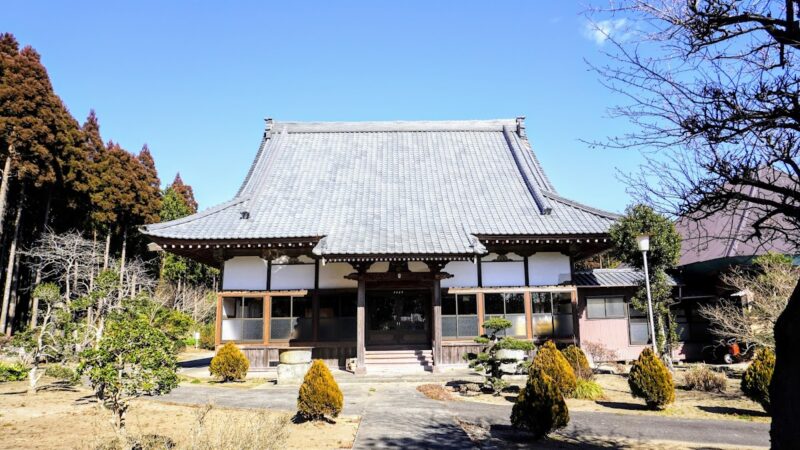
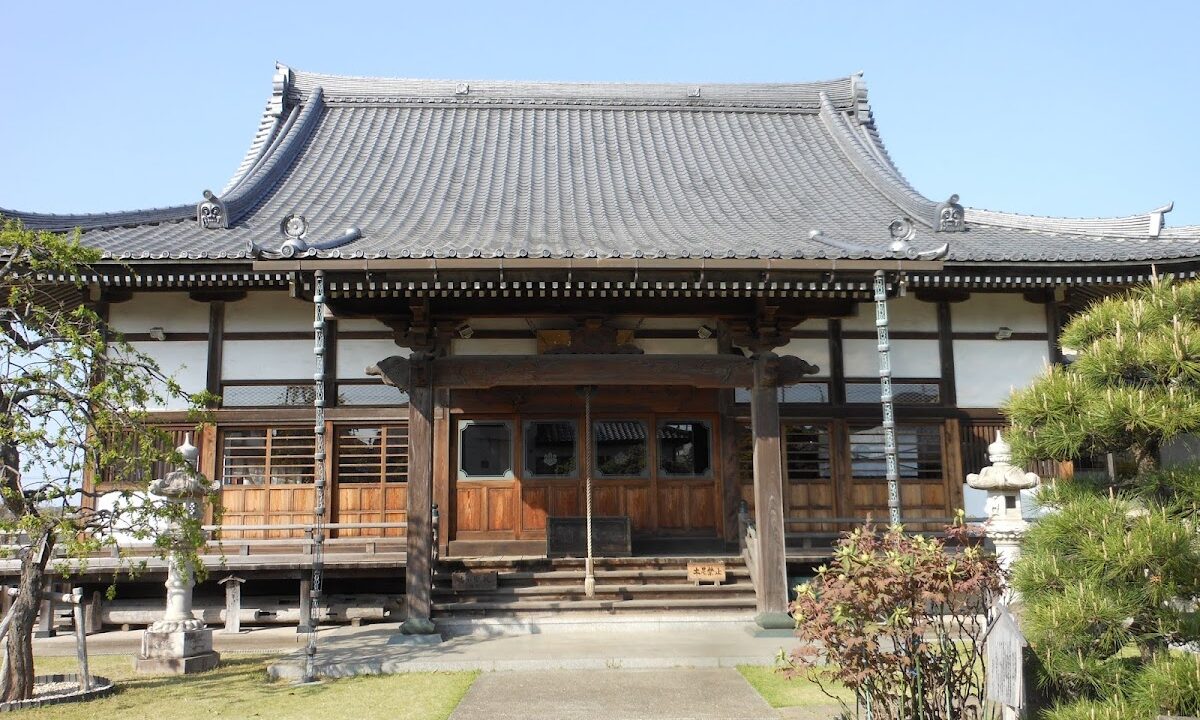
The main hall of Jinmori-ji Temple exhibits architectural characteristics typical of Sōtō Zen temples. While detailed records are needed to determine the exact date of the current building’s construction, it has been carefully maintained as a center of local faith.
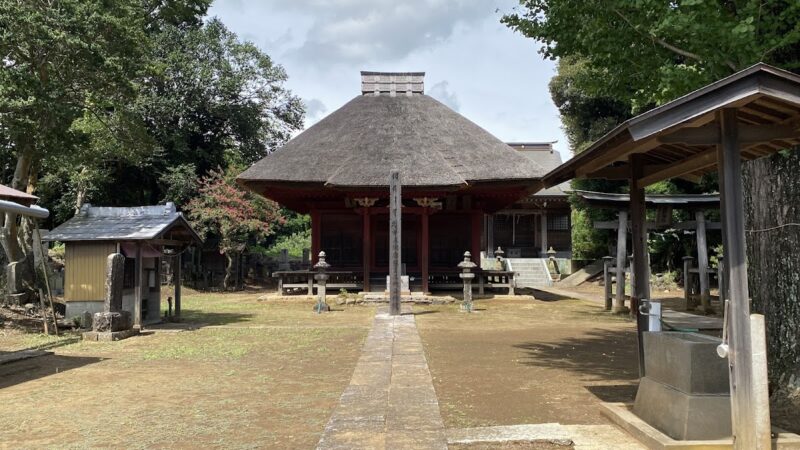
The temple grounds, while located in a residential area, maintain a tranquil atmosphere and serve as a spiritual haven for local residents. The grounds, which display different expressions with each season, provide a peaceful space for visitors.
The Position of Jinshu-ji Temple in the Temple Culture of Chuo Ward, Chiba City
Characteristics of Temples in Chiba Prefecture
Chiba Prefecture has approximately 3,200 temples, of which about 1,200 are Shingon Buddhist temples and 430 are Tendai Buddhist temples. Furthermore, as the birthplace of Nichiren Shonin, it is characterized by a relatively high number of Nichiren Buddhist temples (approximately 930) compared to other prefectures.
On the other hand, there are remarkably few Jodo Shinshu Buddhist temples (only a few dozen), which indicates a unique development in Chiba Prefecture’s religious history.
Jinshu-ji Temple as a Soto Zen Temple
Within this distribution of temples in Chiba Prefecture, Jinshu-ji Temple exists as a Soto Zen temple. While the Soto Zen sect has many temples in Chiba Prefecture, ancient temples dating back to the early Muromachi period are limited, making Jinshu-ji Temple of high historical value.
Role in the Community
Jinmori-ji Temple, rooted in the Nitona-cho area of Chuo-ku, Chiba City, has served as a spiritual pillar for the local community. Even in today’s increasingly urbanized world, it remains an important cultural heritage site that conveys the history and traditions of the region.
Historical Background of the Area Around Jinmori-ji Temple
History of Nitona-cho
Nitona-cho is located in the southeastern part of Chuo-ku, Chiba City, and is an area where an ancient settlement was formed. There are various theories about the origin of the place name, but a connection to the Chiba clan has been pointed out.
During the medieval period, it was within the Chiba clan’s sphere of influence, and the founding of Jinmori-ji Temple is deeply intertwined with the political and social background of this era.
History of the Chiba Clan and Jinmori-ji Temple
The Chiba clan expanded its power, mainly in Shimosa Province, after Chiba Tsunetane achieved success following Minamoto no Yoritomo at the end of the Heian period. The Chiba clan flourished from the Kamakura period to the Muromachi period, but declined during the Sengoku period due to internal conflicts and conflicts with other forces.
The period from the late 14th century, when Jinshu-ji Temple was founded, to the mid-15th century, when it was established as a Soto Zen temple, coincides with a time when the Chiba clan still maintained considerable power. The temple’s records, which include descriptions praising the Chiba clan’s benevolence and virtue, indicate a close relationship between the Chiba clan and the temple during this period.
Points and Precautions for Visiting the Temple
Etiquette for Visiting the Temple
When visiting Jinshu-ji Temple, a Soto Zen Buddhist temple, please keep the following basic etiquette in mind:
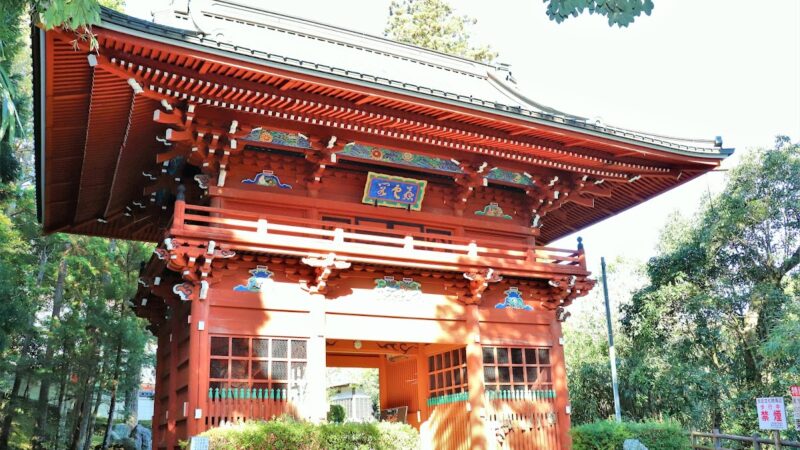
- Bow at the Temple Gate: Bow before entering the temple grounds.
- Purification at the Water Basin: Purify your hands and mouth.
- Worship at the Main Hall: Quietly join your hands in prayer and pray with sincerity.
- Viewing the Temple Grounds: Treat cultural artifacts and stone structures with respect.
- Bow Upon Departure: Bow again when leaving the temple grounds.
Points to Note When Visiting
- Visiting Hours: Visit during general visiting hours (please check with the temple for details).
- Photography: When taking photographs on the temple grounds, please be considerate of other visitors.
- Quietness: As the temple is located in a residential area, please be mindful of quietness during your visit.
- Parking: It is recommended to check in advance whether parking is available and during what hours.
Annual Events
Soto Zen temples hold various memorial services and events throughout the year. Jinshu-ji Temple may also hold memorial services for its parishioners and local residents. For specific events, please contact the temple directly.
Comparison with Other Temples in Chiba City’s Chuo Ward
Besides Jinshu-ji Temple, Chiba City’s Chuo Ward has many other historical temples. Each has its own unique history and characteristics, shaping the local culture.
Major Temples in the Surrounding Area
Chiba City’s Chuo Ward has temples of various sects, including Shingon, Tendai, and Nichiren. Compared to these temples, Jinshu-ji Temple has the characteristics of a Soto Zen temple and possesses uniqueness due to its historical background, particularly its connection to the Chiba clan.
The Present and Future of Jinshu-ji Temple
Role in Modern Times
Currently, Jinshu-ji Temple supports the faith of its parishioners and local residents as a local temple. In Chiba City, which is undergoing urbanization, its value as a precious cultural heritage site that conveys history and tradition is being re-recognized.
Preservation of Cultural Properties
Preserving valuable cultural properties such as the stone monument bearing the inscription of the first year of Eitoku (1430) and the group of Hōkyōintō pagodas for future generations is a crucial mission of Jinshu-ji Temple. These cultural properties are indispensable resources for understanding the history of Chiba City, and their appropriate preservation and utilization are essential.
Connection with the Community
Jinshu-ji Temple serves not only as a religious facility but also as a hub for the local community. Initiatives utilizing the temple’s resources are expected in local history education and cultural activities.
Significance of Jinshu-ji Temple Research
Value in Historical Research
Research on Jinshu-ji Temple is important for elucidating the history of the Chiba region from the medieval to the early modern period. In particular, it is a valuable case study for understanding the relationship with the Chiba clan and the regional development of the Sōtō Zen sect.
The stone monument bearing the inscription of the first year of Eitoku (1430) is a primary source that reveals the reality of Buddhist faith in the Chiba region in the latter half of the 14th century, and further research is expected.
Cultural Heritage Evaluation
The Hōkyōintō pagodas and stone steles of Jinmori-ji Temple are valuable for the study of medieval stone art. Detailed investigation and analysis of these stone structures could deepen our understanding of the technological level and religious practices of the time.
Summary
Jinmori-ji Temple is an ancient Sōtō Zen temple located in Nitona-chō, Chūō-ku, Chiba City, Chiba Prefecture. It is a historical temple believed to have been founded in the early Muromachi period. It preserves valuable cultural assets, including a stone stele bearing the inscription of Eitoku 1 (1381) and numerous Hōkyōintō pagodas. Due to its deep connection with the Chiba clan, it occupies an important position in local history research.
Since its founding as a Sōtō Zen temple in Kyōtoku 1 (1452) by the Venerable Dōun Keishū, it has carved out a history of nearly 600 years as a center of local faith. Even today, amidst the increasing urbanization of Chiba City, its value as a precious cultural heritage site conveying history and tradition is recognized.
A visit to Jinmori-ji Temple is more than just a temple visit; it’s an opportunity to experience the medieval history of Chiba, the glory of the Chiba clan, and the history of the region. Nestled in a quiet residential area, this ancient temple will offer visitors a sense of historical weight and peace of mind.
When visiting Chiba City’s Chuo Ward, be sure to stop by Jinmori-ji Temple and experience its history and cultural treasures. You’ll be able to feel the profound depth of Japanese Buddhist culture from this temple deeply rooted in the community.