Honjo-ji Temple (Kamakura City, Kanagawa Prefecture) Complete Guide: History and Charm of the Eight Temples of Ryukoji Temple
Located in Koshigoe, Kamakura City, Kanagawa Prefecture, Honjo-ji Temple boasts a history of over 700 years as a prestigious Nichiren Buddhist temple. This guide provides a detailed overview of the temple, from its history and highlights to access information, highlighting its important role as one of the eight temples of Ryukoji Temple.
Basic Information on Honjo-ji Temple
Honjo-ji Temple is a Nichiren Buddhist temple located in Koshigoe, Kamakura City, Kanagawa Prefecture. Its former head temple was Komachi Honkaku-ji Temple, and it belongs to the Choshi lineage. As one of the eight temples of Ryukoji Temple, it has played a crucial role in protecting Ryukoji Temple, the site of the Ryukoji Persecution.
Temple Data
- Official Name: Honjo-ji Temple
- Pronunciation: Honjo-ji
- Sect: Nichiren Buddhism
- Former Head Temple: Komachi Honkaku-ji Temple
- Dharma Lineage: Choshi Dharma Lineage
- Founded: Enkei 2 (1309)
- Founding Priest: Awaji Ajari Nikken
- Location: Koshigoe, Kamakura City, Kanagawa Prefecture
History of Honjo-ji Temple
Circumstances of Founding
Honjo-ji Temple was founded in Enkei 2 (1309) by Awaji Ajari Nikken. This was approximately 30 years after the death of Nichiren Shonin, a time when the teachings of Nichiren Buddhism were spreading throughout the Kanto region.
Awaji Ajari Nikken was not a direct disciple of Nichiren Shonin, but he deeply studied the teachings of the Nichiren sect and dedicated himself to spreading the Lotus Sutra by establishing a new temple in Kamakura. The location of Koshigoe was close to the site of the Tatsunokuchi Persecution and held significant meaning as a place associated with Nichiren Shonin.
Role as one of the eight rotating temples of Tatsunokuchi
Honjo-ji Temple has played a special historical role as one of the eight rotating temples of Tatsunokuchi. The eight rotating temples of Tatsunokuchi are eight temples established to protect and manage Tatsunokuchi, the site where Nichiren Shonin suffered the Tatsunokuchi Persecution.
These temples managed Tatsunokuchi on a rotating basis, responsible for performing religious ceremonies and maintaining the temple grounds. Honjo-ji Temple, as a member of this group, has maintained a deep connection with Tatsunokuchi from the Edo period to the present day.
From the Edo Period to the Present
During the Edo period, Honjo-ji Temple functioned as a center of local faith. Koshigoe was a region where fishing flourished, and the temple prospered as a place of worship for fishermen. Located along the road connecting Edo (Tokyo) and Kamakura, it also served as a resting place for travelers.
Despite the impact of the anti-Buddhist movement of the Meiji era, Honjo-ji Temple survived thanks to the support of local residents and has continued to uphold its religious traditions to this day. During the post-war reconstruction period, the temple grounds were renovated, resulting in its current appearance.
Highlights of the Temple Grounds
Main Hall and Principal Image
The main hall of Honjo-ji Temple enshrines the Three Treasures Founder as its principal image. The Three Treasures Founder is a revered image representing Nichiren Shonin, who embodied the Three Treasures of Buddhism (Buddha, Dharma, and Sangha). In Nichiren Buddhist temples, the Three Treasures Founder is a particularly important object of worship.
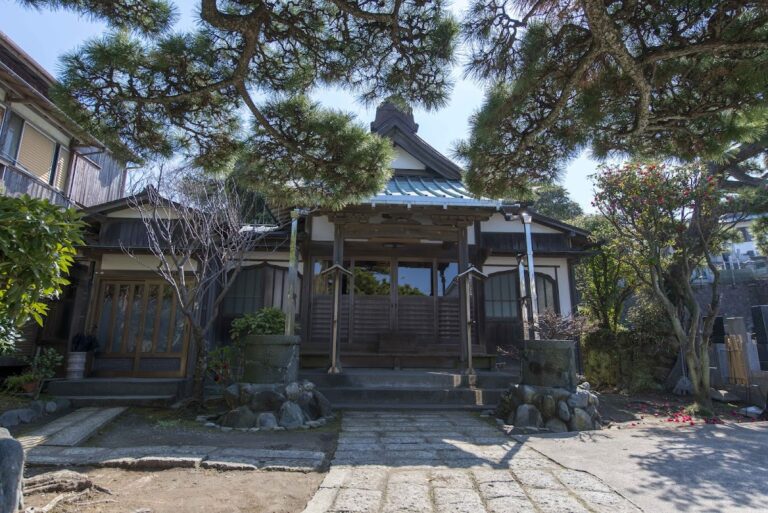
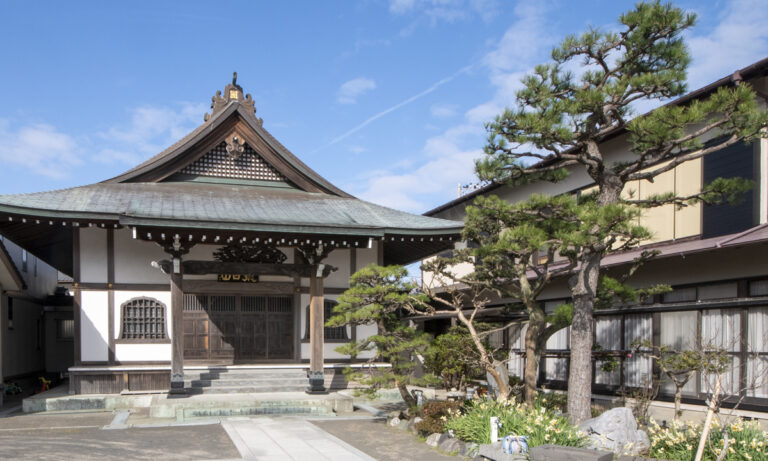
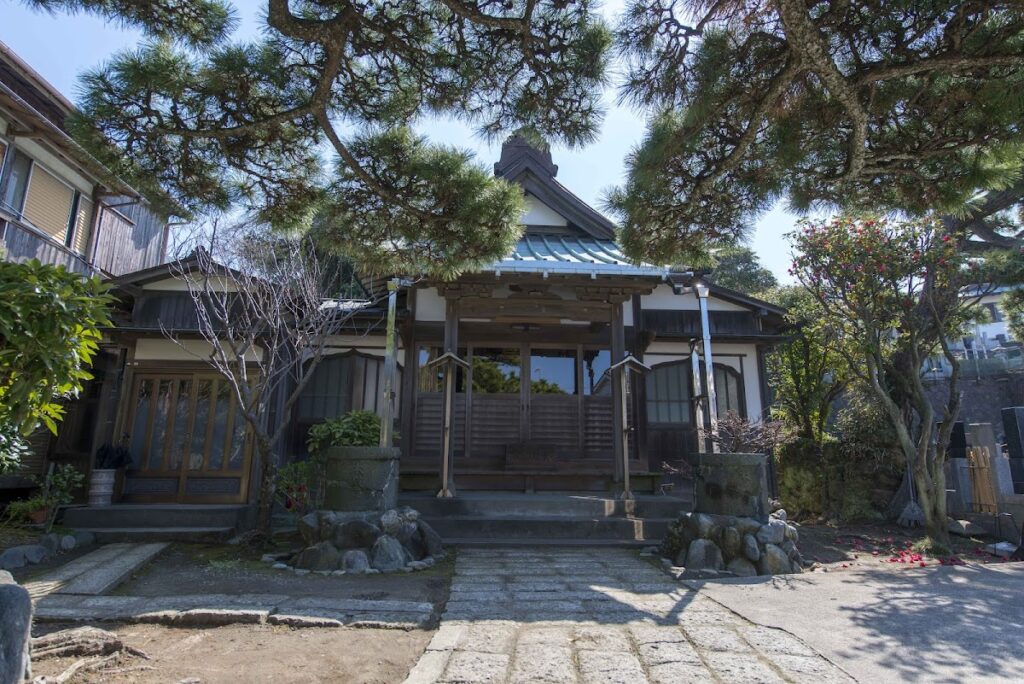
The main hall is built in a traditional wooden architectural style, offering a tranquil atmosphere for worship. The Lotus Sutra is recited daily within the hall, making it a place of prayer for believers.
Inari Myojin Shrine
Within the temple grounds lies a shrine dedicated to Inari Myojin. While Inari worship is a widespread folk religion throughout Japan, the Inari Myojin at Honjo-ji Temple is particularly cherished by locals for its blessings of business prosperity and family safety.
The Inari Myojin shrine is located beside the main hall, marked by a vermilion torii gate. Many visitors can be seen offering prayers to Inari Myojin in addition to their visit to the main hall.
Atmosphere of the Temple Grounds
Honjo-ji Temple’s grounds offer a quiet environment, slightly removed from the hustle and bustle of Kamakura. Located in Koshigoe, close to the sea, visitors can enjoy the sea breeze while praying.
Seasonal flowers are planted on the grounds, allowing visitors to enjoy the beauty of nature throughout the year: cherry blossoms in spring, hydrangeas in early summer, and autumn leaves in fall. Though small, the well-maintained grounds provide a sense of peace and tranquility to visitors.
Honjo-ji Temple and the Nichiren Sect
What is the Nichiren Sect?
The Nichiren Sect is a Buddhist sect founded by Nichiren Shonin (1222-1282), a monk of the Kamakura period. It considers the Lotus Sutra (Myoho Renge Kyo) as its sole fundamental scripture and teaches that one can attain Buddhahood by chanting the title “Namu Myoho Renge Kyo.”
Nichiren Shonin offered harsh criticism of the Buddhist world and society of his time, asserting that the Lotus Sutra was the true teaching. As a result, he suffered persecution many times, but he remained steadfast in his beliefs. The Tatsunokuchi Persecution is one of the most representative events.
The Teachings of the Lotus Sutra
The Lotus Sutra is one of the representative scriptures of Mahayana Buddhism and teaches the “One Vehicle” doctrine, which states that all people have the potential to become Buddhas. At Honjo-ji Temple, faith based on the teachings of the Lotus Sutra is also passed down.
In the Nichiren sect, there is a strong belief in the merits of the Lotus Sutra, and the chanting of the Daimoku (the Lotus Sutra’s title) in daily life is highly valued. At Honjo-ji Temple, the Daimoku is chanted during morning and evening services, supporting the faith of the followers.
Relationship to the Tatsunokuchi Persecution
The system of eight rotating temples, to which Honjo-ji Temple belongs, is deeply connected to the historical event known as the Tatsunokuchi Persecution. On September 12, 1271 (Bun’ei 8), Nichiren Shonin was arrested by the Kamakura Shogunate and sentenced to execution at the Tatsunokuchi execution ground (the current location of Tatsunokuchi Temple).
However, it is said that a mysterious light appeared just before the execution, and the execution was called off. This event, known as the “Tatsunokuchi Persecution,” holds extremely significant meaning in the history of the Nichiren sect and is recounted as a miracle demonstrating Nichiren Shonin’s spiritual power.
The eight rotating temples, including Honjo-ji Temple, bear the mission of protecting this sacred site and passing it on to future generations.
Characteristics of the Koshigoe Area
History of Koshigoe
Koshigoe is a historic fishing town located on the western edge of Kamakura City, facing Sagami Bay. During the Kamakura period, it is known as the setting for the “Koshigoe Letter,” where Minamoto no Yoshitsune stayed in search of a meeting with his brother, Yoritomo.
During the Edo period, the Kamakura Road, a side road of the Tokaido, passed through Koshigoe, and it flourished as a post town. Fishing and tourism are the main industries, and even today, it is a charming area with well-preserved old townscapes.
Temples and Shrines in the Surrounding Area
Besides Honjo-ji Temple, there are many other temples and shrines in the Koshigoe area. The most famous is Ryukoji Temple, which attracts many visitors as a place associated with Nichiren Shonin. Manpuku-ji Temple is also known as the place where Minamoto no Yoshitsune wrote the Koshigoe Letter.
The “Koshigoe Temple and Shrine Pilgrimage,” which visits these temples and shrines, is a popular course for history enthusiasts. Honjo-ji Temple is also a temple worth visiting as part of this course.
Relationship with Enoshima
Enoshima is within walking distance from Koshigoe, just a short walk across the Enoshima Bridge. While Enoshima is famous as a tourist destination, it has also been a place of worship since ancient times. Many tourists visit Enoshima after visiting Honjo-ji Temple, allowing them to experience the richness of the region’s religious culture.
Access Information
Access by Public Transportation
The most convenient way to access Honjo-ji Temple is by using the Enoshima Electric Railway (Enoden).
If using the Enoden Railway:
- Get off at Koshigoe Station on the Enoden Line, approximately 5 minutes on foot.
- Get off at Enoshima Station on the Enoden Line, approximately 10 minutes on foot.
If using the JR Line:
- Transfer to a bus or Enoden Railway from Kamakura Station on the JR Yokosuka Line.
- Transfer to the Enoden Railway from Fujisawa Station on the JR Tokaido Line.
The Enoden is a local line connecting Kamakura and Fujisawa, and enjoying the view of the Shonan sea from the train window is one of the pleasures of sightseeing. Koshigoe Station is a small station, but it has a warm atmosphere closely connected to the local community.
Access by Car
If visiting by car, use National Route 134.
Access from Major Roads
- Approximately 30 minutes from the Asahina Interchange on the Yokohama-Yokosuka Expressway
- Approximately 40 minutes from the Atsugi Interchange on the Tomei Expressway
- Located along National Route 134, in the Koshigoe area
Parking Information
Honjo-ji Temple may not have its own parking lot, so we recommend using nearby coin-operated parking lots. Especially on weekends and during peak tourist seasons, congestion is expected, so using public transportation is recommended.
Access Combined with Nearby Sightseeing
When visiting Honjo-ji Temple, we recommend combining your visit with other nearby tourist attractions.
Recommended Sightseeing Route
- Start from Enoden “Kamakura Station”
- Travel towards Koshigoe on the Enoden (enjoy the sea view from the train window)
- Visit Ryukoji Temple
- Visit Honjoji Temple
- Visit Manpukuji Temple
- Walk to Enoshima Island
- Sightseeing on Enoshima Island
This route allows you to efficiently visit the main spots in western Kamakura in half a day to a full day.
Visiting Information
Visiting Hours and Admission Fees
Basic information regarding visiting Honjoji Temple is as follows:
Visiting Hours
- Free access to the grounds (usually daytime visits are possible)
- Prior confirmation may be required for viewing the interior of the main hall
Admission Fees
- Generally free (donations welcome)
- Separate confirmation is required for special viewings and events
Manners for Visiting Temples
When visiting temples, please observe the following manners.
Basic Etiquette for Visiting a Temple
- Bow at the temple gate before entering the grounds.
- If there is a water basin, cleanse your hands and mouth.
- Join your hands in prayer in front of the main hall and pray quietly.
- Take photographs only where permitted.
- Be quiet on the temple grounds.
- Take your trash with you.
Nichiren Buddhism Etiquette
In Nichiren Buddhism, chanting the mantra “Namu Myoho Renge Kyo” is fundamental. When visiting, it is good to chant the mantra silently or softly while joining your hands in prayer.
Events and Ceremonies
Honjo-ji Temple holds various ceremonies and events throughout the year.
Main Annual Events
- New Year’s Day: New Year’s Prayer Service
- February: Setsubun Festival
- Spring & Autumn: Higan Festival
- Around September 12th: Ryukuchi Persecution Memorial Service (sometimes held jointly with Ryukuchi-ji Temple)
- October 13th: Nichiren Shonin Memorial Service
The Memorial Service is one of the most important events in Nichiren Buddhist temples, a memorial service commemorating the passing of Nichiren Shonin. Many believers gather, and it is a grand event.
Points to Note When Visiting Honjo-ji Temple
Regarding Clothing
There are no specific dress code requirements for temple visits, but it is considered polite to avoid revealing clothing. Especially when entering the main hall, clothing that covers the shoulders and knees is preferable.
Although it is hot in the summer, it is considered good manners to remove your hat before entering the main hall. Also, shoes are recommended over sandals.
Regarding Photography
Photography on the temple grounds is generally permitted, but please note the following points.
- Photography inside the main hall may require permission.
- Please be considerate and avoid including other visitors in your photos.
- Please refrain from using flash photography.
- Please check in advance before using a tripod.
- Please obtain prior permission before taking photos for commercial purposes.
Tips for Avoiding Crowds
Honjo-ji Temple is located away from the center of Kamakura, making it a relatively quiet temple for worship. However, it may be crowded during the following periods:
Periods When Crowds Are Expected
- The first three days of the New Year
- Golden Week
- Obon period
- Oeshiki (around October 13th)
- Autumn foliage season (late November to early December)
Weekday mornings and evenings are relatively less crowded, making them recommended for those who want to worship at a leisurely pace.
Nearby Tourist Attractions
Ryukoji Temple
Ryukoji Temple, located within walking distance of Honjo-ji Temple, is a temple built on the site of the Ryukoji Persecution, where Nichiren Shonin was nearly executed. As a sacred site of the Nichiren sect, it attracts many worshippers from all over Japan. With many sights to see, including a five-story pagoda and a stupa, visiting Honjo-ji Temple along with Manpuku-ji Temple will allow you to gain a deeper understanding of the history of Nichiren Buddhism.
Manpuku-ji Temple
Manpuku-ji Temple, known as the place where Minamoto no Yoshitsune wrote the “Koshigoe Letter” to his brother Yoritomo, is also located close to Honjo-ji Temple. As a temple that tells the story of Yoshitsune’s tragedy, it is a popular spot for history buffs.
Enoshima Island
Enoshima Island is accessible on foot from Koshigoe. There are many tourist attractions, including Enoshima Shrine, Enoshima Samuel Cocking Garden, and an observation lighthouse. Enjoying sightseeing on Enoshima Island after visiting Honjo-ji Temple is highly recommended.
Koshigoe Fishing Port
Don’t miss Koshigoe Fishing Port, where you can enjoy fresh seafood. There are many seafood restaurants serving dishes directly from the port, allowing you to savor Shonan cuisine such as shirasu-don (whitebait rice bowl) and kaisen-don (seafood rice bowl). It’s perfect for a meal after visiting the temple.
Summary of Honjo-ji Temple’s Charms
Honjo-ji Temple is a precious temple where you can experience the history and faith of Nichiren Buddhism in a quiet environment slightly removed from the hustle and bustle of Kamakura. As one of the eight temples that rotate over Ryukoji Temple, it boasts a history of over 700 years and has continuously supported the faith of the local community.
Main Charms of Honjo-ji Temple
- A historical temple founded in 1309
- Its importance as one of the eight temples that rotate over Ryukoji Temple
- The main hall with the Three Treasures and Founders as its principal deity
- Inari Myojin shrine within the temple grounds
- A quiet and peaceful environment for worship
- The atmosphere of Koshigoe, a historic fishing town
- Convenient location accessible by Enoden train
- Combination with surrounding tourist spots
While famous temples and shrines such as Tsurugaoka Hachimangu Shrine and Hase-dera Temple tend to attract attention when it comes to Kamakura sightseeing, visiting a small but historically rich temple like Honjo-ji Temple allows for a deeper understanding of Kamakura’s religious culture.
A Recommendation for Visiting Honjo-ji Temple
Honjo-ji Temple is recommended not only for those interested in Nichiren Buddhism, but also for those interested in the history and culture of Kamakura, and for those who wish to find peace of mind in a quiet temple.
Enjoy the scenic journey along the coast on the Enoden train, stroll through the historic town of Koshigoe, and quietly offer your prayers at Honjo-ji Temple. Such a trip will be a precious time to refresh your mind and escape from the hustle and bustle of everyday life.
When visiting Kamakura, be sure to extend your trip a little and visit Honjo-ji Temple. You’ll discover a different side of Kamakura, different from the famous tourist spots.
Frequently Asked Questions
Q: How much is the entrance fee for Honjo-ji Temple?
A: Visiting the grounds of Honjo-ji Temple is generally free. There may be a donation box; please make a donation according to your feelings.
Q: Can I get a Goshuin (temple stamp)?
A: You can generally get a Goshuin at Nichiren Buddhist temples. It is recommended to check the temple office’s opening hours before visiting.
Q: Is there parking available?
A: Prior confirmation is necessary regarding dedicated parking. We recommend using nearby coin-operated parking lots or accessing the temple by public transport.
Q: Are Honjo-ji and Hongaku-ji different temples?
A: Yes, they are different temples. Honjo-ji is located in Koshigoe, and Hongaku-ji is located in Komachi, Kamakura City. Both are Nichiren Buddhist temples, but they differ in history and location.
Q: Is group worship possible?
A: If you wish to worship as a group, it is recommended to contact the temple in advance to confirm. Advance notice is advisable as it may coincide with memorial services or events.