
Complete Guide to Hōshakuin Temples: A Thorough Explanation of the Charm and Characteristics of Historic Temples Across Japan
There are several temples named Hōshakuin throughout Japan. Each has its own unique history and cultural background, and has served as a center of local faith for many years. This article provides comprehensive information on Hōshakuin temples in various locations, including their history, characteristics, cultural assets, and annual events.
What is Hōshakuin?: Origin of the Name and Buddhist Significance
The word “Hōshaku” originates from Buddhist terminology and means “to accumulate treasures.” This represents the accumulation of merit from Buddhist teachings, and many temples of the Shingon-shu Buzan sect have adopted this name. The temple name Hōshakuin embodies the fundamental Buddhist principle of accumulating spiritual treasures through practice and faith.
The Shingon-shu Buzan sect is a branch of Shingon Buddhism that inherits the teachings of Kūkai Kōbō Daishi, and its head temple is Hase-dera Temple in Sakurai City, Nara Prefecture. Many Hōshakuin temples throughout Japan belong to this sect, and while adhering to common doctrines and practices, they have developed uniquely, reflecting the characteristics of their respective regions.
Hōshakuin in Adachi Ward: A Historic Temple in Tokyo
History and Origins of Hōshakuin in Adachi Ward
Hōshakuin, located in Adachi Ward, Tokyo, is a Shingon-shu Buzan-ha temple founded by the Chiba clan in the late Muromachi period. It is believed that the temple originated from the enshrinement of Myōken Bodhisattva, the guardian deity of the Chiba clan, and is known as a temple with deep ties to the samurai class.
Initially, it had Nishiarai Daishi Sōji-ji as its head temple, but in 1939 (Showa 14), it changed its structure to have Hase-dera, the head temple of the Shingon-shu Buzan-ha, as its head temple. This change clarified its position within the sect and strengthened its direct connection with the head temple.
History of Fire and Reconstruction
A notable event in the history of Hōshakuin Temple in Adachi Ward is the fire of 1915 (Taisho 4). Completely destroyed by arson, the temple was rebuilt using the remains of Daishoji Temple, a defunct temple in Ukizuka, Yawata Village, Minami-Saitama District, Saitama Prefecture (present-day Ukizuka, Yashio City, Saitama Prefecture). This reconstruction was a painstaking decision made to preserve local faith and marked a significant turning point in the temple’s history.
The current main hall and other buildings were newly constructed in 1958 (Showa 33) and are valuable as an example of temple architecture from the post-war reconstruction period. While incorporating modern architectural techniques, it retains the style of traditional temple architecture.
84th Temple of the New Shikoku Four Provinces Eighty-Eight Sacred Sites
Hōshakuin Temple in Adachi Ward is the 84th temple of the New Shikoku Four Provinces Eighty-Eight Sacred Sites, attracting the faith of pilgrims. This sacred site is a reproduction of the Shikoku 88 Temple Pilgrimage in the Kanto region, established for people who could not travel the long distance to make the pilgrimage. It plays an important role in supporting the local religious culture.
Hōshakuin Temple in Seirō-machi, Niigata Prefecture: A Famous Temple of the Echigo 33 Kannon Pilgrimage
History and Origins of Seirōzan Hōshakuin Temple
Located in Suwayama, Seirō-machi, Kitakanbara-gun, Niigata Prefecture, Seirōzan Hōshakuin Temple belongs to the Chizan branch of the Shingon sect and is known as the 29th temple of the Echigo 33 Kannon Pilgrimage. Its origins are said to date back to 737 AD (Tenpyō 9), when Taichō Daidoku carved an eleven-faced Kannon Bodhisattva and two guardian deities and enshrined them for the repose of Midorimaru’s soul.
Taichō Daidoku was a high-ranking priest of the Nara period and is also known as the founder of the Hakusan faith. This history indicates that Hōshakuin Temple has a long history of faith dating back to ancient times, suggesting its central role in the region’s Buddhist culture. ### Relationship with the Mizoguchi Clan, Lords of Shibata Domain
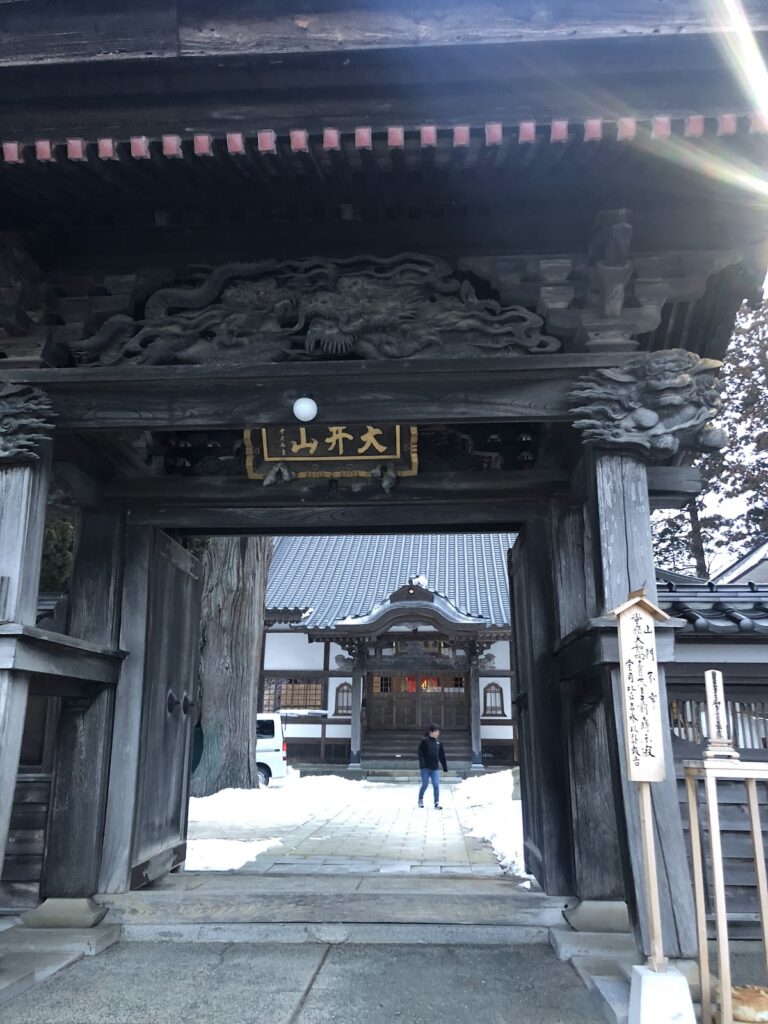
The first lord of Shibata Castle, Mizoguchi Hidekatsu, was a devout follower of Seirozan Kannonji Temple, and in July 1608 (Keicho 13), he rebuilt and repaired the Niomon Gate and Kannon Hall. This is an important example illustrating the relationship between daimyo (feudal lords) and temples in the early Edo period.
The current Niomon Gate and Kannon Hall were newly constructed in October 1756 (Horeki 6) and renovated in September 1859 (Ansei 6). These buildings are designated as tangible cultural properties of Seiro Town, as they are valuable cultural assets that convey the architectural style of the mid-to-late Edo period.
Valuable Cultural Assets Held by the Temple
Hoshakuin Temple in Seiro Town preserves valuable cultural assets, including the Five Secret Sutras, the Legend of Kannon, a sacred sword, and paintings such as the Blue Fudo. These cultural assets enhance the historical value of the temple and are carefully protected as a regional cultural heritage.
In particular, the Aofudo (Blue Fudo) is considered one of the most valuable Buddhist paintings depicting Fudo Myoo, holding significant importance from both a religious and artistic perspective. These cultural artifacts are usually not open to the public, but may be viewable on special occasions.
Hōshakuin Temple, Shirakawa City, Fukushima Prefecture: An Ancient Temple Associated with the Yuki Clan
Founding and History of Shirakawa Hōshakuin Temple
Located in Odagawa Gyōyakubo, Shirakawa City, Fukushima Prefecture, Hōshakuin Temple is a Shingon sect temple of the Buzan school, said to have been founded in the mid-14th century by the monk Kyōhan. Built around the 15th century, it is known for its deep connection to the Yuki clan, the daimyo who ruled this region at the time.
It is believed that the temple was dedicated to the repose of Yuki Munehiro, suggesting some connection to the Shirakawa Yuki family. Since the Yuki clan later formed marital ties with the Tokugawa family, this temple flourished greatly during the Edo period.
Location and Prosperity along the Oshu Kaido Road
Shirakawa’s Hōshakuin Temple benefited from its geographical location along the Oshu Kaido Road, and it is said that the temple attracted a large number of visitors. During the Edo period, the Oshu Kaido was an important route connecting Edo (Tokyo) with the Tohoku region, and many travelers and pilgrims passed through it.
Similar to Ryūzōji Temple, the fact that this temple had numerous branch temples demonstrates its significant influence. It played a role as a religious and cultural center in the region.
Historical Burial Grounds and Sites
Within the cemetery grounds lie the graves of Sasaki Hiroyuki of the Sendai Domain and Niwa Shingo of the Aizu Domain. These are valuable historical sites that serve as witnesses to the turbulent period of the late Edo period, telling the history of the region.
The area surrounding the temple is a beautiful rural landscape, and it is worth visiting just to enjoy the scenery. The harmony of historical buildings and nature provides visitors with a tranquil experience.
Hōshakuin Temple, Sanjō City, Niigata Prefecture: A Temple Known for its Fire-Walking Festival
Overview of Hagurosan Fukōji Hōshakuin Temple
Hōshakuin Temple, located in Sanjō City, Niigata Prefecture, belongs to the Buzan branch of the Shingon sect and its official name is “Hagurosan Fukōji Hōshakuin.” It is a historical temple founded in 1538 during the Sengoku period.
The principal image is the Vajradhatu Dainichi Nyorai (a hidden Buddha), attributed to Gyōki. Gyōki was a high-ranking priest of the Nara period and is known for his involvement in the construction of the Great Buddha of Tōdai-ji Temple. This history demonstrates the temple’s high status.
The Tradition of the Fire-Walking Festival
Hōshakuin Temple in Sanjō City is known for its annual Fire-Walking Festival held in June. Many people, from children to the elderly, gather at this festival to experience fire-walking and pray for good health and protection from illness.
The Fire Walking Festival is a practice of Esoteric Buddhism, where walking across fire is believed to burn away worldly desires and purify the mind and body. It is rare for this festival to be held in a way that allows general participants to experience it, and it has become an important annual event in the region.
Hōshakuin Temple in Edogawa Ward: Katori-san Shōsenji Temple
Hōshakuin Temple, located in Higashi-Komatsugawa, Edogawa Ward, Tokyo, is a Shingon sect temple of the Buzan school, also known as Katori-san Shōsenji Temple. The exact founding date is unknown, but it is said to have been restored and reopened by Hōshū Shōnin (who died in 1556).
Despite its location in the urban area of Edogawa Ward, it maintains a tranquil environment and functions as a place of worship for the local people. Amidst increasing urbanization, it is a valuable example of a temple that continues to preserve traditional temple culture.
Hōshakuin Temple in Ōiso Town, Kanagawa Prefecture
There is also a Hōshakuin Temple in Ōiso Town, Kanagawa Prefecture. Ōiso has long been known as a resort area, and is a historic town where many political and business figures have resided. Hōshakuin Temple in this area has also played an important role as part of the region’s history and culture.
While detailed historical records are limited, given its location in Ōiso, it is possible that it underwent unique development during the modernization that followed the Meiji era.
Faith and Practice at Hōshakuin Temple
Doctrine and Practice of Shingon Buddhism
The Buzan branch of Shingon Buddhism, to which many Hōshakuin temples belong, is based on the teachings of Esoteric Buddhism brought from China by Kūkai, Kōbō Daishi. Its characteristic doctrine is “Sokushin Jōbutsu,” that is, the belief that one can become a Buddha in this life.
Shingon Buddhism emphasizes practice that integrates the three mysteries of body, speech, and mind (physical actions, words, and mind) with the Buddha. Faith is deepened through practices such as Goma rituals, chanting, and meditation.
Annual Events and Memorial Services
Various memorial services and events are held throughout the year at each Hōshakuin temple. Traditional Buddhist events such as the New Year’s Shushō-e (New Year’s service), the spring and autumn equinox services, and the Obon (Buddhist festival) Segaki-e (feeding of hungry ghosts) service shape the rhythm of life for local people.
In particular, unique local events like the Sanjo City Fire Walking Festival are important opportunities to strengthen the ties between temples and the local community. Through these events, Buddhist teachings permeate daily life.
Perpetual Memorial Services and Modern Temple Management
In modern society, the traditional danka (parishioner) system is changing due to the declining birthrate, aging population, and the rise of nuclear families. Many Hōshakuin temples are introducing new forms of memorial services, such as perpetual memorial services, to meet the needs of the times.
Perpetual memorial services, as a system that allows for continued memorial services without burdening descendants, are a suitable option for modern family structures. Temples are also continuing their efforts to adapt to modern society while preserving tradition.
Architecture and Cultural Properties of Hōshakuin Temples
Characteristics of Temple Architecture
While the architectural styles of Hōshakuin temples vary depending on the time of construction and the history of reconstruction, common characteristics as Shingon Buddhist temples can also be observed. The layout of the temple complex, including the main hall, Kannon hall, and Niomon gate, exhibits a typical configuration for an Esoteric Buddhist temple.
In particular, the Niomon gate and Kannon hall of Hoshakuin Temple in Seiro-machi, Niigata Prefecture, are valuable cultural assets that preserve the architectural style of the mid-Edo period. As structures that embody the culmination of wooden construction techniques and aesthetic sensibilities, they possess high historical value.
Buddhist Statues and Paintings
Each Hoshakuin temple houses its own historically significant principal image and Buddhist statues. A diverse range of statues reflecting Shingon Buddhism and local beliefs are enshrined, including Eleven-faced Kannon Bodhisattva, Dainichi Nyorai, and Myoken Bodhisattva.
Many of these statues are kept as hidden images and are not usually on public display, but they may be unveiled on special festival days or during religious ceremonies. Furthermore, Buddhist paintings, such as those of Aofudo, are preserved as important cultural assets from both religious and artistic perspectives.
Access and Visiting Information for Hōshakuin Temple
Transportation Options to Hōshakuin Temples in Various Locations
Hōshakuin Temple in Adachi Ward
- Located in Adachi Ward, Tokyo, easily accessible from within Tokyo.
- Accessible by bus or on foot from the nearest station.
Hōshakuin Temple in Seirō Town, Niigata Prefecture
- Address: 578 Suwayama, Seirō-machi, Kitakanbara-gun, Niigata Prefecture 957-0117
- Phone Number: 0254-27-7773
- Approximately 30 minutes by car from Niigata City.
Hōshakuin Temple in Shirakawa City, Fukushima Prefecture
- Address: 2 Odagawa Yakubo, Shirakawa City
- Phone Number: 0248-22-4140
- Approximately 15 minutes by car from Shirakawa IC on the Tohoku Expressway.
Hōshakuin Temple in Sanjō City, Niigata Prefecture
- Located in Sanjō City, it is bustling with many visitors during the Fire Walking Festival.
Manners and Etiquette for Visiting Temples
When visiting a temple, it is important to observe the following manners:
- Attire: Please wear modest, understated clothing.
- Photography: Permission may be required to photograph the main hall or Buddha statues.
- Quietness: Please be quiet on the temple grounds and be considerate of other visitors.
- Offerings: Please offer a donation within your means, expressing your gratitude.
- Goshuin (Temple Seal): When receiving a Goshuin, please request it politely.
Hoshakuin Temple and the Local Community
Role as a Center of Local Culture
Hoshakuin temples throughout Japan have played a vital role not merely as religious institutions, but as centers of local culture. Through annual events and festivals, they serve as places for interaction among local residents, strengthening community bonds.
Especially in rural areas, Hoshakuin temples have become symbolic figures that maintain regional identity even amidst depopulation. The culture and traditions that the temples have preserved and passed down embody the history of the region itself. ### Education and Cultural Activities
Many Hōshakuin temples promote Buddhist teachings through cultural activities such as sutra copying sessions and Dharma talks. These activities provide opportunities for spiritual peace and reflection on the meaning of life, aspects often lost in modern society.
Some temples also focus on cultural transmission to the next generation through events and experiential activities for children. The educational role of connecting traditional culture to the future is an important mission for modern temples.
The Future and Challenges of Hōshakuin Temples
Balancing Tradition and Modernization
One of the challenges facing Hōshakuin temples throughout Japan is balancing the preservation of tradition with adaptation to modern society. They must maintain their function as places of worship while addressing common problems faced by many temples, such as declining parishioners, a lack of successors, and aging buildings.
On the other hand, initiatives to adapt to the new era, such as using the internet and social media for information dissemination and introducing online memorial services, are beginning. A willingness to embrace change while preserving tradition is required.
Preservation and Utilization of Cultural Properties
The preservation of the valuable cultural properties held by each Hōshakuin temple is a crucial issue. Proper preservation of buildings, Buddhist statues, and Buddhist paintings requires specialized knowledge and funding, and collaboration with government agencies and specialized institutions is essential.
At the same time, it is possible to utilize these cultural properties as regional treasures, leveraging them as tourism and educational resources. A balance between the preservation and utilization of cultural properties is necessary to aim for sustainable temple management.
Summary: The Spiritual Culture of Japan as Conveyed by Hōshakuin Temples
Hōshakuin temples, scattered throughout Japan, each possess their own unique history and culture, yet they share a common mission: to preserve and transmit the teachings of Buddhism. These temples, which have survived through the changing times from the Muromachi period to the Edo period and into the present day, are important bearers of Japan’s spiritual culture.
The practice of faith based on the doctrines of the Buzan branch of Shingon Buddhism, deep ties with local communities, the preservation and transmission of valuable cultural properties, and efforts to adapt to modern society—all of these contribute to the value of the group of temples known as Hōshakuin.
Historic buildings, beautiful Buddhist statues and paintings, and above all, a tradition of faith nurtured over many years—these are not merely relics of the past, but continue to exist as a living culture that holds meaning for us living in the present.
Visiting Hōshakuin temples throughout Japan will be a valuable opportunity to experience Japanese history and culture. The time spent praying in the tranquil temple grounds and reflecting on the spirituality preserved and passed down by our ancestors will surely bring a new perspective to our busy modern lives.
