Hoshūji Temple (宝集寺): Complete Guide to its History, Goshuin (Temple Seal), and Visitors in Kanazawa City, Ishikawa Prefecture
Located in the temple district of Kanazawa City, Ishikawa Prefecture, Hoshūji Temple (宝集寺, Hōshūji) is an ancient temple of the Kōyasan Shingon sect with a history of over 400 years. It flourished as a prayer temple for the Maeda family and houses valuable Buddhist statues, including the Shusse Daishō Kangiten. This article comprehensively introduces information useful for visiting Hoshūji Temple, including its history, highlights, goshuin information, and access methods.
History and Origins of Hoshūji Temple
Founding and Founding Priest
Hoshūji Temple is a Kōyasan Shingon sect temple founded with Kōyo, a monk from Chōrakuji Temple on Mount Kurikara in Kahoku District, as its founding priest. Mount Kurikara is a sacred mountain known as the site of an ancient battle during the Genpei War, and Choraku-ji Temple was an important base for the Shingon sect. The fact that Kōyo was invited from this historically significant temple to found Hōshū-ji Temple speaks to its high status.
From its inception, it functioned as a training ground for Shingon Esoteric Buddhism and developed into one of the centers for Shingon propagation in the Kaga region. The founding priest, Kōyo, was a highly esteemed monk who underwent rigorous training on Mount Kurikara, and the temple, inheriting his lineage, attracted the faith of the local community.
Deep Connections with the Maeda Family
A noteworthy aspect of Hōshū-ji Temple’s history is its deep connection with the Maeda family of the Kaga Domain. From the time of the tenth lord, Maeda Shigenori, it became the Maeda family’s prayer temple and received fervent devotion from the ruling family. Maeda Shigenori was a lord who governed the domain during the Bunka and Bunsei periods and is known for encouraging learning and culture.
The hexagonal hall, an important structure of the temple, was built at the behest of Teirin-in, the mother of Maeda Shigenori. As a woman of the Maeda family, Teirin-in possessed a deep faith in Buddhism and made significant contributions to the development of the Hoshūji temple complex. This hexagonal hall still remains on the temple grounds today, a valuable architectural structure that conveys the temple’s history.
The temple’s status as the Maeda family’s prayer temple stabilized its economic foundation and attracted many worshippers. Under the patronage of the feudal lord, Hoshūji developed into a central Shingon Buddhist temple in Kanazawa.
Positioning within the Teramachi Temple District
Teramachi in Kanazawa City, where Hoshūji is located, is a temple district developed by Maeda Toshitsune, the third lord of the Kaga Domain, for the purpose of defending the castle town and consolidating temples. More than 70 temples are concentrated from Teramachi 1-chome to 5-chome, forming a unique religious and cultural sphere.
Hoshūji Temple is located in Teramachi 1-chome and is known as one of the temples in this group that boasts a long history and high status. The surrounding area is home to temples of various sects, including the Sōtō, Jōdo, and Nichiren sects, embodying religious diversity. The Teramachi temple district is a representative area of Kanazawa’s historical landscape and attracts many tourists and worshippers.
Buddhist Statues and Beliefs of Hoshūji Temple
Shusse Daishō Kangiten (Shōten-sama)
In the hall to the left of the main hall of Hoshūji Temple, Shusse Daishō Kangiten is enshrined. Kangiten is a Buddhist guardian deity with an elephant’s head and a human body, believed to bring blessings such as business prosperity, marital harmony, and good fortune. In particular, as the name “Shusse Daishō” (Great Saint of Success) suggests, it attracts the faith of people who wish for career advancement and business success.
Kangiten is an important deity in Esoteric Buddhism and is especially devoutly worshipped in Shingon Buddhist temples. The Kankiten (God of Joy) at Hoshūji Temple is carefully preserved as a hidden Buddha image and is only unveiled during special religious ceremonies. There are only a limited number of temples in Kanazawa that enshrine Kankiten, and Hoshūji Temple plays an important role as a center of Kankiten worship.
Fudo Myoo
Hoshūji Temple also enshrines Fudo Myoo. Fudo Myoo is one of the most important Buddhist deities in Shingon Buddhism, and is considered an incarnation of Dainichi Nyorai (Vairocana Buddha). He is depicted in a wrathful form, holding a sword in his right hand and a lasso in his left, with flames behind him.
Fudo Myoo is believed to possess the strong power to sever worldly desires and guide people to the Buddhist path, and is thought to offer benefits such as protection from misfortune, warding off evil, and healing from illness. At Hoshūji Temple, a Shingon Buddhist temple, Fudo Myoo holds a central position of worship, playing an important role in daily religious services and prayers.
Bishamonten and Senju Kannon
Hoshuji Temple also enshrines Bishamonten and Senju Kannon. Bishamonten is another name for Tamonten, one of the Four Heavenly Kings, and is worshipped as a god of war and wealth. He is believed to grant blessings for military success, business prosperity, and family safety, and is a deity deeply associated with the samurai character of the Maeda family.
Senju Kannon is a Bodhisattva of Compassion said to have a thousand arms, symbolizing the salvation of all people. Actual statues often depict 42 arms representing a thousand, each holding a tool of salvation. Senju Kannon is believed to grant a wide range of blessings, including healing from illness, longevity, and the fulfillment of wishes, and has attracted the faith of ordinary people.
By housing these multiple Buddhist statues, Hoshuji Temple functions as a comprehensive prayer temple, welcoming worshippers with various wishes.
Architecture and Grounds of Hoshūji Temple
Main Hall and Temple Layout
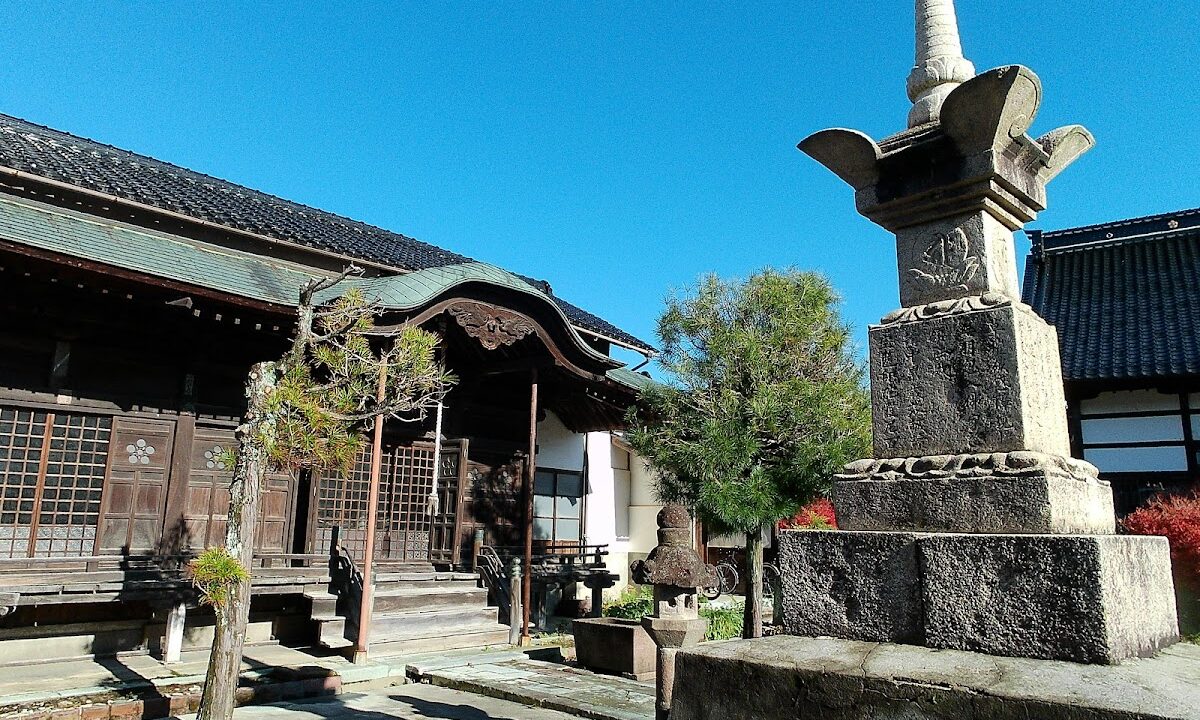
The main hall of Hoshūji Temple is a typical example of Shingon Buddhist architecture. The inner sanctuary houses the principal image and is equipped with esoteric Buddhist ritual implements. The structure of the main hall is designed as a space for performing esoteric Buddhist rituals, creating a solemn atmosphere.
The temple grounds feature a compact layout characteristic of temple districts, efficiently utilizing the limited land. The layout centers around the main hall, with a hall dedicated to Kankiten (a Buddhist deity) and a hexagonal hall, arranged to allow visitors to follow a designated route.
Historical Value of the Hexagonal Hall
Built at the behest of Teirin-in, the mother of Maeda Shigenori, the hexagonal hall is an important structure of Hoshūji Temple. A Buddhist hall with a hexagonal floor plan holds special significance in Japanese Buddhist architecture. The hexagon symbolizes the six realms of existence in Buddhism (hell, hungry ghosts, animals, asuras, humans, and heaven) and is also said to represent the six paramitas (generosity, morality, patience, diligence, meditation, and wisdom).
It is believed that Teirin-in built the Rokkakudo (Hexagonal Hall) with the intention of praying for the prosperity of the Maeda family and the peace and security of her clan. As an example of a woman from a daimyo family being involved in temple construction during the Edo period, the Rokkakudo is a culturally and historically valuable building.
Atmosphere and Highlights of the Temple Grounds
The grounds of Hoshūji Temple have a tranquil atmosphere even among the temples of Kanazawa’s Teramachi district. Despite being in an urban area, a peaceful environment is maintained, allowing visitors to escape the hustle and bustle of everyday life and offer their prayers in quiet contemplation.
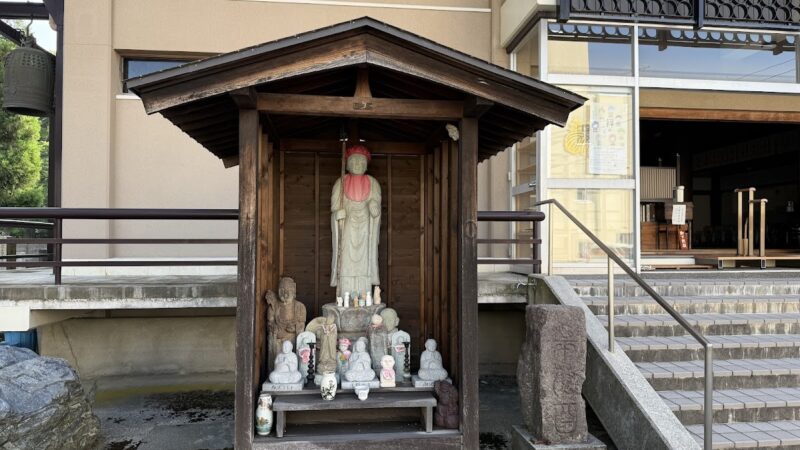
Seasonal flowering trees and shrubs are planted on the grounds, allowing visitors to enjoy the beauty of nature throughout the seasons: cherry blossoms in spring, lush greenery in summer, and autumn leaves in fall. The temple maintains a traditional temple landscape with its stone-paved approach, water basin, stone lanterns, and other well-maintained facilities.
Goshuin and Visiting Information
About Goshuin
Goshuin (temple stamps) are available at Hoshuji Temple. Goshuin are calligraphic inscriptions and red seals given by temples as proof of worship, and have recently become a popular part of temple and shrine visits.
Hoshuji Temple’s goshuin features the temple name, principal image, and date in calligraphic inscription, along with the temple’s red seal. It is recommended to contact the temple in advance to confirm availability. Bringing your goshuin book and making a polite request is considered proper etiquette.
The offering fee (donation) for a goshuin is generally around 300 to 500 yen, but may vary depending on the temple. Goshuin are not merely commemorative stamps; they are important symbols of connection with Buddha, so it is crucial to receive them with respect.
Visiting Hours and Admission Fees
Visiting the grounds of Hoshuji Temple is generally free of charge. While entry to the grounds is possible during daylight hours, it is recommended to check with the temple directly for specific visiting hours.
If you wish to view the interior of the buildings, advance reservations are required. To view areas normally closed to the public, such as the statues of Kankiten and the interior of the hexagonal hall, you must contact the temple in advance by phone or other means to obtain permission.
During special ceremonies and events, different visiting hours and admission fees may apply. To ensure you can visit, it is recommended to inquire with the temple before your visit.
Annual Events and Ceremonies
As a Shingon Buddhist temple, Hoshuji Temple holds various ceremonies and events throughout the year. Particularly important events include the New Year’s visit, the spring and autumn equinox services, and the Obon memorial service.
Special ceremonies are sometimes held on the Kankiten festival days, attracting many worshippers. Furthermore, on the 28th of each month, which is the auspicious day of Fudo Myoo (Acala), esoteric Buddhist rituals such as Goma fire ceremonies may be held.
Participating in these events allows you to experience the reality of the temple’s faith and gain a deeper pilgrimage experience. For event dates, please inquire directly with the temple or check their website or bulletin board.
Access and Surrounding Information
Location and Basic Information
Temple Name: Hoshuji Temple
Sect: Koyasan Shingon Buddhism
Address: 1-6-39 Teramachi, Kanazawa City, Ishikawa Prefecture 921-8033
Telephone: Please contact the temple directly
Access by Public Transportation
The most convenient way to reach Hoshuji Temple is by using the Hokuriku Railway bus. The nearest bus stop is “Teramachi 1-chome,” and the temple is a few minutes’ walk away.
Access from JR Kanazawa Station:
- Take a Hokuriku Railway bus from the Kanazawa Station East Exit Bus Terminal.
- Get off at the “Teramachi 1-chome” bus stop.
- Approximately 3 minutes on foot.
There are several bus routes; buses bound for “Hirokoji” and “Katamachi” pass through the Teramachi area. The journey time varies depending on traffic, but it’s approximately 15 minutes from Kanazawa Station.
The “Kanazawa Castle Town Loop Bus,” convenient for sightseeing in Kanazawa City, also passes through the Teramachi area, making it useful when combining your visit with other tourist spots.
Access by Car and Parking
If traveling by car, it’s approximately 20 minutes from the Hokuriku Expressway Kanazawa West Interchange and approximately 25 minutes from the Kanazawa East Interchange. It’s about a 10-minute drive from the center of Kanazawa City.
The Teramachi temple complex is adjacent to a residential area, and many roads are narrow, so careful driving is necessary. It is recommended to check with the temples in advance regarding the availability of dedicated parking.
There are several paid parking lots in the vicinity, but the Teramachi area is well-suited for walking, so parking a little further away and exploring on foot is also a good option.
Nearby Tourist Spots
The Teramachi temple district, where Hoshuji Temple is located, is home to many historical temples. You can visit several temples within walking distance and gain a deep understanding of Kanazawa’s religious culture.
Myoryu-ji Temple (Ninja Temple): Located in Teramachi 1-chome, this Nichiren Buddhist temple is known as the “Ninja Temple” due to its complex internal structure. It features various defensive mechanisms such as trapdoors and hidden staircases, making it a popular tourist spot.
Exploring the Teramachi Temple District: Enjoy the unique landscape of over 70 temples lined up from Teramachi 1-chome to 5-chome. Each temple has a different history and characteristics, making for a delightful temple-hopping experience.
Sai River and Sakura Bridge: The Sai River, flowing west of Teramachi, is associated with Muroo Saisei, one of Kanazawa’s three great literary figures. The view from Sakurabashi Bridge is beautiful, and the scenery is especially magnificent during cherry blossom season.
Nishi Chaya District: One of Kanazawa’s three geisha districts, located within walking distance of Teramachi, this charming streetscape retains traditional teahouse architecture.
Visiting these spots in combination will allow you to experience Kanazawa’s history and culture more deeply.
Manners and Etiquette for Visiting Temples
Basic Manners for Visiting Temples
When visiting Hoshuji Temple, please observe the following basic manners.
Attire: Avoid revealing or flashy clothing; wear clean and subdued attire. Temples are sacred places, so please dress respectfully.
Photography: Photography is generally permitted on the temple grounds, but photography inside the main hall or of Buddha statues is often prohibited. It is advisable to obtain permission before taking photographs.
Worship Etiquette: Bow at the temple gate before entering the grounds. If there is a water basin, purify your hands and mouth. In front of the main hall, join your hands in prayer and offer a quiet prayer. In Shingon Buddhism, you may also chant “Namu Daishi Henjo Kongo.”
Manners when receiving a Goshuin (temple stamp)
When receiving a Goshuin, please pay attention to the following points:
- Complete your prayers first before receiving the Goshuin.
- Prepare a Goshuincho (stamp book) (notebooks and memo pads are inappropriate).
- Request using polite language.
- Wait quietly while the stamp is being written.
- Prepare the offering fee in advance to avoid needing change.
- Express gratitude for the Goshuin you receive.
A Goshuin is not merely a stamp rally; it is an important way to forge a connection with Buddha. It is important to treat it with respect.
About Shingon Buddhism
Hōshūji Temple is a temple of the Koyasan Shingon sect. Shingon Buddhism is a sect of esoteric Buddhism founded by Kobo Daishi Kukai, and it preaches the concept of “sokushin jōbutsu” (becoming a Buddha in this very body).
Shingon Buddhism emphasizes the practice of unifying the three mysteries: words (mantras), body (mudras), and mind (contemplation/meditation). Esoteric Buddhist rituals such as the Goma ritual performed at Hoshūji Temple are based on this teaching.
Visitors can gain a deeper pilgrimage experience by understanding the basic teachings and customs of Shingon Buddhism. It is important to have faith in the principal image and other Buddhas, and to worship with sincerity.
The Charm of Hoshūji Temple and the Significance of Visiting
A Serene Space Reflecting History
The greatest charm of Hoshūji Temple lies in its prestige as an ancient temple with over 400 years of history, and the serene atmosphere it maintains despite its urban location. Its history as a prayer temple for the Maeda family places it in an important position in the cultural history of Kanazawa.
Stepping onto the temple grounds, one enters a world far removed from the hustle and bustle of everyday life. The stone-paved approach, ancient buildings, and meticulously maintained gardens all harmonize to create a historical atmosphere.
A Center for Diverse Faith
Housing a diverse array of Buddhist statues, including Kankiten, Fudo Myoo, Bishamonten, and Senju Kannon, Hoshuji Temple has welcomed people with various wishes. It has been a source of support for people in various aspects of life, such as career advancement, protection from evil, business prosperity, family safety, and recovery from illness.
In particular, the worship of Kankiten is a unique characteristic of esoteric Buddhist temples, making it a valuable place of worship in Kanazawa. The opportunity to experience the profound teachings of Shingon Esoteric Buddhism is another major attraction of Hoshuji Temple.
A Part of the Temple Town Culture
As a member of the temple district, Hoshuji Temple plays a crucial role in shaping Kanazawa’s unique religious and cultural sphere. This temple district, formed under the Kaga Domain’s castle town policies, is a fascinating example in Japanese urban history.
Exploring the diverse history, culture, and faith of Kanazawa through temple visits is a valuable experience for visitors. Hoshuji Temple is one of its central locations, supporting the region’s cultural landscape.
Summary
Located in Teramachi, Kanazawa City, Ishikawa Prefecture, Hoshuji Temple (also known as Hōshūji) is an ancient temple of the Koyasan Shingon sect, boasting a history of over 400 years. Founded by Kōyo, a monk from Chōrakuji Temple on Mount Kurikara in Kahoku District, it flourished as the Maeda family’s prayer temple from the time of the tenth lord, Maeda Shigenori.
Housing a variety of Buddhist statues, including Shusse Daishō Kangiten, Fudō Myōō, Bishamonten, and Senju Kannon, it has welcomed worshippers with various wishes. The hexagonal hall, built at the behest of Teirin-in, the birth mother of Maeda Shigenori, is a valuable structure that conveys the history of the temple to the present day.
The temple grounds are free to enter, but reservations are required to view the interior of the building. You can also receive a Goshuin (temple stamp), adding to the enjoyment of visiting temples and shrines. It’s easily accessible, just a few minutes’ walk from the Hokuriku Railway bus stop “Teramachi 1-chome.”
Hōshūji Temple, a central temple in the Teramachi district, is a valuable spot to experience Kanazawa’s history and culture. Offering prayers in the tranquil grounds and experiencing the deep faith of Shingon Esoteric Buddhism will provide visitors with a special time. When you visit Kanazawa, be sure to stop by Hōshūji Temple.