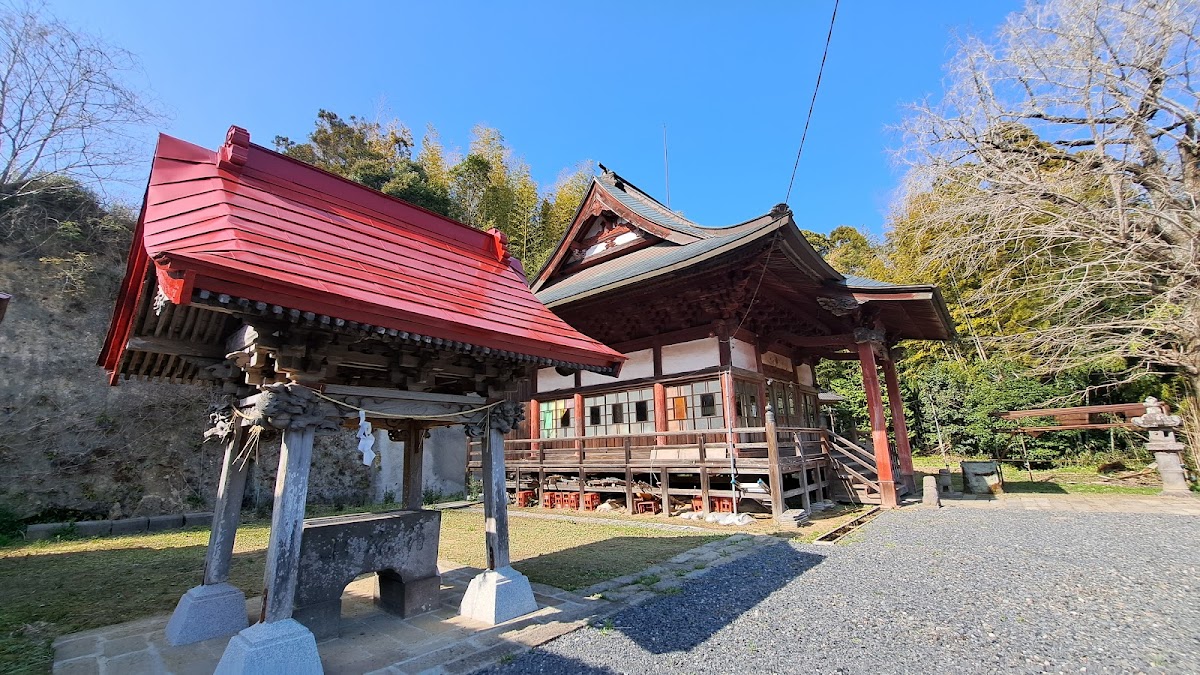
Iio-ji Temple (Iio’s Fudo-sama) Complete Guide | A Nationally Registered Tangible Cultural Property and Sacred Site of Maritime Rescue in Nagara Town, Chiba Prefecture
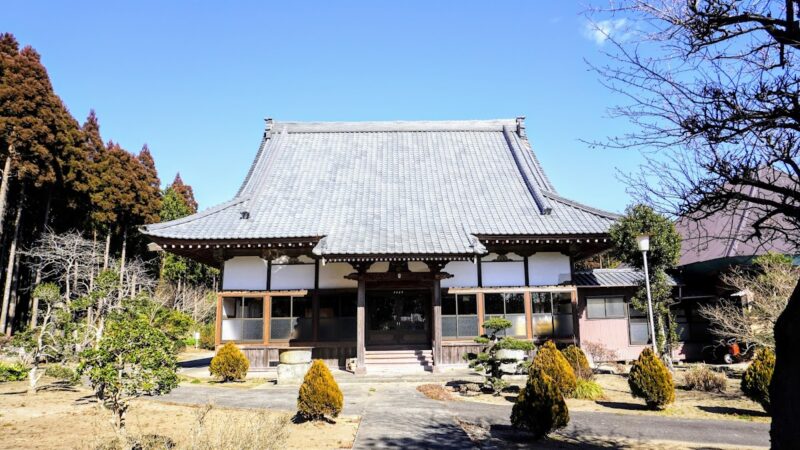
Iio-ji Temple, located in Nagara Town, Chosei District, Chiba Prefecture, is a Kenpon Hokke sect temple that enjoys deep devotion from local residents, known as “Iio’s Fudo-sama.” Its mountain name is Iōzan. It houses numerous valuable cultural assets, including a wooden seated statue of Fudo Myoo created at the end of the Kamakura period and transom carvings by Nami no Ippachi, a renowned craftsman from Awa Province. This article provides a detailed explanation of Iio-ji Temple’s history, cultural assets, access methods, and surrounding area information.
History and Origin of Iio-ji Temple
Circumstances of its Founding and its Relationship with the Iio Clan
There are no reliable historical records regarding the founding date of Iio-ji Temple, and the details are unknown. However, according to temple tradition, it originated as a Buddhist hall built by the Iio clan, who ruled this region from the Kamakura period to the Muromachi period. The Iio clan was a powerful samurai family in this region during the medieval period, and the temple’s name is believed to originate from this family.
According to temple tradition, there is a legend that the Iio clan acquired and enshrined a statue of Fudo Myoo carved by the monk Mongaku Shonin in the early Kamakura period. However, the Iio clan and Iio-dera Temple are only confirmed in historical records from a much later period. There is a time gap between historical records and tradition, and further research is needed to determine the actual founding date.
Nichiju Shonin and the Conversion to the Kenpon Hokke Sect
A significant turning point in the history of Iio-dera Temple was the development of the temple by the monk Nichiju (1314-1391) during the Nanboku-cho period. Nichiju was a high-ranking priest known as the founder of the Myomanji branch of the Hokke sect (present-day Kenpon Hokke sect), and it is said that he founded Iio-dera Temple and organized it as a temple of that sect.
This conversion transformed Iio-ji Temple from a mere local Buddhist temple into a formal temple based on the doctrines of the Nichiren sect. Since then, it has continued as a temple of the Kenpon Nichiren sect to this day.
Miraculous Rescue at Sea and Faith Along the Kujukuri Coast
Iio-ji Temple is located on a hill and has long been revered by the people along the Kujukuri coast for its miraculous rescue at sea. Records show that, especially in the early modern period, it was deeply revered by fishermen of Boso as “Iio’s Fudo-sama.”
Kujukuri Beach boasts a long coastline facing the Pacific Ocean and has long been a thriving fishing area. However, it also experienced many maritime accidents due to rough seas. For fishermen living a life constantly facing danger, faith in the protection of Fudo Myoo (Acala) provided spiritual support.
Even today, it is affectionately known as “Iio’s Fudo-sama” by local people and attracts many worshippers.
The Charm of the Wooden Seated Statue of Fudo Myoo, a Nationally Registered Tangible Cultural Property
The Sculptural Beauty of the Late Kamakura Period
The wooden seated statue of Fudo Myoo, the greatest treasure of Iio-ji Temple, is estimated to be a work from the late Kamakura period. Made using the cypress wood joining technique, it features a deep, stable form. While expressing the wrathful expression characteristic of Fudo Myoo, it is highly regarded as an excellent work that combines the realism and power of Kamakura sculpture.
Joining wood is a technique of creating Buddhist statues by joining multiple pieces of wood, and it was the mainstream method from the late Heian period to the Kamakura period. This technique made it possible to create large statues and to express fine details. The seated statue of Fudo Myoo at Iio-ji Temple is a valuable cultural property created using this advanced technique.
Discovery of Ink Inscriptions Inside the Statue and its Historical Value
A surprising discovery was made in 1961 (Showa 36) when the seated statue of Fudo Myoo was being repaired. A 15-meter-long scroll of ink writing was discovered inside the statue, containing 3047 copies of the Sanskrit character “Kahn,” the seed syllable of Fudo Myoo (Acala).
Seed syllables are Sanskrit characters used in Esoteric Buddhism to represent various deities, including Buddhas and Bodhisattvas. In the case of Fudo Myoo, the Sanskrit character “Kahn” is used. This ink writing is considered a type of “offering” placed inside the statue during its creation, and is believed to be a trace of an important ritual to imbue the statue with a soul.
The task of transcribing such a vast number of seed syllables—3047—demonstrates the deep faith of the creator and patron, making it an extremely valuable document for understanding the religious practices of the time. This discovery reveals that the seated statue of Fudo Myoo at Iio-ji Temple holds high value not only as a work of art, but also from the perspective of religious and cultural history.
Designation as a Nationally Registered Tangible Cultural Property
Recognizing its historical and artistic value, the wooden seated statue of Fudo Myoo has been designated as a Nationally Registered Tangible Cultural Property. The Registered Tangible Cultural Property system, established in 1996, primarily focuses on the preservation and utilization of modern buildings, but also includes works of art and crafts such as Buddhist statues.
The seated statue of Fudo Myoo at Iio-ji Temple is one of the most important Kamakura-period sculptures in Chiba Prefecture, attracting attention from many researchers and Buddhist statue enthusiasts.
Transom Carvings by Nami no Ihachi | Nagara Town Designated Cultural Property
Master Craftsman of Awa, Takeshi Ihachiro Nobuyoshi
Another highlight of Iio-ji Temple is the transom carvings in the main hall. This is a work by Takeshi Ihachiro Nobuyoshi (1751-1824), a master craftsman from Awa (present-day southern Chiba Prefecture), and is said to have been created in 1814 (Bunka 11).
Ihachiro is known as “Ihachiro of the Waves,” and gained fame for his sculptures that particularly depict the powerful swell of waves. His skill was so exceptional that it was said, “Don’t carve waves and dragons in the Kanto region,” and he left behind numerous works in temples and shrines, mainly on the Boso Peninsula. He is also said to have influenced Katsushika Hokusai’s “The Great Wave off Kanagawa,” and is highly regarded as an important sculptor in the history of Japanese art.
Characteristics and Artistic Value of the Transoms at Iio-ji Temple
The transom carvings at Iio-ji Temple are works from Ihachiro’s later years, and fully demonstrate his mature technique. The dragon carved into the transom holds significant meaning, especially in temples where Fudo Myoo (Acala) is the principal deity, as it is one of the Eight Legions that protect Buddhist teachings.
Ippachi’s carvings are characterized by their three-dimensional expression, utilizing the properties of wood, and dynamic composition. The transom at Iio-ji Temple beautifully depicts a dragon in motion, displaying different expressions depending on the viewing angle. The meticulously carved scales and waves are truly worthy of being called the work of a master craftsman.
This transom carving was designated a tangible cultural property of Nagara Town in 1976, and is a must-see point when visiting Iio-ji Temple.
Other Cultural Properties and Highlights of the Temple Grounds
Komainu (Guardian Dogs) and Stone Lanterns Designated as Tangible Cultural Properties of Nagara Town
Within the grounds of Iio-ji Temple are a pair of komainu (guardian dogs) and a stone lantern, both designated as tangible cultural properties of Nagara Town. These were donated during the Edo period and are valuable historical materials demonstrating the level of stonemasonry at that time. Komainu (guardian lion-dogs) are found not only at Shinto shrines but also at Buddhist temples. The Komainu at Iio-ji Temple possess a unique expression and posture, and are highly regarded as representative works of local stone art. Similarly, the stone lanterns exhibit excellent design and carving techniques.
The Little Monk Statue and Wishes
Within the temple grounds is a small stone statue called the “Little Monk Statue,” said to grant the wishes of worshippers. Locals affectionately call it “Little Monk,” and many worshippers pray before it.
Such stone statues, separate from the official principal image of a temple, often attract the simple faith of ordinary people, and the Little Monk Statue at Iio-ji Temple is one such example. Be sure to look for it when you visit.
Atmosphere and Natural Environment of the Temple Grounds
Because Iio-ji Temple is located on a hill, you can enjoy panoramic views of the surrounding countryside from the temple grounds. You can spend a peaceful and calming time in this tranquil environment. The temple grounds also contain many ancient trees, which display different appearances with each season.
Especially during the fresh greenery of spring and the vibrant autumn foliage, you can enjoy a landscape where the beauty of nature and the temple architecture harmonize.
Access Information and Basic Data
Location
821 Yamane, Nagara-machi, Chosei-gun, Chiba Prefecture 297-0206
Access by Public Transportation
By Bus from Mobara Station on the JR Sotobo Line
- Approximately 20 minutes by bus from Mobara Station
- Take the bus bound for “Longwood Station” or “Nagara Nakashita”
- Get off at “Kōri Bus Stop” and walk for approximately 10 minutes
Since the number of buses is limited, it is recommended to check the timetable in advance. Please note that the number of buses may be reduced, especially on holidays.
Access by Car
Using the Ken-O Expressway
- Approximately 10 minutes by car from the Ken-O Expressway “Mobara-Chonan IC”
- Please enter “Iio-ji Temple” or the address into your car navigation system.
Using the Keiyo Expressway
- Approximately 30 minutes by car from the Keiyo Expressway “Soga IC”
- Accessible via National Route 16 and prefectural roads.
Parking Information
There is parking space for visitors on the temple grounds, but the number of spaces is limited. Especially during festivals and events, congestion is expected, so please consider using public transportation.
Visiting Hours and Admission Fees
Generally, you can freely visit the temple grounds, but if you wish to view the interior of the main hall or cultural artifacts in detail, it is recommended to contact the temple in advance to confirm. Especially if you wish to view the seated statue of Fudo Myoo or the transom carvings up close, advance reservations may be required.
Regarding admission fees, regular visits are free, but a donation may be requested for special viewings.
Places to Visit Alongside Nearby Tourist Attractions
Nature and History of Nagara Town
Nagara Town, where Iio-ji Temple is located, is situated almost in the center of Chiba Prefecture and is blessed with a rich natural environment. The following are some of the nearby attractions:
Longwood Station
This station features a direct-sale market for agricultural products and a restaurant, where you can purchase fresh local vegetables and specialty products. It’s easily accessible as it’s located on the bus route to Iio-ji Temple.
Kasamori Kannon (Kasamori-ji Temple)
Kasamori-ji Temple, adjacent to Chonan Town, is an ancient temple known for its Kannon Hall, the only one in Japan with a “four-sided cantilevered” structure. It’s about a 15-minute drive from Iio-ji Temple, making it a great place to visit both and enjoy a tour of temples in the Boso Peninsula.
Mobara Park
A famous cherry blossom viewing spot in Mobara City, where approximately 2,850 cherry trees bloom in spring. It’s also easily accessible from Iio-ji Temple.
Kujukuri Beach Area
Heading east from Iio-ji Temple, you’ll arrive at the Kujukuri Beach area. You’ll experience the connection between Iio-ji Temple, known for its miraculous powers in maritime rescue, and the sea that supported its faith.
Kujukuri Beach
One of Japan’s leading sandy beaches, stretching approximately 66km. Enjoy various marine activities such as surfing, swimming, and seine fishing.
Shirako Onsen, Shirako Town
A hot spring resort along Kujukuri Beach, known as a “beauty spring” due to its high iodine content. It’s an ideal place to stay after visiting Iio-ji Temple.
Other Temples and Shrines in Chosei District
There are many other historical temples and shrines scattered throughout Chosei District. If you enjoy visiting temples and shrines, consider the following locations.
- Ichinomiya Shrine (Ichinomiya Town): An ancient shrine known as the Ichinomiya (first-ranked shrine) of Kazusa Province.
- Kasamori Temple (Chonan Town): The aforementioned Kannon Hall with its four-sided cantilevered structure.
- Mamihara Plateau (Otaki Town): A famous spot for hydrangeas, allowing for a combination of temple visits and nature walks.
Points and Manners for Visiting Iio-ji Temple
Etiquette for Worship
Iio-ji Temple belongs to the Kenpon Hokke sect, but the basic etiquette for worship is the same as for other Buddhist temples.
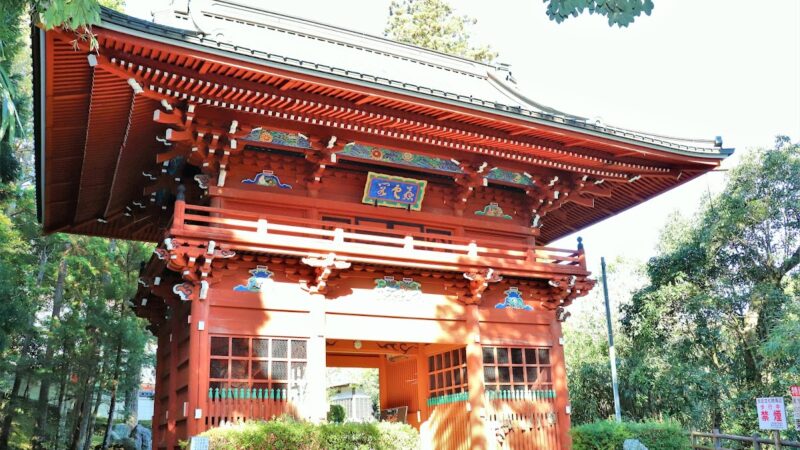
- Bow at the temple gate before entering the grounds.
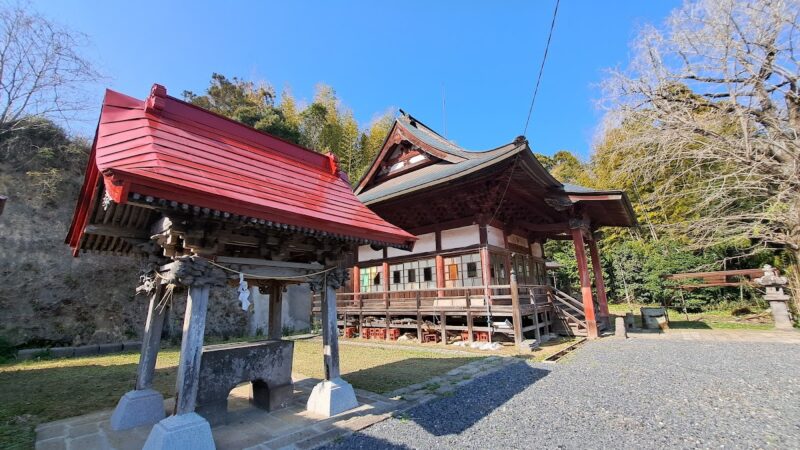
- If there is a water basin, purify your hands.
- Offer your donation in front of the main hall, then clasp your hands together and bow.
- When exploring the temple grounds, be quiet and considerate of other visitors.
- Take photographs only in permitted areas, and refrain from taking pictures in areas where photography is prohibited, such as inside the main hall.
Best Time to Visit
Iio-ji Temple is open for worship throughout the year, but the following times are especially recommended:
Spring (March-May)
The fresh greenery is beautiful, and the weather is mild, making it ideal for worship. Visiting nearby cherry blossom viewing spots is also recommended.
Autumn (October-November)
The autumn leaves color the temple grounds, creating a tranquil atmosphere for worship. The temperature is pleasant, making it perfect for a stroll.
Days of Festivals and Events
Iio-ji Temple holds various Buddhist services and events throughout the year. Visiting on special days allows you to see the temple in a different light than usual. Please check the detailed schedule in advance.
Clothing and Items to Bring
There are no specific dress code requirements, but appropriate and subdued attire for visiting a temple is recommended. Since some parts of the temple grounds are unpaved, please choose comfortable walking shoes.
In summer, the sun is strong, so we recommend bringing a hat, parasol, and drinks. In winter, please take thorough precautions against the cold.
Religious Significance of Iio-ji Temple and the Fudo Myoo Worship
What is Fudo Myoo?
Fudo Myoo is an important deity in Esoteric Buddhism and is considered an incarnation of Dainichi Nyorai. His Sanskrit name is “Acalanatha,” meaning “the immovable one.”
He is often depicted with a wrathful expression, holding a sword (Kurikara sword) in his right hand and a lasso (kensaku, rope) in his left. He plays the role of cutting off worldly desires and saving sentient beings. With flames known as the Garuda Flame behind it, its majestic presence overwhelms those who behold it.
Maritime Rescue and the Fudo Myoo Worship
The reason why the Fudo Myoo of Iio-ji Temple became particularly known for its miraculous powers in maritime rescue lies in the “salvation” aspect of Fudo Myoo. In Esoteric Buddhism, Fudo Myoo is considered a powerful guardian deity who saves people in peril, and was a particularly reliable figure for fishermen who lived in the dangerous environment of the sea.
From the Edo period to the Meiji period, fishermen of Kujukuri Beach had a custom of visiting Iio-ji Temple before going out to sea to pray for safety at sea. It is also said that many people who miraculously survived maritime accidents offered votive offerings in gratitude for Fudo Myoo’s protection.
The Role of Iio-ji Temple in Modern Times
While fishing practices have changed and maritime accidents have decreased in modern times, Iio-ji Temple continues to function as a spiritual pillar for the community. It serves as a place of worship for local residents and is cherished by many as an important cultural asset that conveys history and culture.
Through regular memorial services and events, it also plays a role in strengthening community bonds, remaining not merely a tourist spot, but a vibrant place of faith.
Summary
Iio-ji Temple (Iio’s Fudo-sama) is a temple rich in history and cultural assets, located in Nagara-machi, Chiba Prefecture. It houses valuable works of art designated as national and town cultural properties, including a wooden seated statue of Fudo Myoo from the late Kamakura period with its internal ink inscription, and transom carvings by Nami no Ippachi.
The view from the hilltop and the tranquil temple grounds offer peace of mind to visitors. The faith in Fudo Myoo, known for his miraculous powers in saving people from sea, is deeply intertwined with the lives of the people along the Kujukuri coast. Understanding its historical background will allow for a more profound pilgrimage experience.
Access is possible by both public transport and car, but since bus services are limited, it is recommended to plan your visit carefully in advance. Visiting in conjunction with other nearby tourist attractions will allow you to experience the charm of Nagara Town and the Kujukuri area more deeply.
Iio-ji Temple is an ideal destination for history buffs, Buddhist statue enthusiasts, those interested in cultural properties, and anyone seeking a peaceful and calming place to relax. When visiting Chiba Prefecture, be sure to pay your respects to “Iio’s Fudo-sama.”