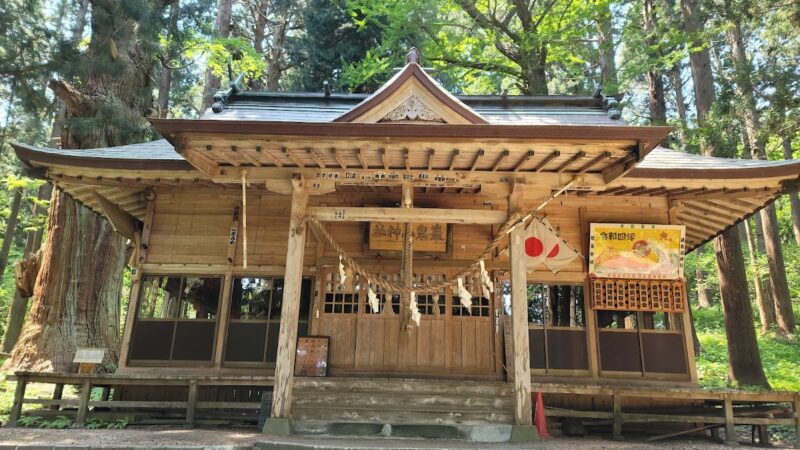
Gankisan Shrine (Hirosaki City, Aomori Prefecture) Complete Guide | Goshuin (Shrine Seal), Deities, History, and Access Information
Gankisan Shrine, located in Tokoshinai, Hirosaki City, Aomori Prefecture, is one of the oldest shrines in the Tsugaru region, said to have been founded in 796 AD. As the original shrine of Iwakiyama Shrine, known as the Ichinomiya (first-ranked shrine) of Tsugaru, and as a sacred site associated with Sakanoue no Tamuramaro, it has attracted the faith of people for over a thousand years.
This article comprehensively introduces all the information you need to know before visiting Gankisan Shrine, including its detailed history, enshrined deities, goshuin information, highlights within the grounds, and access methods.
Basic Information about Gankisan Shrine
Official Name: Gankisan Shrine (巌鬼山神社)
Reading: Gankisan Jinja
Location: 78-17 Sarusawa, Tokoshinai, Hirosaki City, Aomori Prefecture 036-1505
Deity Enshrined: Oyamatsumi-no-kami
Year of Founding: Enryaku 15 (796)
Annual Festival Day: August 17th
Shrine Rank: Former Village Shrine
Pilgrimage Site: First of the Tsugaru Thirty-Three Kannon Pilgrimage Sites
History and Origins of Gankisan Shrine
From Founding to the Heian Period
The history of Gankisan Shrine dates back to Enryaku 15 (796). In this year, the establishment of “Gankisan Seihōji Kannon-in” at the northern foot of Mt. Iwaki is considered the beginning of the shrine. Originally founded as a Buddhist temple, it functioned as a lower shrine (Orinomiya) to the inner shrine at the summit of Mount Iwaki.
It is said that in 807 (Daido 2), Sakanoue no Tamuramaro, known as the Seii Taishogun (Commander-in-Chief of the Expeditionary Force Against the Barbarians), visited this site to pray for the pacification of the Emishi people and rebuilt the shrine. There is also a theory that the principal image, Kannon Bodhisattva, was enshrined at this time by Sakanoue no Tamuramaro.
Changes in the Medieval Period
In 1091 (Kanji 5), a shrine building that would become the predecessor of the current Iwakiyama Shrine was erected in a different location, and the divine spirit was transferred from this shrine. This established Iwakiyama Shrine as the “original shrine” of Iwakiyama Shrine.
In 1448 (Bun’an 5), the shrine building was destroyed by fire, but it was rebuilt by the local influential Nagami clan. Since then, it has been maintained as a sacred site, supported by the fervent faith of the local people. ### From the Early Modern Period to the Modern Period
During the Edo period, Tsugaru Tamenobu, the first lord of the Tsugaru domain, undertook the repair of the shrine buildings, and it came under the protection of the domain. In 1691 (Genroku 4), the main hall was rebuilt by the parishioners, and the architecture from that time remains today as a valuable cultural asset.
With the Meiji-era separation of Shinto and Buddhism, the shrine, which had strong Buddhist ties, underwent a major transformation. In 1873 (Meiji 6), it was renamed “Iwakiyama Shrine” and established itself as a Shinto shrine. However, even today, it continues the tradition of Kannon worship as the first of the 33 Kannon pilgrimage sites of Tsugaru.
In May 1956 (Showa 31), the large cedar trees on the shrine grounds were designated as a natural monument of Aomori Prefecture, and the shrine is protected as a sacred place where nature and history are in harmony.
About the Enshrined Deity
Ōyamatsumi-no-kami
The enshrined deity of Iwakiyama Shrine is Ōyamatsumi-no-kami. Ōyamatsumi-no-kami is a mountain god appearing in Japanese mythology, and is described in the Kojiki and Nihon Shoki as the child of Izanagi-no-mikoto and Izanami-no-mikoto.
Divine Virtues:
- Protection of the Mountain
- Abundant Harvest
- Family Safety
- Business Prosperity
- Protection from Evil
- Safe Voyages
In the faith that considers Mount Iwaki as a sacred mountain, Ōyamatsumi-no-kami has been revered as the deification of the mountain itself. Furthermore, through his daughter, Konohanasakuya-hime-no-mikoto, he has deep ties to the Imperial Family and is known as a highly prestigious deity.
Syncretism with Kannon Worship
Before the separation of Shinto and Buddhism, this was a Kannon Hall where Kannon Bodhisattva was enshrined as the principal deity. Even today, a statue of Kannon is enshrined in the worship hall, preserving the history of Shinto-Buddhist syncretism. As the first temple on the Tsugaru Thirty-Three Kannon Pilgrimage, it attracts many worshippers seeking Kannon worship.
Highlights of the Shrine Grounds
Giant Cedar Grove, a Prefecturally Designated Natural Monument
The greatest highlight of Iwakiyama Shrine is the grove of giant cedar trees within the grounds, designated as a natural monument of Aomori Prefecture in 1956. Several giant trees, estimated to be over 1000 years old, stand tall, with the largest exceeding 41 meters in height, making it one of the largest cedar trees in Aomori Prefecture.
The entire shrine grounds are surrounded by a dense cedar forest, creating a solemn atmosphere unique to a sacred place. These thousand-year-old cedar trees can be considered living witnesses, having watched over worshippers since the shrine’s founding.
Main Hall from the Genroku Period (Hirosaki City Designated Cultural Property)
The existing main hall was built in 1691 (Genroku 4), and its construction date is clearly confirmed by a ridge beam inscription, making it a valuable structure. Designated as a Hirosaki City Designated Tangible Cultural Property, it holds significant architectural value as a typical example of a small Buddhist temple in the early modern Tsugaru region that was converted into a Shinto shrine.
The architectural style is reminiscent of a Buddhist temple, strongly retaining the characteristics of the syncretism of Shinto and Buddhism. The intricate carvings and decorations attest to the high level of architectural technology in the Tsugaru region during the mid-Edo period.
Sacred Spring (Clear Water)
Within the temple grounds is a clear spring, which has been revered as a sacred spring since ancient times. This spring, fed by the underground water of Mount Iwaki, is believed to have the power to purify the mind and body of worshippers and is known as a power spot.
Worship Hall and Kannon Statue
The worship hall is a relatively new building, but inside is enshrined a Kannon statue that has been passed down since before the separation of Shinto and Buddhism. This unique form of a shrine that also enshrines Kannon symbolizes the long history and diverse faith of Iwakiyama Shrine.
Goshuin (Shrine Seal) Information
About the Issuance of Goshuin
Goshuin are available at Iwakiyama Shrine. However, since there may not always be a resident priest, it is recommended to contact the shrine in advance before visiting.
Features of the Goshuin:
- Calligraphy of “Iwakiyama Shrine” or “Iwakiyama Jinja”
- Shrine Seal
- Goshuin (red seal) of the first of the Tsugaru Thirty-Three Kannon Pilgrimage (for Kannon pilgrimages)
Those with a goshuin notebook can receive a valuable goshuin unique to our shrine, which has a history of Shinto-Buddhist syncretism.
Goshuin (Shrine Seal) Reception Hours and Important Notes
The reception hours for Goshuin are irregular. If you wish to be sure to receive one, we recommend checking the information in advance with the Hirosaki City Tourism Association or a local tourist information center. Please note that Goshuin may not be available when the chief priest is absent.
Annual Events and Festivals
Grand Festival (August 17th)
The Grand Festival of Iwakiyama Shrine is held annually on August 17th. Local parishioners and believers gather, and the Shinto rituals are performed solemnly. This is a valuable opportunity to experience the traditions of the Tsugaru region.
Tsugaru Thirty-Three Kannon Pilgrimage
As the first temple on the pilgrimage route, it attracts pilgrims from spring to autumn. Especially from April to October, it is the peak pilgrimage season, with many visitors.
Relationship between Iwakiyama Shrine and Iwakiyama Shrine
Position as the Original Shrine
Iwakiyama Shrine holds a significant position as the “original shrine” of Iwakiyama Shrine, the Ichinomiya (first-ranked shrine) of Tsugaru. Before the divine spirit was moved to the current site of Iwakiyama Shrine in 1091, this was the center of Iwakiyama faith.
Even after the relocation, Iwakiyama Shrine continued to attract reverence as the original shrine and remains one of the important sacred sites in Iwakiyama faith to this day.
The Origin of Iwakiyama Faith
Located at the northern foot of Mount Iwaki, Iwakiyama Shrine boasts an excellent vantage point overlooking the mountain. Since ancient times, it has functioned as a base for mountain worship and a sacred site for Shugendo (mountain asceticism). When visiting Iwakiyama Shrine, we highly recommend also visiting Iwakiyama Shrine, the original shrine, to experience the origins of Tsugaru faith.
Oni Legend and Power Spot
Origin of the Name Iwakiyama
There are several theories about the origin of the name “Iwakiyama,” but it is believed to be deeply connected to the oni legends passed down around Mount Iwaki. In the stories of ancient Tsugaru, there is a legend that oni lived in this area, and there is also a legend that oni were defeated during Sakanoue no Tamuramaro’s subjugation of the Emishi people.
Power Spot in Tsugaru
The shrine grounds are surrounded by ancient cedar trees over a thousand years old, a sacred spring gushes forth, and the area is filled with a sacred atmosphere. Because of this unique atmosphere, Iwakiyama Shrine has become known as one of the representative power spots in the Tsugaru region.
In particular, the area around the base of the ancient cedar trees and the spring are attracting attention from visitors with a spiritual interest, as they are places where a strong energy can be felt.
A Holy Site for “Flying Witch”
In recent years, Hirosaki City, Aomori Prefecture, has become known as the location featured on the cover of the first volume of the popular manga “Flying Witch.” It’s increasingly becoming a pilgrimage spot for fans of the series.
Access Information
Location
78-17 Sarusawa, Tokoshinai, Hirosaki City, Aomori Prefecture 036-1505
Access by Car
From Hirosaki City Center:
- Approximately 30 minutes via National Route 7
- Approximately 25km from Hirosaki Station
From Aomori City:
- Approximately 50 minutes via National Route 7
Parking: Free parking available for visitors on the temple grounds (a few spaces)
Access by Public Transportation
Nearest Station: JR Gonō Line “Mutsu-Morita Station” (difficult to reach on foot)
Due to the inconvenience of public transportation, we recommend using a rental car or taxi. A taxi from Hirosaki Station takes approximately 30 minutes and costs around 5,000 yen one way.
Points to Note When Visiting
- Due to its mountainous location, visits may be difficult during winter (December to March) due to snow.
- There are areas where cell phone reception is poor.
- As there are often no resident priests, prior confirmation is necessary if you wish to receive a Goshuin (temple/shrine stamp).
- As the shrine grounds are surrounded by a rich natural environment, insect repellent is recommended (spring to autumn).
Nearby Tourist Attractions
Iwaki-yama Shrine
After visiting the original shrine, Iwaki-yama Shrine, be sure to also visit Iwaki-yama Shrine. The dignified shrine buildings and beautiful gate are must-sees. It’s about a 20-minute drive from Iwaki-yama Shrine.
Takaoka no Mori Hirosaki Domain History Museum
This facility allows you to learn about the history of the Tsugaru Domain, deepening your understanding of the relationship between Iwaki-yama Shrine and the Tsugaru Domain. It is located in the center of Hirosaki City.
Hirosaki Castle and Hirosaki Park
Hirosaki Castle, a representative cherry blossom viewing spot in Japan and a designated Important Cultural Property of Japan, offers a chance to experience the history and culture of Tsugaru, especially when combined with a visit to Iwakiyama Shrine.
Manners and Points for Visiting
Basic Worship Etiquette
- Bow before passing through the torii gate: This is a courtesy before entering the sacred area.
- Purify yourself at the water basin: Purify your left hand, then your right hand, then your mouth.
- Worship at the main hall: The basic procedure is two bows, two claps, and one bow.
- Touch the large cedar tree in the precincts: Receive power from the thousand-year-old cedar tree (touch it gently).
- Purify your mind and body with spring water: You can purify yourself with the water of the sacred spring.
Photography
Photography is generally permitted within the precincts, but please refrain from photographing the interior of the main hall or the Kannon statue. Also, please be considerate of other worshippers. The large cedar trees and the natural beauty of the shrine grounds make for excellent photo opportunities.
Attire
Please dress appropriately for visiting a shrine. Especially during Shinto rituals such as the annual festival, it is advisable to avoid overly casual clothing. Also, since it is located in a mountainous area, comfortable walking shoes are recommended.
Summary
Iwakiyama Shrine is a representative ancient shrine of the Tsugaru region, with a history of over 1200 years, founded in 796 AD (Enryaku 15). As the original shrine of Iwakiyama Shrine and a sacred site associated with Sakanoue no Tamuramaro, it has attracted the faith of people throughout its long history.
There are many sights to see, including the grove of cedar trees over a thousand years old covering the grounds, the valuable main hall architecture from the Genroku period, and the pure spring. The unique form of worship, which conveys the history of syncretism between Shinto and Buddhism, is also a major attraction of this shrine.
Although it is a little distance from the center of Hirosaki City, it is a valuable place where you can experience the history, nature, and origins of faith in Tsugaru. When visiting Iwakiyama Shrine, be sure to also visit its original site, Iwakiyama Shrine, and experience the source of Tsugaru’s faith, which has been passed down for over a thousand years.
In the tranquil grounds, listening to the sound of the wind rustling through the cedar grove and purifying your soul in the spring water, you will forget the hustle and bustle of everyday life and find peace of mind.