Senryuji Temple (Sakata City, Yamagata Prefecture) Complete Guide | A Historic Soto Zen Temple Associated with the Hiraizumi Fujiwara Clan
Senryuji Temple, located in Chuo-Nishimachi, Sakata City, Yamagata Prefecture, is a Soto Zen temple with a history of over 800 years. Deeply connected to the legend of the Hiraizumi Fujiwara clan’s refugees, and associated with the 36 men who founded Sakata, it is an important cultural asset that conveys the history of the region to the present day.
This article provides detailed information you should know before visiting Senryuji Temple, including its historical background, highlights, access methods, and surrounding spots.
History and Origin of Senryuji Temple
A Nunnery Founded by the Sister of the Hiraizumi Fujiwara Clan
The founding of Senryuji Temple dates back to Bunji 5 (1189). This year marked a historical turning point with the Oshu War led by Minamoto no Yoritomo. The Fujiwara clan, which had flourished with its base in Hiraizumi, Oshu (present-day Hiraizumi Town, Iwate Prefecture), suffered a defeat in this battle. A woman, said to be the wife (or possibly his sister or second wife) of Fujiwara Hidehira, fled to Sakata with 36 retainers.
This woman, after wandering for a long time, arrived in Sakata and built a hermitage there, which is considered the beginning of Senryu-ji Temple. The story of the people connected to the Fujiwara clan, who were forced to live a new life in a remote area after a sudden shift from the glory of Hiraizumi, still lives on within the grounds of Senryu-ji Temple.
Deep Connection with the Thirty-Six Men of Sakata
Senryu-ji Temple has a deep connection with the Thirty-Six Men, who are said to have built Sakata. The Thirty-Six Men refer to the descendants of the 36 retainers who moved to Sakata with the wife of the Fujiwara clan, and they greatly contributed to the town’s development and growth.
Within the temple grounds stands a stone monument commemorating the Thirty-Six Nun, passing on their achievements to future generations. Every year on April 15th, the anniversary of Tokuniko’s death, people connected to the Thirty-Six Nun gather to hold a memorial service, demonstrating the temple’s continued strong ties with the community.
Development as a Soto Zen Temple
Izumiryu-ji Temple initially began as a nunnery, but later developed into a Soto Zen temple. Soto Zen is a branch of Zen Buddhism introduced to Japan by Zen Master Dogen during the Kamakura period, emphasizing the practice of seated meditation.
Izumiryu-ji Temple has played a central role in local faith as a Soto Zen temple within Sakata City. Over its long history, it has been developed into its current form with the support of wealthy merchants and local residents of Sakata.
Highlights and Cultural Assets of Senryu-ji Temple
Wooden Statue of Tokuni
Inside Senryu-ji Temple is a wooden statue of Tokuni, the wife of the temple’s founder, Fujiwara. This statue is a precious artifact, brought from Kyoto by sea in 1764 (Meiwa 1), donated by Honma Mitsuoka, a renowned wealthy merchant of Sakata.
Honma Mitsuoka was such a prominent merchant that he was praised with the saying, “I cannot compare to Mr. Honma, but I aspire to be a lord.” He made significant contributions to the cultural and economic development of Sakata. This wooden statue, donated by Honma Mitsuoka to show his respect for Tokuni, is one of Senryu-ji Temple’s most important cultural assets.
Stone Monument of the Thirty-Six Retainers
The stone monument of the Thirty-Six Retainers, standing within the temple grounds, is an indispensable monument in telling the history of Sakata. This stone monument commemorates the achievements of 36 retainers who moved to Sakata with the wife of the Fujiwara clan, and it tells the story of the town’s origins.
Standing before the monument, one can truly feel the historical event that took place over 800 years ago and how it connects to modern-day Sakata. It is a valuable historical site for history enthusiasts and local history researchers.
The Serene Atmosphere of the Temple Grounds
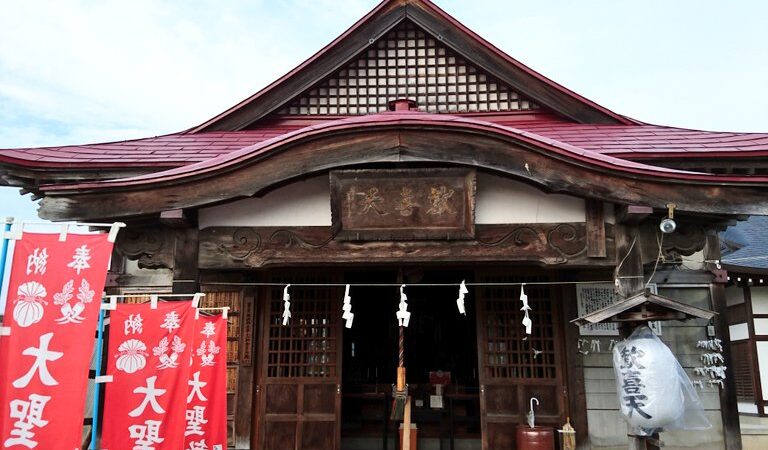
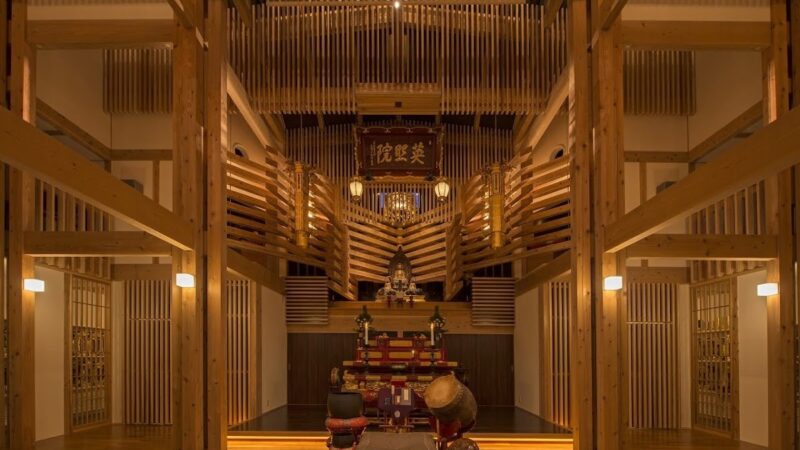
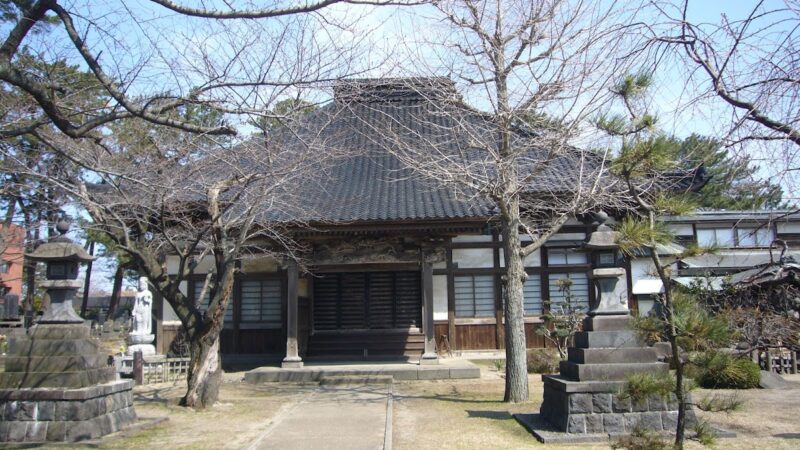
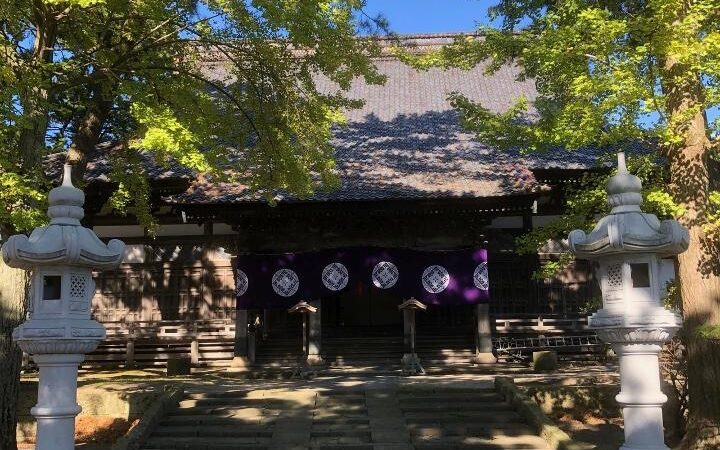
Despite being located in the heart of Sakata City, the grounds of Senryu-ji Temple are enveloped in tranquility. The well-maintained grounds are planted with trees and plants that display different appearances in each season, offering a sense of peace to visitors.
Especially during the cherry blossom season in spring, the fresh greenery of early summer, and the autumn foliage season, the grounds are beautifully colored, making it a popular spot for photography. It is the perfect place to escape the hustle and bustle of the city and quietly reflect on history.
Basic Information and Access to Senryuji Temple
Location and Contact Information
Address: 1-30 Chuo-Nishimachi, Sakata City, Yamagata Prefecture 998-0044
Senryuji Temple is located in Chuo-Nishimachi, in the heart of Sakata City. There are many shops and restaurants nearby, making it a convenient stop for tourists.
Access Methods
Access by Train
The nearest station is Sakata Station on the JR Uetsu Main Line. It is approximately 2.5 km from Sakata Station to Senryuji Temple.
Access by Bus
It is approximately a 5-minute bus ride from Sakata Station. Using the city loop bus or regular bus is convenient. It is a few minutes’ walk from the nearest bus stop.
Access by Car
- Approximately 10 minutes from Sakata IC on the Nihonkai-Tohoku Expressway
- Approximately 5 minutes from Sakata Chuo IC on the Yamagata Expressway
Because it is located in the heart of Sakata City, it is easily accessible by entering the address into a navigation system.
Parking Information
There may be parking spaces on the temple grounds or nearby, but it is recommended to check before your visit. There are also several paid parking lots in the surrounding area.
Visiting Hours and Admission Fees
Like most temples, daytime visits are possible. However, it is recommended to check the specific visiting hours and admission fees in advance.
Visiting hours may change during special ceremonies or events, so if you are visiting from afar, it is best to inquire beforehand.
Annual Events and Festivals
Memorial Service for Tokuni (April 15th)
Every year on April 15th, it is the anniversary of the death of Tokuni, the founder of Senryu-ji Temple. On this day, people associated with the Thirty-Six Gatherings gather for a memorial service.
This service is a traditional event that has continued for over 800 years and is an important event that conveys the history and culture of Sakata to the present day. Those interested in local history may want to plan a visit around this time.
Other Annual Events
As a Soto Zen Buddhist temple, various Buddhist services are held throughout the year, including Obon and Higan ceremonies. As a place of worship for local residents, various Buddhist ceremonies are held throughout the year.
Tourist Attractions Around Senryuji Temple
Former Honma Family Residence
This facility is associated with Honma Mitsuoka, who donated a wooden statue of Tokuni-ko to Senryuji Temple. It is located about 1 km from Senryuji Temple, a 15-minute walk. It is an important cultural property where you can learn about the lifestyle and culture of the wealthy Honma family, and the nationally designated scenic garden is also a highlight.
Sakata City Museum of Art
As a hub for disseminating art and culture in Sakata, various special exhibitions are held here. It is about a 10-minute drive from Senryuji Temple, allowing you to enjoy a cultural day combining art appreciation and temple visits.
Sankyo Warehouses
A representative tourist spot in Sakata, these are a group of rice storage warehouses built during the Meiji era. The zelkova tree-lined avenue is beautiful and famous as a filming location for the NHK morning drama series “Oshin.” It’s accessible from Senryuji Temple in about 5 minutes by car or 20 minutes on foot.
Hiyoriyama Park
This park, located on a hill overlooking Sakata Port, is also known as a famous cherry blossom viewing spot. Within the park, there are historical sites that tell the history of Sakata, a port town, such as the Sakata Lighthouse and the Directional Stone.
Sakata Ramen
One of the joys of sightseeing in Sakata is trying the local specialty, Sakata Ramen. Characterized by its light soy sauce-based soup and homemade noodles, there are many ramen shops in the city. Famous shops are also scattered around the area surrounding Senryuji Temple.
Points to Note When Visiting Senryuji Temple
Manners for Maintaining Silence
Senryuji Temple is an active religious facility and a place of worship for local residents. When visiting, please maintain silence and be considerate of other worshippers and nearby residents.
Regarding Photography
Photography is generally permitted within the temple grounds, but there may be restrictions on photographing inside the halls or of Buddha statues. Please check before taking photos or follow the signs.
Regarding Dress Code
There are no specific dress code requirements, but it is considered polite to avoid overly casual or revealing clothing when visiting a temple.
Regarding Goshuin (Temple Stamps)
Many people collect Goshuin during their temple visits. It is recommended to check in advance whether Goshuin are available at Senryuji Temple.
The Role of Senryuji Temple in Sakata’s History
The Origins of Sakata, a Port Town
Sakata has long flourished as a key point for maritime transport on the Sea of Japan. During the Edo period, it prospered as a port of call for Kitamae ships, boasting an economic power so great that it was called “Sakai in the West, Sakata in the East.”
The thirty-six people mentioned in the founding legend of Senryuji Temple are considered to be the people who laid the foundation for the town of Sakata. The story of people who fled Hiraizumi, started a new life in this area, and laid the foundation for its eventual development as a port town, is an integral part of Sakata’s identity.
The Relationship Between the Honma Family and Senryu-ji Temple
The donation of a wooden statue of Tokuni-ko by the Honma family, a wealthy merchant family during the Edo period, demonstrates that Senryu-ji Temple was not merely a religious institution, but also a symbol of Sakata’s history and culture.
The fact that a wealthy merchant family like the Honma family donated a valuable wooden statue to show respect for Tokuni-ko, as mentioned in the temple’s founding legend, is evidence of Senryu-ji Temple’s important position in the local community.
Senryu-ji Temple and Hiraizumi Culture
The Rise and Fall of the Oshu Fujiwara Clan
The Fujiwara clan of Hiraizumi was a family that fostered a unique Buddhist culture in the Tohoku region in the 12th century. Their magnificent cultural heritage, exemplified by the Konjiki-do Hall of Chuson-ji Temple, is now registered as a World Heritage Site.
The founding legend of Senryu-ji Temple tells the story of what happened after the Fujiwara clan, which once boasted great prosperity, was destroyed by Minamoto no Yoritomo. The story of how those who were defeated in history started a new life in Sakata, far from their homeland, and eventually contributed to the development of the area, is one of the most interesting episodes in Japanese history.
Historical Significance of the Fugitive Legend
While the legends of fugitives remaining throughout Japan are not necessarily historically accurate, they have played an important role in the formation of regional identity. The founding legend of Senryu-ji Temple has also been passed down for a long time as a story explaining the origins of the town of Sakata.
While some parts require historical verification, the value lies in the fact that such legends are cherished as part of the local culture.
Planning Your Visit to Senryu-ji Temple
Recommended Time to Visit
Senryu-ji Temple is open year-round, but here are some particularly recommended times to visit.
Spring (April): Around April 15th, when the memorial service for Tokuni-ko is held, is a valuable opportunity to witness traditional events. It’s also cherry blossom season, and the temple grounds and surrounding area are beautifully colored.
Early Summer (May-June): The fresh greenery is beautiful, and the mild weather makes it an ideal season for a stroll.
Autumn (October-November): The autumn leaves are beautiful, and the temple grounds are painted in autumn colors. It’s also the time of Sakata’s autumn festival, and the entire area comes alive.
Estimated Time Required
If you want to leisurely explore the grounds of Senryuji Temple, it takes about 30 minutes to 1 hour. You can combine it with other nearby tourist spots to create a half-day to full-day Sakata sightseeing plan.
Sample Itineraries
Sakata History and Culture Course (Half-Day):
- Visit Senryuji Temple (30 minutes)
- Visit the Former Honma Family Residence (1 hour)
- Stroll through the Sankyo Warehouses (1 hour)
- Lunch at Sakata Ramen (1 hour)
Sakata Full Experience Course (Full-Day):
- Stroll through Hiyoriyama Park (1 hour)
- Visit Senryuji Temple (30 minutes)
- Visit the Former Honma Family Residence (1 hour)
- Lunch (1 hour)
- Sankyo Warehouses and Sakata City Museum of Art (2 hours)
- Stroll around Sakata Port (1 hour)
Reviews and Reputation of Senryuji Temple
Visitor Feedback
The following are comments from people who have visited Senryuji Temple:
“Located in the heart of Sakata City, this temple has a quiet and peaceful atmosphere. Seeing the stone monument to the Thirty-Six Retainers gives a sense of Sakata’s deep history.”
“This temple has a fascinating history, linked to the legend of the fugitives of the Hiraizumi Fujiwara clan, making it an irresistible spot for history buffs.”
“The simple atmosphere, unspoiled by tourism, is wonderful. It feels like a temple deeply rooted in the community.”
Evaluation by Historians
Among local history researchers, Senryuji Temple is recognized as an important historical site for understanding the origins of Sakata. This is because it contains many elements that tell the story of Sakata’s history, such as its connection to the Thirty-Six Retainers and the wooden statue donated by Honma Mitsuoka.
Summary: Experiencing Sakata’s History at Senryuji Temple
Senryuji Temple in Sakata City, Yamagata Prefecture, is a Soto Zen temple with a history of over 800 years, beginning with the legend of the fugitives of the Hiraizumi Fujiwara clan. It possesses valuable cultural heritage that conveys Sakata’s history to the present day, including its deep connection to the Thirty-Six Retainers and the wooden statue of Tokuni-ko donated by Honma Mitsuoka.
Its convenient location, just a 5-minute bus ride from Sakata Station, is a major draw, making it easy to combine with other nearby attractions such as the former Honma family residence and the Sankyo Warehouses in your sightseeing plans.
Izumiryu-ji Temple is a place that satisfies intellectual curiosity, allowing you to reflect on history in its tranquil grounds and learn about the origins of Sakata. When visiting the Shonai area of Yamagata Prefecture, be sure to stop by Izumiryu-ji Temple. You will feel the weight of history and the dedication of the local people who have carefully preserved it.
When sightseeing in Sakata, don’t just visit tourist spots; stopping by historical temples like Izumiryu-ji Temple will allow you to gain a deeper understanding of the region’s culture and history. The story of the people who, after wandering from the glory of Hiraizumi, finally arrived in Sakata, speaks volumes to us living in the modern age, both as a chapter in Japanese history and as a compelling human drama.