Jorakuji Temple (Kamakura City, Kanagawa Prefecture) Complete Guide: The Charm of an Ancient Temple Associated with Hojo Yasutoki and One of Kamakura’s Three Famous Bells
Located in Ofuna, Kamakura City, Kanagawa Prefecture, Jorakuji Temple is a Rinzai Zen temple of the Kenchoji school, founded by Hojo Yasutoki, the third regent of the Kamakura Shogunate. While situated in a quiet environment slightly removed from the center of Kamakura, it is an indispensable part of Kamakura’s history as a place where Rankei Doryu (Daigaku Zenji), the founder of Kenchoji Temple, practiced asceticism, and as a temple possessing one of Kamakura’s three famous bells.
Basic Information about Jorakuji Temple
Temple Name: Jorakuji Temple
Mountain Name: Zokusenzan
Sect: Rinzai Zen Kenchoji School
Principal Image: Amida Triad
Founded: 1237 (Katei 3)
Founder: Hojo Yasutoki
First Abbot: Taiko Gyoyu
Location: 5-8-29 Ofuna, Kamakura City, Kanagawa Prefecture
Phone Number: 0467-46-5735
Visiting Hours: 9:00 AM – 4:00 PM
Admission Fee: Voluntary Donation
History of Jorakuji Temple
The Background of its Founding and Hojo Yasutoki
Joraku-ji Temple was founded in 1237 by Hojo Yasutoki, the third regent of the Kamakura Shogunate. Hojo Yasutoki is a renowned regent known for enacting the Goseibai Shikimoku (Jōei Shikimoku), and a key figure in establishing the foundation of the samurai government. Yasutoki was deeply devoted to Buddhism, particularly devoting himself to the development of Zen Buddhism.
One theory suggests that Joraku-ji Temple was founded with Yasutoki’s intention as regent to protect the northwestern part of Kamakura. Kamakura was a natural fortress city surrounded by mountains on three sides and facing the sea to the south, and the Ōfuna area held an important position as one of Kamakura’s gateways.
The Founder, Taikō Gyōyū, and the Training of Rankei Dōryū
The founder of Joraku-ji Temple was Taikō Gyōyū. Taikō Gyōyū was a Zen monk who came to Japan from Song China and is one of the figures who brought authentic Zen teachings to Japan. Initially, Jōraku-ji Temple possessed elements of the Jōdo sect, but gradually it strengthened its character as a Zen Buddhist temple.
A noteworthy aspect of Jōraku-ji Temple’s history is the fact that Rankei Dōryū (Daigaku Zenji), who later became the founder of Kenchō-ji Temple, trained there. Rankei Dōryū was a high-ranking monk who came to Japan from the Southern Song dynasty in 1246, and in 1253, he became the founder of Kenchō-ji Temple, Japan’s first full-fledged Zen Buddhist training center.
Rankei Dōryū is believed to have trained at Jōraku-ji Temple for several years immediately after his arrival in Japan. During this period, he adapted to the Japanese climate and culture while preparing to spread the teachings of pure Zen. Jōraku-ji Temple was, in a sense, Rankei Dōryū’s training ground before the grand temple complex of Kenchō-ji Temple was established.
For this reason, Joraku-ji Temple is sometimes called the “predecessor of Kencho-ji Temple” or the “birthplace of Kencho-ji Temple.” While Kencho-ji Temple developed into the largest temple among the Five Great Zen Temples of Kamakura, Joraku-ji Temple, though smaller in scale, maintains a deep connection to Kencho-ji Temple due to its historical importance.
Transition from the Medieval to the Early Modern Period
Throughout the Kamakura period, Joraku-ji Temple flourished under the patronage of the Hojo clan. However, after the fall of the Kamakura Shogunate, it experienced a period of decline, similar to many other temples in Kamakura.
From the Muromachi period to the Sengoku period, despite the effects of war, it continued to uphold its Buddhist traditions as a branch temple of the Kencho-ji school. In the Edo period, under the Tokugawa Shogunate’s policies regarding temples and shrines, efforts were made to restore it, and the foundation of the current temple complex was formed.
The wave of anti-Buddhist movement in the Meiji era also affected Joraku-ji Temple, but it survived thanks to the faith of local residents and the support of the head temple, Kencho-ji. Since the Showa era, preservation and public access have been promoted for this historical temple in Kamakura, and today it welcomes many visitors as a hidden gem of Kamakura.
Highlights of the Temple Grounds and Precincts
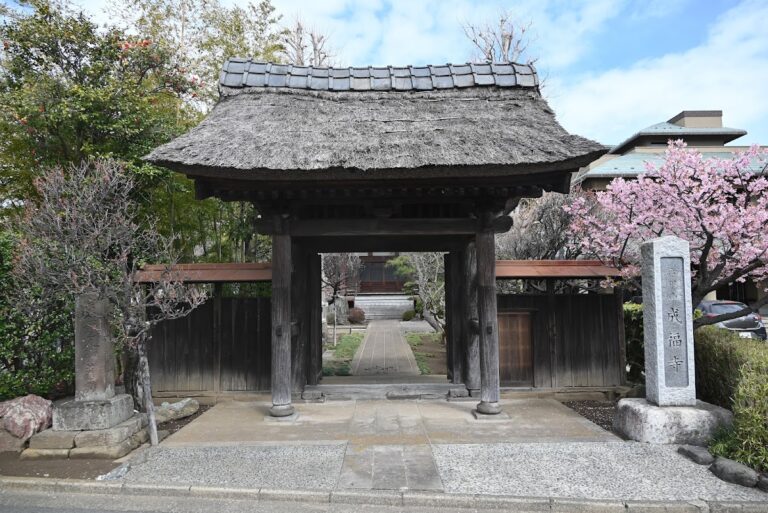
Main Gate
The main gate of Joraku-ji Temple is simple yet dignified, quietly welcoming visitors. Passing through the gate, a lush green precinct unfolds, offering a tranquil atmosphere distinct from the hustle and bustle of central Kamakura.
Various seasonal flowers are planted on either side of the main gate, offering particularly beautiful scenery during the fresh greenery of spring and the vibrant autumn foliage.
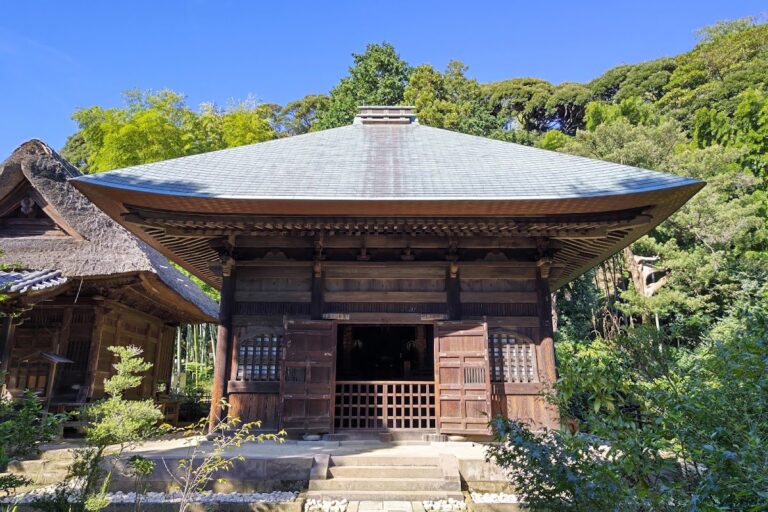
Buddha Hall (Main Hall)
The Buddha Hall, the main hall, houses the principal image, the Amida Triad. The triad arrangement, with Amida Buddha at the center and Kannon Bodhisattva and Seishi Bodhisattva as attendants, reflects the influence of Pure Land Buddhism.
The architectural style of the Buddha Hall is an eclectic style that incorporates elements of both Zen and Japanese architecture, retaining characteristics of its Edo period reconstruction. The interior, though simple, exudes a solemn atmosphere, where quiet Zen meditation and chanting take place.
Monju Hall
The Monju Hall is a particularly important building at Joraku-ji Temple. This hall, dedicated to Monju Bodhisattva, is revered as the god of learning. Every year on January 25th, the “Monju Festival” is held, attracting many worshippers.
During the Monju Festival, students, exam candidates, and their families visit to pray for academic success and passing exams, offering prayers to Monju Bodhisattva. This event is one of the most important annual events at Joraku-ji Temple.
The architecture of the Monju Hall is simple yet beautiful, and a statue of Monju Bodhisattva is enshrined inside. Manjushri Bodhisattva is often depicted riding a lion and has been worshipped since ancient times as a symbol of wisdom.
Temple Bell (One of the Three Famous Bells of Kamakura)
The greatest cultural asset of Joraku-ji Temple is its temple bell, which is designated as a National Important Cultural Property. This bell is counted as one of the “Three Famous Bells of Kamakura” and is known as one of the representative famous bells of Kamakura, alongside the temple bells of Kencho-ji and Engaku-ji Temples.
The Three Famous Bells of Kamakura:
- Temple Bell of Kencho-ji Temple (National Treasure)
- Temple Bell of Engaku-ji Temple (National Treasure)
- Temple Bell of Joraku-ji Temple (Important Cultural Property)
The temple bell of Joraku-ji Temple is believed to have been cast in the first year of Shoan (1299), and is a valuable artifact that demonstrates the excellent casting technology of the late Kamakura period. Standing approximately 1.5 meters tall and with a diameter of about 90 centimeters, its imposing presence speaks of a history spanning over 700 years.
The inscription on the bell details its casting history and a prayer, making it an important historical document for understanding the beliefs and social conditions of the time. Currently, it hangs in the bell tower and is rung on New Year’s Eve and during special Buddhist ceremonies.
Its tone is deep and clear, producing a beautiful sound befitting its reputation as one of the “Three Famous Bells of Kamakura.” The sound of this bell resonates quietly throughout the town of Ofuna, telling the time to the local people.
Tomb of Hojo Yasutoki
Within the temple grounds lies the tomb of Hojo Yasutoki, the temple’s founder. Yasutoki is believed to have died in 1242 at the age of 60 and was buried at Joraku-ji Temple. The tomb is a simple five-tiered pagoda, reflecting Yasutoki’s character.
Hojo Yasutoki, while at the pinnacle of power as regent, is known for his emphasis on frugality and austerity, and for governing fairly. The enactment of the Goseibai Shikimoku (a legal code) was a groundbreaking achievement in establishing the rule of law in samurai society.
The area around his tomb is enveloped in a tranquil atmosphere, allowing visitors to reflect on history and offer their prayers. Visiting Yasutoki’s tomb will be a valuable experience for learning about the history of the Kamakura Shogunate.
Gardens and the Seasons of Nature
The grounds of Joraku-ji Temple are blessed with the beauty of nature throughout the four seasons. The following seasons, in particular, offer beautiful scenery:
Spring: Plum blossoms bloom in profusion, announcing the arrival of early spring. The plum trees around the Monju-do Hall are especially magnificent, with red and white blossoms coloring the temple grounds.
Summer: The fresh greenery is beautiful, and the entire temple grounds are enveloped in green. The shade of the trees is cool, making it a comfortable place to visit even in summer.
Autumn: The ginkgo leaves turn golden, painting the temple grounds in a magnificent display. The large ginkgo tree standing along the approach from the temple gate is a symbol of autumn at Joraku-ji Temple.
Winter: The dignified atmosphere of the Zen temple stands out amidst the winter landscape. When it snows, a beautiful, ink-painting-like scene unfolds.
Cultural Properties and Historic Sites
Important Cultural Properties
Temple Bell (Nationally Designated Important Cultural Property)
As mentioned above, the temple bell, cast in 1299 (Shoan 1), is designated as a National Important Cultural Property and is one of the three famous bells of Kamakura. It is a masterpiece that embodies the pinnacle of late Kamakura period casting technology.
Other Cultural Properties
Wooden Amida Triad Statue: The principal image, the Amida Triad statue, is a valuable Buddhist statue that conveys the style of the Kamakura period.
Manjushri Bodhisattva Statue: The Manjushri Bodhisattva statue enshrined in the Manjushri Hall is revered as the god of learning.
Ancient Documents: Joraku-ji Temple possesses ancient documents that show its relationship with the Hojo clan and Kencho-ji Temple, making them important historical sources for the study of Kamakura history.
Annual Events
Monju Festival (January 25th):
The most important annual event at Joraku-ji Temple is the Monju Festival, held every year on January 25th. Monju Bodhisattva is revered as a symbol of wisdom and is worshipped as a Buddha for academic success and passing exams.
On the day of the Monju Festival, many students, their families, and those preparing for exams visit the temple. A special Buddhist service is held, and worshippers pray to Monju Bodhisattva for academic success and passing exams. Sweet rice wine is served on the temple grounds, making it a place for interaction with the local community.
Other Events
New Year’s Eve Bell Ringing (December 31st): On New Year’s Eve, the temple bell, one of the three famous bells of Kamakura, is rung. General visitors may sometimes be allowed to ring the temple bell.
Zen Meditation Sessions: Zen meditation sessions are held regularly and are open to the public (advance confirmation required).
Access
Access by Train
From JR Ofuna Station:
- Walking: Approximately 15 minutes
- Bus: Get off at the “Jorakuji” bus stop, then a 5-minute walk
From JR Kita-Kamakura Station:
- Walking: Approximately 20 minutes
Ofuna Station is a major station served by the Tokaido Main Line, Yokosuka Line, Shonan-Shinjuku Line, and Negishi Line. The walk from the station is relatively flat, making it enjoyable for a stroll.
Access by Car
Approximately 15 minutes from the Asahina Interchange on the Yokohama-Yokosuka Expressway. However, parking is limited, so using public transportation is recommended.
Nearby Tourist Attractions
When visiting Jorakuji Temple, we recommend also visiting the following nearby spots.
Kencho-ji Temple: A grand temple, the first of the Five Great Zen Temples of Kamakura, founded by Rankei Doryu. It’s within walking distance of Joraku-ji Temple.
Engaku-ji Temple: A renowned temple, the second of the Five Great Zen Temples of Kamakura. It possesses one of the three most famous bells in Kamakura.
Ofuna Kannon: A giant Kannon statue known as a landmark of Ofuna.
Notes on Visiting
Visiting Hours and Admission Fee
Visiting Hours: 9:00 AM – 4:00 PM
Admission Fee: Voluntary donation
Visiting hours may change, so it is recommended to check in advance. Especially during the New Year holidays and special events, hours may differ from the usual.
Manners and Etiquette
Joraku-ji Temple is a Zen temple where training is still conducted. Please note the following:
- Maintain silence on the temple grounds and avoid disturbing other visitors.
- Photography is permitted, but please refrain from photographing Buddhist statues and religious artifacts.
- Please only enter designated areas within the building.
- Please take all your trash with you.
- Smoking is prohibited.
The Charm and Worth of Visiting Joraku-ji Temple
Compared to Kamakura’s famous temples, Joraku-ji Temple is small in scale and quiet, with fewer tourists. However, its historical value and the importance of its cultural assets are extremely high, making it a must-see spot for those who want to deeply understand the history of Kamakura.
The Significance as the “Birthplace of Kencho-ji Temple”
Kencho-ji Temple, as the first of the Five Great Zen Temples of Kamakura, occupies an extremely important position in the history of Japanese Zen Buddhism. Joraku-ji Temple, where its founder, Rankei Doryu, trained, can be considered a “predecessor of Kencho-ji Temple.”
Although often overshadowed by the grandeur of Kencho-ji Temple, the fact that a magnificent page in the history of Zen Buddhism is etched into this small temple, Joraku-ji, speaks volumes about the profoundness of Kamakura’s history.
Hojo Yasutoki and the Regency
Hojo Yasutoki, the founder of Joraku-ji Temple, was the figure who established the regency system of the Kamakura Shogunate. Through the enactment of the Goseibai Shikimoku (a legal code), he laid the foundation for the rule of law in samurai society.
Standing at Yasutoki’s tomb, we can reflect on the Kamakura period, an era of samurai rule, and a crucial turning point in the history of Japanese law.
The Sound of Kamakura’s Three Famous Bells
The temple bell of Joraku-ji Temple, one of Kamakura’s three famous bells, is a valuable cultural asset with a history of over 700 years. Alongside the bells of Kencho-ji and Engaku-ji Temples, this bell symbolizes the history and culture of Kamakura.
The sound of the bell, ringing on New Year’s Eve and during special Buddhist ceremonies, continues to convey the history of Kamakura across time.
A World of Zen in Silence
Unlike the bustling center of Kamakura, Joraku-ji Temple is a precious place where one can experience the spirit of Zen in a tranquil environment. Walking through the temple grounds, quietly offering prayers in the main hall, and gazing up at the temple bell, we can escape the hustle and bustle of modern life and find inner peace.
Summary: Visit Joraku-ji Temple to Deepen Your Understanding of Kamakura’s History
Joraku-ji Temple is a small Zen temple located in Ofuna, Kamakura City, but its historical value is immeasurable. Founded by Hojo Yasutoki, the training grounds of Rankei Doryu, the temple bell (one of Kamakura’s three most famous bells), and the tradition of Manjushri worship—all of these are condensed within this tranquil temple.
Many tourists visiting Kamakura visit famous spots such as Tsurugaoka Hachimangu Shrine, Hase-dera Temple, and the Great Buddha, but it is in hidden gems like Joraku-ji Temple that the true history and culture of Kamakura truly reside.
After visiting, or even before visiting, large temples such as Kencho-ji and Engaku-ji, be sure to visit Joraku-ji Temple. There, the history of the Kamakura Shogunate’s regency, the introduction and development of Zen Buddhism, and a history of faith spanning over 700 years quietly but surely exist.
Conveniently located just a 15-minute walk from Ofuna Station, it offers a tranquil environment far removed from the hustle and bustle. The temple grounds are beautifully surrounded by nature that changes with the seasons, and it houses valuable cultural artifacts that tell the story of Kamakura’s history. Joraku-ji Temple is a temple well worth visiting for anyone who wants to learn more about Kamakura’s history or who seeks to find peace of mind in a quiet environment.
Next time you visit Kamakura, be sure to add Joraku-ji Temple to your list. The tranquility and history you encounter there will surely enrich your Kamakura experience.