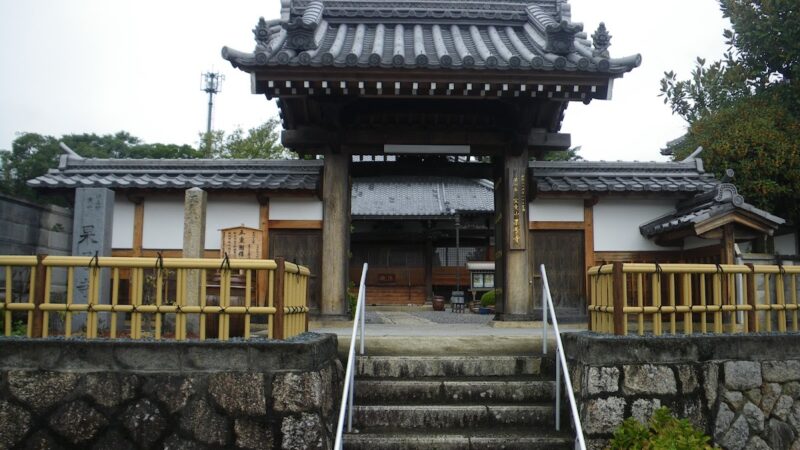
Kagoji Temple (Mie Prefecture) Complete Guide: A Thorough Explanation of the Nationally Designated Natural Monument, the Shibunashigaya Tree, and its History
Kagoji Temple, located in Nishiyama, Iga City, Mie Prefecture, is a Jodo sect temple that houses the “Kagoji Shibunashigaya Tree,” a nationally designated natural monument, and has attracted attention from cultural heritage enthusiasts and plant researchers. This article provides a detailed and comprehensive explanation of Kagoji Temple, from its history to the characteristics of the Shibunashigaya Tree and how to access it.
Overview and Location of Kagoji Temple
Kagoji Temple is a Jodo sect temple located at the southeastern foot of the Gozaitoge Pass, on the border with Koka City, Shiga Prefecture, in the northwestern part of the Iga Basin in northwestern Mie Prefecture. It sits on a slope at an altitude of approximately 220-230 meters in the Nishiyama district of Iga City, nestled in a quiet mountainous area where houses and fields are mixed.
Geographical Characteristics
Located at the northwestern tip of the Iga region, the Nishiyama area has long been known as a key transportation hub connecting Iga and Koga prefectures. The Gosai Pass was an important mountain pass connecting Iga and Koga, and historically and culturally, it was a region of vibrant exchange between the two areas. Kagoji Temple has long been a place of worship for local residents within this historical area.
Nationally Designated Natural Monument: “Kagoji Temple’s Shibunashigaya”
The main reason Kagoji Temple is known nationwide is that the “Kagoji Temple’s Shibunashigaya” growing on its grounds is designated as a national natural monument. It was designated a national natural monument on July 25, 1932 (Showa 7), and has been protected for over 90 years.
What is Shibunashigaya?
Shibunashigaya (Torreya japonica) is a variety of Torreya nucifera (Torreya nucifera), an evergreen tree belonging to the genus Torreya in the family Taxaceae. While typical torreya seeds have a thin, brownish membrane called a “shibukawa” covering the endosperm, the Shibunashigaya (a type of torreya) has a unique characteristic: this membrane adheres to the inner surface of the shell during the drying process, making it easily detachable.
When the shell is cracked, the white seed (endosperm) is immediately exposed, hence the name “Shibunashigaya” (meaning “non-shibukawa torreya”). This characteristic is considered highly valuable from a botanical perspective as an example of torreya mutation.
Characteristics of the Shibunashigaya at Kagoji Temple
The Shibunashigaya at Kagoji Temple is located in the northeast corner of the temple grounds and has the following characteristics:
- Tree Height: Approximately 20 meters
- Growth Status: Healthy, bearing a large amount of fruit every year
- Tree Age: Estimated several hundred years (exact age unknown)
- Date of Designation: July 25, 1932 (Showa 7)
- Other Designations: Also selected as one of Mie Prefecture’s 100 Famous Trees
Its majestic appearance, reaching approximately 20 meters in height, overwhelms visitors. Its growth status is excellent, and it bears a large amount of fruit every autumn, demonstrating its strong vitality.
Uses of Kaya Nuts
Kaya nuts have been used for food and medicine since ancient times. When roasted, they are fragrant and highly nutritious, making them a valuable food source in mountainous areas. The oil extracted from kaya nuts was used as lamp oil and also as cooking oil.
In the case of *Kaya japonica*, the bitter outer skin is easily removed, making it easier to process for food than regular kaya nuts. However, since it is currently protected as a natural monument, collecting the fruits of the Japanese nutmeg tree at Kagoji Temple is prohibited.
Japanese Nutmeg Trees as Natural Monuments in the Iga Region
Interestingly, the Iga region also has the “Japanese nutmeg tree at Takakura Shrine,” which was designated a national natural monument on the same day as the Japanese nutmeg tree at Kagoji Temple. Takakura Shrine is located in Nishitakakura, Iga City, and this tree is also recognized for its academic value as a variety of Japanese nutmeg tree.
Japanese Nutmeg Tree Natural Monuments Nationwide
There are 15 Japanese nutmeg trees designated as national natural monuments throughout Japan, including giant trees and varieties. Many of these are designated for their distinctive and rare seeds, and include the following types:
- Shibunashigaya: Kagoji Temple (Iga City, Mie Prefecture), Takakura Shrine (Iga City, Mie Prefecture)
- Kotsubugaya: Kotsubugaya of Ohara (Shiraishi City, Miyagi Prefecture), Kotsubugaya of Kurazoji Temple (Toba City, Mie Prefecture)
- Hadakagaya: Hadakagaya of Heki (Tambasasayama City, Hyogo Prefecture)
- Hidarimakigaya: Hidarimakigaya of Kumano (Kumano City, Mie Prefecture)
The Kansai Breeding Station of the Forestry and Forest Products Research Institute, a national research and development agency under the jurisdiction of the Forestry Agency, is undertaking efforts to collect clones of these kaya trees designated as natural monuments, and to preserve and plant them. From the perspective of genetic resource conservation, the Shibunashigaya of Kagoji Temple plays an important role.
History and Culture of Kagoji Temple
Kagoji Temple as a Jodo Sect Temple
Kagoji Temple is a temple belonging to the Jodo sect. The Jodo sect, founded by Honen Shonin, is a Buddhist sect that seeks rebirth in paradise by chanting the Nembutsu, “Namu Amida Butsu.” Many Jodo sect temples exist in the Iga region, functioning as a center of local religious life.
While limited information is currently available regarding the founding date and detailed history of Kagoji Temple, judging from the age of the Japanese yew trees, it is believed to be a temple with a history of at least several hundred years.
Historical Background of the Iga Region
The Iga region is nationally known as the home of ninjas. Iga ninjas were active from the Sengoku period to the Edo period, and their unique culture remains an important tourist resource in Iga City today.
Furthermore, the author Ryotaro Shiba, in his “Kaido wo Yuku” series, specifically in “The Roads of Koga and Iga” (serialized in Weekly Asahi in 1973), described his visit to the area around Gosai Pass. Shiba also wrote a novel about Iga ninjas called “The Owl’s Castle,” demonstrating his deep interest in the Iga region.
The Nishiyama district, where Kagoji Temple is located, has played an important role as a key point on the transportation route connecting Iga and Koga within this historical context.
Mie’s 100 Famous Trees
The Japanese cypress (Shibunashigaya) at Kagoji Temple is a national natural monument and has also been selected as one of “Mie’s 100 Famous Trees.” This selection features distinctive and valuable trees within Mie Prefecture, aiming to raise awareness of nature conservation among residents and foster a sense of local pride.
Significance of the 100 Famous Trees
Selection as one of the 100 Famous Trees promotes conservation activities by local residents and ensures its transmission to future generations. The Japanese cypress at Kagoji Temple is appropriately managed under a dual protection system of national designation and prefectural selection.
Many other valuable trees exist within Mie Prefecture, each deeply connected to the history and culture of the region. The Shibunashigaya tree at Kagoji Temple is of particularly high academic value and is considered a rare specimen nationwide.
Access
Due to limited public transportation, visiting Kagoji Temple by private car is recommended.
Access by Car
- From the Meihan Expressway: Exit at Kamitsuge IC or Iga IC, then take the prefectural road for approximately 20-30 minutes.
- From the Shin-Meishin Expressway: Exit at Konan IC, then take National Route 307 for approximately 30 minutes.
- Parking: Limited space available around the temple grounds (advance confirmation required).
Access by Public Transportation
- From the JR Kansai Main Line: Get off at Tsuge Station or Iga-Ueno Station, then take a taxi or community bus.
- From the Iga Railway: Get off at Ueno-shi Station, then take a taxi.
*Public transportation is limited, so it is recommended to check the timetable in advance.
Points to Note When Visiting
- Kagoji Temple is an active temple, so please be considerate of other visitors.
- The Japanese cypress (Shibunashigaya) is a natural monument, so touching it or collecting its fruit is prohibited.
- Photography is permitted, but please be quiet on the temple grounds and be considerate of other visitors.
- As it is located in a mountainous area, temperatures can be low and insects may be numerous depending on the season. Appropriate clothing is recommended.
Nearby Tourist Attractions
When visiting Kagoji Temple, exploring the surrounding tourist attractions will allow you to experience the charm of the Iga region more deeply.
Gozaitoge Pass
Located northwest of Kagoji Temple, Gozaitoge Pass is a historical mountain pass connecting Iga and Koga. National Route 307 still runs through it, and from the pass you can see the Iga Basin and the mountains of Koga. It was once a place where many travelers passed through and charcoal burning took place, and you can feel the traces of history.
Takakura Shrine
Located in Nishitakakura, Iga City, Takakura Shrine also houses the “Takakura Shrine’s Shibunashigaya,” which was designated a national natural monument on the same day as the one at Kagoji Temple. Comparing and observing the two Shibunashigaya trees deepens understanding of this valuable variant.
Iga Ueno Castle and Iga-ryu Ninja Museum
In the heart of Iga City are the beautiful Iga Ueno Castle, also known as Hakuhō Castle, and the Iga-ryu Ninja Museum, where you can learn about the history and techniques of ninjas. A visit to the Iga region will offer a valuable opportunity to experience ninja culture.
Cultural Property Protection Efforts
Management of Nationally Designated Natural Monuments
National natural monuments are protected under the Cultural Properties Protection Law, and any actions that alter their current state or affect their preservation require permission from the Commissioner of the Agency for Cultural Affairs. The Shibunashigaya at Kagoji Temple is also properly managed and protected.
The management organization is composed of local government and temple officials, and regular observations and necessary protective measures are implemented. Health checkups by certified arborists and early detection and treatment of pests and diseases are also important management tasks.
Cultural Property Protection in Mie Prefecture
The Social Education and Cultural Property Protection Division of the Mie Prefectural Board of Education oversees cultural property protection within the prefecture. Under the slogan, “Let’s protect and utilize Mie’s cultural properties together!”, they promote citizen-participatory cultural property protection activities.
Detailed information about the Japanese nutmeg tree at Kagoji Temple is publicly available in an information database and widely disseminated to the public. This initiative aims to ensure its transmission to future generations by increasing understanding and interest in cultural properties.
Preservation of Genetic Resources
As mentioned above, the Kansai Breeding Station of the Forestry Research and Development Agency, under the jurisdiction of the Forestry Agency, collects and preserves clones of Japanese nutmeg trees designated as natural monuments. This is an important initiative to ensure the restoration of genetically identical individuals in the event that the original trees are lost due to disasters or pests and diseases.
Valuable varieties like *Torreya japonica* are highly valuable for preservation from the perspective of genetic diversity and play an important role as fundamental data for future plant breeding and academic research.
Botanical Significance and Research Value
Research on Torreya Variation
*Torreya japonica* is a subject of research in plant genetics and evolutionary biology as an example of natural variation in *Torreya japonica*. Research into why such variations occur and what genetic characteristics they possess provides valuable data for understanding plant adaptive strategies and evolutionary mechanisms.
Research on Seed Characteristics
Research into why *Torreya japonica* seeds easily lose their inner skin compared to typical *Torreya japonica* is an interesting topic for understanding seed germination strategies and co-evolution with animals (the role of animals in seed dispersal).
While the ease of removing the inner skin is advantageous for humans in terms of easier processing for food, further research is needed to understand its significance in the natural world.
Message to Visitors
The Shibunashigaya tree at Kagoji Temple is a precious cultural asset that has been protected as a national natural monument for over 90 years. The fact that this giant tree has grown healthily to this day is a testament to the continuous efforts of local residents, temple officials, and the local government.
When visiting, it is important to be mindful of passing on this precious natural heritage to future generations and to observe proper etiquette. The quietly standing Shibunashigaya tree will evoke a sense of vitality cultivated over many years and the dedication of those who have protected it.
In the tranquil mountainous environment of Iga City, Mie Prefecture, taking the time to slowly contemplate this natural monument will provide an opportunity to deeply reflect on the mystery of nature and the importance of cultural property preservation.
Summary
Kagoji Temple (Nishiyama, Iga City, Mie Prefecture) is a Jodo sect temple that houses the “Kagoji Shibunashigaya tree,” designated as a national natural monument. The Japanese nutmeg tree (Siberian nutmeg), approximately 20 meters tall, is scientifically valuable as a variety of Japanese nutmeg and has been protected for over 90 years since 1932.
Within the historical context of the Iga region, Kagoji Temple has played an important role as a place of local worship, and the Japanese nutmeg tree has played an important role as a natural heritage site. It has also been selected as one of Mie Prefecture’s 100 Famous Trees, and conservation efforts by local residents continue.
Access is most convenient by private car, but advance planning is necessary if using public transportation. When visiting, please observe appropriate manners, considering that it is an active temple and a natural monument.
Nearby, there are many spots where you can feel the history and nature, such as the Japanese nutmeg tree at Takakura Shrine and the Gosai Pass, allowing you to experience the charm of the Iga region comprehensively. Enjoy encountering this precious natural heritage while appreciating the importance of cultural property preservation.