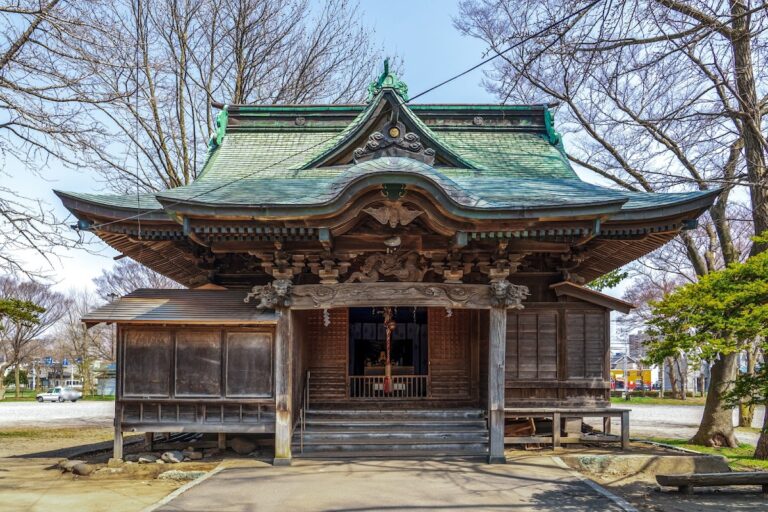
Kameda Hachimangu Shrine Complete Guide | History, Goshuin (Shrine Seals), Access, and Hakodate War Site Explained in Detail
Kameda Hachimangu Shrine, located in Hachiman-cho, Hakodate City, Hokkaido, is one of Hokkaido’s most historic shrines, dating back to the Muromachi period. Known as a historical site where the Hakodate War took place, it continues to attract many worshippers and history enthusiasts. This article provides a detailed explanation of Kameda Hachimangu Shrine’s history, enshrined deities, highlights, goshuin information, and access methods.
What is Kameda Hachimangu Shrine?
Kameda Hachimangu Shrine is located at 3-2 Hachiman-cho, Hakodate City, and is a shrine of the rank of Gosha (village shrine) belonging to the Hokkaido Shrine Association. Situated approximately 2 kilometers from Goryokaku Park, it boasts a vast grounds of 6,439 tsubo (approximately 20,100 square meters) and is known as one of Hokkaido’s representative ancient shrines.
Currently, it has approximately 20,000 parishioner households and is deeply revered as a center of local faith. The shrine’s architectural style is Nagare Gongen-zukuri, and it boasts a floor area of 46 tsubo (approximately 152 square meters).
Deity Enshrined
The deity enshrined at Kameda Hachimangu Shrine is Homudawake-no-mikoto. Homudawake-no-mikoto is the divine name of Emperor Ojin, and is widely worshipped as Hachiman-Okami, the god of military fortune, victory in competitions, and national protection.
History of Kameda Hachimangu Shrine
Origin of Founding (Muromachi Period)
The founding of Kameda Hachimangu Shrine dates back to Meitoku 1 (1390). According to shrine tradition, its origin lies in the transfer of a divided spirit of Hachiman-Okami from Kehi Shrine in Tsuruga District, Echizen Province (present-day Tsuruga City, Fukui Prefecture) to this location.
There are several legends regarding the person involved in the founding of the shrine. One theory states that Kasahara Ugenta of Echizen Province enshrined a divided spirit here, while another claims that Kono Kaga-no-kami Moriyuki invited the deity to the site. Later, Kono Kaga-no-kami Moriyuki is said to have ordered Ugenta’s grandson, Saemon, to construct the main hall.
Turmoil of the Sengoku Period
Shortly after its founding, the shrine faced difficulties in performing rituals and maintaining the shrine buildings due to conflicts with Takeda Nobuhiro (later Matsumae Nobuhiro), the founder of the Matsumae Domain. This period was a time of conflict among Japanese forces in Ezo (Hokkaido), and Kameda Hachimangu Shrine was affected.
Development during the Edo Period
In 1603 (Keicho 8), the main hall and worship hall are said to have been constructed. During this period, the Matsumae Domain’s rule was established, and Kameda Hachimangu Shrine came to occupy an important position as the domain’s place of prayer.
In 1845 (Koka 2), the shrine buildings were renovated, and in 1863 (Bunkyu 3), a stone torii gate was erected. Improvements continued throughout the Edo period. Under the patronage of the Matsumae Domain, it developed into a center of faith in Ezo (Hokkaido).
The Hakodate War and Kameda Hachimangu Shrine
One of the most important events in the history of Kameda Hachimangu Shrine is its connection to the Hakodate War.
On May 15, 1869 (Meiji 2), the area around Kameda Hachimangu Shrine became a fierce battlefield. The former shogunate forces (the Ezo Republic army led by Enomoto Takeaki) and the new government forces fought, and bullet holes from that time still remain in the old worship hall. These bullet holes are a valuable historical site that conveys the intensity of the Hakodate War.
It is said that on May 17, 1869 (Meiji 2), Enomoto Takeaki and Otori Keisuke of the former shogunate army exchanged surrender oaths with the new government forces at this Kameda Hachimangu Shrine. The Hakodate War ended with this surrender, marking a significant turning point in modern Japanese history.
From the Meiji Era to the Present
During the Meiji era, it was ranked as a local shrine, establishing its status as an important regional shrine. Since then, it has undergone numerous renovations and repairs, leading to its current appearance.
Even after the war, it continued to attract the faith of Hakodate citizens, and various Shinto rituals such as New Year’s visits, Shichi-Go-San (a traditional rite of passage for children), and exorcisms are performed here. Alongside Goryokaku, it is a historical site in Hakodate, attracting many tourists.
Highlights of Kameda Hachimangu Shrine
Former Shrine Building and Bullet Holes
The biggest highlight is the former worship hall, which still bears bullet holes from the Hakodate War. The remnants of the fierce battle of 1869 (Meiji 2) still remain, making this a valuable historical site where you can feel the weight of modern Japanese history firsthand. It’s a must-see spot for history buffs.
Stone Torii Gate
The stone torii gate, erected in 1863 (Bunkyu 3), is an important structure that preserves the style of the late Edo period. Passing through this gate, built during the turbulent Bakumatsu period, allows you to feel the weight of history.
Atmosphere of the Shrine Grounds
The vast 6,439 tsubo (approximately 20,100 square meters) grounds, despite being in an urban area, are enveloped in a tranquil atmosphere. The environment is perfect for worshippers to experience the changing seasons and offer prayers in peace.
Shrine Architecture
The Nagare Gongen-zukuri style shrine building is a valuable structure that showcases the characteristics of Hokkaido’s shrine architecture. The integrated structure of the main hall and worship hall is noteworthy as an architectural style adapted to Hokkaido’s harsh climate.
Annual Festival and Other Annual Events
Annual Festival Date
The annual festival date for Kameda Hachimangu Shrine is September 15th. The Grand Festival is the most important festival for the shrine, attracting many parishioners and worshippers. Traditional festival rituals, such as the portable shrine procession and offering ceremonies, are held, and the entire community is enveloped in a festive atmosphere.
Other Annual Events
- Hatsumode: Many worshippers visit during the first three days of the New Year.
- Setsubun Festival: Events such as bean-throwing are held around February 3rd.
- Shichi-Go-San: Many families visit between October and November.
- Exorcism/Protection from Evil Spirits: Accepted throughout the year.
Goshuin (Shrine Seal) Information
Goshuin Issuance
Kameda Hachimangu Shrine offers Goshuin (shrine seals). They are available at the shrine office, and many people receive them as a memento of their visit.
Features of the Goshuin (Shrine Seal)
The goshuin of Kameda Hachimangu Shrine features the shrine’s name and date of visit written in ink, along with the shrine’s seal. As a goshuin from one of Hokkaido’s most historic shrines, it is popular among goshuin notebook collectors.
Issuance Hours
The goshuin issuance hours are the same as the shrine office’s opening hours. It is recommended to confirm by phone before visiting.
Contact Information: 0138-41-5467
Access Information
Location
3-2 Hachiman-cho, Hakodate City, Hokkaido 040-0083
Access by Public Transportation
By Tram (Streetcar)
- Approximately 10 minutes on foot from Hakodate Tram “Chiyodai Station”
- Approximately 12 minutes on foot from Hakodate Tram “Chuo Byoin-mae Station”
By Bus
Get off at “Hachiman-cho” bus stop on any Hakodate Bus route, then approximately 3 minutes on foot.
Access by Car
From Hakodate Station
Approximately 15 minutes by car from Hakodate Station (approximately 5 kilometers)
From Hakodate Airport
Approximately 25 minutes by car from Hakodate Airport (approximately 12 kilometers)
From Goryokaku Park
Approximately 5 minutes by car from Goryokaku Park (approximately 2 kilometers)
Parking
A parking lot for visitors is available on the shrine grounds. However, due to limited spaces, using public transportation is recommended during events such as the annual festival.
Nearby Tourist Attractions
Goryokaku Park
Located approximately 2 kilometers from Kameda Hachimangu Shrine, Goryokaku Park is the site of a star-shaped fortress that was the main battlefield of the Hakodate War. The view from Goryokaku Tower is magnificent, and visiting both Kameda Hachimangu Shrine and Goryokaku Park will provide a deeper understanding of the history of the Hakodate War.
Hakodate Central Library
The Hakodate Central Library houses scroll-mounted materials related to Kameda Hachimangu Shrine and historical materials from the northern region. High-resolution images are also available in the digital archives, making it recommended for those interested in historical research.
Hakodate City Center
Major tourist spots in Hakodate, such as Mount Hakodate, Motomachi, and the Bay Area, are accessible in about 20 minutes by car. Visiting Kameda Hachimangu Shrine as part of a Hakodate sightseeing trip is a good idea.
Manners and Etiquette for Visiting a Shrine
Basic Visiting Etiquette
- Passing Through the Torii Gate: Bow before passing through the gate.
- Purifying at the Water Basin: Purify your left hand, right hand, and mouth in that order.
- Worshiping in Front of the Main Hall: Worship using the two bows, two claps, and one bow ritual.
- Offering a Coin: Place your offering quietly and with sincerity.
Photography
Photography is generally permitted on the shrine grounds, but consideration should be given to avoiding disturbing ceremonies or other visitors. Please photograph historically valuable parts, such as bullet holes in the old main hall, with respect.
The Relationship Between Kameda Hachimangu Shrine and Goryokaku Fortress
Kameda Hachimangu Shrine and Goryokaku Fortress have a close relationship, dating back to the Battle of Hakodate. For the former Shogunate forces holed up in Goryokaku, Kameda Hachimangu Shrine held a strategically important position and also served as a source of spiritual support.
Kameda Hachimangu Shrine continues to hold historical significance as the site where the surrender pledge was exchanged after the end of the Hakodate War. When visiting Goryokaku, be sure to also visit Kameda Hachimangu Shrine and reflect on the history of that time.
Relationship with the Hokkaido Association of Shinto Shrines
Kameda Hachimangu Shrine is a shrine belonging to the Hokkaido Association of Shinto Shrines. The Hokkaido Association of Shinto Shrines is an organization that oversees shrines within Hokkaido and functions as a regional branch of the Association of Shinto Shrines.
The Hokkaido Association of Shinto Shrines’ website publishes information on shrines in Hokkaido, including Kameda Hachimangu Shrine, and also provides information on Shinto rituals, Hokkaido’s annual events, and gagaku (ancient Japanese court music). Those interested in Shinto culture should refer to the information provided by the Hokkaido Association of Shinto Shrines.
Prayers and Sorrows at Kameda Hachimangu Shrine
Various Prayers
Kameda Hachimangu Shrine accepts various prayers and blessings, as listed below.
- Family Safety: Praying for the health and peace of the family
- Business Prosperity: Praying for the development and prosperity of the business
- Traffic Safety: Praying for the safety of vehicles and drivers
- Academic Success: Praying for passing exams and academic improvement
- Exorcism/Protection from Misfortune: Praying for the misfortunes of the unlucky year
- Safe Childbirth: Praying for the health of mother and child and a safe delivery
- First Shrine Visit: Praying for the healthy growth of the baby
- Shichi-Go-San: Expressing gratitude for the child’s growth and praying for their future health
Applying for Prayer
Those wishing to request prayer are advised to make a reservation by phone in advance. Reservations may be required, especially during busy seasons such as Shichi-Go-San and New Year’s.
Contact Information: 0138-41-5467
FAX: 0138-40-8210
Cultural Value of Kameda Hachimangu Shrine
Historical Buildings
The main shrine building and former worship hall of Kameda Hachimangu Shrine are important structures that demonstrate the history of shrine architecture in Hokkaido. In particular, the former worship hall, bearing bullet marks from the Hakodate War, possesses valuable cultural heritage as a war relic.
Importance in Local History
Kameda Hachimangu Shrine, which has existed since the Muromachi period, is an indispensable presence in telling the history of Hakodate and the southern Hokkaido region. It possesses multi-layered historical value, including its role as a place of prayer during the Matsumae Domain era and its importance as a historical stage in the Hakodate War.
Preservation and Inheritance
It is still carefully preserved by the local people, and its history and traditions are being passed down to future generations. As a cultural property of Hokkaido, appropriate preservation and utilization are expected in the future.
Summary
Kameda Hachimangu Shrine is a representative ancient shrine of Hokkaido, boasting a history of over 600 years since its founding in the Muromachi period. It is a historically significant shrine, having received a divided spirit of Hachiman Okami from Kehi Shrine in Echizen Province. It has been deeply involved in Hokkaido’s history, serving as a place of prayer for the Matsumae Domain and as an important stage in the Battle of Hakodate.
Still located in Hachiman-cho, Hakodate City, it remains a center of faith for the community, serving approximately 20,000 parishioners and beloved by many. The old worship hall, bearing bullet holes from the Battle of Hakodate, holds invaluable historical significance and, along with Goryokaku, is an important spot that tells the history of Hakodate.
When visiting Hakodate, be sure to visit Kameda Hachimangu Shrine and experience Hokkaido’s history and culture. You can find peace of mind in its tranquil grounds and feel the power of faith cultivated over its long history.
By receiving a Goshuin (temple/shrine stamp) or participating in events such as the annual festival, you can experience the charm of Kameda Hachimangu Shrine more deeply. Kameda Hachimangu Shrine is a place I wholeheartedly recommend not only to history buffs, but also to those who enjoy visiting shrines and those who want to enjoy sightseeing in Hakodate.