Kamiteine Shrine Complete Guide | History, Goshuin (Shrine Seal), Access, and Annual Events: A Thorough Explanation
Kamiteine Shrine, quietly nestled on the hillside of a small hill in Nishino, Nishi-ku, Sapporo, is a historic shrine that conveys the history of Meiji-era development. This shrine, which also gave its name to the Miyanosawa area, has been cherished as a spiritual center for local residents for over 140 years.
This article comprehensively introduces all the information visitors want to know about Kamiteine Shrine, from its history, enshrined deities, goshuin (shrine seal), and access methods to annual events and traditional culture such as Shiraishi Bayashi.
What is Kamiteine Shrine? | A Historic Guardian Shrine in Sapporo’s Nishi-ku
Kamiteine Shrine is a shrine located at 290-257 Nishino, Nishi-ku, Sapporo, Hokkaido, and enshrines Susanoo-no-Mikoto and Amaterasu-Omikami.
Located on the hillside at the end of Yamanote-dori, at the western edge of Nishino, the shrine retains a strong sense of the late Showa era, even amidst the rapid land development in the surrounding area since 1975. Along with the adjacent Miyagaoka Park, it is a beloved place of relaxation for local residents.
The Shrine that Originated the Name of Miyanosawa
Kami-Teine Shrine is also known as the shrine that gave rise to the place name “Miyanosawa.” The name of Miyanosawa Station, the terminal station of the Tozai Subway Line, also derives from the existence of this shrine, and it continues to be revered as a symbolic presence in the region.
History of Kami-Teine Shrine | Guardian Deity of the Settlement by Sendai Domain Samurai
Settlement in the Early Meiji Era and the Founding of the Shrine
The history of Kami-Teine Shrine dates back to the settlement of Hokkaido in the early Meiji era. In 1872 (Meiji 5), 47 households and 241 people, including Tsutomu Miki, a retainer of the Katakura family, lords of Shiroishi Castle in the Sendai Domain (present-day Miyagi Prefecture), settled in the present-day Hassamu, Nishimachi (Teinehigashi), and Nishino areas.
These pioneers, facing the harsh natural environment of Hokkaido, needed a guardian deity to offer spiritual support. In 1876 (Meiji 9), a small shrine was erected in a marshland in Kami-Teine Village, dedicated to Susanoo-no-Mikoto, marking the beginning of Kami-Teine Shrine.
The Origins of Teine Village and Kami-Teine Village
After settlement, Teine Village (formerly Teine Town) separated from Hassamu Village. In 1874 (Meiji 7), the Hoshioki area became Shimo-Teine Village, and the rest became Kami-Teine Village. Kami-Teine Shrine was founded as the tutelary shrine of this Kami-Teine Village.
The Enshrinement and Development of Amaterasu Omikami
In 1898 (Meiji 31), Amaterasu Omikami was enshrined alongside the main deity, resulting in two enshrined deities. This further elevated the shrine’s status and established its position as a center of local faith.
The History of the Taisho and Showa Periods
In 1920 (Taisho 9), a memorial mound for cattle and horses was erected. This was a tangible expression of gratitude to the cattle and horses that supported the pioneering era. In 1953 (Showa 28), it became a religious corporation, establishing its organizational foundation.
In 1965 (Showa 40), the shrine was relocated to its current location. It moved from a marshy area to the middle of a small hill, taking its present form. In 1976 (Showa 51), a grand festival was held to commemorate the 100th anniversary of its founding, celebrating its 100-year history.
Developments Since the Heisei Era
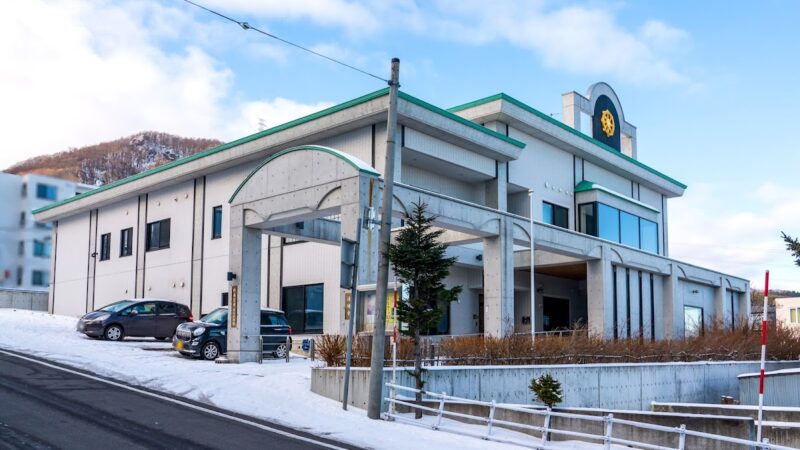
In 1990 (Heisei 2), a new shrine office was completed, further improving services for worshippers. In 1996 (Heisei 8), the 120th anniversary of the shrine’s founding was commemorated with a grand festival, marking a significant milestone.
Dividing of Nishi Ward and Teine Ward
In 1989 (Heisei 1), Teine Ward was separated from Nishi Ward, but the area of the former Teine Town, including the location of Kami-Teine Shrine, remained within Nishi Ward. Therefore, interestingly, Kami-Teine Shrine, Teine Higashi Elementary and Junior High School, and the Sapporo City Teine Memorial Hall all still bear the name “Teine” within Nishi Ward.
About the Deities Enshrined | Susanoo-no-Mikoto and Amaterasu-Omikami
Susanoo-no-Mikoto
Susanoo-no-Mikoto, the principal deity of Kami-Teine Shrine, is a god appearing in Japanese mythology and is the younger brother of Amaterasu-Omikami. Known for the myth of slaying the Yamata no Orochi (eight-headed serpent), Susanoo-no-Mikoto is widely worshipped as a god of protection against misfortune, disaster, matchmaking, and agriculture.
For settlers undertaking the arduous task of pioneering, Susanoo-no-Mikoto, with his power to control the unruly forces of nature, was a truly fitting guardian deity.
Amaterasu-Omikami
Amaterasu-Omikami, enshrined in 1898 (Meiji 31), is the supreme deity of Japanese mythology and the ancestral goddess of the Imperial family. As the sun goddess, she possesses the power to illuminate and nurture all things and is revered as a god of national peace, abundant harvests, and good fortune.
With these two enshrined deities, Kami-Ina Shrine offers a wide range of divine blessings, from protection against misfortune to abundant harvests and good fortune.
Access and Transportation Information to Kami-Teine Shrine
Location
Address: 290-257 Nishino, Nishi-ku, Sapporo City, Hokkaido
Access by Public Transportation
By Subway/Bus:
- Get off at Miyanosawa Station on the Tozai Subway Line
- Take a JR Hokkaido Bus (Routes Miya 43 or Nishi 21) for approximately 3 minutes
- Get off at the Kami-Teine Shrine bus stop.
On Foot:
- Approximately 15 minutes on foot from Miyanosawa Station on the Tozai Subway Line
- Proceed towards the mountains along Nishino Tonden Street
Access by Car
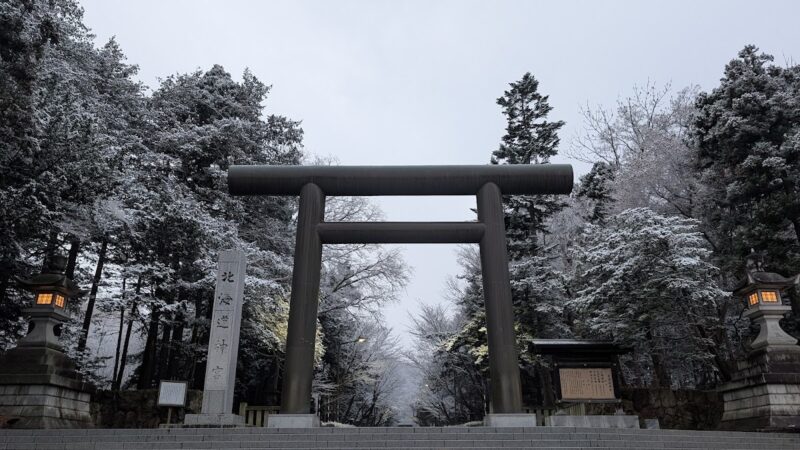
Proceed west along Yamanote Street, then turn towards Nishino at the end of the road. You can go up the road from the entrance with the torii gate. There is parking space for visitors.
Visiting Route
While climbing the stairs from the street will take you to the front of the shrine, you can also go up the road from the torii gate a little further on. This route is recommended for those with mobility issues or the elderly.
Highlights of the Shrine and Grounds
Unique Shrine Architecture
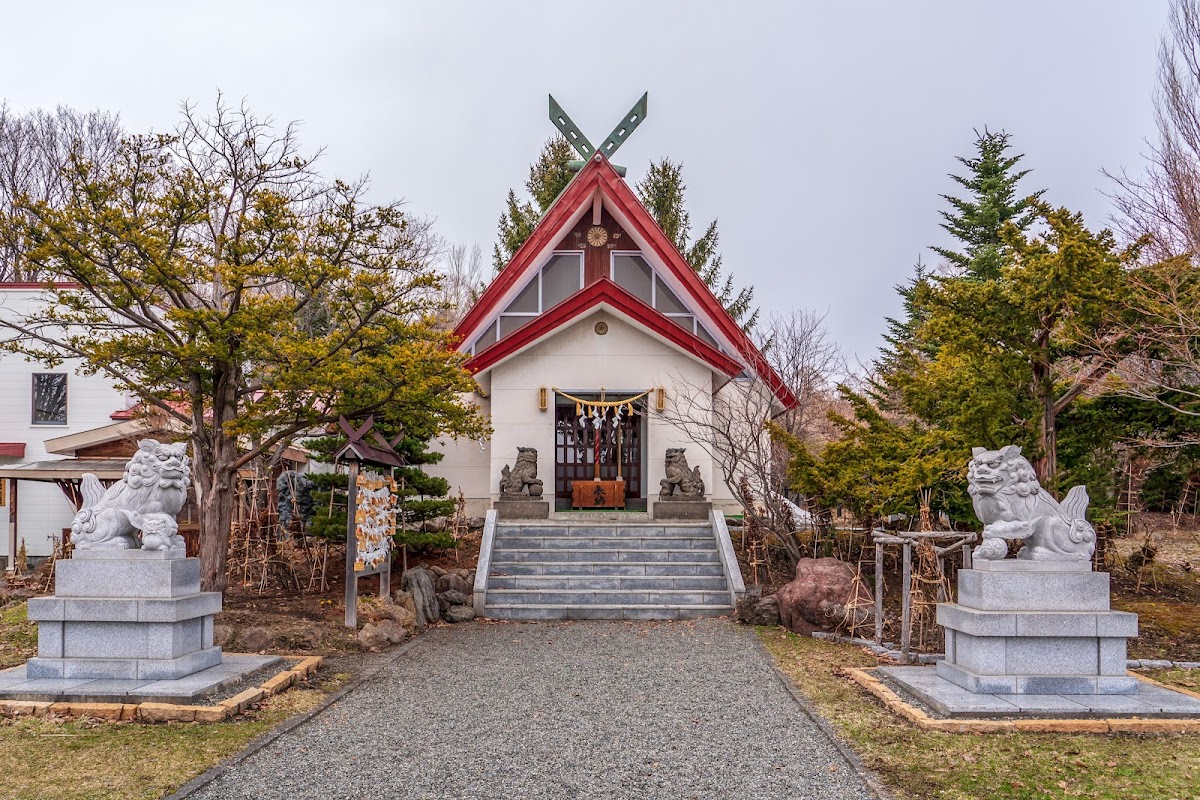
The shrine building of Kami-Teine Shrine differs slightly from typical shrines, known for its church-like atmosphere. This unique architectural style leaves a fresh impression on visitors.
Views from a Hilltop
Located on the side of a small hill, the shrine grounds offer panoramic views of Sapporo’s Nishi Ward. The view is particularly stunning on clear days.
First Sunrise Spot
Around New Year’s, the sun sometimes rises directly behind the torii gate, attracting many visitors early in the morning to witness the first sunrise of the year. It’s a popular, hidden spot for watching the first sunrise.
Integration with Miyagaoka Park
The integrated environment with the adjacent Miyagaoka Park allows visitors to enjoy the changing seasons and is ideal for walks. It offers different scenery with each season: cherry blossoms in spring, lush greenery in summer, vibrant autumn leaves, and snowy winter landscapes.
Goshuin (Shrine Seal) Information
Goshuin (shrine seals) are available at Kami-Teine Shrine. Please visit the shrine during its opening hours and speak to the staff.
Points to Note When Receiving a Goshuin (Shrine Stamp)
- Please receive your Goshuin after completing your prayers.
- Bringing your Goshuincho (stamp book) will make the process smoother.
- Please prepare the offering fee (usually around 300 yen).
- It is recommended to check the shrine office’s opening hours in advance.
A Goshuin is proof of your visit to the shrine, not a stamp rally. Please visit with a respectful and reverent attitude.
Annual Events and Festivals
At Kami-Ina Shrine, various Shinto rituals are performed throughout the year.
Main Annual Events
New Year’s Day Festival: Many worshippers visit for Hatsumode (first shrine visit of the year) to pray for happiness in the new year.
Annual Grand Festival: The most important festival at the shrine, where local residents gather to pray for the prosperity of the shrine and the peace of the community.
Autumn Grand Festival: A festival to express gratitude for the harvest.
In addition, regular Shinto rituals such as monthly festivals are held.
Shiraishi Bayashi and Kami-Teine Shrine | Preservation of Traditional Culture
One of the notable cultural activities of Kami-Teine Shrine is the preservation and transmission of “Shiraishi Bayashi.”
What is Shiraishi Bayashi?
Shiraishi Bayashi is a traditional performing art brought by retainers of the Katakura family, lords of Shiraishi Castle in the Sendai Domain, when they settled in the area. It is a valuable intangible cultural asset that conveys the culture of Shiraishi City, Miyagi Prefecture, the hometown of the pioneers, and is carefully passed down within the community.
Current Activities
Currently, under the guidance of Mr. Hoshino, a member of the Central Hokkaido Gagaku Association, we are active with the following members:
- Elementary School Lower Grades: 5
- Elementary School Upper Grades: 3
- Junior High School Students: 2
- High School Students: 8
- University Students: 1
- Caretakers: 5
- Total: 25
Practice and Activities
- Lower Grades: Approximately 4 practices per month
- Others: Approximately 2 practices per month
- Performances at various events
This activity provides an opportunity for a wide range of generations, from elementary school students to university students, to experience traditional culture and learn about local history. The sound of Shiraishi Bayashi is an important element that enhances the festivals of Kami-Teine Shrine.
Kami-Teine Shrine and the Hokkaido Association of Shinto Shrines
Kami-Teine Shrine is one of the shrines belonging to the Hokkaido Association of Shinto Shrines. The Hokkaido Association of Shinto Shrines is an organization that encompasses shrines throughout Hokkaido, providing support for shrine management, training of Shinto priests, and promoting Shinto culture.
The Hokkaido Shrine Association’s website features information on shrines throughout Hokkaido, including Kamiteine Shrine, making it a useful resource for shrine visits.
Manners and Etiquette for Visiting Shrines
Here are some basic manners to observe when visiting Kamiteine Shrine.
How to Pass Through the Torii Gate
The torii gate is the entrance to the sacred area. Bow before passing through. Since the center of the path is considered the path of the gods, it is proper etiquette to walk along the sides.
Proper Ritual for Washing Hands
- Take the ladle with your right hand and wash your left hand.
- Switch the ladle to your left hand and wash your right hand.
- Switch the ladle back to your right hand, receive water in your left hand, and rinse your mouth.
- Wash your left hand again.
- Hold the ladle upright, wash the handle, and return it to its original position.
Proper Ritual for Worship
- Gently place your offering in the offering box.
- If there is a bell, ring it.
- Perform two bows, two claps, and one bow (two deep bows, two claps, one deep bow).
Nearby Attractions and Facilities
Miyagaoka Park
A park adjacent to Kami-Teine Shrine, it features playground equipment and open spaces, making it popular with families. It’s ideal to visit in conjunction with a shrine visit.
Sapporo City Teine Memorial Hall
A facility in Nishi Ward that tells the history of Teine. It exhibits materials from the pioneering era, which are deeply connected to the history of Kami-Teine Shrine.
Teine Higashi Elementary and Junior High School
As a school bearing the name “Teine” within Nishi Ward, it preserves the history of the region.
The Four Seasons of Kami-Teine Shrine
Spring (March-May)
As the snow melts, flowers and plants that herald the arrival of spring begin to sprout in the shrine grounds. During cherry blossom season, the shrine, along with Miyagaoka Park, becomes a popular spot for flower viewing.
Summer (June-August)
The lush green grounds are cool and refreshing, making it ideal for summer visits. This is also the season when events such as the annual festival are held.
Autumn (September-November)
The autumn foliage is beautiful, and the view from the hilltop is exceptional. The Autumn Grand Festival, offering thanks for the harvest, is held.
Winter (December-February)
The tranquil shrine grounds covered in snow enhance the sacred atmosphere. Many worshippers visit for Hatsumode (first shrine visit of the year), and it is also a popular spot for watching the first sunrise of the year. ## Recommended Points for Visiting Kami-Ina Shrine
For History Enthusiasts
This shrine allows you to experience firsthand the history of Hokkaido’s development during the Meiji era. Its history, beginning with the settlement of samurai from the Sendai domain, tells a part of the Hokkaido development process.
For Those Collecting Goshuin (Shrine Stamps)
As a historic shrine in Sapporo’s Nishi Ward, it’s a must-have for your goshuin collection.
For Those Seeking a Quiet Visit
Despite being in an urban area, the shrine offers a peaceful and calming experience on a hillside.
For Families
Visiting the adjacent Miyagaoka Park in conjunction with the shrine provides an enjoyable experience for children.
For Those Witnessing the First Sunrise of the Year
The first sunrise rising from the torii gate around New Year’s Day is breathtaking. Early morning visits are recommended.
Summary | Kami-Ina Shrine: Walking Together with the Community
Since its founding in 1876 (Meiji 9), Kami-Ina Shrine has watched over the community as the local guardian deity in Nishino, Sapporo’s Nishi Ward, for over 140 years. This shrine preserves the history of pioneering by the retainers of the Katakura family, lords of Shiroishi Castle in the Sendai Domain. With its enshrined deities, Susanoo-no-Mikoto and Amaterasu-Omikami, it offers a wide range of divine blessings, from protection against misfortune to abundant harvests and good fortune.
The shrine is the origin of the place name Miyanosawa and preserves the traditional culture of Shiroishi Bayashi, beloved by people of all ages in the area. It boasts many attractions, including its unique church-like shrine building, panoramic views from its elevated location, and its appeal as a spot to watch the first sunrise of the year.
It’s easily accessible, just a 3-minute bus ride or a 15-minute walk from Miyanosawa Subway Station. If you’re looking to visit a historic shrine in Sapporo, find peace in a quiet environment, or learn about the history of Hokkaido’s development, be sure to visit Kami-Teine Shrine.
Visiting it in conjunction with the adjacent Miyagaoka Park will make for an even more fulfilling experience. Experience the beauty of nature in every season and the unique atmosphere woven from over 140 years of history.