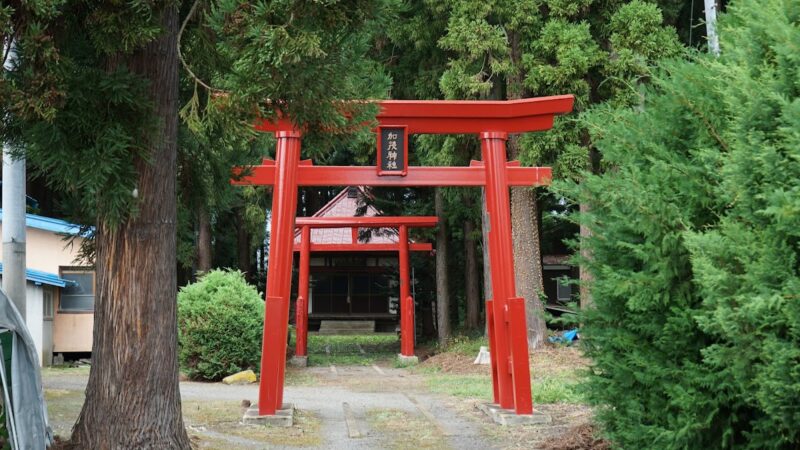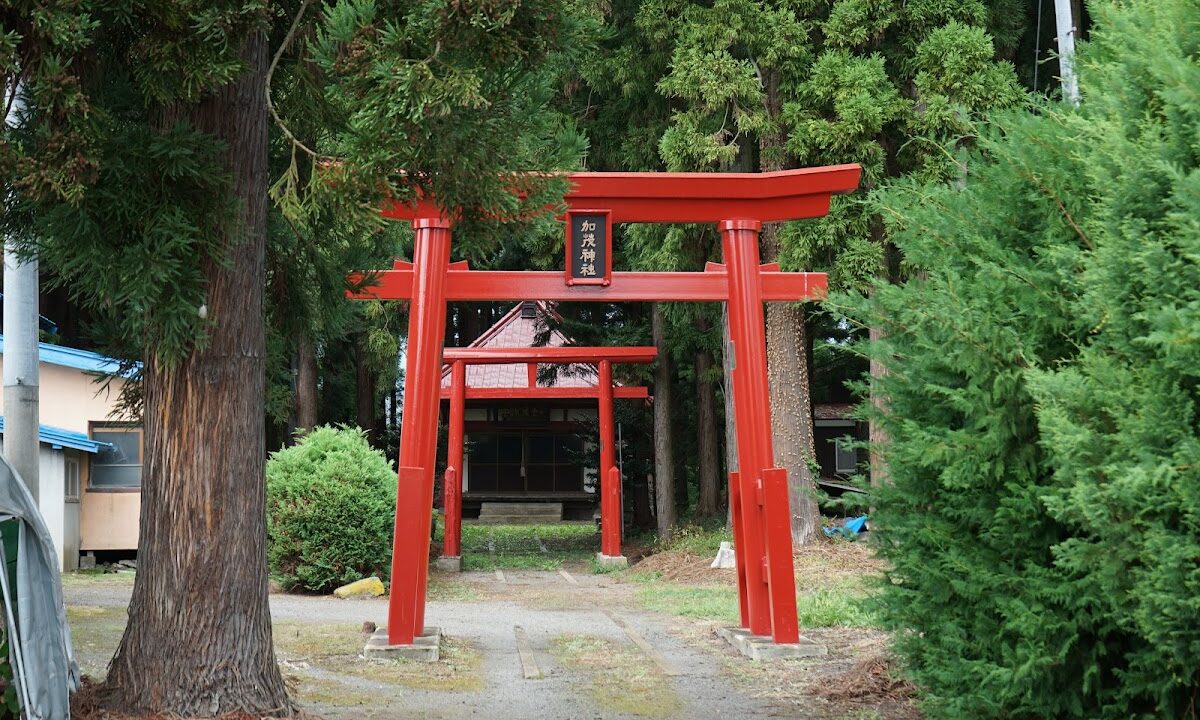
Kamo Shrine (Yamashita, Takasugi, Hirosaki City, Aomori Prefecture) Complete Guide | History, Access, and Surrounding Area Information
Kamo Shrine, located at 131 Yamashita, Takasugi, Hirosaki City, Aomori Prefecture, is a shrine situated in a quiet area at the foot of Mt. Iwaki. While there are several Kamo Shrines (or Kamo-jinja) in Hirosaki City, this article focuses specifically on the one located in Yamashita, Takasugi, providing detailed information on its historical background, geographical features, access methods, and surrounding area.
Basic Information on Kamo Shrine
Location and Postal Code
Kamo Shrine is located at 131 Yamashita, Takasugi, Hirosaki City, Aomori Prefecture. The postal code is 〒036-8302. This area occupies a corner of the Takasugi district, which spreads across the western part of Hirosaki City at the eastern foot of Mt. Iwaki.
Shrine Rank and Historical Positioning
Kamo Shrine is classified as an unranked local shrine. In the modern shrine ranking system of the Meiji era, shrines that did not hold a rank such as Kanpei-sha, Kokuhei-sha, Ken-sha, Go-sha, or Son-sha were called “Mugaku-sha” (unranked shrines). However, this does not necessarily indicate the importance of the shrine or its role in the region. Rather, they have a long history of being cherished by local residents as places of worship closely tied to the community.
Characteristics of the Deities and Beliefs
From the name Kamo Shrine, it is thought to be a shrine of the same lineage as Kamigamo Shrine (Kamo Wakeikazuchi Shrine) and Shimogamo Shrine (Kamo Mioya Shrine) in Kyoto. Generally, Kamo Shrines often enshrine deities such as Kamo Wakeikazuchi-no-kami, Kamo Taketsunumi-no-mikoto, and Tamayorihime-no-mikoto, and are worshipped as gods of thunder, agriculture, and protection against evil.
Geography and Characteristics of the Takasugi Area
Geographical Location
The Takasugi area is located in the western part of Hirosaki City, and is a region that spreads out on the eastern foothills of Mount Iwaki. Two major prefectural roads, Aomori Prefectural Road 31 (Hirosaki-Ajigasawa Line) and Aomori Prefectural Road 35 (Goshogawara-Iwaki Line), pass through the area, making it a relatively convenient location for transportation.
The area’s boundaries are bordered to Onizawa, Naraki, and Nukatsubo to the north; Okawa to the east; Maesaka and Nakabessho to the south; and Hyakusawa (the area famous for Iwaki-san Shrine) to the west. Its proximity to Hyakusawa, the center of Iwaki-san worship, suggests that the area has been influenced by mountain worship and nature worship since ancient times.
Sub-districts and Regional Structure
The Takasugi district has several sub-districts. The main sub-districts are listed below:
- Abeno
- Okada
- Onoeyama
- Kanbara
- Obata
- Gotanda
- Haseno
- Makino
- Yamashita
Yamashita, where Kamo Shrine is located, is one of these sub-districts. The name Yamashita literally means “below the mountain,” and is thought to reflect the geographical feature of being at the foot of Mount Iwaki.
Surrounding Natural Environment
The Takasugi area is located at the foot of Mount Iwaki and is blessed with a rich natural environment. Agriculture, mainly apple cultivation, is thriving in the area, and in spring, cherry blossoms and apple blossoms, and in autumn, autumn leaves and harvested apples create a beautiful landscape. The clear stream flowing from Mount Iwaki is one of the region’s distinctive features, and has been used as agricultural water since ancient times.
How to Access Kamo Shrine
Access by Car
The most convenient way to access Kamo Shrine is by car.
From Hirosaki City Center:
- Approximately 15-20 minutes from Hirosaki Station
- Take Aomori Prefectural Road 31 (Hirosaki-Ajigasawa Line) or Aomori Prefectural Road 35 (Goshogawara-Iwaki Line)
- Head towards Mount Iwaki and aim for the Yamashita settlement in the Takasugi area.
From Tohoku Expressway:
- Approximately 30 minutes from Owani-Hirosaki IC
- Take National Route 7 to the prefectural road.
Regarding parking, as it is a small shrine, there may not be a dedicated parking lot. Please be considerate of local residents when visiting.
Access by Public Transportation
If using public transportation, you will need to take a bus from Hirosaki Station, but there are limited bus routes that go directly to Yamashita in the Takasugi area. Konan Bus:
- Take a bus bound for Iwaki from Hirosaki Station Bus Terminal.
- You may need to walk from the nearest bus stop.
- We recommend checking the Konan Bus route map and timetable in advance.
Due to limited public transportation, you may want to consider using a taxi or renting a car.
Nearby Facilities and Attractions
Iwakiyama Shrine
Heading west from Kamo Shrine, you will find Iwakiyama Shrine, known as the guardian shrine of the Tsugaru region. Located in the Hyakusawa area, this shrine is a center of mountain worship with Mount Iwaki as its sacred object, and boasts numerous impressive buildings, including the gate and main hall, which are designated as important cultural properties. When visiting Kamo Shrine, be sure to extend your trip to include Iwakiyama Shrine.
Mount Iwaki
Mount Iwaki, at an altitude of 1,625 meters, is a beautiful isolated peak also known as “Tsugaru Fuji.” During the climbing season, many hikers visit the mountain, and from the summit, you can see the Tsugaru Plain, the Sea of Japan, and on clear days, even Hokkaido. You can access the mountain by car up to the 8th station via the Skyline road, and from there, you can use a lift, making it easy to enjoy the atmosphere of the high mountains.
Agriculture and Tourism in the Takasugi Area
The western part of Hirosaki City, including the Takasugi area, is a leading apple-producing region in Aomori Prefecture. During the autumn harvest season, you can enjoy apple picking at tourist apple orchards. You can also purchase fresh apples and processed products at direct sales outlets, allowing you to experience the local agricultural culture.
Shrine Culture and Kamo Shrines in Hirosaki City
Distribution of Shrines in Hirosaki City
Hirosaki City has numerous shrines, each reflecting the history and culture of the region. There are several Kamo Shrines (or Kamo-jinja) within the city; for example, there is a Kamo Shrine in Haragahira 5-chome, Hirosaki City. These shrines function as places of worship rooted in different local communities.
Religious Culture of the Tsugaru Region
In the Tsugaru region, mountain worship, centered on the worship of Mount Iwaki, has flourished since ancient times. Furthermore, in a lifestyle centered on agriculture, shrine worship, praying for abundant harvests and family safety, has also played an important role. Kamo Shrine is thought to have played a part in this regional religious culture.
Local Communities and Shrines
Small local shrines have functioned not only as religious institutions but also as centers of local communities. Through festivals and cleaning activities, they have served as places to deepen interaction among residents and strengthen community bonds. It is highly probable that Kamo Shrine played such a role for the people of the Yamashita settlement in the Takasugi district.
History and Background of the Takasugi District
Origin of the Place Name
There are several theories regarding the origin of the place name “Takasugi.” One theory is that it was named because many cedar trees grew in the high-altitude area. Another theory is that it originates from a person’s name. In any case, it is undoubtedly a place name that reflects the natural environment and historical background of this region.
Development Since the Modern Era
Since the implementation of the town and village system during the Meiji era, the Takasugi district has developed as part of Hirosaki City. Agriculture, particularly apple cultivation, has been the core of the local economy, taking advantage of its location at the foot of Mount Iwaki, and this continues to this day. Furthermore, as one of the gateways to Mount Iwaki, a popular tourist destination, tourism has also become an important industry in the region.
Precautions When Visiting a Shrine
Shrine Visit Manners
When visiting Kamo Shrine, please observe the following basic manners:
- Bow before passing through the torii gate: This shows respect when entering the sacred area.
- Avoid walking in the center of the approach: The center is considered the path of the gods.
- Purify yourself at the water basin: If there is a water basin, purify your hands and mouth before praying.
- Two bows, two claps, one bow: This is the general etiquette for visiting a shrine.
- Pray quietly: Remember that the surrounding area is a residential area.
Photography
Photography is generally permitted at shrines, but please note the following:
- Avoid photographing the interior of the main hall or the sacred object.
- Be considerate and avoid including other worshippers in your photos.
- Use flash sparingly.
- Do not enter restricted areas.
Seasonal Visit Characteristics
Spring (April-June): A beautiful season with cherry blossoms and apple blossoms. The snow on Mt. Iwaki is melting, and the fresh greenery is stunning.
Summer (July-August): The best season for climbing Mt. Iwaki. The surrounding area is covered in greenery, and you can enjoy the refreshing air.
Autumn (September-November): Apple harvest season, bringing life to the entire region. The autumn foliage is beautiful, and the autumn colors on Mt. Iwaki are particularly magnificent.
Winter (December-March): A season of heavy snow, which can make access difficult. If planning a winter visit, please check the weather and road conditions in advance.
Life and Culture of the Surrounding Area
Number of Households and Population
The Takasugi area has a relatively low population density compared to other areas in Hirosaki City. Life revolves around agriculture, and while the number of households is limited, the community ties tend to be strong.
Educational Facilities and School Districts
Students in the Takasugi district attend elementary and junior high schools based on the school districts designated by Hirosaki City. In some areas, the school district includes elementary and junior high schools in western Hirosaki City, and students may use school buses to commute.
Transportation and Living Infrastructure
The Takasugi district is traversed by Aomori Prefectural Road 31 (Hirosaki-Ajigasawa Line) and Aomori Prefectural Road 35 (Goshogawara-Iwaki Line), providing access to central Hirosaki City, the Iwaki district, and Ajigasawa. However, public transportation is limited, making private cars essential for daily life.
Kamo Shrines and the Nationwide Kamo Shrine Network
Kamo Shrines Nationwide
There are said to be approximately 179 Kamo Shrines (Kamo Jinja) throughout Japan. The head shrines are the Kamigamo Shrine (Kamo Wakeikazuchi Shrine) and Shimogamo Shrine (Kamo Mioya Shrine) in Kyoto, and shrines established by inviting deities from these shrines have spread throughout the country.
Kamo Shrines in Aomori Prefecture
Several Kamo Shrines exist within Aomori Prefecture. Besides the Kamo Shrine in Yamashita, Takasugi, Hirosaki City, there is also a Kamo Shrine in Midorikawa, Toyooka, Nakadomari Town, Kitatsugaru District. While individual investigations are needed to determine when and how these shrines were founded, they all play an important role in supporting local religious beliefs.
Characteristics of Kamo Faith
Kamo faith, while centered on the worship of the thunder god, also possesses characteristics of a god of agriculture, a god of protection against misfortune, and a god of protection against evil. It has been particularly worshipped in agricultural areas as an object of prayer for abundant harvests and stable weather. The presence of Kamo Shrines in agricultural areas like the Takasugi district of Hirosaki City aligns with these characteristics of the faith.
Reference Information and Related Links
Hirosaki City Tourist Information
When visiting Hirosaki City, we recommend visiting the following tourist spots in addition to Kamo Shrine:
- Hirosaki Castle: One of Japan’s leading cherry blossom viewing spots
- Fujita Memorial Garden: A beautiful Japanese garden
- Tsugaru Clan Neputa Village: A facility where you can experience Tsugaru culture
- Hirosaki Apple Park: A facility where you can learn about apples
Local Festivals and Events
Hirosaki City hosts various festivals and events throughout the year:
- Hirosaki Cherry Blossom Festival (Late April to Early May)
- Hirosaki Neputa Festival (August 1st to 7th)
- Iwaki-san Pilgrimage (Lunar Calendar August 1st)
- Hirosaki Castle Chrysanthemum and Autumn Leaves Festival (Late October to Early November)
Kamo Shrine may also hold its own local festivals, but it is recommended to check with locals for details.
Summary
Kamo Shrine, located at 131 Yamashita, Takasugi, Hirosaki City, Aomori Prefecture, is a community-oriented shrine situated in a quiet area at the foot of Mt. Iwaki. As part of the nationwide Kamo Shrine network, it has a history of supporting local faith.
The surrounding area is rich in nature and agricultural, primarily focused on apple cultivation, and has also been influenced by the Iwaki-san faith. It is relatively easy to access, about 15-20 minutes by car from the center of Hirosaki City, and can be visited in conjunction with sightseeing at Iwaki-san Shrine and Mt. Iwaki.
Although it is a small local shrine, it holds the marks of many years of faith and life of the local people. When visiting Hirosaki City, why not visit not only the famous tourist spots but also these community-rooted shrines? In the tranquil temple grounds, you can reflect on the history, culture, and lives of the people of Tsugaru.