Kasamori Kannon-do (Chiba Prefecture) Complete Guide | Japan’s Only Four-Sided Suspended Structure, History, and Access Information
Located in Chonan-machi, Chosei-gun, Chiba Prefecture, Kasamori Kannon-do (Kasamori-dera Kannon-do) is an ancient Tendai sect temple situated in the central part of the Boso Peninsula. The Kannon-do, built on a massive rock, is known for its unique architectural style, the only one of its kind in Japan, known as “Shiho-kakezukuri” (four-sided suspended construction). As a nationally designated Important Cultural Property, it attracts many worshippers and architecture enthusiasts. Also known as the 31st temple of the Bando Thirty-Three Kannon Pilgrimage, this temple, with its mystical space woven from history and nature, is a representative tourist spot in Chiba Prefecture.
Overview and History of Kasamori Kannon-do
Founding and Dengyo Daishi Saicho
The history of Kasamori-dera is ancient, dating back to Enryaku 3 (784). The temple’s founding is attributed to Dengyo Daishi Saicho, who carved an eleven-faced Kannon Bodhisattva from a sacred camphor tree and enshrined it on the mountaintop. Saicho was the founder of the Tendai sect, establishing Enryaku-ji Temple on Mount Hiei, and played a crucial role in the history of Japanese Buddhism. It is said that he chose this location because he was drawn to its sacred natural environment and the mystical power of the massive rocks.
Imperial Prayer by Emperor Go-Ichijo and Construction of the Kannon Hall
The current Kannon Hall is said to have been built in 1028 (Chogen 1) by imperial prayer of Emperor Go-Ichijo. An imperial prayer signifies construction by imperial order, indicating the high regard in which the Kasamori Kannon Hall was held at the time. However, during repairs in 1960 (Showa 35), inscriptions dating from the Tensho and Bunroku periods were discovered, revealing that the existing building dates back to the Momoyama period (late 16th century).
Nevertheless, this building boasts a history of over 400 years, was designated a “National Treasure” in 1908 (Meiji 41), and later became a “Nationally Designated Important Cultural Property” with the enactment of the Cultural Properties Protection Law in 1950 (Showa 25).
The 31st Temple of the Bando Thirty-Three Kannon Pilgrimage
Kasamori-ji Temple, as the 31st temple of the Bando Thirty-Three Kannon Pilgrimage, has long been visited by many pilgrims. The Bando Thirty-Three Kannon Pilgrimage is a pilgrimage route that visits 33 temples dedicated to Kannon Bodhisattva, mainly in the Kanto region, and is said to have been established by Minamoto no Yoritomo during the Heian period. The principal image, the Eleven-Faced Kannon Bodhisattva, is revered as a Kannon who relieves people’s suffering and grants their wishes.
What is Japan’s Only Four-Sided Suspended Construction?
Structural Characteristics of the Four-Sided Suspended Construction
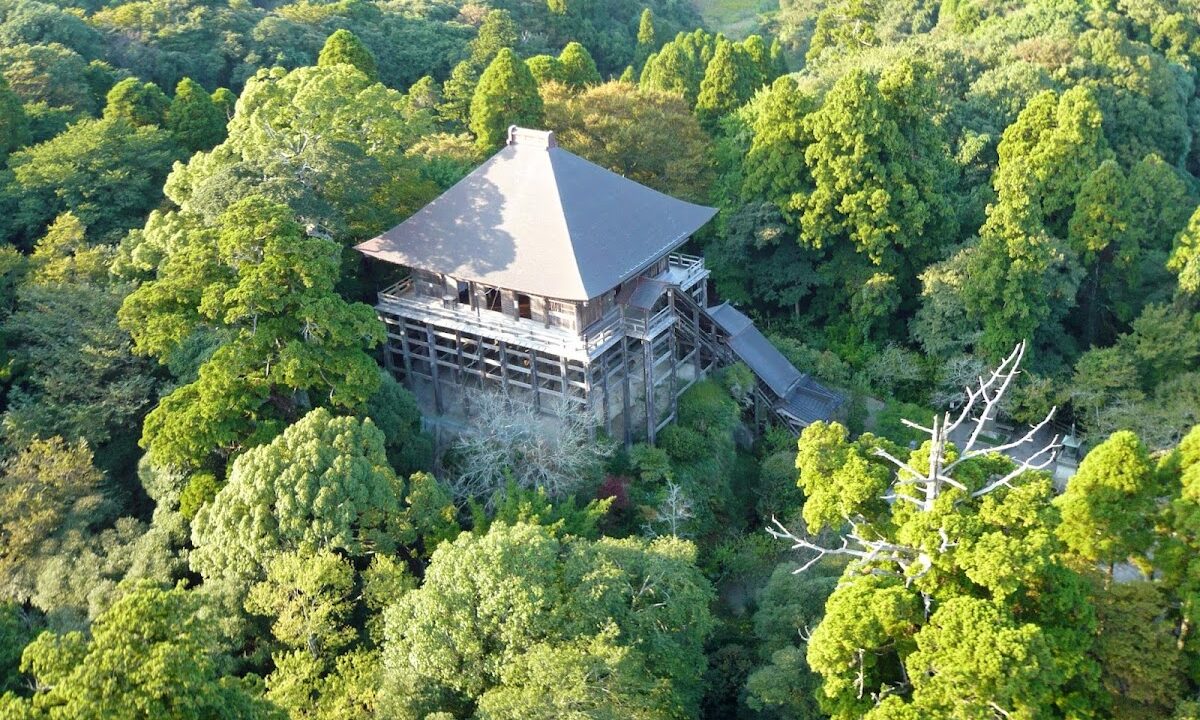
The most distinctive feature of Kasamori Kannon-do is its “four-sided suspended construction,” a unique architectural style in Japan. The term “Shiho-kakezukuri” refers to a construction method where a building is erected on a massive rock at the mountaintop, supported on all four sides by long pillars. While the “kakezukuri” (suspended construction) of Kiyomizu-dera Temple’s stage is known for supporting only one side with pillars, the Kasamori Kannon-do Hall requires more complex and advanced techniques to support all four sides.
The Kannon-do Hall is supported by 61 pillars, and these wooden pillars have supported the building for hundreds of years. Climbing the stairs and walking along the corridors, one is overwhelmed by the magnificent sight of dozens of pillars intertwined. The irregular arrangement of the pillars conforms to the terrain, creating a unique landscape that integrates with the natural rock.
Architectural Techniques and Preservation
The Kasamori Kannon-do Hall, a culmination of Momoyama period architectural techniques, possesses both the durability and beauty of a wooden structure. Regular repairs and preservation work maintain its value as an Important Cultural Property. During a major repair in 1960 (Showa 35), a structural survey was conducted, determining the building’s construction date and carrying out reinforcement work.
The floor of the Kannon Hall is designed as a corridor, allowing visitors to walk around the entire perimeter. From this corridor, you can enjoy magnificent views of the Kasamori-dera Natural Forest and the southern Boso Peninsula. Especially on clear days, you can see the surrounding mountains and distant landscapes, truly making it an experience worthy of being called a “temple in the sky.”
Kasamori-dera Natural Forest and Highlights of the Temple Grounds
Natural Forest Designated as a Natural Monument
The area surrounding Kasamori-dera Temple is designated as a natural monument of Chiba Prefecture, known as the “Kasamori-dera Natural Forest.” Evergreen broad-leaved trees such as Castanopsis sieboldii, Machilus thunbergii, and fir grow abundantly, preserving a natural environment close to a primeval forest. Because this forest has been protected as an object of worship since ancient times, precious natural areas untouched by human hands remain.
Walking along the approach to the temple, you can feel a mystical atmosphere surrounded by giant trees. The Kannon Hall, built as if blending with the forest, embodies the beauty of Japanese architecture, where nature and man-made structures harmonize. The natural forest, which displays different expressions depending on the season, offers new discoveries with each visit: the fresh green of spring, the deep green of summer, the vibrant autumn foliage, and the tranquility of winter.
Approach and Stairs
The approach to Kasamori Kannon is part of the Metropolitan Area Nature Trail and is a popular course for hikers and walkers. Upon entering the temple grounds, a staircase leading to the Kannon Hall at the mountaintop appears. While some parts of the staircase are steep, it’s possible to take breaks along the way.
As you climb the stairs, the view gradually opens up, and the surrounding scenery changes, creating a pilgrimage-like experience of moving from the secular world to a sacred place. Small shrines and stone Buddha statues are placed along the staircase, watching over the worshippers.
Other Highlights on the Temple Grounds
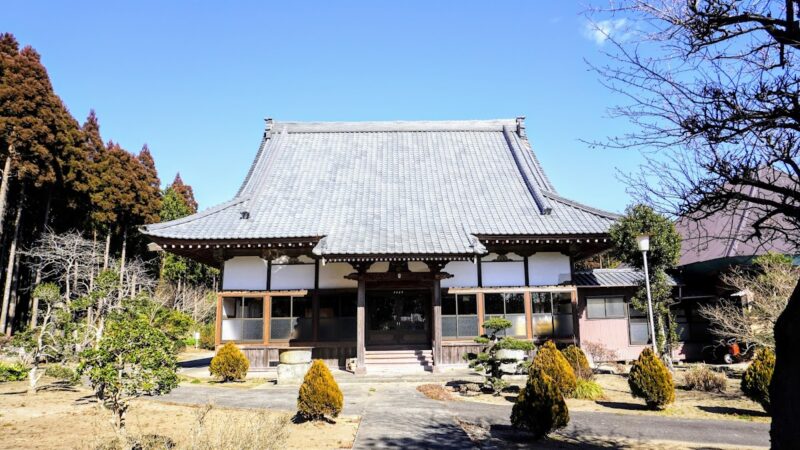
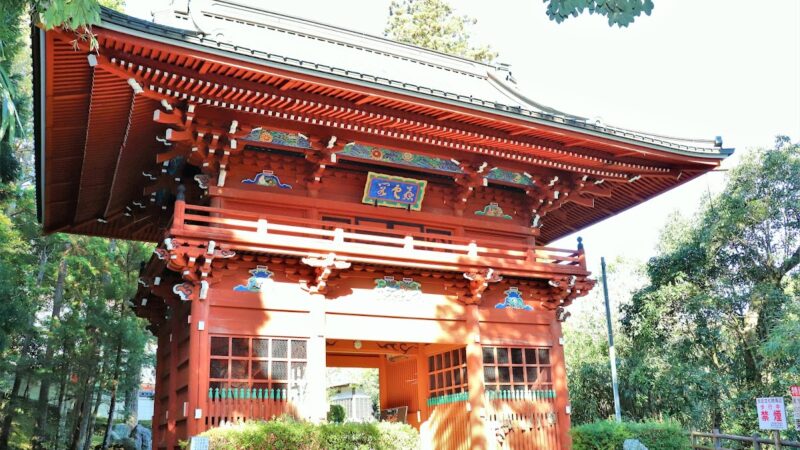
Besides the Kannon Hall, there are several other points of interest on the grounds of Kasamori Temple. Upon passing through the Niomon Gate, Nio statues are positioned on either side, welcoming worshippers. Furthermore, the temple grounds also house a statue of Kannon known as the “Child-Granting Kannon,” attracting visitors praying for children.
After purifying oneself at the water basin, visitors can enjoy the seasonal flowers along the path to the main hall. In spring, plum and cherry blossoms bloom in profusion, making it a famous spot for “spring flowers (plum and cherry blossoms).” The tranquil atmosphere of the temple grounds, combined with the seasonal beauty of nature, is another charm of Kasamori-ji Temple.
Kasamori Kannon as a Power Spot
The Sunrise Ley Line
Kasamori Kannon is also attracting attention as a power spot located on the sunrise ley line. A ley line is a configuration where sacred sites, shrines, and temples are aligned in a straight line, and there is a theory that this was intentionally arranged since ancient times. Kasamori Kannon is said to be aligned with other sacred sites in the direction of the sunrise on the spring and autumn equinoxes, and is considered a place where special energy gathers.
Kannon Worship and Benefits
Kasamori Kannon, whose principal deity is the Eleven-Faced Kannon Bodhisattva, is believed to offer various benefits. Kannon Bodhisattva is a symbol of compassion and is worshipped as a being who hears people’s wishes and relieves them from suffering. Many visitors come to pray for family safety, recovery from illness, safe childbirth, and academic success, and there is a constant stream of pilgrims seeking Goshuin (temple stamps).
The location of the Kannon Hall, built on a large rock, is also considered to have spiritual significance as a place where the energy of the earth gathers. Many visitors say that by calming their minds in the tranquil environment surrounded by forest and offering prayers to Kannon, they can receive mental and physical refreshment and healing.
Access and Visiting Information
Access by Public Transportation
Kasamori Kannon can be accessed by both public transportation and car.
By Train and Bus:
- Take the Kominato Bus bound for Kazusa-Ushiku Station from JR Sotobo Line “Mobara Station”
- Get off at the “Kasamori” bus stop (approximately 35 minutes)
- The entrance to Kasamori-ji Temple is approximately a 5-minute walk from the bus stop.
Since bus services are limited, it is recommended to check the timetable in advance. Mobara Station is approximately 1 hour from Tokyo Station by express train and approximately 1 hour 30 minutes by local train.
Access by Car
By Car:
- Approximately 15 minutes from Ken-O Expressway “Mobara-Chonan IC”
- Parking: Free parking available (approximately 50 spaces for regular cars)
Located in the central part of Chiba Prefecture, it is relatively easy to access from the Tokyo area. For car navigation, please enter “Kasamori Kannon” or the address “302 Kasamori, Chonan-machi, Chosei-gun, Chiba Prefecture”.
Visiting Hours and Admission Fee
Visiting Hours:
- April to September: 8:00 AM to 4:30 PM
- October to March: 8:00 AM to 4:00 PM
- *Access to the Kannon Hall may be suspended in case of rain.
Admission Fee:
- Adults: 300 yen
- Junior high school students and younger: Free
Notes:
- Photography is prohibited inside the Kannon Hall.
- The stairs are steep, so comfortable shoes are recommended.
- The ground can be slippery in rainy weather, so extra caution is advised.
Surrounding Sightseeing and Model Itinerary
Tourist Spots in Chonan Town
When visiting Kasamori Kannon, combining your visit with sightseeing spots in Chonan Town and the surrounding area will make your trip even more fulfilling.
Highlights in Chonan Town:
- Kumano no Shimizu: A spring selected as one of the “100 Famous Waters of the Heisei Era” by the Ministry of the Environment.
- Nomikane Park: A park known for its cherry blossoms.
- Michi-no-Eki Nagara: A roadside station where you can purchase local agricultural products and specialty goods.
Recommended Model Course
Example Day Trip Course:
- Morning: Arrive at Mobara Station, take a bus to Kasamori Kannon.
- 10:00-12:00: Visit Kasamori Kannon, stroll through the natural forest.
- 12:00-13:00: Lunch in the surrounding area (enjoy Boso’s local cuisine at a local restaurant).
- 13:30-15:00: Visit Kumano no Shimizu, visit Michi-no-Eki Nagara.
- 15:30: Return to Mobara Station.
Hiking Course:
A hiking course using the Metropolitan Area Nature Trail is also recommended. Starting from Kasamori Kannon, this course through the nature-rich Boso Hills is suitable for beginners. ### Combining with the Minami-Boso Area
If you’re visiting by car, you can combine your visit with sightseeing in the Minami-Boso area. It offers good access to representative Chiba Prefecture tourist spots such as Yoro Valley, Kamogawa Sea World, and Mother Farm.
Enjoying the Temple by Season
Spring at Kasamori Kannon
Spring is the most vibrant season at Kasamori Kannon. The plum and cherry blossoms in the temple grounds are in full bloom, attracting many visitors who come to enjoy the “spring flowers (plum and cherry blossoms).” The best time to see the cherry blossoms is from late March to early April, and the contrast between the Kannon Hall and the blossoms is breathtaking. A stroll through the lush green forest in the spring sunshine is also very pleasant.
Summer at Kasamori Kannon
Summer is the time when the Kasamori Temple forest, enveloped in deep green, is at its most vibrant. The trees are lush, the forest is cool, and it’s a comfortable summer retreat. However, thunderstorms are common in summer, so it’s recommended to check the weather forecast before visiting. Visiting early in the morning is especially refreshing, and the way the morning light shines through the forest is mystical.
Kasamori Kannon in Autumn
Autumn is a beautiful season for autumn foliage. The trees in the natural forest change color, and the area around the Kannon Hall is adorned with reds and yellows. The best time to see the autumn leaves is from late October to mid-November, and the view of the foliage spreading out below is magnificent. On some days, you can even see the distant mountains in the clear autumn air.
Kasamori Kannon in Winter
Winter is a season when there are fewer visitors, allowing for a peaceful and tranquil visit. The natural forest, with its many evergreen trees, remains green even in winter, presenting a calm landscape. The air is clear, so the views are also excellent. However, since visiting hours are shorter, it is recommended to visit earlier in the day.
Cultural Value of Kasamori Kannon
Importance in Architectural History
Kasamori Kannon Hall occupies an extremely important position in the history of Japanese architecture. The unique architectural style of the Shiho-kakezukuri (four-sided cantilevered construction) is a culmination of the ingenuity of Japanese architecture that takes advantage of the terrain, representing an unparalleled technical achievement. This building, born from the pursuit of the limits of wooden construction, is a valuable cultural heritage that demonstrates the high level of Japanese carpentry skill.
Inheritance of Faith and Culture
With a history spanning over 1200 years, Kasamori-ji Temple has played a crucial role in the inheritance of Japanese religious culture as a center of Kannon worship and a pilgrimage site for the 33 Kannon temples of Bando. The continued visits of numerous pilgrims seeking Goshuin (temple stamps) demonstrate that the traditional faith and culture continues to thrive in the modern age.
Connection to Local Culture
Kasamori Kannon is a symbol of Chonan Town and the core of the region’s identity. The Kannon Hall and natural forest, carefully preserved by local people, are a source of pride for the region’s culture and contribute to the local economy as a tourist resource. The religious services and events held throughout the year also play a role in strengthening the bonds of the local community.
Manners and Precautions for Visiting the Temple
Basic Manners for Visiting the Temple
When visiting Kasamori Kannon, please observe the following manners:
- Clothing: Be mindful that this is a sacred place and avoid overly revealing clothing.
- Photography: Photography is prohibited inside the Kannon Hall. When taking photos on the temple grounds, please be considerate of other visitors.
- Quiet: Refrain from loud conversations on the temple grounds and pray quietly.
- Litter: Always take your trash with you.
- Nature Conservation: Be careful not to damage the natural forest, which is a natural monument.
Safety Precautions
- Stairs: The stairs leading to the Kannon Hall have steep sections. Use the handrail and climb carefully.
- Rainy Weather: The ground can be slippery on rainy days. Avoid visiting in bad weather and it is recommended to visit on a day with good weather.
- Physical Condition Management: Climbing and descending stairs requires physical strength. Take breaks as needed while visiting the temple, according to your physical condition.
- Elderly and Children: Special care is required when visiting with elderly people or young children.
Summary: The Charm of Kasamori Kannon-do
Kasamori Kannon-do in Chonan Town, Chiba Prefecture, is a unique place that combines Japan’s only four-sided cantilevered architectural style, over 1200 years of history, and a rich natural environment, offering an experience unlike any other. Its value as a nationally designated important cultural property, its status as a pilgrimage site for the Bando Thirty-Three Kannon Pilgrimage, and its status as a representative power spot on the Boso Peninsula attract many visitors.
The 61 pillars supporting the Kannon-do built on a giant rock, the natural forest designated as a natural monument surrounding it, the panoramic view of southern Boso below, and the spiritual peace felt in the tranquil grounds—all of these harmonize to create the unique charm of Kasamori Kannon.
Its easy accessibility, allowing for a day trip from Tokyo, is another attractive feature. Kasamori Kannon-do is a place worth visiting for history buffs, architecture enthusiasts, nature lovers, and those seeking spiritual healing. When you visit Chiba Prefecture, be sure to visit this “Temple in the Sky” and experience its magnificent appearance and mystical atmosphere.