Katori Shrine Complete Guide | A Thorough Explanation of History, Deities, Highlights, and How to Visit
Katori Shrine, located in Katori City, Chiba Prefecture, is the head shrine of approximately 400 Katori shrines nationwide, dedicated to Futsunushi-no-Okami, a deity appearing in Japanese mythology. Founded in 643 BC, it boasts a history of over 2600 years, making it one of the oldest shrines in eastern Japan. It has long been revered as a god of war and military prowess.
This article provides a comprehensive explanation of Katori Shrine’s charm, from its historical background and the origin of its deities to its designated Important Cultural Properties, highlights within the grounds, the Shikinen Shinkosai festival held every 12 years, and even information on how to visit and access.
History and Origins of Katori Shrine
Founding and Ancient Beliefs
Katori Shrine is said to have been founded in the 18th year of Emperor Jimmu’s reign (643 BC). According to records such as the Nihon Shoki and Kojiki, the origin of Katori Shrine is said to be the descent of Futsunushi-no-Okami during the pacification of the eastern provinces, and it has been revered as a guardian deity of the eastern provinces since ancient times.
The Engishiki Jinmyocho lists it as a Myojin Taisha (a major shrine), and records show that it already received special reverence from the imperial court during the Heian period. Furthermore, along with Ise Grand Shrine and Kashima Grand Shrine, it is one of the few shrines in Japan granted the title of “Jingu” (Grand Shrine). These three shrines together are called the “Three Shrines,” and it has a particularly deep relationship with Kashima Grand Shrine.
Reverence from the Samurai Government
From the medieval period onward, Katori Shrine received fervent devotion from the samurai government as a god of war. Records show that Minamoto no Yoritomo constructed shrine buildings, and warlords such as the Ashikaga and Chiba clans frequently visited the shrine.
During the Edo period, it received generous protection from the Tokugawa shogunate, and many of the current major buildings were constructed during the time of Tokugawa Tsunayoshi, the fifth shogun. It is said that Tokugawa Mitsukuni (Mito Kōmon) also visited the shrine and planted cherry trees on the grounds. These cherry trees are still affectionately known as “Kōmon Cherry Trees.”
Katori Shrine in the Modern Era
After the Meiji Restoration, Katori Shrine was elevated to the rank of Kanpei Taisha (Grand Imperial Shrine), establishing itself as an important national shrine. It is particularly known that during the Russo-Japanese War, Admiral Tōgō Heihachirō visited to pray for victory and inscribed the plaque on the main gate.
Currently, as a special shrine of the Association of Shinto Shrines and an imperial shrine, it maintains its ancient status and welcomes many worshippers throughout the year. It is also deeply revered by those involved in martial arts, and many martial artists such as kendo and judo practitioners can be seen visiting to pray for victory.
About the Deity Enshrined: Futsunushi-no-Okami
The Divine Nature of Futsunushi-no-Okami
Futsunushi-no-Okami, the enshrined deity of Katori Shrine, is known in Japanese mythology as a god of war and swords. The name “Futsu” represents the sound of cutting with a sword, symbolizing military power and strength.
In the “Myth of the Transfer of the Land” in the Kojiki and Nihon Shoki, Futsunushi-no-Okami, along with Takemikazuchi-no-Okami, the enshrined deity of Kashima Shrine, is depicted as a god who descended to Izumo to Ōkuninushi-no-Mikoto and successfully negotiated the transfer of the land. This myth is the reason why the two shrines are revered as a pair.
The Pacification of the Eastern Provinces and Katori Shrine
After the transfer of the land, Futsunushi-no-Okami is said to have pacified the eastern provinces. During the pacification of the eastern provinces, Futsunushi-no-Okami descended to the land of Katori and ruled the region from this base, which is considered the origin of the founding of Katori Shrine.
The Shikinen Shinkosai festival, held once every 12 years in the Year of the Horse, is a festival that recreates the pacification of the eastern provinces and is a valuable event that conveys the great achievements of Futsunushi-no-Okami to the present day.
Divine Virtues and Faith
The divine virtues of Futsunushi-no-Okami are wide-ranging. In addition to prayers for victory and success as a god of war, he is worshipped as a god who grants various wishes, including industrial development, family safety, traffic safety, and protection from evil.
He is especially known as a god who is powerful in matters of competition, and people aiming for “victory” in various fields, such as athletes, students taking exams, and business people, visit the shrine. Furthermore, as the god of swords, he is revered by sword enthusiasts and swordsmiths.
Highlights and Important Cultural Properties within the Shrine Grounds
Tower Gate (Important Cultural Property)
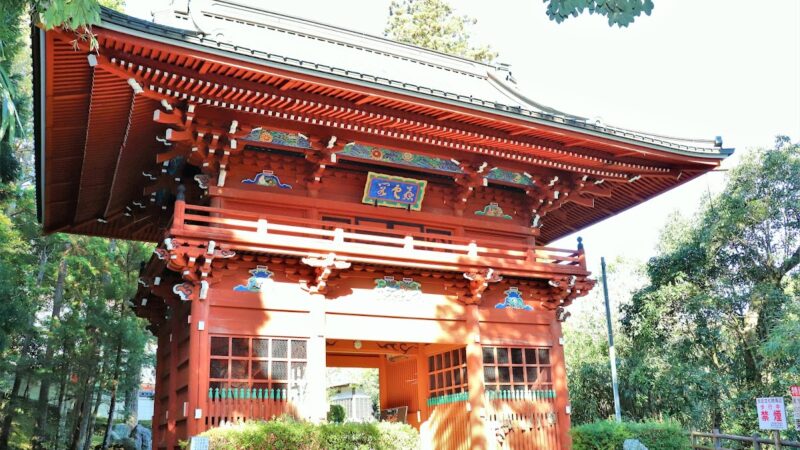
The tower gate, a symbol of Katori Shrine, is a structure built in 1700 by the Tokugawa Shogunate and is designated as a National Important Cultural Property. This striking two-story gate, painted in a vibrant vermilion, stands approximately 7.5 meters tall.
The most distinctive feature of the tower gate is the “Katori Shrine” plaque displayed on the upper floor. This plaque was inscribed by Admiral Togo Heihachiro of the Meiji era and was dedicated when he visited to pray for victory in the Russo-Japanese War. Togo Heihachiro deeply revered Katori Shrine, and this plaque symbolizes the dignity of Katori Shrine as a god of war.
Main Hall (Important Cultural Property)
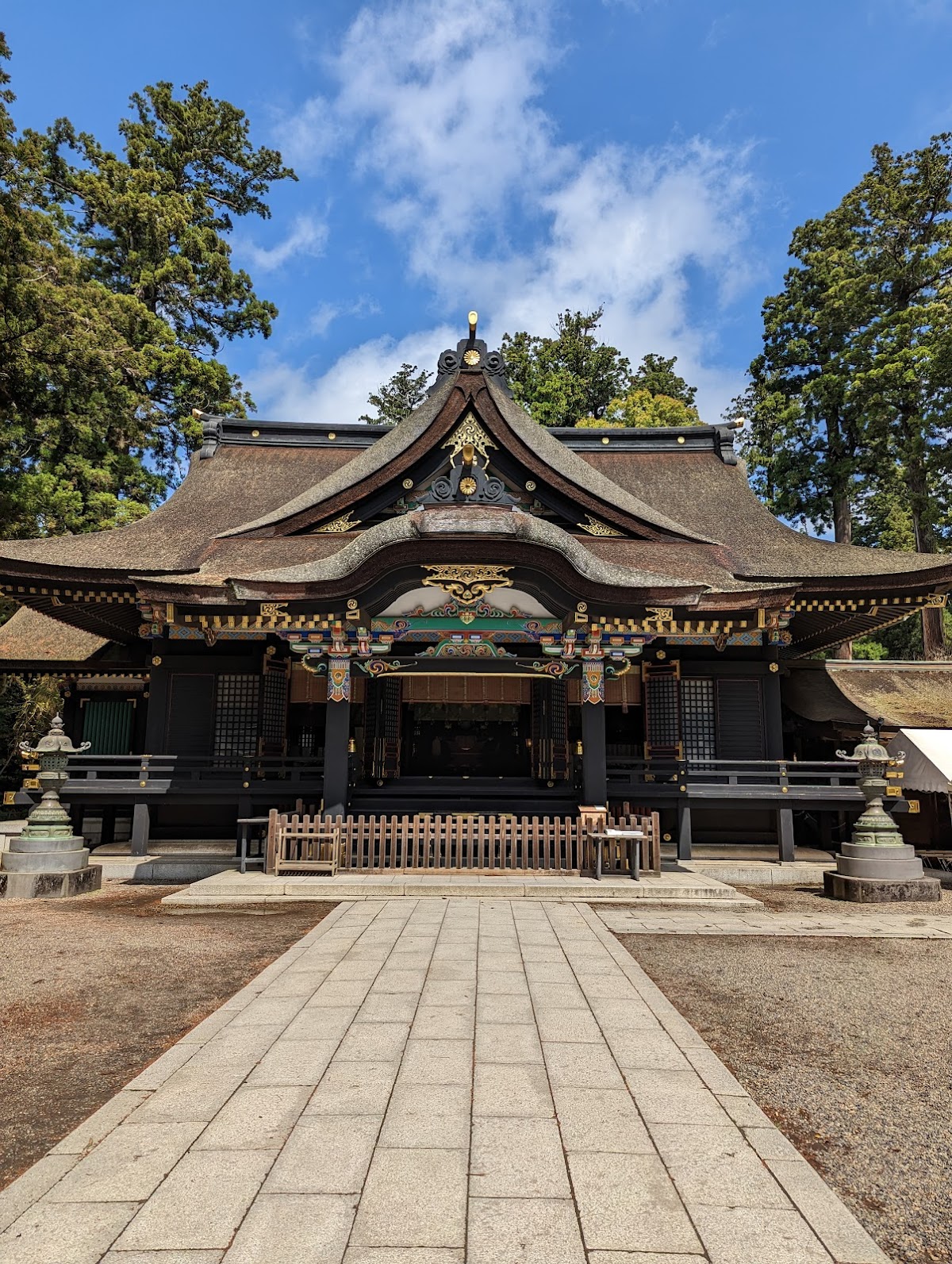
The main hall was built in 1700 and is a beautiful black lacquered building with a cypress bark roof. The main hall is built in the Sanmasha Nagare-zukuri architectural style, featuring intricate carvings in every detail. It is designated as an Important Cultural Property, a masterpiece showcasing the pinnacle of Edo period architectural technology.
The main hall is surrounded by a sacred fence, and while viewing is usually from the outside, its majestic, predominantly black appearance evokes a sacred atmosphere even from afar. Visiting in the tranquil early morning hours allows one to experience the pure air of the sacred grounds.
Worship Hall/Prayer Hall
The current prayer hall is a renovated version of the former worship hall. Visitors can receive prayers from Shinto priests here. The interior is adorned with various offerings representing the divine virtues of Futsunushi-no-Okami, many of which come from martial arts practitioners.
Inner Shrine
Located deep within the forest behind the main hall, the inner shrine enshrines the Aramitama (fierce spirit) of Futsunushi-no-Okami. Aramitama represents the fierce and powerful aspect of the deity, and is believed to possess particularly powerful divine virtues.
The path leading to the inner shrine is surrounded by centuries-old cedar trees, creating a mystical atmosphere. Visiting the inner shrine after paying respects at the main shrine offers a deeper pilgrimage experience.
The Keystone
Within the grounds of Katori Shrine lies the “Keystone,” a legendary stone said to quell earthquakes. Though only a small portion of it protrudes above ground, it extends deep underground and is said to hold down the head of a giant catfish that causes earthquakes.
Kashima Shrine also has a similar keystone, with legend stating that the Kashima keystone holds down the catfish’s head, while the Katori keystone holds down its tail. This keystone is concave, forming a pair with the convex keystone at Kashima Shrine.
The Sacred Tree and the Kōmon Cherry Tree
Within the shrine grounds stands a gigantic sacred cedar tree, over 1,000 years old. The trunk of this sacred tree is approximately 7 meters in circumference and has watched over Katori Shrine for many years. Many worshippers offer their prayers to this tree.
The “Komon Cherry Tree,” said to have been planted by Tokugawa Mitsukuni, is another highlight of the shrine grounds. In spring, it blooms with beautiful flowers, delighting visitors.
Treasure Hall
The Katori Shrine Treasure Hall houses and displays valuable cultural artifacts, including national treasures and important cultural properties. Visitors can see items that tell the history of Katori Shrine, such as the Sea Beast and Grape Mirror (national treasure), ancient documents, swords, and armor.
The collection of swords, in particular, is extensive, making it a fitting exhibit for a shrine dedicated to the god of swords.
The Shikinen Shinkosai Festival (held once every 12 years)
What is the Shikinen Shinkosai Festival?
The Katori Shrine Shikinen Shinkosai Festival is the largest festival of the shrine, held once every 12 years in the Year of the Horse. This festival recreates the scene of Futsunushi-no-Okami’s pacification of the eastern provinces, and is characterized by a magnificent procession involving approximately 3,000 people.
Most recently scheduled for 2026 (Reiwa 8), the previous festival was held grandly in 2014 (Heisei 26).
The Divine Procession
In the Divine Procession, the portable shrine (mikoshi) is at the center, surrounded by Shinto priests, shrine maidens, parishioners, and a procession of warriors, parading from Katori Shrine through the town of Sawara. The procession stretches for several kilometers, creating a truly awe-inspiring spectacle.
The warrior procession includes samurai in armor, archers with bows and arrows, and flag bearers, vividly reminiscent of the pacification of the eastern provinces. Kagura and gagaku (ancient court music) performances are also held, enveloping the entire town in a traditional and elegant atmosphere.
Relationship with the Town of Sawara
The Shinkosai procession travels from Katori Shrine to Sawara, a town known for its waterways. Sawara was a thriving commercial city during the Edo period, thanks to its water transport on the Tone River, and its Edo-period charm is still preserved today.
During the Shinkosai, the entire town of Sawara is immersed in the festival atmosphere, and the streets are packed with spectators. The ancient and elegant procession, unfolding against the backdrop of the historic townscape, is truly like a historical picture scroll.
Annual Events and Festivals
Major Annual Events
In addition to the Shikinen Shinkosai, Katori Shrine holds various festivals and events throughout the year.
New Year’s Day Festival (January 1st): A festival celebrating the New Year, attracting many first-time visitors.
Kinensai (February 17th): A major spring festival praying for a bountiful harvest.
Annual Festival (April 14th): The most important festival at Katori Shrine, attended by an imperial envoy.
Divine Procession Festival (April 15th): An annual procession festival, smaller in scale than the Shikinen Divine Procession Festival, but still featuring a portable shrine procession.
Niiname-sai Festival (November 23rd): A major autumn festival expressing gratitude for the harvest.
Martial Arts Dedications
At Katori Shrine, which enshrines the god of war, martial arts dedications such as kendo and kyudo are performed throughout the year. Especially during the annual festival, martial artists from all over Japan gather to perform demonstrations before the shrine.
Relationship between Katori Shrine and Kashima Shrine
The Two Shrines as Pairs
Katori Shrine and Kashima Shrine in Ibaraki Prefecture have been considered a pair since ancient times, often referred to as “Kashima and Katori.” The deities enshrined at both shrines, Futsunushi-no-Okami and Takemikazuchi-no-Okami, are gods who played a significant role in the myth of the transfer of the land and have been worshipped together as guardian deities of eastern Japan.
Geographically, the two shrines are situated facing each other across the Tone River, and in ancient times, they are believed to have functioned as “guardian deities of eastern Japan,” protecting the entrance to the eastern provinces.
The Custom of Visiting Both Shrines
Since ancient times, there has been a custom of “visiting both shrines,” or “ryōmairi,” to worship at both Katori Shrine and Kashima Shrine. There is a legend that visiting only one shrine will halve the blessings received, so many worshippers visit both shrines.
Even today, pilgrimage tours connecting the two shrines are popular, with many courses designed to visit both shrines in a single day.
The Legend of the Keystone
As mentioned above, each shrine has a keystone, and there is a legend that they jointly hold down the giant catfish that causes earthquakes. The Kashima keystone is convex, holding down the head, while the Katori keystone is concave, holding down the tail. These paired keystones are believed to calm earthquakes in eastern Japan.
Katori Shrine as a Power Spot
Source of Powerful Energy
Katori Shrine is known as one of Japan’s leading power spots. It possesses a powerful energy characteristic of shrines dedicated to war gods, and is particularly popular as a power spot for enhancing “luck in competitions,” “career luck,” and “decisiveness.”
The entire shrine grounds are enveloped in a sacred atmosphere, and many report feeling a strong energy, especially around the main hall, the inner shrine, and the keystones.
Power of the Sacred Tree
The sacred tree, over 1,000 years old, is believed to emit life force energy accumulated over many years. Many visitors touch the tree or meditate nearby.
Boosting Luck in Competitions and Career Success
Due to the divine virtues of Futsunushi-no-Okami, the god of war and victory, Katori Shrine is particularly popular among those seeking success in competitions and careers. Athletes, business owners, students, and people aiming for “victory” in various fields visit the shrine.
How to Worship and Manners
Basic Worship Etiquette
Worship at Katori Shrine follows these steps:
- Bow at the Torii Gate: Before entering the shrine grounds, bow at the torii gate.
- Purify at the Water Basin: Purify your hands and mouth at the water basin.
- Walk the Path: The center of the path is the path of the gods, so walk along the sides.
- Worship at the Main Hall: Worship using the two bows, two claps, and one bow ritual.
- Visit the Inner Shrine: If time permits, also visit the inner shrine.
Goshuin (Shrine Seal)
At Katori Shrine, you can receive a goshuin as proof of your visit. The goshuin office is located in the shrine office, and the fee is usually 300 yen. Original goshuin notebooks are also sold and are popular as souvenirs of your visit.
Amulets and Souvenirs
Katori Shrine offers a variety of amulets and souvenirs. Particularly popular are amulets related to the god of war, such as the Kachimamori (victory amulet) and Budomamori (martial arts amulet). Traffic safety amulets and amulets for warding off evil are also popular.
Nearby Tourist Attractions
Sawara Townscape
Sawara, located about 10 minutes by car from Katori Shrine, is a waterside town that retains the atmosphere of the Edo period. Merchant houses dating back to the Edo period line the Ono River, and it has been designated as an Important Preservation District for Groups of Traditional Buildings.
The Koedo Sawara boat tour allows you to view the townscape from a small boat on the river, offering a charming and atmospheric experience.
Ino Tadataka Memorial Museum
Ino Tadataka, who surveyed all of Japan and created a precise map of the country, was from Sawara. At the Ino Tadataka Memorial Museum, you can see his achievements and the surveying instruments he used.
Suigo Sawara Float Museum
This facility displays the magnificent floats used in the Sawara Grand Festival. You can learn about Sawara’s festival culture.
Michi-no-Eki/Kawa-no-Eki Mizu-no-Sato Sawara
This roadside station along the Tone River offers fresh local produce and specialty products. The restaurant serves dishes made with local ingredients.
Access Information
Access by Train
Using the JR Narita Line
- Approximately 30 minutes from JR Narita Station on the Narita Line, alight at “Sawara Station”
- Approximately 10 minutes by taxi or 15 minutes by bus from Sawara Station
Using the JR Kashima Line
- Approximately 2 hours from JR Tokyo Station via the Sobu Line and Narita Line to Sawara Station
Access by Car
Using the Higashi-Kanto Expressway
- Approximately 5 minutes from Sawara-Katori IC
- Approximately 15 minutes from Daiei IC
Using the Ken-O Expressway
- Approximately 10 minutes from Kanzaki IC
Parking
Katori Shrine has a free parking lot for visitors. While there is usually ample space, it can become full during peak seasons such as New Year’s Day and festivals, so early arrival is recommended.
Best Time and Season for Visiting
Recommended Season
Katori Shrine boasts beauty throughout the seasons, but the following times are particularly recommended:
Spring (March-May): The cherry blossom season, with the Kōmon cherry trees and other cherry trees in the grounds in full bloom. The shrine is especially lively during the April festival.
Autumn (October-November): The autumn leaves are beautiful, and the trees in the grounds change color. The weather is pleasant, making it an ideal season for visiting.
New Year’s Visit (January 1st-3rd): While crowded with many visitors, you can enjoy the refreshing atmosphere of the New Year.
Recommended Time of Day
Visiting early in the morning (immediately after opening) is recommended. There are fewer people, allowing for a peaceful and tranquil visit. The cool morning hours are especially comfortable during the summer.
Basic Information about Katori Shrine
Location: 1697-1 Katori, Katori City, Chiba Prefecture
Phone: 0478-57-3211
Visiting Hours:
- Grounds: Always open
- Prayer Reception: 8:30 AM – 4:30 PM
- Treasure Hall: 9:00 AM – 4:30 PM
Admission Fee: Grounds free (Treasure Hall is charged)
Official Website: The latest information can be found on the Katori Shrine official website.
Summary
Katori Shrine is one of Japan’s oldest shrines, boasting a history of over 2,600 years. It is the head shrine of approximately 400 Katori shrines nationwide, dedicated to Futsunushi-no-Okami. The shrine offers numerous attractions, including magnificent buildings such as the important cultural property gate and main hall, a sacred tree over 1,000 years old, and a keystone believed to quell earthquakes.
Revered since ancient times as a god of war and victory, Katori Shrine remains a popular power spot for those seeking good fortune in competitions and careers. The Shikinen Shinko-sai festival, held once every 12 years, is a magnificent event with approximately 3,000 participants, and the next one is scheduled for 2026.
Visiting both Katori Shrine and Kashima Shrine, or combining it with sightseeing in the waterside town of Sawara, will enhance your pilgrimage and sightseeing experience. Why not experience the sacred energy of Katori Shrine, which has a long history as the guardian deity of eastern Japan?