Complete Guide to Keiseiji Temple (Nishikan-ku, Niigata City, Niigata Prefecture)
Keiseiji Temple, located in Hirasawa, Nishikan-ku, Niigata City, Niigata Prefecture, is a historic temple belonging to the Shinshu Otani sect. This article provides detailed information about Keiseiji Temple, including its history, features of the temple grounds, access methods, and annual events, for those considering a visit or those interested in learning about local temples.
Basic Information about Keiseiji Temple
Keiseiji Temple is a Shinshu Otani sect temple located at 455 Hirasawa, Nishikan-ku, Niigata City, Niigata Prefecture. The Shinshu Otani sect is one of the Jodo Shinshu sects, with Shinran Shonin as its founder and its head temple at Higashi Honganji Temple in Kyoto.
Location and Contact Information
- Address: 455 Hirasawa, Nishikan-ku, Niigata City, Niigata Prefecture
- Sect: Shinshu Otani-ha (Jodo Shinshu)
- Principal Image: Amida Buddha
Nishikan-ku, Niigata City, is located in the western part of Niigata City and was formerly part of Nishikanbara District. It is a region with a thriving agricultural industry and is blessed with a rich natural environment.
About Shinshu Otani-ha
By deepening your understanding of Shinshu Otani-ha, to which Keiseiji Temple belongs, you can gain a deeper understanding of the temple’s character and teachings.
Teachings of Jodo Shinshu
Jodo Shinshu is a Buddhist sect founded by Shinran Shonin (1173-1263), a monk of the Kamakura period. It teaches that by believing in the power of Amida Buddha’s original vow and chanting “Namu Amida Butsu,” all people can attain rebirth in the Pure Land equally.
The following are some of the characteristics of the Shinshu Otani sect:
- The teaching of salvation through the power of others: The belief that salvation comes not through one’s own power, but through the vow of Amida Buddha.
- Lay Buddhism: A form of Buddhism that is close to the lives of ordinary people, where monks are permitted to marry.
- Equality philosophy: The belief that all people, regardless of social status or gender, are equally saved.
Relationship with Higashi Honganji
The head temple of the Shinshu Otani sect is Higashi Honganji (official name: Shinshu Honbyo) in Kyoto. Keiseiji Temple also considers Higashi Honganji as its head temple and plays a role in spreading its teachings in the region.
History and Origin of Keiseiji Temple
The name Keiseiji Temple may originate from Taira no Kagekiyo (Fujiwara no Kagekiyo), a well-known warrior of the Taira clan. Taira no Kagekiyo was a warrior who was active from the late Heian period to the early Kamakura period, and is known for continuing his resistance against the Minamoto clan even after the Taira clan’s downfall at the Battle of Dan-no-ura.
The History of Shin Buddhism in the Niigata Region
Niigata Prefecture is known as a region where Shin Buddhism is very popular. From the medieval to the early modern period, Shin Buddhism missionary activities were active in the region from the Hokuriku region to Niigata.
In particular, Echigo Province (present-day Niigata Prefecture) has a history of Shinran Shonin himself being exiled and staying there, and after that, the teachings of Shin Buddhism were widely accepted. It is thought that Keiseiji Temple also developed as a center of faith for the local people within this historical background.
Highlights of the Temple Grounds
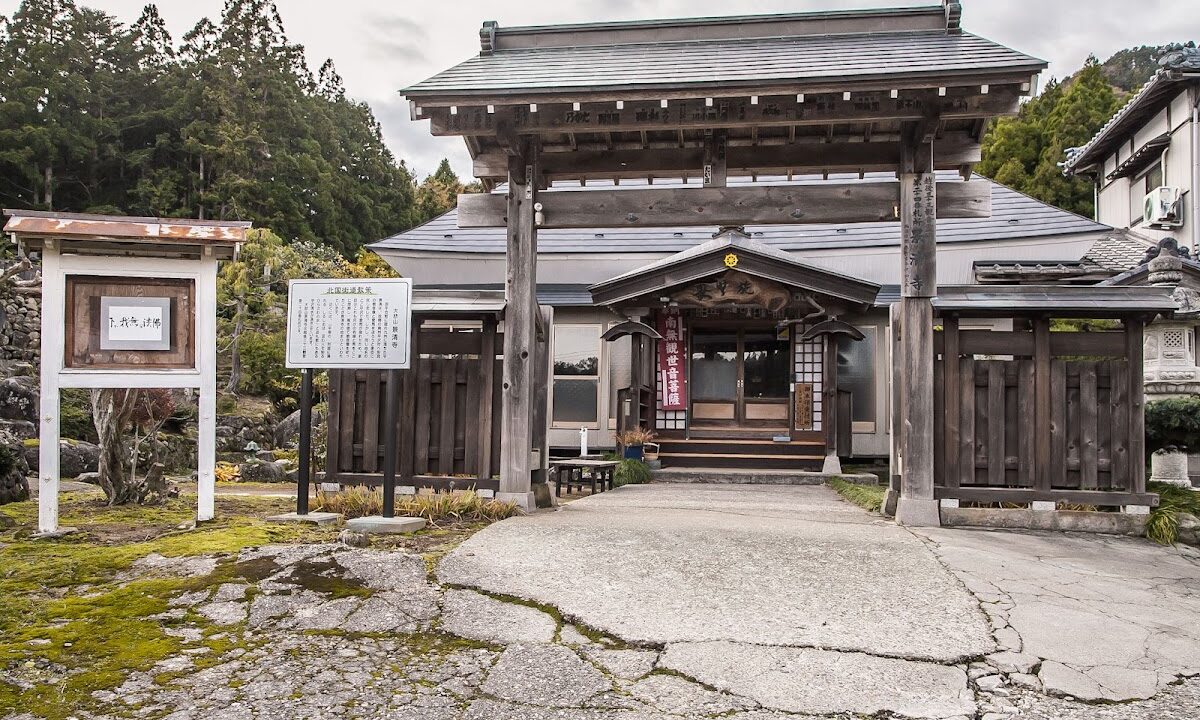
The grounds of Keiseiji Temple contain characteristic buildings and facilities of a Shin Buddhism temple.
Main Hall
The main hall is the central building of the temple, and the principal image, Amida Buddha, is enshrined there. The main hall of the Shinshu Otani sect is generally divided into an inner sanctuary and an outer sanctuary, and is an important space where religious services and ceremonies are held.
Bell Tower
Like many temples, it is believed that Keiseiji Temple also has a bell tower. The temple bell not only tells the time, but also, as an important ritual implement in Buddhism, it symbolizes the dispelling of people’s worldly desires.
Cemetery
Kagekiyo-ji Temple has a cemetery for its parishioners. In Shin Buddhism, there is a teaching called “Kue Issho” (mutual reunion in one place), and the belief that one can be reunited in the Pure Land of Amida Buddha is reflected in the design of the cemetery.
Access Methods
This section provides detailed information on how to access Kagekiyo-ji Temple.
Access by Public Transportation
Because Nishikan-ku in Niigata City is located away from the city center, access by public transportation may take time.
Access from the Nearest Station:
- The nearest station is JR Echigo Line “Maki Station”
- From Maki Station, it is convenient to use a bus or taxi
- If using a bus, take a Niigata Kotsu route bus and get off at the bus stop towards Hirasawa.
Access by Car
Access by car is the most convenient.
Route from Major Roads:
- Approximately 15 minutes from the Hokuriku Expressway “Makigatahigashi Interchange”
- Accessible via National Route 116 or a prefectural road
- Enter “455 Hirasawa, Nishikan-ku, Niigata City” into your car navigation system.
Parking:
The temple is believed to have parking spaces for visitors, but it may be crowded during events such as memorial services. It is recommended to check in advance.
Annual Events and Memorial Services
Shinshu Otani sect temples hold various events and memorial services throughout the year. It is believed that Keiseiji Temple also holds the following events:
Main Annual Events
Shushōe:
A memorial service held at the beginning of the new year to pray for peace throughout the year. Usually held from January 1st to 3rd.
Spring Equinox Service:
A memorial service held during the week centered around the spring equinox. This is an important time to remember our ancestors and reflect on the teachings of Amida Buddha.
Gotan-e (Birth Celebration): A memorial service celebrating the birth of Shinran Shonin, held around May 21st. In Shin Buddhism, it is one of the most important events, known as the “Founder’s Birthday Celebration.”
Urabon-e (Obon Festival): Generally known as “Obon,” this event is held from August 13th to 16th. It is a time to welcome and honor our ancestors.
Autumn Equinox Service: A memorial service held during the week centered around the autumnal equinox. Similar to the spring equinox, it is a time for expressing gratitude and offering prayers to our ancestors.
Ho-on-ko (Memorial Service): The most important memorial service in Shin Buddhism, held on the anniversary of Shinran Shonin’s death (November 28th in the old lunar calendar). Many temples hold these services from late November to early December.
Participation in Memorial Services
Even those who are not temple parishioners can participate in many memorial services. If you wish to participate, it is recommended that you contact the temple in advance to confirm.
The Relationship Between the Temple and the Danka System
Many Buddhist temples in Japan are maintained through the Danka system. Keiseiji Temple is also supported by local parishioners.
How to Become a Temple Member
If you wish to become a temple member, the following procedures are generally followed:
- Consultation with the Temple: First, contact the temple and express your desire to become a temple member.
- Interview: You will have an interview with the head priest where you will receive an explanation of the temple’s history, teachings, and your role as a temple member.
- Membership Fee: A membership fee may be required when becoming a temple member.
- Annual Maintenance Fee: As a temple member, you will pay an annual maintenance fee to help maintain the temple.
Benefits of Being a Temple Member
The benefits of becoming a temple member include the following:
- You can hold funerals and memorial services at the temple.
- You gain the right to use a cemetery plot.
- You can consult about Buddhist rituals.
- You have the opportunity to participate in temple events and experience Buddhist teachings.
About Funerals and Memorial Services
Kagekiyo-ji Temple conducts funerals and memorial services for its temple members.
Characteristics of Shinshu Buddhist Funerals
Shinshu Buddhist funerals have the following characteristics:
- Immediate Enlightenment Upon Rebirth: The belief that the deceased immediately enters Amida Buddha’s Pure Land and attains Buddhahood.
- Not a Memorial Service for the Deceased: Instead of praying for the deceased’s peaceful repose, the ceremony is an expression of gratitude to Amida Buddha and an expression of appreciation for encountering Buddhism through the deceased.
- A Pure Ceremony: Death is not considered defilement, but rather seen as rebirth in the Pure Land.
Types of Memorial Services
In Shinshu Buddhism, the following memorial services are held:
- First Seven Days: The seventh day after death.
- Forty-Ninth Day: The forty-ninth day after death (full mourning period).
- First Anniversary: One full year after death.
- Third Anniversary: Two full years after death.
- 7th, 13th, 17th, 23rd, 27th, 33rd, and 50th Anniversary Memorial Services
About Cemeteries and Interment
Kagekiyo-ji Temple has a cemetery for its parishioners.
Use of Cemeteries
Using a cemetery plot usually requires becoming a parishioner. Please contact the temple directly regarding plot sizes and usage fees.
Types of Graves
There are various types of graves available today:
- Traditional Graves: A traditional grave with a tombstone.
- Perpetual Memorial Graves: Graves where the temple provides perpetual memorial services and management.
- Tree Burials: A nature-oriented burial method using trees as grave markers.
- Columbariums: Facilities for indoor storage of cremated remains.
Please contact Kagekiyo-ji Temple directly to inquire about the types of graves available.
Temple Culture in Nishikan-ku, Niigata City
In addition to Kagekiyo-ji Temple, many other temples exist in Nishikan-ku, Niigata City, where a rich Buddhist culture is deeply rooted. ### History and Culture of Nishikan-ku
Nishikan-ku is an area incorporated into Niigata City through the 2005 municipal merger. It consists of the former Maki Town, Nishikawa Town, Iwamuro Village, Katagashi Village, and parts of Nakanokuchi Village.
Agriculture has flourished here since ancient times, particularly developing as an agricultural area centered on rice cultivation. It is also characterized by its rich natural environment, surrounded by mountains such as Mt. Kakuda and Mt. Taho.
Local Beliefs and Temples
Shinshu Buddhism is prevalent throughout Niigata Prefecture, and many Shinshu temples in Nishikan-ku serve as spiritual centers for the community. Temples have played a role not only as religious facilities but also as centers of the local community.
Etiquette and Manners for Visiting a Temple
This section explains the basic etiquette and manners for visiting Keiseiji Temple.
Basics of Visiting a Temple
Attire:
Casual clothing is acceptable, but clean and subdued attire is preferred. When attending a memorial service, semi-formal attire or clothing in subdued colors is appropriate.
Procedure for Visiting a Temple:
- Bow at the temple gate before entering the grounds.
- If there is a water basin, cleanse your hands and mouth.
- Face the main hall and quietly join your hands in prayer and bow.
- If making an offering, quietly place it in the offering box.
- Bow at the temple gate again when leaving.
Characteristics of Worship in Shin Buddhism
Shin Buddhism emphasizes “gassho” (joining hands in prayer). Both hands are joined in front of the chest, and one faces Amida Buddha with sincerity. Chanting “Namu Amida Butsu” is also an important practice.
How to Interact with Temples
In modern society, ways of interacting with temples are diversifying.
How Non-Parishioners Can Interact
Even if you are not a parishioner, you can interact with the temple in the following ways:
- General Visit: Anyone can visit during opening hours.
- Participation in Events: Many events are open to the general public.
- Buddhist Lectures: Some temples offer lectures on Buddhist teachings.
- Consultation: Temples may offer consultations on life’s problems or matters related to Buddhist rituals.
Donations and Offerings to the Temple
Maintaining a temple incurs significant costs. You can support the temple’s activities by making an offering during your visit or by making a donation.
Nearby Attractions
Here are some nearby attractions you might want to visit when you come to Keiseiji Temple.
Mount Kakuda
Mount Kakuda, a symbol of Nishikan-ku, Niigata City, is a mountain with an elevation of 481.7 meters and is known for its large clusters of Hepatica nobilis (snowdrop) in spring. Hiking trails are well-maintained, making it ideal for hiking.
Iwamuro Onsen
Nishikan-ku is home to Iwamuro Onsen, a historic hot spring resort. This hot spring town has existed since the Edo period and also offers day-trip bathing facilities. Refreshing yourself in the hot springs after visiting the temple is highly recommended.
Yahiko Shrine
In the neighboring Yahiko Village lies Yahiko Shrine, known as the Ichinomiya (first-ranked shrine) of Echigo Province. It is one of Niigata Prefecture’s representative shrines and attracts many visitors.
Contact Information and Visiting Hours
Before visiting Keiseiji Temple, we recommend checking the following points.
Things to Check in Advance
- Visiting Hours: Generally, visits are possible during the daytime, but the main hall may be closed at certain times.
- Event Schedule: If you wish to participate in a specific event, please check the schedule in advance.
- Parking Availability: If you are visiting by car, we recommend checking for parking spaces.
- Photography: Please check in advance whether photography is permitted on the temple grounds.
How to Inquire
For specific inquiries, please contact the temple directly by phone, or, if possible, visit in person and ask the head priest or temple family.
Summary
Kagekiyo-ji Temple is a Shinshu Otani sect temple located in Hirasawa, Nishikan-ku, Niigata City, Niigata Prefecture, and has a long history as a center of faith for the local people. Based on the teachings of Shinshu Buddhism, it conveys the teaching that all people are equally saved by the power of Amida Buddha’s original vow.
Those wishing to visit are requested to observe basic manners and visit quietly and with a calm mind. Furthermore, those considering becoming a parishioner or using the cemetery are advised to contact the temple directly.
Kagekiyo-ji Temple is not merely a religious facility, but also an important place that conveys the local culture and history. When visiting Nishikan-ku, Niigata City, we highly recommend paying a visit. Combined with the surrounding nature and hot springs, you’re sure to have a truly enriching experience.