Complete Guide to Togakuji Temple (Matsue City, Shimane Prefecture) | History, Highlights, and Access Information
Togakuji Temple, located in Okutani-cho, Matsue City, Shimane Prefecture, is a Soto Zen Buddhist temple associated with the Horio clan, the lords of the Matsue Domain. Founded in 1610, it boasts a history of over 400 years and features numerous attractions, including 500 Arhats, beautiful gardens, and historical burial grounds. This article comprehensively introduces information useful for visitors, from the detailed history of Togakuji Temple and its highlights to access methods.
Basic Information about Togakuji Temple
Togakuji Temple is a Soto Zen Buddhist temple located north of Matsue Castle, a national treasure, in Matsue City, Shimane Prefecture. Its official name is “Ryuenzan Togakuji.”
Location: 279 Okutani-cho, Matsue City, Shimane Prefecture 690-0872
Sect: Soto Zen
Mountain Name: Ryuenzan (Originally “Ryukozan,” later renamed)
Principal Image: Shakyamuni Buddha
Founder: Ryugaku Domon Daiosho (8th abbot of Jokoji Temple, Kurayoshi, Hoki Province)
Founder: Choshoin-dono (Second wife of Horio Tadauji)
Established: Keicho 15 (1610)
Telephone: 0852-21-5024
History of Kirigakuji Temple
Circumstances of Founding and Relationship with the Horio Clan
The founding of Kirigakuji Temple is deeply intertwined with the history of the Matsue Domain. On August 6, 1609 (Keicho 14), Kojiro, the second son of Horio Tadauji, the first lord of the Matsue Domain (the Governor of Unshu Province), died at a young age. Kojiro was the grandson of Horio Yoshiharu (a warrior who laid the foundation for the Matsue Domain). Mourning his untimely death, Tadauji’s widow, Choshoin-dono, decided to build a temple to commemorate her beloved son.
In August of the following year, 1610 (Keicho 15), a temple was built in Sakurazaki, Hirose Tomita-go, Nogi-gun, and named “Kirigatake-ji” after Kojiro’s posthumous Buddhist name, “Kirigatake.” The temple was founded as a Soto Zen temple, with Ryugaku Domon Daiosho, the 8th abbot of Jokoji Temple in Kurayoshi, Hoki Province, invited to serve as its founding priest (first head priest).
Relocation and Development to Matsue
Three years after its founding, in 1613 (Keicho 18), Kirigaku-ji Temple relocated to its current location in Okutani-cho, Matsue City. This relocation is thought to have been related to the development of the Matsue castle town and the stabilization of the domain’s administration. Its location north of Matsue Castle was considered suitable for the family temple of the Horio clan, the feudal lords.
Initially, the temple’s mountain name was “Ryukozan,” but it was later changed to “Ryūbuchizan.” While there are various theories regarding the timing and reasons for this name change, it is believed to have been intended to elevate the temple’s status and harmonize with the local community.
History of Fire and Reconstruction
In 1691 (Genroku 4), Kirigaku-ji Temple suffered a major fire, losing many of its buildings. It is said that many of the original buildings were destroyed in this fire. However, with the support of parishioners and local residents, the temple began its path to reconstruction.
In 1758 (Hōreki 8), the main hall was rebuilt, fully restoring the temple’s functions. This rebuilt main hall is a valuable structure that preserves the architectural style of the mid-Edo period.
From the Edo Period to the Present
Throughout the Edo period, Kirigakuji Temple developed as a place of worship for the local people under the patronage of the Matsue Domain. Having weathered the wave of anti-Buddhist movement after the Meiji Restoration, and continuing through the Showa and Heisei eras to the present day, it has continued its activities as a Soto Zen temple deeply rooted in the community.
In recent years, while responding to modern needs such as perpetual memorial services and memorial services for stillborn babies, it continues to fulfill its role as a traditional temple.
Highlights of Kirigakuji Temple
Grave of Horio Kojiro
Within the temple grounds is the grave of Horio Kojiro, the second son of Horio Tadashi, who is the origin of Kirigakuji Temple’s founding. This grave, built in the style of a five-ring pagoda, is attracting attention as a valuable example of early Edo period stone art. This is a place where you can feel the deep love a mother had for her son, Kojiro, who died young, imbued throughout the entire temple.
The Five Hundred Arhats
One of the major highlights of Kirigakuji Temple is the Five Hundred Arhats enshrined within the temple grounds. Arhats are saints who have attained the highest level of enlightenment in Buddhism, and the Five Hundred Arhats are said to represent the disciples of Shakyamuni Buddha.
Each of the Five Hundred Arhats at Kirigakuji Temple has a different expression and posture, and each one is uniquely crafted. Many visitors search for Arhats that resemble deceased family members or acquaintances, and there is a legend that you can “meet the person you want to see.”
Beautiful Garden
Behind the main hall and study is a garden said to have been created by the castle’s official gardener. This garden was renovated from the Showa to Heisei eras, and has been restored to a beautiful and atmospheric space with moss and autumn leaves.
Especially during the autumn foliage season, the entire garden is dyed in red and yellow, captivating visitors. This is a precious place where you can feel the changing seasons in a tranquil setting.
Historical Burial Sites
Besides Kojiro’s grave, the cemetery of Kirigakuji Temple contains many graves of historically important figures.
Grave of Kiyohara Tahei: This is the grave of Kiyohara Tahei, a samurai of the Matsue Domain who excavated the Sada River during the Edo period. Kiyohara Tahei is known for his significant contributions to flood control in Matsue, and his achievements in the development of the region are celebrated.
Grave of Takigawa Kametaro: The grave of Takigawa Kametaro, a scholar of Chinese classics famous for his research on the *Records of the Grand Historian*, is also located at Kirigakuji Temple. Takigawa Kametaro was a scholar who was active from the late Edo period to the Meiji era, and left important achievements in the study of the Chinese historical text *Records of the Grand Historian*.
These burial sites demonstrate that Kirigakuji Temple is not merely the family temple of the Horio clan, but an important place that conveys the history and culture of Matsue.
Main Hall and Temple Grounds Architecture
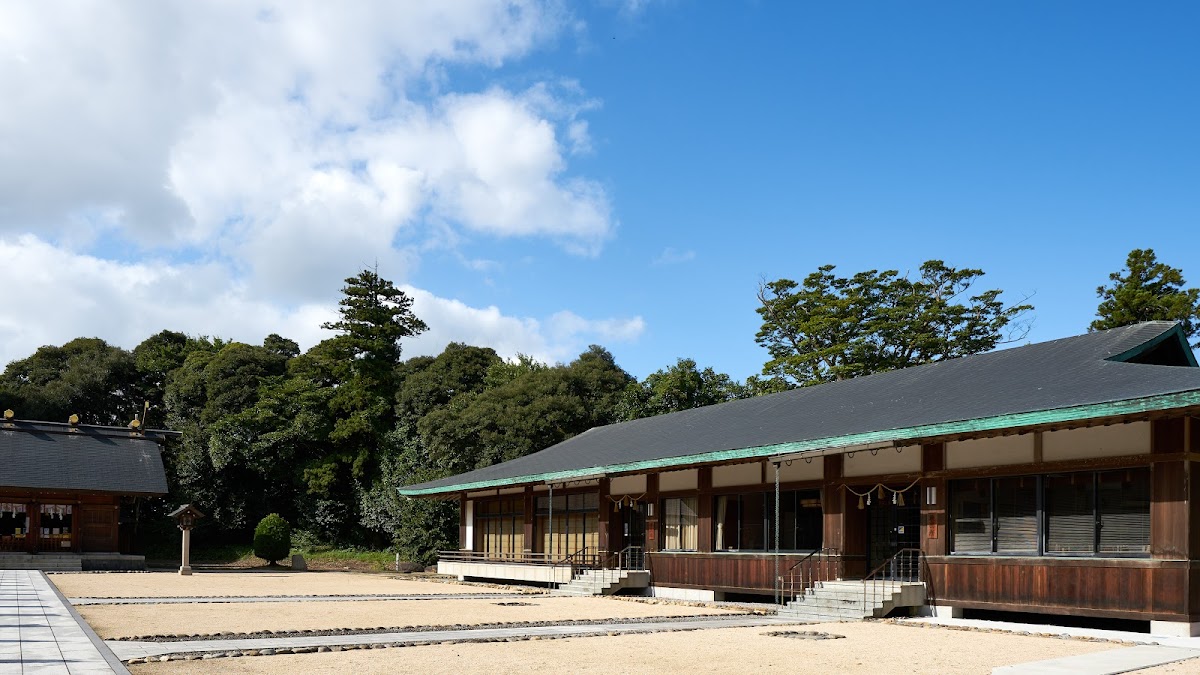
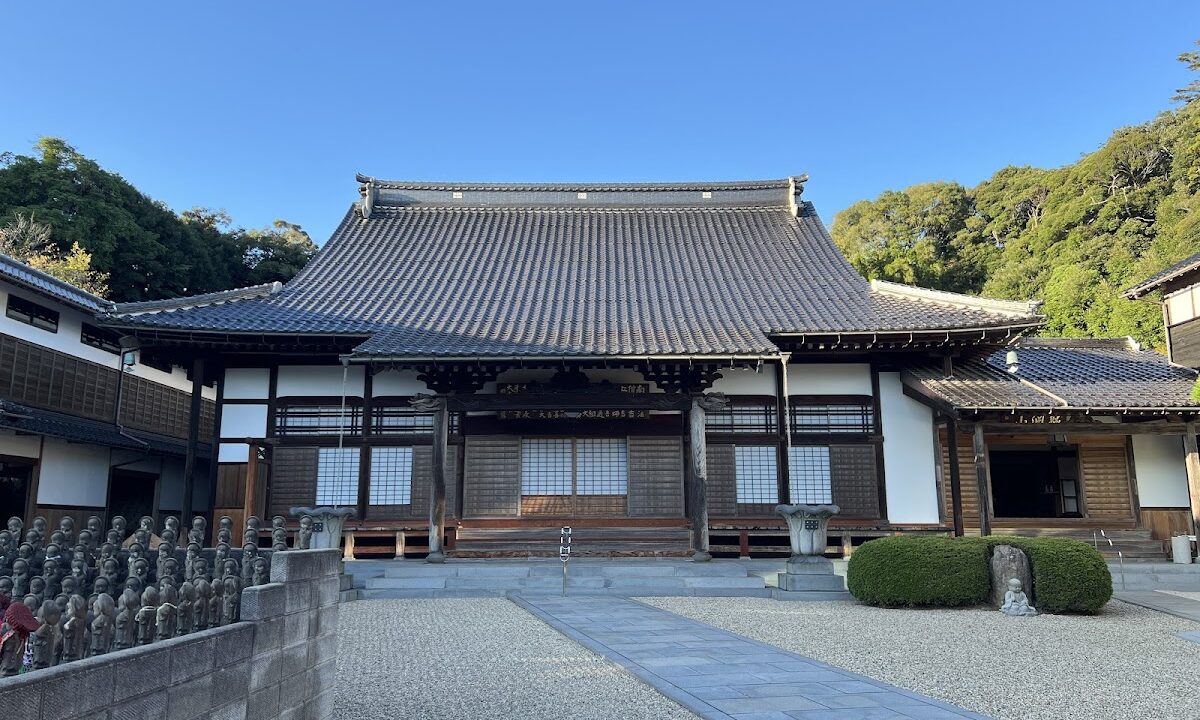
The main hall, rebuilt in 1758 (Hōreki 8), retains many characteristics of Sōtō Zen temple architecture from the mid-Edo period. Inside the majestic main hall, the principal image of Shakyamuni Buddha is enshrined, allowing visitors to worship in a serene atmosphere.
Services Offered at Kirigakuji Temple
Perpetual Memorial Service
In recent years, due to changes in family structure and declining birth rates, the inheritance of family graves has become increasingly difficult. To meet these modern needs, Kirigakuji Temple offers perpetual memorial services.
In mid-February 2021, a new type of columbarium facility called “Nōkotsubo” was introduced. “Nōkotsubo” is a collective grave similar to traditional graves, located outdoors. Its compact design makes it ideal for small families or single individuals.
Memorial Service for Stillborn Children
Kirigakuji Temple also offers memorial services for stillborn children. We strive to provide respectful memorial services for lives that were unable to be born for various reasons, aiming to bring solace to families.
Cemetery Plots
We also offer general cemetery plots, accommodating those who wish to have a family grave passed down through generations. You can honor your ancestors in a quiet environment close to Matsue Castle.
Harudai-san (Jizo Statue)
Within the temple grounds is a Jizo statue called “Harudai-san,” which is revered by local residents. Many visitors come to pray for the healthy growth of their children and the safety of their families.
Access
Here’s how to access Kirigakuji Temple.
Access by Public Transportation
Using the JR San’in Main Line:
- From Matsue Station: Approximately 25 minutes on foot from JR San’in Main Line Matsue Station. Approximately 7 minutes by taxi.
- From Matsue Shinjiko Onsen Station: Approximately 15 minutes on foot from JR San’in Main Line Matsue Shinjiko Onsen Station. Visiting while strolling around Matsue Castle or the area around Matsue Shinjiko Onsen Station is highly recommended.
Using a local bus:
Take an Ichibata Bus or Matsue City Bus from Matsue Station and get off at the “Okutani-cho” bus stop. It’s about a 3-minute walk from there. Since bus service is limited, it’s recommended to check the timetable in advance.
Access by car:
Using the San’in Expressway:
- Approximately 15 minutes from Matsue Nishi IC
- Approximately 10 minutes from Matsue Chuo IC
Parking: There is parking space for visitors on the temple grounds, but spaces are limited. During long holidays and memorial services, using public transportation is recommended.
Nearby Tourist Attractions:
Kigakuji Temple is located north of Matsue Castle, making it ideal to visit in conjunction with Matsue sightseeing.
- Matsue Castle: A national treasure with an existing castle tower. Approximately a 20-minute walk.
- Matsue History Museum: A facility where you can learn about the history and culture of Matsue. Approximately 15 minutes on foot.
- Shiomi Nawate: A charming street lined with samurai residences. Approximately 18 minutes on foot.
- Lafcadio Hearn Memorial Museum: A memorial museum dedicated to Lafcadio Hearn, known for his novel *Kwaidan*. Approximately 20 minutes on foot.
Manners and Precautions for Visiting the Temple
Visiting Hours
While Kirigakuji Temple is generally open for daytime visits, there may be religious services or events taking place. If you have a special reason for visiting, it is recommended to check by phone in advance.
Photography
Photography of the temple grounds and building exteriors is generally permitted, but please refrain from taking photos inside the main hall or in the cemetery, or obtain permission in advance. When photographing the Five Hundred Arhats, please be considerate of other visitors.
Attire
For regular visits, everyday clothes are acceptable. However, for memorial services, formal or semi-formal attire is appropriate.
Offerings
You can place your offering in the offering box in front of the main hall. If you wish to use services such as perpetual memorial services or memorial services for stillborn babies, it is recommended to inquire about the costs with the temple in advance.
History and Culture of Kirigakuji Temple and Matsue
The Horio Clan and the Formation of Matsue Castle Town
To understand the history of Kirigakuji Temple, it is important to know the history of the Matsue Domain and the Horio clan. Horio Yoshiharu was a samurai who served under Toyotomi Hideyoshi and, after the Battle of Sekigahara, was granted 240,000 koku of land in Izumo and Oki by Tokugawa Ieyasu.
Yoshiharu moved his base from Gassan Tomita Castle to Matsue and completed Matsue Castle in 1611. During the formation of the castle town centered around Matsue Castle, many temples and shrines, including Kirigaku-ji Temple, were established, creating the framework of present-day Matsue.
Soto Zen Buddhism and Matsue
The Soto Zen sect, founded by Zen Master Dogen, is a branch of Zen Buddhism that emphasizes “Shikantaza” (simply sitting in meditation). Kirigaku-ji Temple has played a vital role in spreading Zen teachings throughout the region as one of the important centers of the Soto Zen sect in Matsue.
Cultural Value
While Kirigaku-ji Temple itself is not a nationally or prefecturally designated cultural property, it possesses numerous elements of high historical and cultural value, such as the five-tiered pagoda, the Five Hundred Arhats, and the main hall rebuilt in the mid-Edo period. Furthermore, the presence of graves of historical figures such as Kiyohara Tahei and Takigawa Kametaro is an important asset that conveys the history of Matsue.
Annual Events at Kirigaku-ji Temple
As a Soto Zen temple, Kirigaku-ji Temple holds various events throughout the year.
Spring Equinox Service
This memorial service, held around the spring equinox, is for honoring ancestors. Many parishioners visit to pay their respects.
Obon (Urabon-e)
In mid-August, the Obon memorial service is held. This is an important event for welcoming and honoring the spirits of ancestors.
Autumn Equinox Service
This memorial service is held around the autumn equinox. It coincides with the beautiful autumn foliage season, allowing visitors to enjoy the scenery of the temple grounds.
Zen Meditation Sessions
As is typical of Soto Zen temples, Zen meditation sessions are sometimes held regularly. Please contact the temple directly for details.
Inquiries to Kirigakuji Temple
For inquiries regarding visits, perpetual memorial services, cemeteries, memorial services, etc., please contact the following:
Kigakuji Temple
- Address: 279 Okutani-cho, Matsue City, Shimane Prefecture 690-0872
- Phone: 0852-21-5024
- FAX: 0852-23-6865
Confirming by phone before your visit will allow for a more fulfilling pilgrimage experience.
Summary
Kigakuji Temple in Matsue City, Shimane Prefecture, is an ancient Soto Zen temple founded in 1610 (Keicho 15) by Choshoin-dono, the second wife of Horio Tadauji. Built to commemorate Kojiro, the second son of the Matsue domain lord Horio, this temple, with over 400 years of history, boasts many attractions, including the Five Hundred Arhats, beautiful gardens, and historical burial grounds.
Located north of Matsue Castle, and easily accessible from JR San’in Main Line’s Matsue Station and Matsue Shinjiko Onsen Station, it’s ideally situated for a visit in conjunction with Matsue sightseeing. In modern times, it offers services such as perpetual memorial services and memorial services for stillborn babies, continuing to attract the faith of local people as a temple that preserves tradition while meeting contemporary needs.
When you visit Matsue, be sure to visit this historic Kirigakuji Temple along with the national treasure, Matsue Castle. In its tranquil grounds, you can spend a precious time reflecting on Matsue’s history and culture.