Complete Guide to Kōkoku-ji Temple (Shimane Prefecture): The World-Renowned Dry Landscape Garden and the History of Sankō Kokushi
Kōkoku-ji Temple, located in Kunitomi-cho, Izumo City, Shimane Prefecture, is an ancient temple of the Myoshin-ji branch of the Rinzai school of Zen Buddhism, dating back to the Nanboku-chō period. It boasts a renowned garden that consistently ranks among the top in the American Japanese garden magazine “Journal of Japanese Gardening,” attracting attention both domestically and internationally as a space where the spirit of Zen and the beauty of nature are fused. This article comprehensively introduces information you should know before visiting Kōkoku-ji Temple, from its history and the charm of its garden to visiting information and surrounding sightseeing.
History of Kōkoku-ji Temple: A Renowned Zen Temple Dating Back to the Nanboku-chō Period
Founding History and Sankō Kokushi
The official name of Kōkoku-ji Temple is “Daiunzan Kōkoku-ji,” and it was founded in 1322 (Genkō 2). The founding priest was Zen Master Kohō Kakumyō, also known as “Sankō Kokushi,” a highly respected monk. Sankō Kokushi was a Zen monk of the Rinzai school who trained in various regions and attracted many followers due to his high moral character.
The temple’s construction was rooted in the deep faith of Misawa Yasunori, a powerful local lord who ruled the area at the time. Yasunori had his castle at the foot of Tabushiyama Mountain in the Kanayama district of Kunitome (present-day Kunitomi-cho, Izumo City), and he deeply embraced the teachings of Sankō Kokushi, deciding to build a Zen temple on his own territory. The temple’s name, “Kōkoku-ji,” is derived from the name of this donor, Yasunori.
The Restoration by Zen Master Setsuan and the Expansion of the Temple Grounds
Approximately 450 years after its founding, during the Tenmei era (1781-1788), Kōkoku-ji underwent significant development under Zen Master Setsuan. As the restorer and founder, Zen Master Setsuan expanded the temple grounds and improved the temple complex. Inside the current main hall, along with the three principal images of worship, is enshrined this statue of Abbot Setsuan, attesting to its importance in the temple’s history.
Throughout the Edo period, Kōkoku-ji Temple played a vital role as a center of local faith and a training ground for Zen. Its history spans nearly 700 years, and the Zen tradition, passed down continuously from the Nanboku-chō period to the present day, still thrives within the temple grounds.
The Charm of Kōkoku-ji Temple’s Garden, Recognized Worldwide
Garden Designed by Master Gardener Sawa Gentan
The greatest reason Kōkoku-ji Temple has become known nationwide and internationally is its dry landscape garden located north of the shoin (study hall). This garden was created in the late Edo period by Sawa Gentan, the gardener employed by Matsudaira Fumai, the 7th lord of the Matsue domain.
Sawa Gentan was a multi-talented individual, not only a gardener but also an excellent castle builder. Matsudaira Fumai was known as a daimyo tea master with a deep understanding of the tea ceremony, and his aesthetic sense was unparalleled in his time. The skill and sensibility of Sawa Gentan, recognized by Fumai, are beautifully realized in the Kōkoku-ji Temple garden.
The Exquisite Harmony of Dry Landscape and Borrowed Scenery
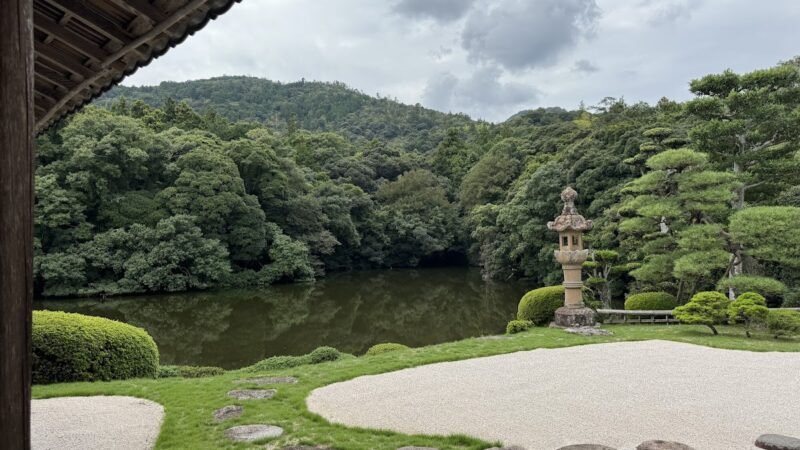
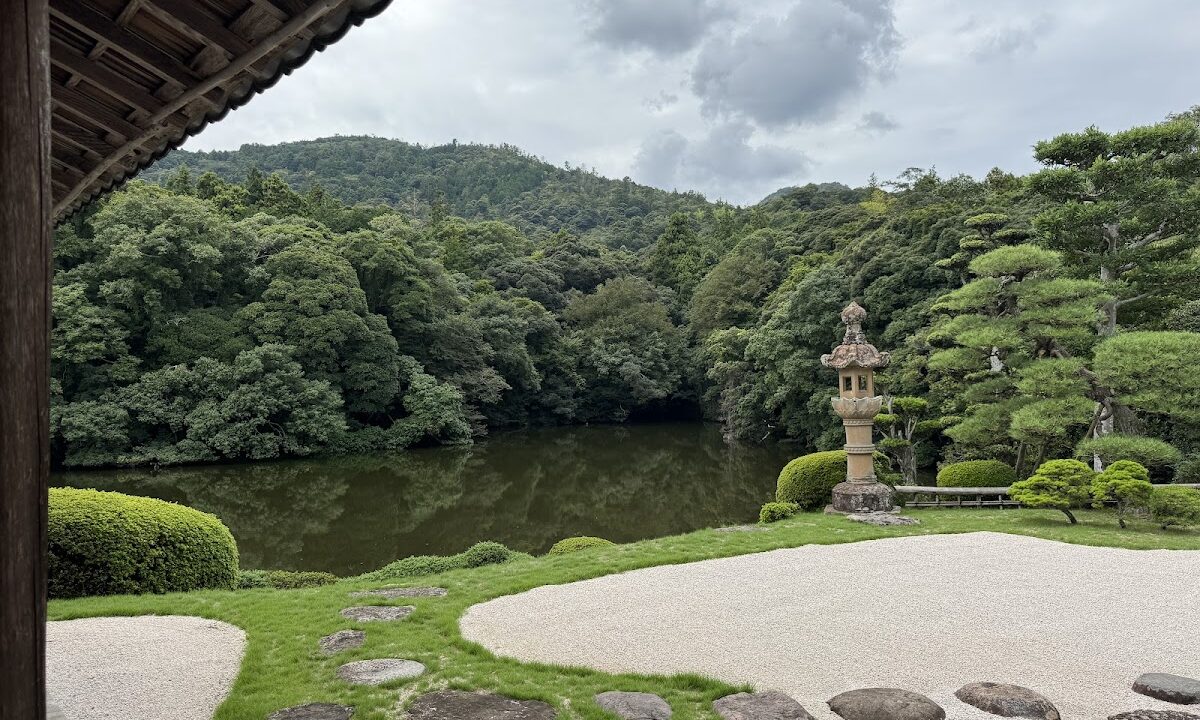
The most distinctive feature of the Kōkoku-ji Temple garden lies in its composition, which incorporates the dry landscape garden characteristic of Zen temples, the towering Mt. Tabushi in the background, and the Nishikikyō Pond (a reservoir) as borrowed scenery. While dry landscape gardens typically focus on the aesthetics of “mitate” (a metaphorical representation of mountains and water using stones and sand), Kōkoku-ji incorporates the actual natural mountains and pond as a backdrop, creating a unique landscape where abstraction and figuration are beautifully fused.
In the foreground of the garden, a dry landscape garden of white sand and stone arrangements unfolds, while large trimmed trees are placed in the middle ground. In the distance, the lush green form of Mt. Tabushi and the surface of Nishikikyō Pond at its base are visible. This three-tiered structure naturally guides the viewer’s gaze into the depths, creating a sense of infinite expanse within the limited space.
The lush trees surrounding the pond contrast with the large trimmed hedges, giving the viewer a sense of brightness and grandeur—a testament to Sawa Gentan’s exceptional spatial design abilities. The changing expressions of nature throughout the seasons bring rich temporal variations to the garden.
Ranked in an American Specialist Magazine
The value of Kōkoku-ji Garden is highly regarded not only in Japan but also overseas. In the “Shiosai Project,” an annual ranking of Japanese gardens published by the American Japanese garden specialist magazine “Journal of Japanese Gardening,” Kōkoku-ji Garden consistently ranks among the top 50. In 2006, it achieved a high ranking of 8th place, attracting attention from garden enthusiasts worldwide.
This ranking is based on evaluations by Japanese garden experts and enthusiasts, comprehensively considering the garden’s beauty, historical value, state of preservation, and consideration for visitors. The Kōkoku-ji Temple Garden continues to receive high praise because of its nearly 700-year history, the spiritual spirit of the temple, the garden design techniques of renowned Edo-period gardeners, and the meticulous maintenance and management that has continued to this day.
Kōkoku-ji Temple’s Architecture and Highlights
Main Hall and Buddhist Statues
The main hall of Kōkoku-ji Temple is a traditional Zen Buddhist architectural style, a single-story wooden building with a copper roof, a flat entrance, and a hipped roof. A one-bay curved gable is featured on the front, and the exterior walls are constructed in the true-wall style. Its simple yet dignified appearance, typical of Zen temples, gives visitors a serene impression.
Inside the main hall are enshrined the three principal images, and beside them is a statue of the temple’s restorer, Abbot Setsuan. These Buddhist statues are carefully preserved as valuable cultural assets that tell the history of Kōkoku-ji Temple.
Viewing the Study and Garden
The dry landscape garden is located north of the study. The formal way to view it is to sit quietly on the veranda of the study and admire the garden. Sitting on the tatami mats and gazing at the garden’s scenery framed like a picture allows for a deeper experience of the Zen worldview.
The view from the study changes depending on the season and time of day. You can enjoy the beauty of each season: fresh greenery in spring, deep green in summer, vibrant autumn leaves, and snowscapes in winter. The changing light, especially in the early morning and at dusk, gives the garden a fantastical atmosphere, and you will experience a completely different impression depending on the time of day you visit.
Mount Tabushi and the Surrounding Natural Environment
Kōkoku-ji Temple is located at the foot of Mount Tabushi, and the entire temple is surrounded by abundant nature. Although Mount Tabushi is not particularly high in elevation, it offers excellent views overlooking the Izumo Plain and has a long history as an object of worship.
The temple grounds are surrounded by a variety of plants that grow naturally throughout the seasons. In spring, cherry blossoms and wildflowers bloom; in early summer, fresh greenery adorns the grounds; and in autumn, vibrant autumn leaves delight visitors. This natural environment is a crucial element in creating the Kōkoku-ji Temple garden as a borrowed landscape garden.
Kōkoku-ji Temple as the Second Temple of the Izumo Province Shinto-Buddhist Pilgrimage
What is the Izumo Province Shinto-Buddhist Pilgrimage?
Kōkoku-ji Temple is designated as the second temple of the “Izumo Province Shinto-Buddhist Pilgrimage.” The Izumo Province Shinto-Buddhist Pilgrimage is a pilgrimage route visiting 20 shrines and temples scattered throughout eastern Shimane Prefecture (the former Izumo Province). It is a unique pilgrimage route characteristic of the Izumo region, where the tradition of syncretism of Shinto and Buddhism remains strong since ancient times, and is characterized by the coexistence of shrines and temples.
The pilgrimage is a journey of worship where visitors collect temple stamps and protective amulets while visiting each temple. At Kōkoku-ji Temple, a Goshuin (temple stamp) is available for 500 yen, and a protective amulet is also available for 500 yen. Its inclusion as a pilgrimage site, alongside famous shrines and temples such as Izumo Taisha, demonstrates the high historical and religious value of Kōkoku-ji Temple.
Divine Virtues and Benefits
As a Zen Buddhist temple, Kōkoku-ji Temple’s fundamental form of faith is seeking peace of mind and enlightenment through Zen meditation and other forms of contemplation. While it rarely emphasizes specific worldly benefits, it is expected to provide mental stability, physical and mental health, and wisdom through Zen practice.
Quietly gazing at the garden also has a calming effect as a form of meditation. Spending time in the garden space, away from the hustle and bustle of daily life and integrated with nature, will be a precious rest for modern people.
Main Festivals and Annual Events
As a Zen Buddhist temple, Kōkoku-ji Temple holds various Buddhist services and events throughout the year. Typical annual events at Zen Buddhist temples include the New Year’s Day Shushō-e (New Year’s Day service), the spring and autumn equinox services, the Obon (Buddhist festival) Segaki-e (feeding of hungry ghosts), and the December Jōdō-e (a Buddhist service commemorating the Buddha’s enlightenment).
For information on special events or Zen meditation sessions, it is recommended to inquire with the temple in advance. Zen meditation sessions open to the public may be held, offering a valuable opportunity to experience authentic Zen practice.
Visiting Information: Visiting Hours, Fees, and Reservations
Visiting Hours and Fees
Kōkoku-ji Temple’s visiting hours are 9:00 AM to 5:00 PM. However, advance reservations are recommended for garden viewing. This is to allow small groups to appreciate the garden at their leisure and to maintain a tranquil environment.
The garden viewing fee is 500 yen. This fee includes garden viewing from the study hall. A Goshuin (temple stamp) and a protective amulet are available for an additional 500 yen.
For reservations and inquiries regarding visits, please call (0853-62-2213). Especially for group visits or requests for special times, we strongly recommend contacting us in advance.
Closing Days and Visiting Precautions
Kangokuji Temple’s closing days are irregular. We strongly recommend calling to confirm before visiting. In particular, general visitors may not be accepted during the New Year period or on days when religious services are held.
As the garden is also a place of Zen practice, quiet appreciation is required. Loud conversations and entering the garden are prohibited. It is advisable to obtain permission in advance for photography.
Access: How to Get to Kangokuji Temple
Access by Public Transportation
Using the Ichibata Electric Railway
The nearest station to Kangokuji Temple is “Tabushi Station” on the Ichibata Electric Railway Kita-Matsue Line. Kangokuji Temple is approximately a 10-minute walk from Tabushi Station. Exit the station and head northwest towards Mount Tabushi; you will find directional signs.
The Ichibata Electric Railway is a local railway connecting Izumo Taisha-mae Station to Matsue Shinjiko Onsen Station, with numerous tourist attractions in the Izumo region along its route. From the train windows, you can enjoy views of Lake Shinji and the rural landscape of the Izumo Plain, making for a truly memorable journey.
Using the Bus
While it’s possible to take a bus from JR Izumo-shi Station or Ichibata Electric Railway Unshu-Hirata Station, the number of buses is limited, so it’s recommended to check the timetable in advance.
Access by Car and Parking
From the San’in Expressway
It’s approximately a 15-minute drive from the San’in Expressway’s “Izumo IC.” After exiting the IC, head east on National Route 9 towards Kunitomi-cho. Following the signs makes for a relatively easy route.
Parking
Kōkoku-ji Temple has a parking lot for visitors. It’s free, but space is limited, so early arrival is recommended, especially during peak tourist season and weekends. If you are planning to visit by large bus, please contact the temple in advance to discuss securing parking space.
Access Time from Major Cities
- From Izumo Taisha Shrine: Approximately 30 minutes by car
- From Matsue City: Approximately 40 minutes by car
- From Yonago City: Approximately 60 minutes by car
- From Hiroshima City: Approximately 3 hours by car
Planning a sightseeing route that combines Izumo Taisha Shrine, Matsue Castle, and other major tourist attractions in Shimane Prefecture is efficient.
Nearby Tourist Spots and Model Courses
Hirata Honjin Memorial Museum
Located about 10 minutes by car from Kōkoku-ji Temple, the Hirata Honjin Memorial Museum is a museum that recreates a honjin (a lodging facility for daimyo, etc.) from the Edo period. You can learn about the history and culture of the Izumo region, making it an ideal spot to deeply understand the history of Izumo in conjunction with a visit to Kōkoku-ji Temple.
Izumo Taisha Shrine
Izumo Taisha Shrine, a representative tourist destination of Shimane Prefecture, is approximately 30 minutes by car from Kōkoku-ji Temple. You can visit two contrasting sacred sites in one day: Izumo Taisha Shrine, nationally known as the god of matchmaking, and Kōkoku-ji Temple, enveloped in the tranquility of Zen.
Around Lake Shinji
Lake Shinji, located about 20 minutes by car from Kōkoku-ji Temple, is famous for its beautiful sunsets. There are many hot spring inns and restaurants along the shores of Lake Shinji, making it a great place to relax by the lake after a peaceful visit to Kōkoku-ji Temple.
Recommended Model Course
Day Trip Course
- Morning: Garden viewing and Zen meditation experience at Kōkoku-ji Temple (reservations required)
- Lunch: Enjoy Izumo soba in the Hirata area
- Afternoon: History learning at Hirata Honjin Memorial Museum
- Evening: Sunset viewing at Lake Shinji
One Night, Two Day Course
Day 1:
- Morning: Visit Izumo Taisha Shrine
- Afternoon: Garden viewing at Kōkoku-ji Temple
- Evening: Overnight stay at Tamatsukuri Onsen or Matsue Shinjiko Onsen
Day 2:
- Morning: Stroll around Matsue Castle and the castle town
- Afternoon: Japanese garden viewing at Adachi Museum of Art (Yasugi City)
This course allows you to fully enjoy the beauty of shrines, temples, and Japanese gardens in the Izumo region.
Restaurants and Accommodations near Kōkoku-ji Temple
Restaurants in the Area
Izumo Soba
Izumo soba is a must-try when visiting the Izumo region. Around Kōkoku-ji Temple and the Hirata district, there are several restaurants serving traditional Izumo soba noodles. The soba, served in a unique “wariko soba” style, is fragrant and has a smooth texture.
Local Ingredients
There are also restaurants offering dishes made with local ingredients, such as fresh seafood caught in Lake Shinji and the Sea of Japan, and vegetables grown in the Izumo Plain. In particular, the Seven Delicacies of Lake Shinji (clams, sea bass, icefish, amberjack, carp, eel, and moroge shrimp) are a unique regional delicacy.
Accommodation
Tamatsukuri Onsen
Tamatsukuri Onsen, located about 30 minutes by car from Kōkoku-ji Temple, is an ancient hot spring known for its skin-beautifying properties. Many inns and hotels line the streets, offering a variety of accommodations to suit different budgets and preferences. The hot spring town also features footbaths and walking paths, allowing visitors to fully enjoy the atmosphere of a traditional Japanese hot spring resort.
Matsue Shinji-ko Onsen
Located on the shores of Lake Shinji, Matsue Shinji-ko Onsen is a hot spring resort easily accessible, about a 25-minute drive from Kōkoku-ji Temple. Many accommodations offer open-air baths overlooking the lake, allowing for a truly relaxing experience.
Business Hotels & Guesthouses
Around Izumo City Station and in the Hirata area, there are also reasonably priced business hotels and guesthouses. These accommodations are a good option for those planning a budget-friendly trip.
Best Season to Visit Kōkoku-ji Temple
Spring (March-May)
Spring is a beautiful season for Kōkoku-ji Temple, with its fresh greenery. The trees in the garden bud all at once, and the vibrant green is full of life. During cherry blossom season, cherry blossoms bloom in the temple grounds and surrounding areas, coloring the garden with the soft spring light. The weather is mild, making it an ideal time for a stroll.
Summer (June-August)
During the rainy season, the gardens of Kōkoku-ji Temple, wet with rain, present a unique and beautiful atmosphere. The greenery deepens, and the borrowed scenery of Mount Tabushi is also covered in lush green. Although there are days with strong sunlight in the summer, the inside of the study hall is relatively cool, making it a good season to quietly admire the garden.
Autumn (September-November)
Autumn is one of the most beautiful seasons for the Kōkoku-ji Temple gardens. The autumn leaves color the garden, and the contrast between the white sand of the dry landscape garden and the autumn leaves creates a magnificent landscape. The best time to see the autumn leaves is especially from mid to late November, attracting many tourists. The clear autumn sky and the borrowed scenery of the colorful mountains also make for a wonderful view.
Winter (December-February)
In winter, the snow-covered gardens of Kōkoku-ji Temple present a fantastical beauty. The San’in region often experiences snowfall in winter, and the snow-covered dry landscape garden and the snow-covered scenery of Tabushiyama Mountain create a serene world reminiscent of an ink painting. With fewer visitors, it’s a season to quietly contemplate the garden.
Cultural Value and Preservation Activities of Kōkoku-ji Temple
Position in Japanese Garden Culture
Kōkoku-ji Temple Garden holds an important position in the history of Japanese gardens as one of the representative works of late Edo period garden culture. In particular, the combination of dry landscape gardening and borrowed scenery embodies the aesthetics of Japanese gardens, expressing infinite expanse within a limited space.
The clear expression of the individuality and skill of a single gardener, Sawa Gentan, further enhances its value as a cultural property. As a masterpiece born from the collaboration of Matsudaira Fumai, a patron with excellent aesthetic sensibilities, and a gardener with the skills to meet those expectations, it has also become a subject of study in art history and garden history.
International Recognition and Utilization as a Tourism Resource
As mentioned above, the Kōkoku-ji Temple Garden has consistently received high praise in American specialist magazines, and its international recognition is increasing year by year. Amidst the growing attention to inbound tourism, Japanese gardens are positioned as important tourism resources where visitors can experience Japanese culture, and Kōkoku-ji Temple plays a vital role in this.
Shimane Prefecture and Izumo City are also focusing on promoting tourism by utilizing local cultural properties, including Kōkoku-ji Temple. This includes installing multilingual signage and disseminating information through websites.
Efforts for Preservation and Inheritance
To pass on the temple and garden, with its nearly 700-year history, to future generations, continuous preservation activities are essential. Kōkoku-ji Temple undertakes various initiatives, including the maintenance of buildings, garden planting management, and the preservation of cultural properties.
Maintaining the garden, in particular, requires specialized knowledge and skills, and regular pruning and care are indispensable. The sand patterns in the dry landscape garden are also disturbed by wind and rain, requiring regular maintenance. This meticulous daily maintenance is what keeps the garden beautiful.
Summary: Experiencing the Harmony of Zen and Nature at Kōkoku-ji Temple
Kōkoku-ji Temple is a representative cultural asset of Shimane Prefecture, blending its history dating back to the Nanboku-chō period, the Zen spirit of Sankō Kokushi, the garden design techniques of the renowned gardener Sawa Gentan, and the rich natural beauty of Mount Tabushi. It is a precious place where you can slowly appreciate a world-class Japanese garden, ranked in American specialist magazines, in a tranquil environment.
By visiting Kōkoku-ji Temple in combination with other Shimane Prefecture tourist destinations such as Izumo Taisha Shrine and Matsue Castle, you can experience the diverse cultures of Japan—Shinto, Buddhism, and samurai culture—all at once. It is especially recommended for those interested in Japanese gardens and Zen culture, and for those seeking a peaceful time.
By making a reservation in advance and visiting with ample time, you can more deeply appreciate the profound charm of Kōkoku-ji Temple. Sitting on the veranda of the study hall, gazing at the dry landscape garden and the borrowed scenery of Mount Tabushi, and connecting with the spirit of Zen will be a precious experience that allows you to forget the hustle and bustle of everyday life. Please visit Kōkoku-ji Temple, located at 1301 Kunitomi-cho, Izumo City, Shimane Prefecture. The tranquility and beauty nurtured by 700 years of history await you.