About Kinpusen-ji Temple
Kinpusen-ji Temple is the head temple of Shugendo, located in Yoshino-cho, Yoshino-gun, Nara Prefecture. Founded in the 7th century by En no Gyoja, it is known as one of Japan’s leading sacred sites, preserving the spirit of syncretism between Shinto and Buddhism. In 2004, it was registered as a World Heritage Site as part of the “Sacred Sites and Pilgrimage Routes in the Kii Mountain Range.”
History as a Sacred Site of Shugendo
Shugendo is a unique religion that fuses ancient Japanese mountain worship with Buddhism, Taoism, and Shinto. Kinpusen-ji Temple boasts a history of over 1300 years as its central training ground. During the Heian period, it attracted the faith of nobles and samurai, and is also famous as the place where Minamoto no Yoshitsune and Benkei hid.
Points to Note During Your Visit
Zao-do Hall (National Treasure)
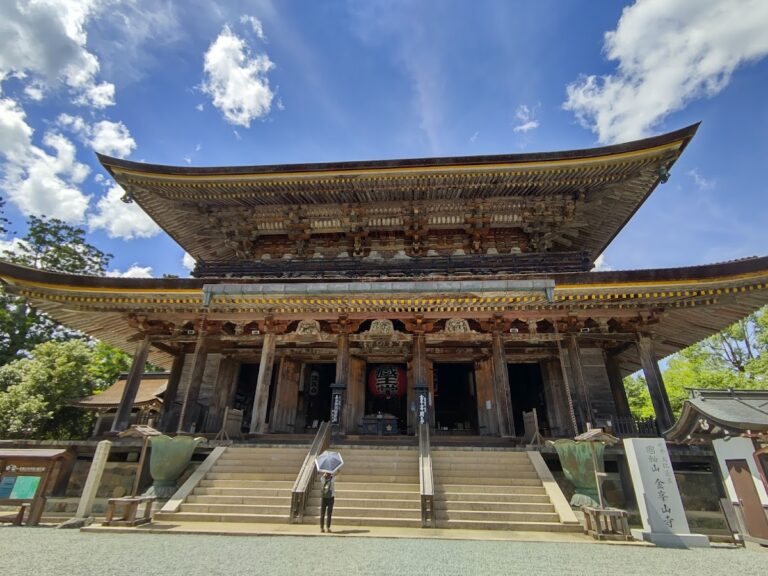
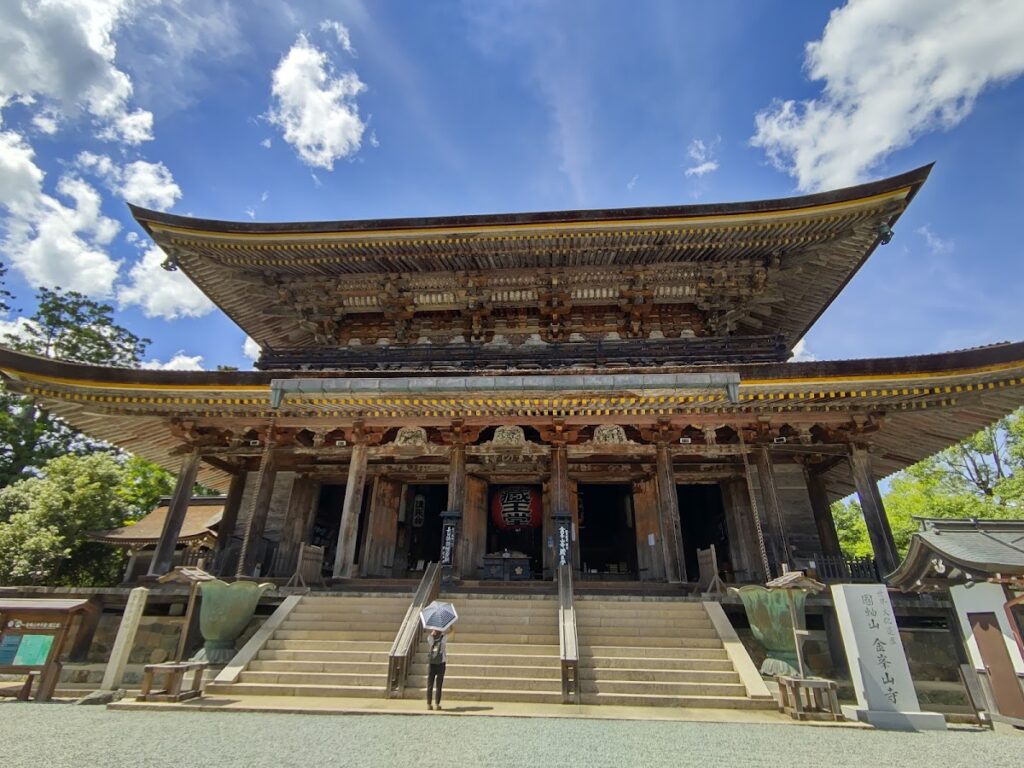
The Zao-do Hall, the main hall of Kinpusen-ji Temple, is designated a National Treasure as the second largest wooden building after the Great Buddha Hall of Todai-ji Temple. Its imposing presence, approximately 34 meters high and 36 meters wide at the front, is truly awe-inspiring.
Inside the hall are three statues of Zao Gongen, the principal deity of Shugendo (mountain asceticism). The central deity is approximately 7.3 meters tall, and the two attendant deities on either side are over 6 meters tall—these are colossal, hidden Buddha images. They are usually not open to the public, but are unveiled during special periods in spring and autumn. Their dark blue skin and angry expressions express fierce compassion for the salvation of all sentient beings.
Nio-mon Gate
Currently under construction with the aim of completion in 2028, this magnificent two-story gate, approximately 20 meters tall, is a symbol of Mount Yoshino. The Kongo Rikishi statues enshrined within are from the Muromachi period and are designated as Important Cultural Properties.
Copper Torii Gate
Located about a 10-minute walk from Zaōdō Hall, this copper torii gate stands at the entrance to Mount Yoshino. Built in 1348, it is one of Japan’s three most important torii gates and a designated Important Cultural Property. As a symbol of the syncretism of Shinto and Buddhism, it marks the entrance to the sacred area of Shugendō (mountain asceticism).
Benefits
Kinpusen-ji Temple is believed to offer the following benefits:
- Protection from Evil and Disaster: The powerful protective force of Zaō Gongen
- Healing from Illness: Purification of mind and body through the spiritual power of Shugendō
- Family Safety: Protection of family based on mountain worship
- Good Fortune and Prosperity: Increased luck through the spiritual power of En no Gyōja
In particular, Zaō Gongen is believed to protect people from calamities of all eras as one of the three deities protecting “past, present, and future.”
Seasonal Charms
Spring Cherry Blossoms (Late March to Mid-April)
Yoshino Mountain is Japan’s most famous cherry blossom viewing spot, known as “Ichimoku Senbon” (a thousand trees at a glance). Around Kinpusen-ji Temple, approximately 30,000 white mountain cherry trees bloom, creating a breathtaking contrast with the Zao-do Hall. The blossoms open sequentially from Shimo-senbon (lower thousand trees) to Kami-senbon (upper thousand trees), allowing visitors to enjoy the cherry blossoms for about a month.
Autumn Foliage (Late October to Late November)
The cherry trees turn red and yellow, creating a magnificent landscape different from spring. The special viewing period for Zao-do Hall often coincides with the autumn foliage season, making it an ideal time to visit.
Access
Access by Train
- Approximately 3 minutes on foot from Kintetsu Yoshino Line “Yoshino Station” to the ropeway “Senbonguchi Station”
- Approximately 3 minutes by ropeway to “Yoshinoyama Station”
- Approximately 10 minutes on foot (uphill) from Yoshinoyama Station to Kinpusenji Zaodo Temple
Estimated Travel Time: Approximately 1 hour 30 minutes from Osaka Abenobashi Station, approximately 2 hours from Kyoto Station
Access by Car
- Approximately 50 minutes via National Route 169 from Minami-Hanna Expressway “Katsuragi IC”
- Private car restrictions are in place during cherry blossom season (late March to late April) and autumn foliage season (late October to late November)
- During the restriction period, use of the shuttle bus from the Yoshinoyama tourist parking lot is mandatory
Parking Information
During normal periods, there are several paid parking lots within Yoshinoyama (approximately 1,500 yen per day). However, during peak season, the parking lot fills up early in the morning, so we strongly recommend using public transportation.
Visiting Information
- Visiting Hours: 8:30 AM – 4:30 PM (Last entry at 4:00 PM)
- Admission Fee: Adults 800 yen, Junior/Senior High School Students 600 yen, Elementary School Students 400 yen
- Special Viewing: A separate special viewing fee is required when the Zao Gongen statue is on display (Adults 1,600 yen)
- Address: 2498 Yoshinoyama, Yoshino-cho, Yoshino-gun, Nara Prefecture 639-3115
- Inquiries: 0746-32-8371
Precautions When Visiting
- Photography is prohibited inside the Zao-do Hall
- Yoshinoyama has many steep slopes, so comfortable walking shoes are recommended
- It gets very crowded during cherry blossom and autumn foliage seasons, so visiting on weekdays or early in the morning is recommended
- During the winter months (December to February), there is a possibility of snow and ice, so warm clothing is essential.
Kinpusen-ji Temple is a precious sacred site where you can experience firsthand the history of Japanese mountain worship and the syncretism of Shinto and Buddhism. Please come and experience the solemn atmosphere created by the powerful presence of Zaō Gongen and the natural beauty of Mount Yoshino.