Kongofuku-ji Temple Complete Guide | History, Highlights, and Visiting Information for the 38th Temple on the Shikoku Pilgrimage, at the Southernmost Point
What is Kongofuku-ji Temple?
Kongofuku-ji Temple is a Shingon sect (Toyozan branch) temple located in Tosashimizu City, Kochi Prefecture, and is known as the 38th temple on the Shikoku 88 Temple Pilgrimage. Its formal names are Sadazan and Fudarakuin, and its principal image is the Thousand-Armed Kannon Bodhisattva. Located at the southernmost tip of Shikoku, on a hillside overlooking the Pacific Ocean at Ashizuri Cape, it boasts a vast grounds of approximately 120,000 square meters, welcoming many pilgrims and tourists.
Among the sacred sites of Tosa (Kochi Prefecture), known as “training grounds,” Kongofuku-ji Temple stands out for its longest distance between temples on the Shikoku Pilgrimage, approximately 90 kilometers from the previous 37th temple, Iwamoto-ji, and approximately 55 kilometers from the next 39th temple, Enko-ji. It truly embodies the rigor of ascetic training.
History and Origin of Kongofuku-ji Temple
Founding Legend
Kongofuku-ji Temple is believed to have been founded in the early Heian period, either in 822 or 823. It is said to have been founded by Kobo Daishi Kukai at the behest of Emperor Saga (reigned 809-823).
It is said that when Kukai visited Cape Ashizuri, he perceived the world of Fudaraku, the ideal land of Kannon Bodhisattva, beyond the Pacific Ocean stretching out from the tip of the cape. Potalaka is a sacred place believed to be the dwelling place of Kannon Bodhisattva, a legendary Pure Land located in the southern seas of India. Kukai decided to establish a sacred site for Kannon Bodhisattva in this location, and personally carved a statue of the Three-Faced Thousand-Armed Kannon Bodhisattva, which he enshrined as the principal image.
Origin of the Temple Name
The temple name “Kongofuku-ji” is a fusion of Kannon worship and esoteric Buddhist thought. “Kongō” symbolizes the indestructible truth and wisdom in esoteric Buddhism, and “Fuku” signifies bringing good fortune and virtue to all sentient beings. Furthermore, the mountain name “Sada-san” means “mountain of stumbling,” representing the difficulty of ascetic practice and also expressing the wish for salvation from mistakes and delusions in life.
The temple name “Fudaraku-in” indicates that it is a place where the world of Potalaka, the Pure Land of Kannon, has been manifested in this world.
Historical Changes
Since its founding, Kongofuku-ji Temple has flourished as a sacred site of Kannon worship. In the Middle Ages, it received the patronage of the Tosa Ichijo clan, and during the Edo period, under the protection of the Yamauchi family, the lords of the Tosa domain, it attracted many pilgrims as a pilgrimage site on the Shikoku Pilgrimage.
Despite the impact of the anti-Buddhist movement of the Meiji era, the temple’s traditions were preserved through the efforts of local people and believers. From the Showa to the Heisei era, the temple grounds were renovated, and today, as a vast sacred site with beautifully arranged temple buildings, it welcomes many visitors throughout the year.
Highlights of the Temple Grounds
Niomon Gate
The Niomon Gate, standing at the entrance to Kongofuku-ji Temple, is the imposing gate that first greets visitors. The Nio statues placed on either side serve to ward off evil spirits and protect the sacred area. Passing through the gate, a vast temple ground unfolds, conveying a solemn atmosphere befitting a training ground for asceticism.
East Potalaka Gate
After passing through the Niomon Gate, the East Potalaka Gate appears, symbolizing the entrance to the Potalaka world, the dwelling place of Kannon Bodhisattva. This gate marks the boundary between the secular world and the sacred realm, reminding worshippers that beyond this point lies the Pure Land of Kannon.
Main Hall
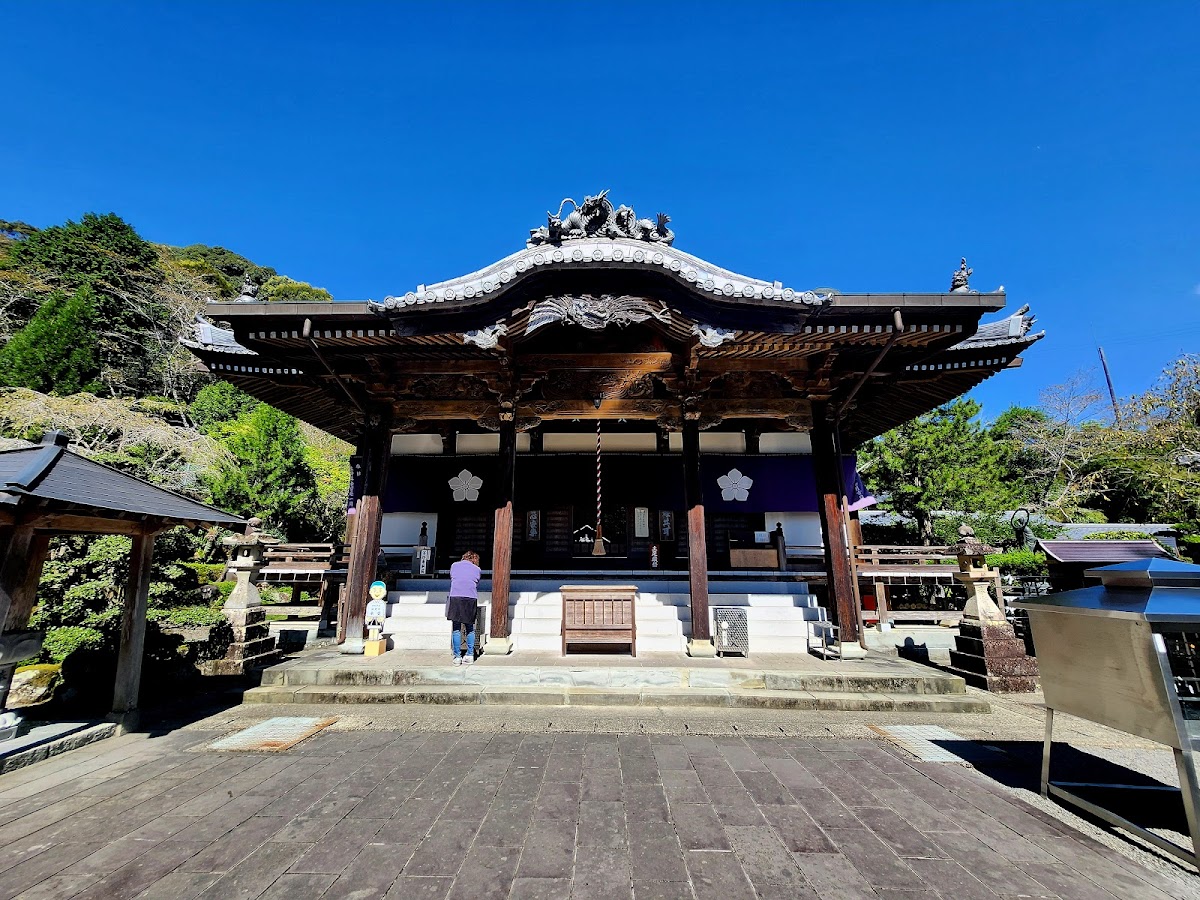
The Main Hall houses the principal image, a three-faced, thousand-armed Kannon Bodhisattva, said to have been carved by Kobo Daishi himself. The three faces represent the compassionate face on the front, the wrathful face on the right, and the smiling face on the left, symbolizing the diverse forms of Kannon Bodhisattva’s ability to save all sentient beings. The thousand arms represent the infinite compassion that saves countless beings simultaneously.
The Main Hall is a magnificent structure where pilgrims offer their sutras and prayers to Kannon Bodhisattva. A solemn atmosphere permeates the hall, providing solace to worshippers who have walked the long pilgrimage route.
Daishido Hall
The Daishido Hall, dedicated to Kobo Daishi, is an important place of worship along with the main hall. In the Shikoku Pilgrimage, there is a saying, “Dōgyō Ninin” (two traveling together), reflecting the belief that one always walks alongside Kobo Daishi. Visiting the Daishido Hall is a place to express gratitude to Kobo Daishi and pray for safety on the journey ahead.
Tahōtō Pagoda
The Tahōtō pagoda, standing on a hill within the temple grounds, is a symbolic presence of Kongōfuku-ji Temple. Looking towards the mountains from the Ashizuri Cape observation deck, the beautiful form of the Tahōtō pagoda emerges from the lush green temple grounds, allowing one to identify Kongōfuku-ji Temple from afar. The Tahōtō pagoda is an architectural structure that expresses the worldview of Esoteric Buddhism, and its elegant form adds splendor to the temple’s landscape.
Kameyobaba (Turtle-Calling Place)
Kameyobaba, known as one of Kongōfuku-ji Temple’s seven mysteries, is the legendary place where Kobo Daishi is said to have summoned a turtle. Legend says that when Kukai chanted a mantra facing the sea at this spot during his ascetic training, countless turtles emerged from the ocean and gathered around him. This legend symbolizes the state of spiritual practice that involves harmony with nature and a sense of oneness with living creatures.
Other Halls
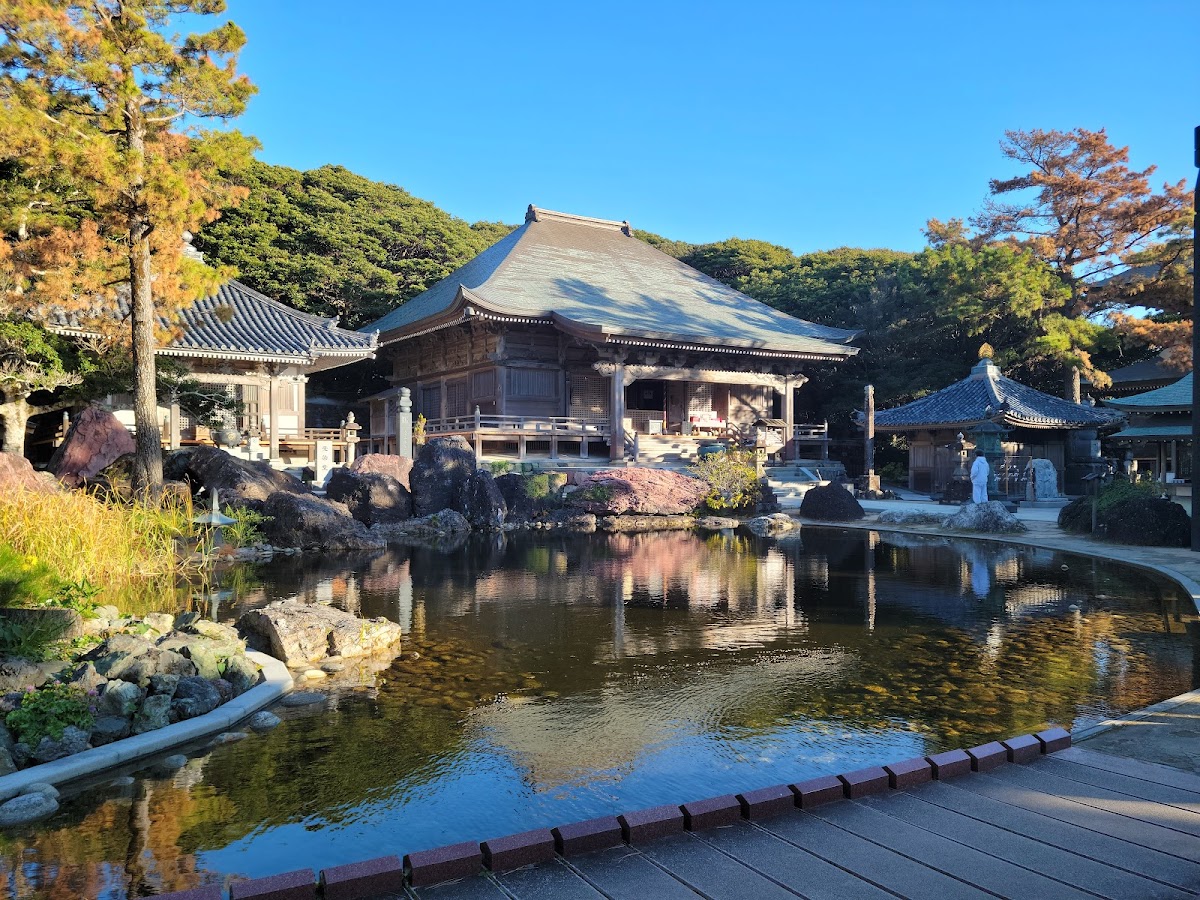
The vast temple grounds contain many halls, including a Goma Hall, a bell tower, and a guest hall. Each building harmonizes with the others, creating a temple layout that collectively represents the Pure Land of Potalaka in this world. By touring the grounds, one can experience the worldview of Kannon worship.
The Seven Wonders of Kongofuku-ji Temple
Kongofuku-ji Temple has a legend of “Seven Wonders” related to Kobo Daishi. These are not mere legends, but stories that symbolically convey the meaning of ascetic training and the teachings of Buddhism, and are still told today.
- Turtle-Calling Place: As mentioned earlier, this is the place where Kobo Daishi summoned turtles.
- Dragon’s Horse: A legend says that the dragon that Kukai rode transformed into a horse.
- The Pond of Unchanging Water: A pond that never dries up, even during severe droughts, and never overflows, even during heavy rains.
- Bamboo Roots: Bamboo that grew from the spot where Kobo Daishi planted his staff.
- Fist Stone: A stone bearing the imprint of Kobo Daishi’s fist.
- Bathing Pond: A pond where Kobo Daishi purified himself.
- Sleepless Guardhouse: A place where the guardian deity is said to constantly protect the temple.
These seven mysteries demonstrate that Kongofuku-ji Temple is not merely a temple, but a sacred place imbued with the spiritual power of Kobo Daishi.
The Position of Kongofuku-ji Temple in the Shikoku Pilgrimage
A Training Ground: The Difficult Passage of Tosa
The Shikoku 88 Temple Pilgrimage represents four stages of spiritual training: the “Dojo of Awakening” (Awa, Tokushima), the “Dojo of Training” (Tosa, Kochi), the “Dojo of Enlightenment” (Iyo, Ehime), and the “Dojo of Nirvana” (Sanuki, Kagawa).
Kochi Prefecture, where Kongofuku-ji Temple is located, is known as the “Dojo of Training,” and the long distances between temples demand rigorous training. The approximately 90 kilometers from Temple 37, Iwamoto-ji, to Kongofuku-ji is the longest distance between temples on the Shikoku Pilgrimage, and it is a section where one experiences the true essence of the “Dojo of Training.”
In the past, transportation was limited, and it was necessary to walk for many days along steep mountain paths and coastlines. Even today, this section is known as a difficult test of both mind and body for those who walk the pilgrimage.
A Sacred Experience Integrated with Cape Ashizuri
Visiting Kongofuku-ji Temple offers a sacred experience integrated with the natural landscape of Cape Ashizuri. Cape Ashizuri, the southernmost point of Shikoku, is a sheer cliff face battered by the rough waves of the Pacific Ocean, its magnificent scenery leaving a profound impression on visitors.
The “Fudaraku World” perceived by Kobo Daishi exists in harmony with the vast natural beauty of Cape Ashizuri. The horizon viewed from the cape’s observation deck, the sound of crashing waves, the scent of the sea—all these elements contribute to experiencing the Pure Land of Kannon.
Many pilgrims visit Cape Ashizuri before or after visiting Kongofuku-ji Temple, contemplating the Fudaraku World stretching out beyond the Pacific Ocean. This experience, a fusion of nature and faith, is the greatest appeal of Kongofuku-ji Temple.
Cultural Properties and Japanese Heritage
Japanese Heritage “Shikoku Pilgrimage”
Kongofuku-ji Temple is one of the cultural properties that make up the Japanese Heritage “Shikoku Pilgrimage – A Circular Pilgrimage Route and Unique Pilgrimage Culture,” which was certified in 2015. The Shikoku Pilgrimage is a globally rare circular pilgrimage route with a history of over 1200 years, and its cultural value is internationally recognized.
A characteristic of the Shikoku Pilgrimage is that it is not merely a pilgrimage to religious sites, but a comprehensive cultural experience where nature, history, culture, and people’s activities are integrated. Kongofuku-ji Temple occupies an important position within this pilgrimage, as one of the sacred sites where the natural environment and faith are most closely intertwined.
Temple Treasures and Cultural Properties
Kongofuku-ji Temple possesses many temple treasures accumulated over its long history. Precious Buddhist art objects are enshrined there, including the principal image, a three-faced, thousand-armed Kannon Bodhisattva statue, a statue of Kobo Daishi, and the Ryokai Mandala.
Furthermore, ancient documents and scriptures are also preserved, making them valuable resources for studying the history of the Shikoku Pilgrimage and the local beliefs.
Visiting Information
Basic Information
- Temple Name: Sadazan Fudarakuin Kongofukuji
- Sect: Shingon-shu Buzan-ha
- Principal Image: Senju Kannon Bodhisattva
- Founder: Kobo Daishi Kukai
- Founded: Konin 13 (822) or Konin 14 (823)
- Pilgrimage Site: 38th temple of the Shikoku 88 Temple Pilgrimage
- Visiting Hours: 8:00 – 17:00
- Sutra Copying Hours: 7:00 – 17:00
- Admission Fee: Free (Free entry to the grounds)
- Parking: Free parking available (approximately 200 regular cars)
Location and Access
Address: 787-0315 214-1 Ashizuri Cape, Tosashimizu City, Kochi Prefecture
Access by Car
- Approximately 2 hours (approx. 100km) from Shimanto-cho Chuo IC on the Kochi Expressway
- Approximately 40 minutes (approx. 30km) from Nakamura city center via National Route 321
- Approximately 5 minutes from Ashizuri Cape Lighthouse
Access by Public Transportation
- Approximately 1 hour 20 minutes by Kochi Seinan Kotsu bus bound for Ashizuri Cape from Nakamura Station on the Tosa Kuroshio Railway, get off at “Kongofuku-ji-mae” bus stop
- Approximately 50 minutes by taxi from Nakamura Station
For Walking Pilgrimages
- Approximately 90km from Temple No. 37, Iwamoto-ji (approx. 3-4 days on foot)
- Approximately 55km to Temple No. 39, Enko-ji (approx. 2-3 days on foot)
Nearby Attractions
When visiting Kongofuku-ji Temple, we recommend also visiting nearby tourist spots.
- Ashizuri Cape Lighthouse: A white lighthouse located on the southernmost cape of Shikoku. Enjoy a panoramic view of over 270 degrees from the observation deck.
- Ashizuri Cape Observation Deck: A spectacular viewpoint offering a panoramic view of the Pacific Ocean horizon. You can truly feel the curvature of the Earth.
- Hakusan Cave: A granite sea cave 16 meters high and 17 meters wide. See the beauty of natural formations up close.
- John Manjiro (Nakahama Manjiro) Birthplace: The birthplace of a great figure from Tosashimizu City who contributed to Japan’s modernization.
- Tatsukushi Coast: A scenic spot known for its unique rock formations and crystal-clear waters. The Ashizuri Underwater Observatory and Ashizuri Marine Museum SATOUMI are also located here.
Points and Manners for Visiting the Shrine
Etiquette for Visiting the Shrine
- Bow at the Main Gate (Niomon Gate): Bow and clasp your hands together before entering the shrine grounds.
- Purifying yourself at the water basin: Purify your left hand, then your right hand, then your mouth.
- Worship at the main hall: Perform the following steps: offering a votive slip and money, ringing the bell, bowing with clasped hands, and chanting sutras.
- Worship at the Daishi Hall: Worship using the same procedure as at the main hall.
- Receiving a stamp at the sutra hall: After worshipping, receive a stamp in your sutra book.
Clothing and belongings
Since you will be walking around the vast temple grounds, comfortable shoes and clothing are recommended. In summer, the sun is strong, so a hat and sun protection are also necessary. Bringing pilgrimage supplies (white robe, walking stick, sutra book, etc.) will allow for a more authentic pilgrimage experience.
Photography
Photography is generally permitted on the temple grounds, but there are areas where photography is prohibited, such as inside the main hall. Please be considerate of other visitors.
Annual Events at Kongofuku-ji Temple
Kongofuku-ji Temple holds various Buddhist services and events throughout the year.
- First three days of the New Year: Many worshippers visit for Hatsumode (first shrine visit of the year).
- Spring and Autumn Equinoxes: Memorial services for ancestors are held.
- August 10th: 48,000-day Kannon Merit Day. Visiting on this day is considered to bring particularly great merit.
- Other: Goma prayers and other rituals are held regularly every month.
Temple Lodgings and Nearby Accommodations
Kongofuku-ji Temple does not have its own temple lodgings, but there are many accommodations around Cape Ashizuri. You can choose from guesthouses, inns, hotels, etc., depending on your budget and purpose. In particular, accommodations in the Ashizuri Onsenkyo hot spring area allow you to relax and soothe your pilgrimage fatigue while soaking in hot springs overlooking the Pacific Ocean.
Summary
Kongofuku-ji Temple, located at the southernmost tip of Shikoku, is the 38th temple on the Shikoku Pilgrimage and a significant sacred site. It offers a unique spiritual experience, combining a vast temple grounds that represent the Fudaraku world perceived by Kobo Daishi, the magnificent natural scenery of Cape Ashizuri, and the rigorous atmosphere of a “training ground.”
Reached via the longest pilgrimage route of approximately 90 kilometers from the previous temple, Kongofuku-ji Temple is truly a culmination of spiritual training. Facing the vast Pacific Ocean, it provides an opportunity to reflect on the meaning of life and one’s own existence.
Kongofuku-ji Temple is a must-see spot not only for those undertaking the Shikoku Pilgrimage but also for tourists visiting Cape Ashizuri. Experience the unique atmosphere woven from history, faith, and nature. The Fudaraku world, enveloped in the compassion of Kannon Bodhisattva, will warmly welcome you.