
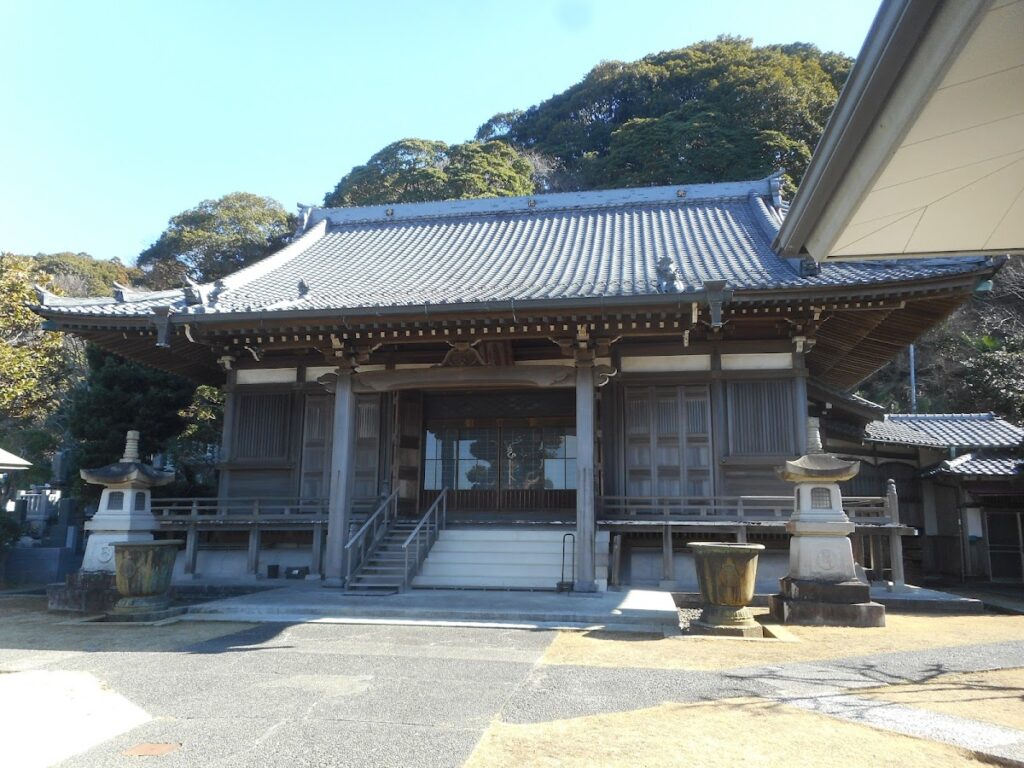
Complete Guide to Kōtoku-ji Temple (Hayama Town): History, Access, and Cemetery Information
Located in Horiuchi, Hayama Town, Miura District, Kanagawa Prefecture, Kōtoku-ji Temple is a historic temple belonging to the Jōdo sect. This guide provides detailed information about Kōtoku-ji Temple, which has a long history in the scenic area of Hayama, from its origins to the present day.
Basic Information about Kōtoku-ji Temple
Kōtoku-ji Temple is a Jōdo sect temple whose official name is Busshinzan Jōshōin Kōtoku-ji.
Location and Contact Information
- Address: 1349 Horiuchi, Hayama-machi, Miura-gun, Kanagawa Prefecture 240-0112
- Phone Number: 046-875-0229
- Sect: Jodo-shu (Pure Land Buddhism)
- Mountain Name: Busshinzan
- Temple Name: Joshōin
- Principal Image: Amida Buddha
Hayama-machi is known as a scenic area facing Sagami Bay and is also famous for having an imperial villa. Kōtoku-ji Temple is located in the Horiuchi district of Hayama-machi and is cherished by local people as a place of worship in a quiet environment.
History and Origins of Kōtoku-ji Temple
Origins as a Jodo-shu Temple
Kōtoku-ji Temple is a temple that enshrines Amida Buddha as its principal image, based on the teachings of the Jodo-shu sect. The Jodo sect, founded by Honen Shonin, is a Buddhist sect that seeks rebirth in the Pure Land by chanting the Nembutsu, “Namu Amida Butsu.”
While detailed records of the founding date of Kotoku-ji Temple are limited, it has long served as a center of Buddhist faith in the Hayama region and a spiritual pillar for the local residents. Under the danka system (parishioner system) that has continued since the Edo period, it has a history of supporting the religious lives of local people by conducting funerals and memorial services.
The Role of Temples in Hayama Town
Hayama Town has developed since the Meiji era due to the establishment of an imperial villa. Kotoku-ji Temple has walked hand in hand with Hayama’s history and has played an important role in the local community. It is a spiritual haven not only for its parishioners but also for many people who visit Hayama.
Highlights of the Temple Grounds
Main Hall and Jitoku-den Hall
The main hall of Kotoku-ji Temple is the central facility of the temple, housing the Amida Buddha. The plaque above the main hall bears the characters “Jitoku-den” (Hall of Compassion), symbolizing the Jodo sect’s teachings of valuing compassion.
The inner sanctuary of the main hall is enveloped in a solemn atmosphere, allowing worshippers to quietly offer their prayers. A statue of Amida Buddha is enshrined within the sanctuary, its compassionate expression soothing the hearts of visitors.
Bell Tower and Bell
A bell tower stands on the temple grounds, housing a temple bell. This bell is an important cultural asset that tells the story of the temple’s history. A “Reconstruction Commemorative Monument” also stands on the grounds, commemorating the temple’s history of reconstruction and restoration.
The sound of the bell resonates throughout the temple grounds during morning and evening services and ceremonies, reaching the surrounding area. For the local people, this bell’s sound marks the time and serves as a cherished reminder of Buddhist teachings.
Cemetery and Burial Grounds
Kōtoku-ji Temple boasts a vast and well-maintained cemetery where many of its parishioners rest. The cemetery is meticulously cared for, maintaining a clean and tranquil atmosphere.
How to Access Kōtoku-ji Temple
Access by Train
The nearest stations to Kōtoku-ji Temple are as follows:
- Keikyu Zushi Line “Zushi-Hayama Station” (Shin-Zushi Station)
- Distance from station: Approximately 2.3 km
- Walking time: Approximately 30 minutes
- Bus use is recommended
- JR Yokosuka Line “Zushi Station”
- Convenient transfer to the Keikyu Zushi Line
- Distance from station: Approximately 2.5 km
- JR Yokosuka Line “Higashi-Zushi Station”
- Distance from station: Approximately 3 km
Access by Bus
It is convenient to take a Keikyu bus from Zushi-Hayama Station or Zushi Station. Take a bus bound for Hayama, get off at the nearest bus stop, and Kōtoku-ji Temple is a few minutes’ walk away.
Bus service varies depending on the time of day, so we recommend checking the Keikyu Bus timetable in advance. Please note that service may be reduced, especially on weekends and holidays.
Access by Car
If coming by private car:
- Approximately 15 minutes from the Zushi Interchange on the Yokohama-Yokosuka Expressway
- Accessible via National Route 134 (Shonan Road)
- Please inquire with the temple in advance regarding parking availability.
Please drive carefully, as some roads in Hayama Town are narrow. Traffic volume increases, especially during tourist seasons and weekends.
Landmarks in the Surrounding Area
Kotoku-ji Temple is located in the Horiuchi district of Hayama Town, surrounded by residential areas. It is relatively close to the Hayama Imperial Villa and Morito Beach, making it a convenient stop during Hayama sightseeing.
Information Regarding Graves and Cemeteries
Features of the Cemetery
Kotoku-ji Temple’s cemetery is operated as a Jodo sect temple cemetery. Located in the naturally rich environment of Hayama, it is characterized by a quiet and peaceful atmosphere. Main Features of the Cemetery:
- Sect: For Jodo-shu (Pure Land Buddhism) parishioners
- Environment: Quiet and nature-rich location
- Management: Appropriate management by the temple
- Access: Bus available from Zushi and Hayama stations
Flow from Purchase of a Burial Plot to Interment
When seeking a burial plot at Kotoku-ji Temple, the general process is as follows:
1. Inquiry and Visit
First, please contact Kotoku-ji Temple by phone or letter. It is important to actually visit the cemetery and check the plot and environment.
2. Confirmation of Becoming a Parishioner
Since Kotoku-ji Temple is a Jodo-shu temple cemetery, becoming a parishioner is generally a prerequisite. You will receive a detailed explanation from the head priest regarding the parishioner system and annual maintenance fees.
3. Selection and Contract of a Burial Plot
You will choose your desired plot and sign a contract for its use. Costs such as perpetual use fees and management fees will also be clarified at this stage.
4. Construction of the Tombstone
Once the burial site is decided, you will commission a stonemason to construct the tombstone. You will discuss the design, type of stone, budget, and other details as you proceed.
5. Consecration Ceremony
Once the tombstone is completed, an consecration ceremony (soul-imbuing) is held. This makes the tombstone an object of worship.
6. Interment
When interring the remains of the deceased, an interment ceremony is held. The ceremony is conducted respectfully according to the customs of the Jodo sect.
Acceptance of Reburial Due to Grave Closure
Kotoku-ji Temple accepts remains from other cemeteries (grave closure). If you are considering relocating a distant grave to Kotoku-ji Temple in Hayama, please consult the temple first.
Reburial requires procedures at the original cemetery and notification to the government. The head priest of Kotoku-ji Temple will provide careful advice, so you can consult with confidence. ### Regarding Fees
The usage and maintenance fees for the burial plot vary depending on the size and location of the plot. For detailed information on fees, please contact Kōtoku-ji Temple directly. The typical cost structure for a temple cemetery is as follows:
- Perpetual Use Fee: Cost of acquiring the right to use the burial plot perpetually
- Annual Management Fee: Cost of maintaining the entire cemetery
- Gravestone Construction Fee: Cost of the gravestone paid to the stonemason (separate)
- Offerings for Various Memorial Services: Offerings for services such as the eye-opening ceremony and the interment ceremony
Memorial Services and Events Held at Kōtoku-ji Temple
Regular Memorial Services
At Kōtoku-ji Temple, various memorial services are held in accordance with the annual events of the Jōdo sect:
- Obon Memorial Service: Memorial service for ancestors held during the Obon period in August
- Higan Memorial Service: Higan service centered around the spring and autumn equinoxes
- Annual Memorial Service: Individual annual memorial services for parishioners
The Teachings of the Jodo Sect
The Jodo Sect teachings cherished at Kotoku-ji Temple are those of “exclusive recitation of the Buddha’s name,” founded by Honen Shonin. This teaching states that by chanting “Namu Amida Butsu,” anyone can attain rebirth in the Pure Land through the compassion of Amida Buddha.
This teaching is characterized by its simplicity, emphasizing that all people are equally saved, regardless of the difficulty of their studies or training. It has been widely accepted by the people since the Kamakura period.
Comparison with Other Temples and Cemeteries in Hayama Town
Jodo Sect Temples in and around Hayama Town
There are several other Jodo Sect temples in Hayama Town and the neighboring cities of Zushi and Yokosuka. Each temple has its own unique history and characteristics, but Kotoku-ji Temple stands out for its excellent location in Horiuchi, Hayama Town, and its well-maintained cemetery environment.
Similar Cemeteries and Burial Grounds
If you are looking for a burial plot with similar conditions to Kōtoku-ji Temple (Jōdo sect, near Hayama Town, temple cemetery), you should consider the following points:
- Accessibility: Distance from home, ease of use of public transportation
- Environment: Atmosphere of the cemetery, sunlight, tranquility
- Cost: Comparison of perpetual use fees and annual maintenance fees
- Sect: Confirmation that it is Jōdo sect
- Management Condition: Cleanliness of the entire cemetery, how well it is maintained
Differences from Public Cemeteries in Kanagawa Prefecture
There are many public cemeteries in Kanagawa Prefecture, such as Yokohama City Cemetery and Kawasaki City Cemetery. The main differences between public cemeteries and temple cemeteries are:
Characteristics of Temple Cemeteries (Kotokuji Temple):
- You can receive memorial services based on your religious sect.
- The head priest is always present, making it easy to consult about memorial services.
- You can develop a connection as a temple parishioner.
- You can experience the history and culture of the temple.
Characteristics of Public Cemeteries:
- Often open to all religions and sects.
- Relatively clear usage fees.
- Applications may be by lottery.
- You need to arrange memorial services yourself.
Points to Note When Visiting Kotokuji Temple
Manners for Visiting a Temple
When visiting a temple, please observe the following basic manners:
- Attire: Modest, understated clothing is preferable.
- Greetings: Bow when passing through the temple gate.
- Quietness: Be quiet within the temple grounds.
- Photography: Obtain permission before taking photos inside the main hall, etc.
- Worship: Clasp your hands together and bow in front of the main hall.
Regarding Prior Contact
If you have specific matters to discuss, such as visiting the cemetery or arranging a memorial service, we recommend contacting us by phone beforehand. Since the head priest may be absent or in the middle of a memorial service, making a reservation is the safest way to ensure you receive assistance.
About Hayama Town
Characteristics of Hayama Town
Hayama Town is located in the northwestern part of the Miura Peninsula in Kanagawa Prefecture, and is a scenic town facing Sagami Bay. Hayama is a small town with a population of approximately 33,000, but it has the following characteristics:
- Town of an Imperial Villa: Hayama has had an Imperial Villa since the Taisho era, making it a place with strong ties to the Imperial family.
- Beautiful Coastline: Beautiful beaches such as Morito Beach and Isshiki Beach are scattered throughout the area.
- Upscale Residential Area: A popular quiet residential area.
- Marine Sports: Sailing and windsurfing are popular.
- Natural Environment: Blessed with the rich natural beauty of the Miura Peninsula.
Access to Hayama Town
Hayama Town is accessible from central Tokyo in about an hour:
- Train: Take the JR Yokosuka Line or Keikyu Line to Zushi Station, then take a bus.
- Car: From Zushi IC via the Yokohama-Yokosuka Expressway.
- Sightseeing: Many people visit Hayama in conjunction with Kamakura or Zushi.
Attractions around Kotoku-ji Temple
Hayama Imperial Villa
The Hayama Imperial Villa is located relatively close to Kotoku-ji Temple. While the villa itself is not open to the public, the surrounding Hayama Shiosai Park is known for its beautiful Japanese garden and offers scenic views of Sagami Bay.
Morito Beach and Morito Shrine
Morito Beach, one of Hayama’s representative beaches, is famous for its beautiful sunsets. Near the beach is Morito Shrine, an ancient shrine associated with Minamoto no Yoritomo, attracting many worshippers.
Isshiki Beach
Isshiki Beach, considered particularly beautiful even within Hayama, has been selected as one of the Ministry of the Environment’s “100 Best Beaches.” It is bustling with swimmers in the summer and attracts visitors who enjoy strolling throughout the year.
Summary: The Charms of Kotoku-ji Temple
Kotoku-ji Temple, located in Horiuchi, Hayama-machi, Miura-gun, Kanagawa Prefecture, is a historic temple that continues to uphold the teachings of the Jodo sect. As its official name, Busshinzan Joshōin Kōtoku-ji, suggests, Kōtoku-ji Temple has supported the religious lives of local people as a temple that cherishes the heart of Buddha and the ever-shining light.
The charm of Kōtoku-ji Temple lies in its quiet and peaceful environment, despite being located in the scenic area of Hayama. It is also easily accessible by bus from Zushi-Hayama Station and is relatively close to central Tokyo.
For those seeking a burial plot, the opportunity to receive traditional Jōdo-shū memorial services, the proper management by the temple, and the pleasant environment of Hayama will be major attractions.
For inquiries regarding visits to Kōtoku-ji Temple or burial plots, please contact the temple directly (Tel: 046-875-0229). The head priest will provide courteous assistance.
Why not spend a peaceful time at Kōtoku-ji Temple, where the beautiful nature of Hayama and the historic temple intertwine?

