Complete Guide to Koyama-ji Temple | History, Highlights, and Access Information for the 74th Temple of the Shikoku 88 Temple Pilgrimage
About Koyama-ji Temple
Koyama-ji Temple is a Shingon sect Zentsuji school temple located in Hirota-cho, Zentsuji City, Kagawa Prefecture. Its mountain name is Io-san, and its temple name is Taho-in. It enshrines Yakushi Nyorai (Medicine Buddha) as its principal image. As the 74th temple of the Shikoku 88 Temple Pilgrimage, it has long been cherished by many pilgrims and worshippers.
Named “Koyama-ji” because it is located at the foot of Mount Kabuto, this temple is said to have been built with a reward given to Kobo Daishi Kukai by the imperial court for his successful completion of the Manno Pond repair project. It is also affectionately known locally as “Rabbit Temple” due to the numerous rabbit decorations on its grounds, and is believed to bring blessings for conception and matchmaking.
History and Origins of Kōzanji Temple
Origin of its Founding and Kōbō Daishi Kūkai
Kōzanji Temple is said to have been founded in the 12th year of the Kōnin era (821 AD). In that year, Kōbō Daishi Kūkai was ordered by the imperial court to repair the Mannō Pond in Sanuki Province (present-day Mannō-chō, Nakatado-gun, Kagawa Prefecture). Mannō Pond was a large reservoir that had repeatedly breached its banks, and many engineers had failed in its repair.
Kūkai, using the latest technology of the time, the arch-type embankment construction method, completed the repair in a short period of just three months. For this achievement, he received a large reward from the imperial court. It is said that Kūkai used this reward to build Kōzanji Temple and enshrined a statue of Yakushi Nyorai (Medicine Buddha), which he is said to have carved himself, as the principal image.
Senyūgahara and Kūkai’s Childhood
The area around Kōzanji Temple was a vast field called “Senyūgahara.” According to documents from approximately 300 years ago, this area is known as a place where Kukai, born in Zentsu-ji, often played during his childhood. It is said that Kukai played here by making Buddha statues out of mud, building temples out of plants, and stacking stones to make pagodas. This area is considered one of the places that nurtured Kukai’s religious sensibilities.
The Divine Power of Bishamonten and the Origin of the Temple’s Name
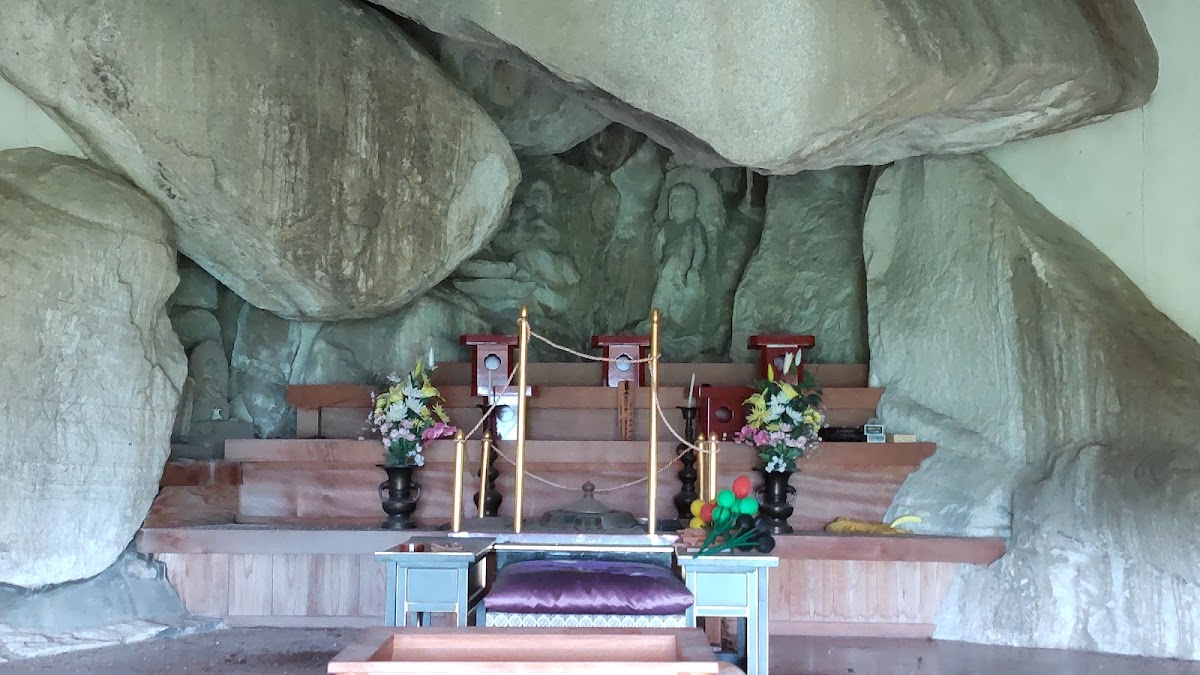
The history of Kōzan-ji Temple includes a legend related to Bishamonten. It is said that when Kukai was working on the repair of Mannō Pond, Bishamonten appeared in a cave on Mount Kōzan and helped the project succeed. Therefore, Kukai enshrined Bishamonten in a cave behind the main hall, and because the shape of the mountain resembled a helmet (kabuto), he named it “Kōzan” (meaning “helmet mountain”), and the temple was named “Kōzan-ji” (Kōzan Temple).
Even today, a statue of Bishamonten (Vaisravana) is enshrined in a cave located at the top of the stone steps to the left of the main hall, attracting many worshippers.
Transition from the Medieval to the Early Modern Period
Since its founding, Kōzanji Temple developed as a branch temple of Zentsūji Temple. However, during Chōsokabe Motochika’s invasion of Sanuki Province in the Tenshō era (1573-1593), it suffered damage from warfare, and many of its buildings were destroyed. Later, during the Edo period, it gradually recovered under the patronage of the Takamatsu Domain, forming the foundation of its current temple complex.
During the Edo period, the Shikoku Pilgrimage became popular among common people, and Kōzanji Temple, as the 74th temple on the pilgrimage route, welcomed many pilgrims. The layout of the approach to the temple and the temple grounds, which were developed during this period, remains largely unchanged to this day.
Highlights and Temple Buildings
Main Hall
The main hall is a magnificent building with a hipped roof, enshrining the principal image, Yakushi Nyorai (Medicine Buddha). Yakushi Nyorai is believed to grant healing from illness and promote longevity, and many worshippers pray for good health. Inside the main hall is a statue of Yakushi Nyorai said to have been carved by Kobo Daishi Kukai himself, but it is usually kept in a shrine as a hidden Buddha.
The temple is flanked by statues of Nikko Bosatsu (Sunlight Bodhisattva) and Gekko Bosatsu (Moonlight Bodhisattva). The rabbit depicted on the moon disc held by Gekko Bosatsu is one of the origins of the temple’s nickname, “Rabbit Temple.”
Daishi Hall
Climbing the stone steps to the left of the main hall leads to the Daishi Hall. A statue of Kobo Daishi Kukai is enshrined here, and pilgrims offer sutra copying at both the main hall and the Daishi Hall. The Daishi Hall is a relatively new building, but it is a beautiful structure that follows traditional architectural styles.
From in front of the Daishido Hall, you can overlook the cityscape of Zentsuji, and on a clear day, you can enjoy a panoramic view of the Sanuki Plain.
Bishamonten Cave
Climbing further up the stone steps from the Daishido Hall, you reach a cave dedicated to Bishamonten, who is deeply connected to the history of Kōzanji Temple. This cave utilizes the natural bedrock as is, and a statue of Bishamonten is enshrined inside. Bishamonten is also known as one of the Seven Lucky Gods and is believed to bring good fortune in competitions and wealth.
The stone steps leading to the cave are a little steep, but it is a sacred space well worth the climb. The view from the cave is also wonderful, allowing you to feel the nature of Mount Kōzan.
Temple Gate and Grounds
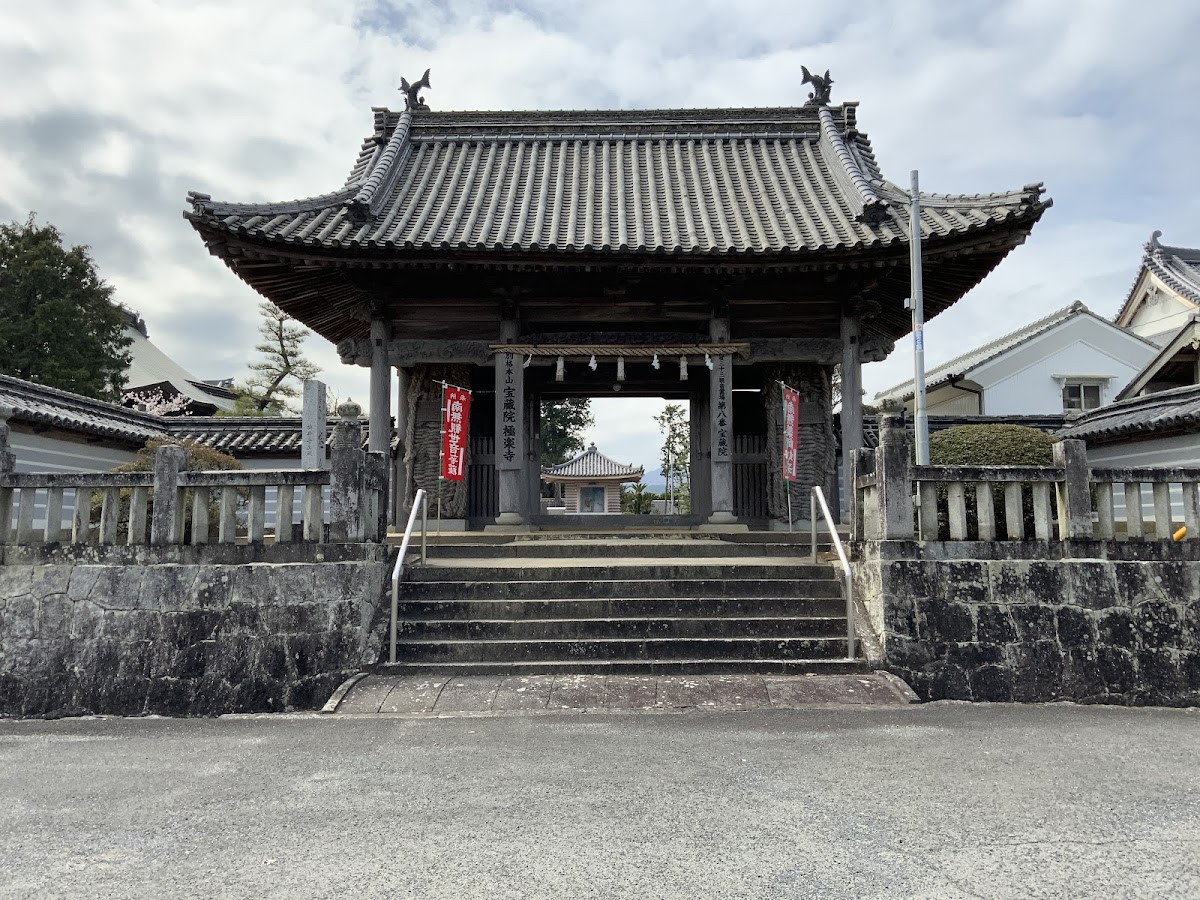
The temple gate of Kōzanji Temple faces Prefectural Road 48 and is a magnificent structure welcoming visitors. Passing through the gate, a spacious temple ground unfolds, with well-maintained gardens and a stone-paved path leading to the temple.
The temple grounds are dotted with ancient trees hundreds of years old, allowing visitors to enjoy the beauty of nature throughout the seasons. The cherry blossoms in spring and the autumn foliage are particularly beautiful, attracting many worshippers and tourists.
Rabbit Decorations
The reason Kōzanji Temple is called the “Rabbit Temple” is due to the rabbit decorations placed throughout the grounds. There are “rabbit tiles” depicting 14 rabbits on the roof, and two stone statues of a mother and baby rabbit are enshrined on the grounds.
These rabbits are said to originate from the rabbits depicted on the moon disc of the Moonlight Bodhisattva, and are worshipped as symbols of fertility, safe childbirth, and family safety. Among worshippers, there is a legend that “if you find all the rabbits, your wish will come true,” and many people enjoy searching for rabbits on the temple grounds.
Designated as a Cultural Property
Part of the “Shikoku Pilgrimage” Japan Heritage Site
Kōzanji Temple is registered as one of the part of the “Shikoku Pilgrimage – A Circular Pilgrimage Route and Unique Pilgrimage Culture” Japan Heritage Site, which was certified in 2015. The Shikoku 88 Temple Pilgrimage is a unique circular pilgrimage route, unparalleled in the world, and a valuable cultural heritage with a history of over 1200 years.
Kōzanji Temple holds a particularly important position among them as a temple directly founded by Kōbō Daishi Kūkai.
Historic Sites and Monuments
The Senyūgahara area surrounding Kōzanji Temple is recognized for its historical value as a playground during Kōbō Daishi Kūkai’s childhood and is protected as a local historical site. Furthermore, some of the ancient trees and stone structures within the temple grounds are designated as cultural properties of Zentsuji City.
Faith and Benefits of Kōzanji Temple
Healing from Illness by Yakushi Nyorai
The principal image, Yakushi Nyorai (Medicine Buddha), is also known as “Iō” (King of Medicine) and is worshipped as a Buddha who heals all illnesses. The temple’s mountain name, “Iōzan” (Mount Iō), also derives from this Yakushi Nyorai. Many visitors come to pray for healing from illness, good health, longevity, and good physical health.
Benefits for Conception and Safe Childbirth
Rabbits have long been considered symbols of fertility and safe childbirth. Kōzanji Temple’s rabbit worship originates from the rabbit on the moon disc of Gekko Bosatsu (Moonlight Bodhisattva), and it is a popular temple for prayers for conception and safe childbirth in the local area. In fact, numerous reports of people being blessed with children have been received, and the temple is constantly visited by pregnant women and couples hoping for children.
Bishamonten’s Luck in Competition and Wealth
Bishamonten, enshrined in a cave, is one of the Seven Lucky Gods and is believed to bring good fortune in competition and wealth. Many visitors pray for business prosperity and success, and the temple is especially crowded during the New Year and other significant periods.
Matchmaking
In recent years, combined with the cute image of rabbits, the temple has seen an increase in young visitors seeking blessings for matchmaking. People seeking good relationships can be seen praying to the rabbits on the temple grounds, making their wishes.
Visiting Information
Basic Information
- Official Name: Iōsan Tahōin Kōyamaji
- Sect: Shingon-shu Zentsuji-ha
- Principal Image: Yakushi Nyorai (Medicine Buddha)
- Pilgrimage Site: 74th Temple of the Shikoku 88 Temple Pilgrimage
- Address: 1765-1 Hirota-cho, Zentsuji City, Kagawa Prefecture
- Phone: 0877-63-0074
- Visiting Hours: 7:00 AM – 5:00 PM (Temple Nokyo Office)
- Admission Fee: Free (Free access to the grounds)
- Parking: Free parking available (approximately 30 spaces for regular cars)
Goshuin (Temple Seal) and Nokyo (Temple Nokyo)
At Kōyamaji Temple, you can receive a Goshuin in your Shikoku 88 Temple Pilgrimage Nokyo book. The temple office is located to the right of the main hall and is open from 7:00 to 17:00. The fee for receiving a temple stamp is 300 yen.
The temple stamp will have the calligraphy of “Yakushi Nyorai” (Medicine Buddha) and the red stamp of the 74th temple on the pilgrimage route. Stamping on hanging scrolls and white robes is also possible upon request.
Annual Events
- New Year’s Day: Shusho-e (New Year’s prayer)
- January 8th: Hatsuyakushi (Day of Yakushi Nyorai)
- March 21st: Spring Equinox Ceremony
- April 8th: Hana Matsuri (Buddha’s Birthday)
- August 8th: Segaki Ceremony
- September 23rd: Autumn Equinox Ceremony
- December 31st: New Year’s Eve Bell Ringing
Special ceremonies are held during these events, attracting many worshippers.
Transportation Access
Access by Train and Bus
- From JR Dosan Line “Zentsuji Station”:
- Approximately 5 minutes by taxi
- Approximately 10 minutes by community bus “City Loop Line,” get off at “Kozanji-mae” bus stop.
- Approximately 25 minutes on foot (approx. 2km)
- From JR Yosan Line “Tadotsu Station”:
- Approximately 15 minutes by taxi
- Approximately 40 minutes on foot (approx. 3km)
Access by Car
- From Takamatsu Expressway “Zentsuji IC”:
- Approximately 5 minutes (approx. 2km)
- Head north on Prefectural Road 48 and follow the signs.
- From Takamatsu area:
- Head west on National Route 11, turn onto Prefectural Road 48 in Zentsuji City and head north.
- Approximately 40 minutes
- From Matsuyama area:
- Head east on National Route 11, then turn onto Prefectural Route 48 in Zentsuji City and head north.
- Estimated travel time: approximately 1 hour 30 minutes
There is a free parking lot in front of the temple gate, with space for approximately 30 regular cars and several large buses. It can get crowded during pilgrimage season and on weekends, so early arrival is recommended.
Preceding and Following Temples
The following are the temples before and after Kōzanji Temple when visiting Kōzanji Temple on the Shikoku Pilgrimage:
Temple No. 73: Shusshakaji Temple
- Location: 1091 Yoshihara-cho, Zentsuji City, Kagawa Prefecture
- Distance: Approximately 2.5 km from Kōzanji Temple (approximately 35 minutes on foot, approximately 7 minutes by car)
- Principal Image: Shakyamuni Buddha
Shusshakaji Temple is located on the mountainside of Gahaishi-san and is known as the legendary site where Kūkai performed a self-sacrificial ascetic practice at the age of 7.
Temple No. 75: Zentsu-ji Temple
- Location: 3-3-1 Zentsuji-cho, Zentsuji City, Kagawa Prefecture
- Distance: Approximately 3km from Kozan-ji Temple (approximately 40 minutes on foot, approximately 8 minutes by car)
- Principal Image: Yakushi Nyorai (Medicine Buddha)
Zentsū-ji Temple is the head temple of the Shingon sect’s Zentsu-ji branch, built on the birthplace of Kobo Daishi Kukai, and is one of the most important temples among the 88 temples of the Shikoku Pilgrimage. It boasts a vast precinct divided into the East and West Precincts and houses numerous nationally important cultural properties.
Nearby Tourist Attractions
Zentsu-ji Temple
The head temple of the Shingon sect’s Zentsu-ji branch, located approximately 3km from Kozan-ji Temple. As the birthplace of Kobo Daishi Kukai, it is a central point on the Shikoku Pilgrimage. There are many sights to see, including the five-story pagoda in the East Precinct (a nationally important cultural property) and the Mikage-dō Hall in the West Precinct.
Shusshakaji Temple and Gahaishi Mountain
Shusshakaji Temple, the 73rd temple on the Shikoku Pilgrimage, and Gahaishi Mountain, where its inner sanctuary is located, are sacred sites where Kukai trained in his childhood. From the mountaintop, you can enjoy a magnificent view of the Sanuki Plain and the Seto Inland Sea.
Mannō Pond
Mannō Pond, which is associated with the founding of Kōzanji Temple, is known as the largest reservoir in Japan. The surrounding area has been developed into a park, and it is a scenic spot with beautiful cherry blossoms in spring and lotus flowers in summer. Many tourists visit this place to reflect on the great achievements of Kōbō Daishi Kukai.
Senyūgahara
Senyūgahara, which spreads around Kōzanji Temple, is said to be a place where Kukai played in his childhood. Even today, a rural landscape stretches out, allowing visitors to enjoy the peaceful scenery of Sanuki.
Zentsuji City Digital Museum
This facility allows visitors to learn about the history and culture of Zentsuji City, and features extensive exhibits related to Kobo Daishi Kukai and the Shikoku Pilgrimage. You can also learn about the history of Kozanji Temple in detail.
Points and Manners for Visiting the Temple
Order of Visiting the Temple
- Bow at the Temple Gate: Bow with hands clasped together before passing through the temple gate.
- Purify at the Water Basin: Purify your hands and mouth.
- Visit the Main Hall: Pay respects to the principal image, Yakushi Nyorai, offer a donation, and chant sutras.
- Visit the Daishi Hall: Pay respects to Kobo Daishi and chant sutras.
- Visit the Bishamonten Cave: If time permits, also visit the Bishamonten cave.
- Nokyo-jo (Temple Nokyo Office): Receive your temple stamp.
- Bow at the Temple Gate: When leaving the temple grounds, turn back to the temple gate, bow with hands clasped together.
Manners for Visiting the Temple
- Clothing: There are no specific rules, but avoid revealing clothing and aim for clean attire.
- Photography: Photography is generally permitted on the temple grounds, but consideration for the interior of the main hall and other visitors is necessary.
- Quietness: Please pray quietly on the temple grounds and refrain from loud conversations.
- Smoking: Smoking is strictly prohibited on the temple grounds.
- Pets: Pets are generally not allowed on the temple grounds.
Pilgrimage Supplies
If you are officially undertaking the Shikoku Pilgrimage, it is recommended that you prepare the following items:
- White robe (hakue/byakue)
- Straw hat (sugegasa)
- Kongo staff (kongozue)
- Sutra book or hanging scroll
- Prayer beads
- Sutra book
These items can be purchased at Zentsu-ji Temple or pilgrimage supply stores.
Special Experiences at Kozan-ji Temple
Rabbit Hunt
Finding all 16 rabbits (14 on roof tiles + 2 on stone statues) scattered throughout the temple grounds is a popular activity for visitors. Enjoyable for both children and adults, exploring the temple grounds thoroughly allows you to rediscover its charm.
Sutra Copying and Buddha Image Copying Experience
With advance reservations, you can experience sutra copying and Buddha image copying. Experiencing a part of Buddhist practice in the tranquil main hall will be a precious time to forget the hustle and bustle of everyday life.
Seasonal Scenery
- Spring (March-April): The cherry blossoms in the temple grounds are in full bloom, creating a vibrant atmosphere.
- Summer (June-August): The fresh greenery is beautiful, and the sounds of cicadas fill the air, creating a tranquil space.
- Autumn (October-November): The autumn leaves color the temple grounds, especially around the stone steps leading to the cave.
- Winter (December-February): Visitors can pray in a serene atmosphere amidst the crisp, clear air.
The Modern Role of Kōzanji Temple
Kōzanji Temple, as one of the 88 temples of the Shikoku Pilgrimage, continues to welcome many pilgrims even today. In recent years, the number of foreign tourists has also increased, and it is attracting international attention as a place where one can experience traditional Japanese Buddhist culture.
Furthermore, it plays a central role in the local community, with many local residents gathering during annual events and local festivals. The approachable image of the temple as the “Rabbit Temple” serves as a bridge to convey Buddhist culture to younger generations.
It also occupies an important position in the promotion of tourism in Zentsuji City, and together with Zentsuji and Shusshakaji temples, it plays a central role in tourist routes as one of the “Three Temples Associated with Kukai.”
Summary
Kozanji Temple is a historic temple founded by Kobo Daishi Kukai for his achievements in repairing the Mannō Pond, and boasts a history of over 1200 years as the 74th temple of the Shikoku 88 Temple Pilgrimage. While it is a temple for healing illnesses with Yakushi Nyorai as its principal deity, it is also known as the “Rabbit Temple” for its blessings of fertility and matchmaking, and is popular with visitors of all ages.
With its rich natural environment at the foot of Mount Kozan, a mystical cave enshrining Bishamonten, and rabbit decorations scattered throughout the temple grounds, there are plenty of sights to see. Visiting this temple along with other nearby sacred sites such as Zentsuji and Shusshakaji will allow you to gain a deeper understanding of the footsteps of Kobo Daishi Kukai.
It’s easily accessible, about a 5-minute drive from the Zentsuji Interchange, and also easily reachable by bus or taxi from Zentsuji Station. It’s a temple worth visiting for various purposes, including Shikoku pilgrims, tourists, history buffs, and those seeking power spots.
Spending time in the tranquil grounds, reflecting on 1200 years of history, and being watched over by Yakushi Nyorai, Kobo Daishi, and adorable rabbits will surely be a memorable experience.