
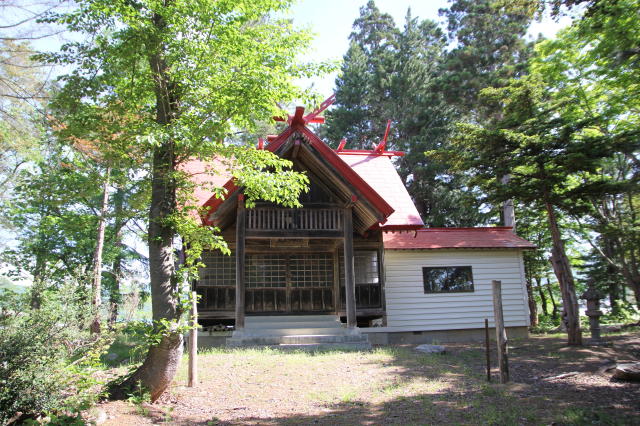
Kumano Shrine (Kyowa-cho, Iwanai-gun, Hokkaido) Complete Guide | History and Visiting Information Related to Matsuura Takeshiro
Kumano Shrine, located in Kyowa-cho, Iwanai-gun, Hokkaido, is a historically significant shrine with deep ties to Matsuura Takeshiro, an explorer of the late Edo period. This article provides detailed information you should know before visiting, including the shrine’s history, enshrined deities, access methods, and highlights.
Basic Information on Kumano Shrine
Kumano Shrine is located at 89 Hatsusoku, Kyowa-cho, Iwanai-gun, Hokkaido (also written as 89-31 Miyaoka), and belongs to the Hokkaido Shrine Association.
Location and Contact Information
- Address: 89 Hatsusoku, Kyowa-cho, Iwanai-gun, Hokkaido (89-31 Miyaoka)
- Phone Number: 0135-62-0143
- Former Shrine Rank: Unranked Shrine
- Annual Festival Date: September 15th
Shrine Building and Grounds Size
- Shrine Building Style: Shinmei-zukuri
- Shrine Building Area: 29 tsubo
- Grounds Area: 2,230 tsubo
- Number of Parishioner Households: 460 households
- Number of Worshippers: 1,015 people
The Shinmei-zukuri style shrine building is the same style as Ise Grand Shrine and possesses a status befitting the enshrinement of Amaterasu Omikami. The vast grounds are also a popular place of relaxation for local residents.
Deities and Divine Virtues
Main Deity: Amaterasu Omikami
The deity enshrined at Kumano Shrine is Amaterasu Omikami. Amaterasu Omikami is the supreme deity in Japanese mythology, known as the goddess personifying the sun. She is the ancestral deity of the Imperial Family and is enshrined at the Inner Shrine of Ise Grand Shrine.
Divine Virtues
Amaterasu Omikami’s divine virtues are numerous:
- National Peace and Security
- Abundant Harvests and Industrial Development
- Good Fortune and Protection from Evil
- Family Safety and Prosperity
- Fulfillment of Wishes
In Hokkaido, a land of pioneering, enshrining Amaterasu Omikami reflects the hopes of people for peace and prosperity in this new land.
History and Origins of Kumano Shrine
Founded by Matsuura Takeshiro and Hori Oribe-no-Sho
The founding of Kumano Shrine is deeply connected to two historical figures: Matsuura Takeshiro, an explorer of the late Edo period, and Hori Oribe-no-Sho, the Hakodate Magistrate at the time.
In 1857 (Ansei 3), Matsuura Takeshiro, who was visiting the Iwanai region for research, received a heartfelt request from a local woodcutter at Raiden Pass. The woodcutter wanted to build a shrine to protect travelers from bears. At the time, bear attacks were a serious problem in the area, and a place of worship to protect people’s safety was needed.
Matsuura Takeshiro accepted this request and wrote a letter to Hori Oribe-no-Sho, the Hakodate Magistrate, requesting the construction of a shrine. With Hori Oribe-no-Sho’s support, Kumano Shrine was successfully built.
About Matsuura Takeshiro
Matsuura Takeshiro (1818-1888) was an explorer and northern studies scholar from Ise Province (present-day Mie Prefecture). He explored Ezo (Hokkaido) six times, documenting Ainu culture and conducting geographical surveys. After the Meiji Restoration, he is also known as the person who coined the name “Hokkaido,” and is called the “godfather of Hokkaido.”
His records are extremely important resources in the study of Hokkaido history, and traces of his footsteps remain in various places. Kumano Shrine in Kyowa Town is one such place associated with Matsuura Takeshiro.
The Role of Hori Oribe-no-kami
Hori Oribe-no-kami (Hori Toshihiro) was a shogunate official who served as the Hakodate Magistrate during the Ansei era. He dedicated himself to the governance and development of Ezo, centered around Hakodate, a port city. The support for the construction of Kumano Shrine at the request of Matsuura Takeshiro was not merely the construction of a religious facility, but also an expression of administrative consideration to ensure the safety of local residents and provide them with a spiritual pillar of support.
Valuable Cultural Asset: Kumano Shrine Plaque
Historical Value of the Plaque
The plaque owned by Kumano Shrine is a valuable historical document of extremely high cultural value in Hokkaido. This plaque bears the traces of two historical figures.
- Front: The characters “Kumano,” believed to be in the handwriting of Hori Oribe-no-Sho
- Back: Matsuura Takeshiro’s signature
Handwriting analysis has confirmed that this plaque was actually written by Matsuura Takeshiro. It is extremely rare for an original piece written by Matsuura Takeshiro to remain in Hokkaido, making it of very high historical value.
The Story of the Shrine’s Founding as Told by the Plaque
This plaque is not merely a decorative item, but a “witness” that conveys the circumstances of the founding of Kumano Shrine to the present day. The format of having Hakodate Magistrate Hori Oribe-no-kami inscribe the calligraphy and Matsuura Takeshiro sign it symbolizes the cooperative relationship between the two and their deep affection for the region.
In the development of Ezo (Hokkaido) at that time, the construction of such shrines held significance beyond the mere establishment of religious facilities. They served as a spiritual anchor for the settlers and as the core of community formation.
Kumano Faith and Hokkaido
Kumano Shrines Spreading Across Japan
There are numerous shrines throughout Japan bearing the name “Kumano Shrine.” These are shrines that received their deities from the Kumano Sanzan (Kumano Hongu Taisha, Kumano Hayatama Taisha, and Kumano Nachi Taisha) located in Kii Province (present-day Wakayama and southern Mie prefectures).
From the medieval to the early modern period, pilgrimages to Kumano became popular, and Kumano faith spread throughout Japan. Through the activities of guides known as Kumano Sendatsu and the donation of manors by influential figures, shrines dedicated to Kumano Gongen were established in various locations.
Kumano Faith in Hokkaido
Several Kumano shrines exist in Hokkaido. Kumano-affiliated shrines are located in various places, such as Kuromatsunai Town in Suttsu District and Muroran City, and have attracted local faith since the pioneering era.
The Kumano Shrine in Kyowa Town holds a special position due to its connection with the historical figure Matsuura Takeshiro. It is an interesting example of how Kumano faith, which originated in Honshu, spread to Hokkaido and developed uniquely in conjunction with local circumstances (protection from bear attacks).
Access and Transportation Information
Access by Public Transportation
Access to Kumano Shrine is as follows:
Using Chuo Bus
- Take the bus bound for Omagari from Iwanai
- Get off at the “Omagari” bus stop
- Approximately 25 minutes on foot from the bus stop
Access by Car
Visiting by private car is also possible. From the center of Kyowa Town, head towards the Hatsuzumi area and then towards the Miyagaoka area. If using a car navigation system, please search using the address “89-31 Miyagaoka, Kyowa-cho, Iwanai-gun, Hokkaido” or the phone number “0135-62-0143”.
Nearby Shrines
There are other shrines located around Kyowa-cho:
- Kamikawa Shrine (239-16, Hatsusoku, Kyowa-cho): Approximately 6.7km from Kumano Shrine
- Iwanai Shrine (Iwanai-cho): Approximately 8.8km from Kumano Shrine
- Kotohira Shrine (Iwanai-cho)
If you have time, it would be good to visit these shrines as well.
Annual Festival and Events
Annual Festival (September 15th)
The annual festival of Kumano Shrine is held every year on September 15th. The annual festival is the most important ceremony at the shrine, where gratitude is offered to the enshrined deity for the past year and prayers are offered for peace and prosperity in the region.
On the day of the annual festival, parishioners and devotees gather, and Shinto rituals are performed. It is an important opportunity to reaffirm the bonds of the local community and pass on the faith to the next generation.
Annual Events at Shrines in Hokkaido
In addition to the annual events similar to those in Honshu, shrines in Hokkaido also hold events that reflect Hokkaido’s unique climate and history:
- Saitansai (January 1st): A festival celebrating the New Year
- Setsubunsai (around February 3rd): Including bean-throwing ceremonies
- Kinensai (February 17th): A prayer for a bountiful harvest
- Reisai (Varies by shrine)
- Niinamesai (November 23rd): A festival expressing gratitude for the harvest
These festivals may also be held at Kumano Shrine; please contact the shrine for details.
Manners and Etiquette for Visiting a Shrine
Basic Etiquette for Visiting a Shrine
Here are some basic manners for visiting a shrine:
- Bow before passing through the torii gate: This is a courtesy before entering the sacred area.
- Walk along the edge of the path: The center is considered the path of the gods.
- Purify yourself at the water basin:
- Take the ladle with your right hand and purify your left hand.
- Switch the ladle to your left hand and purify your right hand.
- Switch the ladle back to your right hand, receive water in your left hand, and rinse your mouth.
- Purify your left hand once more.
- Stand the ladle upright to purify the handle, and return it to its original position.
- Pray in front of the main hall:
- Place your offering.
- Ring the bell if there is one.
- Bow twice, clap twice, and bow once.
- Bow again at the torii gate when leaving.
Clothing and Belongings
While casual attire is acceptable for worship, please dress respectfully and cleanly to avoid offending the deities. Hokkaido’s climate differs from that of Honshu, so appropriate cold-weather gear is important.
During winter visits, the shrine grounds may be covered in snow or ice, so we recommend wearing non-slip shoes.
About Goshuin (Shrine Seals)
Some shrines may not offer Goshuin, so we recommend contacting the shrine in advance if you wish to receive one.
Goshuin are proof of worship, not a stamp rally. They are received as a memento after a sincere visit. Please bring your Goshuincho (seal book) and request respectfully.
About Kyowa Town
Regional Overview
Kyowa Town is located in Iwanai District, under the jurisdiction of the Shiribeshi General Subprefectural Bureau of Hokkaido. It includes part of the Niseko-Shakotan-Otaru Coast National Park and is known as a region rich in nature.
The town’s name was chosen in 1955 (Showa 30) when Maeda Village and Hatsusoku Village merged, reflecting the wish for “harmony and prosperity together.”
Major Industries and Local Products
Kyowa Town’s core industry is agriculture, and the following agricultural products are particularly well-known:
- Watermelon: Highly regarded both within and outside Hokkaido as “Raiden Watermelon”
- Melon: High quality with a strong sweetness
- Rice: One of Hokkaido’s rice-producing areas
With tourist attractions such as Raiden Onsen (hot spring), the town is promoting town development that harmonizes nature and agriculture.
Nearby Tourist Spots
Raiden Coast
This coastline stretches from Kyowa Town to Iwanai Town, a scenic area characterized by its unique rock formations. It was during his research in this region that Matsuura Takeshiro encountered a woodcutter at Raiden Pass.
Niseko Mountain Range
To the southeast of Kyowa Town lies the Niseko Mountain Range, offering opportunities for outdoor activities such as mountain climbing and skiing. The beautiful natural scenery throughout the seasons attracts many tourists.
Shinsennuma Marsh
Located near the border between Kyowa Town and Niseko Town, this high-altitude wetland possesses a mystical atmosphere. It is particularly beautiful during the autumn foliage season and is a popular spot for photography enthusiasts.
About the Hokkaido Shrine Association
Kumano Shrine belongs to the Hokkaido Shrine Association. The Hokkaido Shrine Association is an organization that encompasses shrines throughout Hokkaido and functions as a regional branch of the Association of Shinto Shrines.
Roles of the Hokkaido Shrine Association
- Liaison and coordination of shrines in Hokkaido
- Training and education of Shinto priests
- Promotion and awareness of Shinto culture
- Provision of information on shrines
- Guidance and support for rituals
The Hokkaido Shrine Association website allows users to search for information on shrines throughout Hokkaido, and also provides basic knowledge about Shinto and shrines, as well as explanations of annual events. ## Summary: The Significance of Visiting Kumano Shrine
Kumano Shrine in Kyowa-cho, Iwanai-gun, Hokkaido, is not just a small local shrine. It is a historically significant shrine, with a founding history involving historical figures such as the late Edo period explorer Matsuura Takeshiro and the Hakodate magistrate Hori Oribe-no-Sho. It boasts a valuable plaque and embodies the wishes of the people of the pioneering era.
Kumano Shrine, which enshrines Amaterasu Omikami as its main deity, has watched over the peace and prosperity of the region. Understanding its history is also a way of touching upon a part of Hokkaido’s pioneering history.
If you have the opportunity to visit Kyowa-cho, why not visit this historic shrine and quietly offer your prayers? By standing on the path walked by Matsuura Takeshiro and in a place of worship preserved by the local people, you will be able to feel Hokkaido’s history and culture more deeply.
A shrine is not merely a tourist spot; it is a sacred space where the history of the region and the prayers of its people have accumulated. We hope that through your visit to Kumano Shrine, you will reflect on the history of pioneering, the hardships and wishes of our ancestors, and the spirit of faith that continues to be passed down to the present day.
