
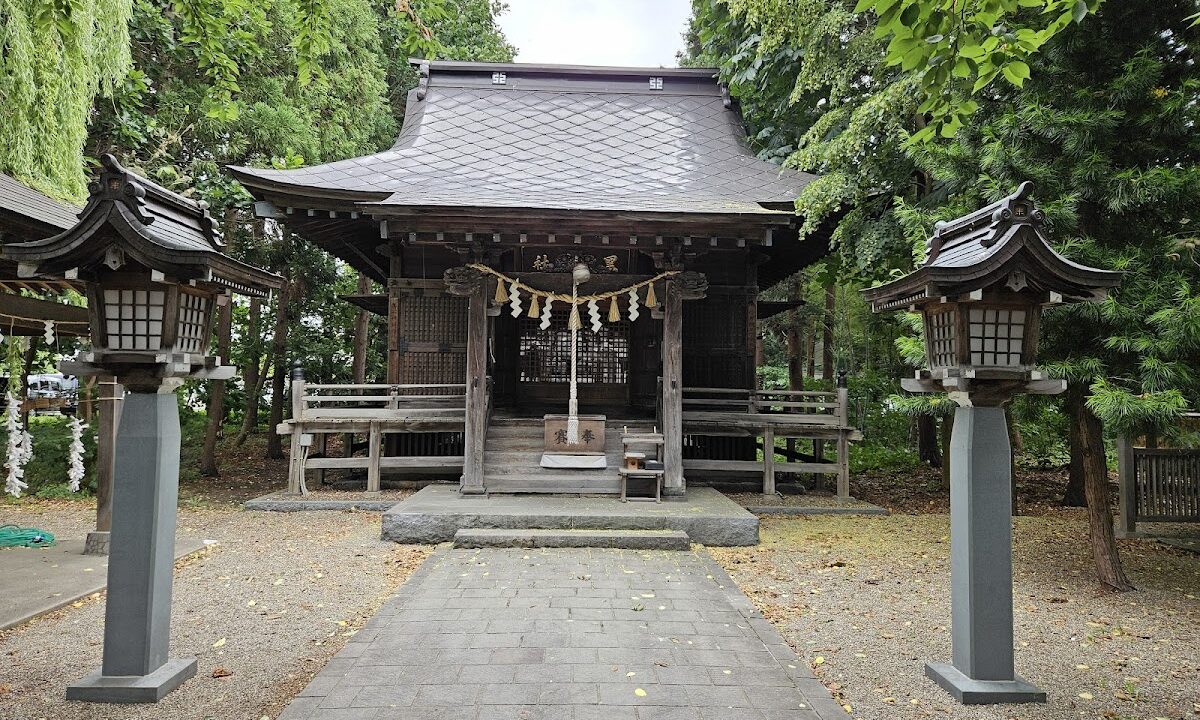
Kuroishi Shrine (Kuroishi City, Aomori Prefecture) Complete Guide | A Thorough Explanation of History, Deities, Cultural Properties, and Visiting Information
Kuroishi Shrine, located in Kuroishi City, Aomori Prefecture, is an important shrine that conveys the history and culture of the region, enshrining Tsugaru Nobuhide, the founder of the Kuroishi Domain, as its deity. This guide provides a detailed explanation of Kuroishi Shrine, which boasts a history dating back to the early Edo period, a valuable shrine building designated as an Aomori Prefecture Important Cultural Property, and the Toshogu Shrine located within its grounds. From its historical background to visiting information, this guide offers a wealth of attractions.
Overview and Location of Kuroishi Shrine
Kuroishi Shrine is located at 18 Ichinomachi, Kuroishi City, Aomori Prefecture (Postal Code 036-0307). Its former shrine rank was Prefectural Shrine. Situated in the heart of Kuroishi City, it has been revered by many people for over 350 years as a center of faith praying for the peace and prosperity of the region.
Kuroishi City is located in the southern part of the Tsugaru region and is a castle town known for its traditional culture, including kokeshi dolls, hot springs, and sake. Kuroishi Shrine is closely intertwined with the history of this castle town and is a valuable cultural heritage site that conveys the history of the Kuroishi Tsugaru family.
Deity Enshrined: Tsugaru Nobufusa
Life and Achievements of Tsugaru Nobufusa
The deity enshrined at Kuroishi Shrine is Tsugaru Jurozaemon Nobufusa. Born as the third son of Tsugaru Nobuyoshi, the lord of Hirosaki Domain, Nobufusa was granted 5,000 koku of land in Kuroishi by order of the Edo Shogunate in 1632.
In governing Kuroishi, Nobufusa made significant contributions in various areas, including industrial development, new land development, and the improvement of the castle town. His town planning, particularly centered around the Kuroishi Jinya (fortified residence), is highly regarded as laying the foundation for present-day Kuroishi City. He dedicated himself to the development of Kuroishi for approximately 30 years until his death at Hirosaki Castle in 1662.
Founding of the Kuroishi Tsugaru Family and the Kuroishi Domain
The Kuroishi Tsugaru family, founded by Lord Nobuhide, was initially an independent hatamoto (direct retainer of the shogun) family, not a branch of the Hirosaki Domain. Later, his descendants ruled the Kuroishi area for generations, and in 1758, the Kuroishi Domain was officially recognized. This made the Kuroishi Tsugaru family a daimyo (feudal lord) family, which continued until the Meiji Restoration.
Lord Nobuhide is revered as the founder of the Kuroishi Tsugaru family and the later Kuroishi Domain. Kuroishi Shrine was built to commemorate the achievements of this founder and to enshrine him as the guardian deity of the region.
History of Kuroishi Shrine
From Founding to the Edo Period
The origins of Kuroishi Shrine date back to 1662. When Lord Tsugaru Nobuhide died at Hirosaki Castle, according to his will, a shrine was built in the southeastern corner of the Kuroishi Jinya (fortified residence), corresponding to the “back demon gate” of the castle, and he was buried there. This shrine became the predecessor of Kuroishi Shrine.
Initially, the shrine functioned as a place to mourn Lord Nobuhide, but over time, it transformed into a place of worship honoring his achievements. Successive heads of the Kuroishi Tsugaru family and their subjects carefully preserved this shrine and regularly performed rituals.
Shrineification and Rank in the Meiji Era
Following the Meiji Restoration’s separation of Shinto and Buddhism, the shrine was reorganized as a shrine. In 1873 (Meiji 6), it was officially established as Kuroishi Shrine and designated a local shrine. Later, in 1880 (Meiji 13), it was promoted to a prefectural shrine, establishing its position as a representative shrine of the region.
During the Meiji era, improvements were made to the shrine buildings, laying the foundation for the current main hall and worship hall. Some of the buildings from this period are still preserved today as important cultural properties of Aomori Prefecture.
During Emperor Meiji’s tour of the Tohoku region, he also visited Kuroishi Shrine, and a monument commemorating this visit has been erected on the shrine grounds. This is evidence that Kuroishi Shrine was recognized as an important shrine in the region.
From Showa and Heisei to the Present
During the Showa era, the shrine escaped war damage, and valuable cultural properties were preserved. In the 1970s, a large-scale restoration of the shrine buildings was carried out, and its value as a cultural property was re-recognized.
Even in the Heisei era, regular maintenance and cultural property protection activities have continued. In 2016, renovation work was carried out on the worship hall, ensuring the preservation of the historical building and the safety of worshippers.
Even today, Kuroishi Shrine functions as a center of faith in the region, and many worshippers visit for New Year’s prayers and the annual festival. It is also attracting attention as a tourist resource for Kuroishi City, becoming a place visited by tourists interested in history and culture.
Features of the Shrine Buildings and Architecture
Main Hall Designated as a Prefectural Important Cultural Property
The main hall of Kuroishi Shrine is a valuable building designated as an Important Cultural Property of Aomori Prefecture. It preserves the architectural style from the late Edo period to the Meiji era, and clearly demonstrates the characteristics of shrine architecture in the Tsugaru region.
The main hall has a hipped roof and is adorned with elaborate carvings. The decorations on the transoms and gables are particularly magnificent, demonstrating the high skill of the craftsmen of the time. The carvings feature auspicious motifs such as dragons, phoenixes, pine, bamboo, and plum blossoms, symbolizing the achievements of Lord Nobuhide and a wish for the prosperity of Kuroishi.
Worship Hall and Shrine Gate
The worship hall was built during the Meiji era, and its imposing structure is impressive. The shrine gate, which welcomes worshippers, was also built during the same period. The contrast between the vermilion pillars and the black tiled roof is beautiful, conveying a sense of high status.
Inside the main hall are enshrined portraits of Lord Nobuhide and items related to the Kuroishi Tsugaru family, which are sometimes displayed on special occasions. The layout of the shrine buildings still maintains the positional relationship that protects the “back demon gate” of the Kuroishi Jinya (fortified residence), and is based on the principles of feng shui.
Stone Lanterns and Stone Structures on the Shrine Grounds
Numerous stone lanterns, donated from the Edo period to the Meiji period, line the shrine grounds. These lanterns bear the names and years of their donors, serving as evidence of the faith of the Kuroishi Tsugaru family’s retainers and influential local figures.
In particular, the pair of stone lanterns placed in front of the main hall were donated during the Kansei era (1789-1801), making them valuable cultural assets with a history of over 200 years. The moss-covered texture of the stones evokes the long history of the shrine.
Subsidiary Shrines on the Grounds
History of the Toshogu Shrine
The Toshogu Shrine is located within the grounds of Kuroishi Shrine. This Toshogu Shrine enshrines Tokugawa Ieyasu and his adopted daughter, Mantenhime.
Mantenhime was the principal wife of Tsugaru Nobuhira and had deep ties to the Kuroishi Tsugaru family. The Toshogu Shrine was established in Kuroishi as a symbol of the relationship between the Hirosaki Domain and the Tokugawa family. Originally functioning as a subsidiary shrine of Hirosaki Toshogu Shrine, after Hirosaki Toshogu Shrine went bankrupt due to financial difficulties, this Kuroishi Shrine Toshogu Shrine inherited its history.
The shrine building, though small, is exquisitely crafted, and the Tokugawa family’s three-leaf hollyhock crest can be seen throughout. It is a valuable historical site that conveys the Tsugaru family’s emphasis on their relationship with the Edo Shogunate.
Other Subsidiary Shrines
In addition to the Toshogu Shrine, several subsidiary shrines are enshrined within the grounds. The Inari Shrine is a place of worship for business prosperity and abundant harvests, and is popular among local people.
Furthermore, within the shrine grounds, there is a small shrine dedicated to the successive heads of the Kuroishi Tsugaru family, demonstrating the continued reverence for the feudal lord’s family. These subsidiary shrines illustrate that Kuroishi Shrine is not merely the mausoleum of the clan’s founder, but a comprehensive space of faith encompassing diverse beliefs.
Cultural Properties and Highlights
Prefectural Important Cultural Properties
Kuroishi Shrine possesses several cultural properties designated as important cultural properties of Aomori Prefecture. The main hall architecture is a prime example, but the carvings and decorations attached to the shrine also possess high artistic value.
In particular, the ancestral tablet of Lord Nobuhide, enshrined inside the main hall, and the ritual implements donated by successive heads of the family, represent the pinnacle of Edo period craftsmanship. These are not usually open to the public, but there are opportunities to view them during special festivals.
Monument Commemorating Emperor Meiji’s Visit
Within the shrine grounds stands a stone monument commemorating Emperor Meiji’s visit to Kuroishi Shrine during his tour of the Tohoku region. The Imperial visit in 1876 (Meiji 9) was a significant event that strengthened the Meiji government’s ties with the Tohoku region.
This monument features calligraphy by a calligrapher of the Meiji era, characterized by its dignified style. An Imperial visit was the highest honor for a shrine, and this monument is an important historical site demonstrating the high status of Kuroishi Shrine.
Nature and Scenery of the Shrine Grounds
The grounds of Kuroishi Shrine are surrounded by ancient cedar and pine trees hundreds of years old, creating a tranquil atmosphere. The scenery is particularly beautiful in spring with its fresh greenery and in autumn with its vibrant foliage, allowing visitors to enjoy nature alongside their worship.
There is also a pond on the grounds where carp can be seen swimming. This pond has existed since the Edo period, reflecting a landscape gardening philosophy that incorporated garden elements into the shrine space. The front garden of the shrine office is also meticulously maintained, with seasonal flowers welcoming visitors.
Annual Events and Festivals
Grand Festival
The Grand Festival of Kuroishi Shrine is held every September. This festival is scheduled around the anniversary of Lord Nobuhide’s death and is an important Shinto ritual to honor the achievements of the founder of the domain and pray for peace and prosperity in the region.
During the Grand Festival, Kagura (sacred dance) is performed and a portable shrine is carried in procession, enveloping the city of Kuroishi in a festive atmosphere. Many local parishioners and devotees attend, and the traditional festival is conducted solemnly.
New Year’s Visit and Setsubun Festival
Many citizens visit the shrine for their first shrine visit of the new year, praying for safety and well-being throughout the year. Special Goshuin (shrine seals) are given out from New Year’s Day to the third day, attracting many visitors.
The Setsubun Festival in February involves bean-throwing, a well-established local event to ward off evil and pray for good fortune. A wide range of generations, from children to the elderly, participate, making it an opportunity to strengthen community bonds. ## Visiting Information and Access
Basic Information
Location: 18 Ichinomachi, Kuroishi City, Aomori Prefecture 036-0307
Telephone: Information provided by Kuroishi Tourism Association (0172-52-3488)
Visiting Hours: Grounds are freely accessible (Shrine office is usually open 9:00-17:00)
Admission Fee: Free
Parking: Available (Free)
Access Methods
Public Transportation:
- Approximately 15 minutes on foot from Kuroishi Station on the Konan Railway Konan Line
- Approximately 5 minutes by taxi from Kuroishi Station
By Car:
- Approximately 10 minutes by car from Kuroishi IC on the Tohoku Expressway
- Approximately 40 minutes from central Aomori City via National Route 394
- Approximately 30 minutes from central Hirosaki City via National Route 102.
Parking is adjacent to the shrine grounds and can accommodate approximately 20 regular-sized cars. Temporary parking is also available during peak seasons such as New Year’s Day and the annual festival.
Nearby Tourist Attractions
Around Kuroishi Shrine, there are several tourist spots where you can experience the history and culture of Kuroishi City.
Komise Street: A traditional shopping street retaining the atmosphere of the Edo period, approximately a 5-minute walk from Kuroishi Shrine. It is designated as an Important Preservation District for Groups of Traditional Buildings.
Nakano Momijiyama: Known as a famous spot for autumn foliage, it attracts many tourists in the fall. Approximately a 15-minute drive from Kuroishi Shrine.
Tsugaru Kokeshi Museum: A facility where you can see and experience making Tsugaru-style kokeshi dolls. Approximately a 10-minute drive from Kuroishi Shrine.
Kuroishi Onsenkyo: A tranquil hot spring resort, perfect for relaxing after visiting the shrine.
Goshuin (Shrine Seals) and Souvenirs
Goshuin (Shrine Seals)
Kuroishi Shrine offers goshuin. The goshuin features the calligraphy of “Kuroishi Shrine” and the shrine’s seal, making it a popular memento of your visit. They can be obtained during the shrine office’s opening hours.
The usual offering fee is 300 yen, and they are given either inscribed in your goshuin book or as a pre-printed seal. Limited edition goshuin may be offered on special days such as the annual festival.
Amulets and Souvenirs
Kuroishi Shrine offers various amulets and souvenirs. There are amulets for various wishes, including traffic safety, family safety, and academic success.
The “Good Fortune Amulet,” named after the founder of the domain, Lord Nobuhide, is particularly popular among those starting new businesses or facing life-changing events. It is believed to bestow the strength to take a new step forward, drawing on Lord Nobuhide’s achievements in laying the foundation of Kuroishi.
Cultural Significance of Kuroishi Shrine
Symbol of Regional Identity
Kuroishi Shrine is more than just a religious facility; it is an important cultural symbol that shapes the identity of the citizens of Kuroishi. By enshrining Lord Nobuhide, the founder of the domain, it serves as a place to confirm Kuroishi’s historical roots and cultivate pride in the region.
In local school education, Kuroishi Shrine is also used as an important subject for learning local history, providing children with opportunities to learn about the history of their region.
Documentary Value for Historical Research
The documents and ritual objects preserved at Kuroishi Shrine are valuable primary sources for historical research in the Tsugaru region. In particular, the records remaining at the shrine are an indispensable source of information for understanding the lineage of the Kuroishi Tsugaru family and the social structure of Kuroishi during the Edo period.
Researchers from within and outside Aomori Prefecture regularly visit Kuroishi Shrine to conduct cultural property surveys and historical research. The shrine is cooperative with these academic activities and accepts viewing and research of materials under appropriate management.
Utilization as a Tourism Resource
In recent years, Kuroishi Shrine has also attracted attention as a base for historical tourism. In collaboration with the Kuroishi Tourism Association, guided tours of historical buildings, including the shrine, are also conducted.
English signage is provided for foreign tourists, and the shrine plays a role in internationally promoting Japanese shrine culture and local history. Kuroishi Shrine occupies an important position in the promotion of tourism in Kuroishi City.
Summary
Kuroishi Shrine is a representative shrine of Kuroishi City, Aomori Prefecture, with a history of over 350 years. It enshrines Tsugaru Nobuhide, the founder of the Kuroishi Domain, and has functioned as a center of faith praying for the peace and prosperity of the region.
With many cultural assets and points of interest, including the shrine building designated as a prefectural important cultural property, the Toshogu shrine within the grounds, and the monument commemorating Emperor Meiji’s visit, it is an attractive spot for history buffs and tourists. The tranquil grounds are blessed with the beauty of nature throughout the seasons, creating a space where one can pray with peace of mind.
When you visit Kuroishi City, be sure to visit Kuroishi Shrine and experience the history and culture of Tsugaru. You will be able to experience a form of faith that continues to this day, while feeling the achievements of the founder of the domain and the history of the region.


