Complete Guide to Makari Shrine | A Stunning Hokkaido Scenic Spot with Mount Yotei and Cherry Blossom Trees
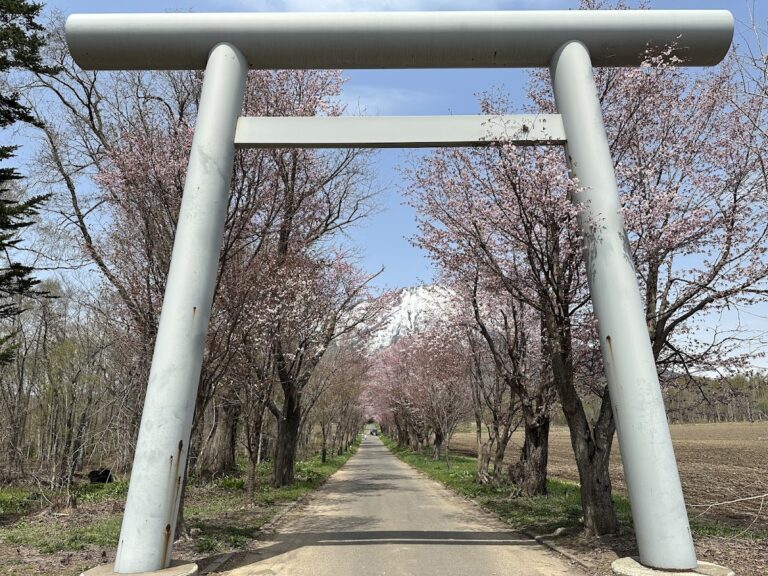
Located in Makari Village, Abuta District, Hokkaido, Makari Shrine is a hidden gem, boasting a magnificent view of Mount Yotei (also known as Ezo Fuji) as a backdrop, and a pedestrian avenue lined with over 100-year-old Ezo cherry trees adorning the approach to the shrine. This shrine, which conveys the history of Hokkaido’s development during the Meiji era, is one of Hokkaido’s premier cherry blossom viewing spots, attracting many photographers and tourists in spring.
This article comprehensively covers everything you need to know before visiting Makari Shrine, from its historical background and enshrined deities to its highlights, the charm of its cherry blossom trees, access information, and details about its Goshuin (shrine stamp).
History and Origins of Makari Shrine
Faith in the Pioneer Era and the Founding of the Shrine
The history of Makari Shrine is closely intertwined with the development of Hokkaido during the Meiji era. In 1896 (Meiji 29), settlers in Makari Village consulted with each other and erected a temporary small shrine at the boundary between government-owned land and privately owned land on Kita 9-sen 9-go-dori, enshrining Hachiman-jin. This is considered the founding of the shrine.
At that time in Makari Village, settlers would erect temporary small shrines in each area, enshrining the tutelary deities of their respective hometowns. However, the then-mayor of Makari Village, Abe Yutei, strongly urged the villagers to be aware that “secretly erecting shrines and performing religious ceremonies in various parts of the village is strictly prohibited by law and would only result in blasphemy against the divine power.”
Following Mayor Abe’s thorough discussions, the villagers unanimously decided to consolidate the scattered small shrines into a single shrine, which would serve as the village’s principal guardian shrine. Thus, on September 12, 1906 (Meiji 39), permission was granted for its establishment as an unranked shrine, and the construction of the shrine building was completed in November 1909 (Meiji 42). Later, in 1910 (Meiji 43), the formal construction was completed, laying the foundation for the present-day Makari Shrine.
Promotion to Village Shrine and Regional Development
After its founding, Makari Shrine grew as a center of faith alongside the development of the region. By merging small shrines moved from several settlements, it came to serve as the guardian shrine for the entire Makari village, becoming a spiritual pillar for the villagers.
In the harsh natural environment of the early pioneering days, the shrine was a source of comfort for the settlers and a place to strengthen community bonds. The history of Makari Shrine can be said to embody the history of Hokkaido’s development itself.
Deities and Divine Virtues
Six deities are enshrined at Makari Shrine. We will introduce each deity and their divine virtues. ### Hondawake-no-Mikoto
Homudawake-no-Mikoto, also known as Emperor Ojin, is widely worshipped as Hachiman-sama. He is revered as the god of military success, national protection, and industrial development, and in the pioneering era of Makari Village, he attracted the faith of settlers hoping for success and prosperity in their new land.
Onamuchi-no-Mikoto
Onamuchi-no-Mikoto, another name for Okuninushi-no-Mikoto, is known as the god of nation-building. He has been worshipped as the god of agricultural and commercial development, matchmaking, and medicine, and has been revered by people hoping to establish a stable life in the pioneering lands.
Sukunahikona-no-Mikoto
A god who worked with Onamuchi-no-Mikoto in nation-building, he is known as the god of medicine, hot springs, and sake brewing. He is believed to grant healing from illness and promote longevity, and was the object of prayer for health during the harsh pioneering life.
Oyamatsumi-no-Mikoto
Revered as the god of mountains, Oyamatsumi-no-Mikoto is also the guardian deity of agriculture and forestry. At Makari Shrine, with Mount Yotei as its backdrop, he holds an important position as an object of prayer for the blessings and safety of the mountains.
Uganomitama-no-Mikoto
Widely known as Inari-no-Kami, Uganomitama-no-Mikoto is the god of abundant harvests and business prosperity. In the development of Makari Village, which is based on agriculture, he has been worshipped as an object of prayer for bountiful harvests.
Sugawara-no-Michizane
Famous as the god of learning, Sugawara-no-Michizane is revered as the god of academic achievement and success in examinations. He is enshrined as a god who watches over the promotion of education in Makari Village and the growth of children.
The Cherry Blossom Avenue at Makari Shrine | One of Hokkaido’s Most Scenic Spots
A Breathtaking Spring Scenery Created by the Ezo Cherry Blossom-Lined Approach
An essential part of discussing Makari Shrine is the avenue of Ezo cherry blossom trees lining its approach. Planted around 1920 by local residents, these trees are now over 100 years old, with 50 to 60 trees adorning the path.
During the blooming season, a tunnel of cherry blossoms forms, beyond which the majestic Mount Yotei, still covered in snow, can be seen—a truly spectacular view unique to Hokkaido. The contrast between the pink cherry blossoms, the snow-capped Mount Yotei, and the blue sky captivates visitors.
Best Time to See the Cherry Blossoms and Blooming Season
The best time to see the cherry blossoms at Makari Shrine is usually from early to mid-May. The peak blooming period is often around May 10th, attracting many photographers and tourists from both within and outside Hokkaido during this time.
Cherry blossoms in Hokkaido bloom later than those in Honshu, often reaching their peak after Golden Week. Therefore, those traveling during the spring holidays may miss the full bloom. When planning a visit, it is recommended to check the Makari Village Tourism Association or local blooming information.
Characteristics of the Ezo Cherry Blossom
The Ezo cherry blossoms planted at Makari Shrine are a representative variety of cherry blossom native to Hokkaido. They are characterized by their deeper pink color compared to Somei Yoshino cherry blossoms, and because the leaves and flowers open simultaneously, the reddish young leaves and pink blossoms create a beautiful contrast.
With their tall, powerful form, the Ezo cherry blossoms possess the toughness to withstand Hokkaido’s harsh climate, and continue to bloom beautifully every year, even after more than 100 years.
Attractiveness as a Photography Spot
The cherry blossom trees at Makari Shrine are a perfect subject for photography enthusiasts. The following points are particularly popular as photography spots:
Angle Viewing the Approach from the First Torii Gate
From the first torii gate, facing Hokkaido Prefectural Road 66 (Iwanai-Toya Line), you can capture the tunnel of cherry blossoms and Mount Yotei towering beyond in a single frame.
View Towards Mount Yotei from the Middle of the Approach
Standing within the tunnel of cherry blossoms and capturing Mount Yotei directly in front is a representative composition of Makari Shrine. Taking photos in the soft light of early morning will result in even more fantastical images.
Silhouette at Dusk
Photos capturing the silhouette of cherry blossoms against the backdrop of Mount Yotei illuminated by the setting sun are also popular.
When taking photos, please be considerate of other worshippers and remember that you are on shrine grounds, so please observe proper etiquette.
Makari Shrine Grounds and Highlights
Shrine Building and Grounds
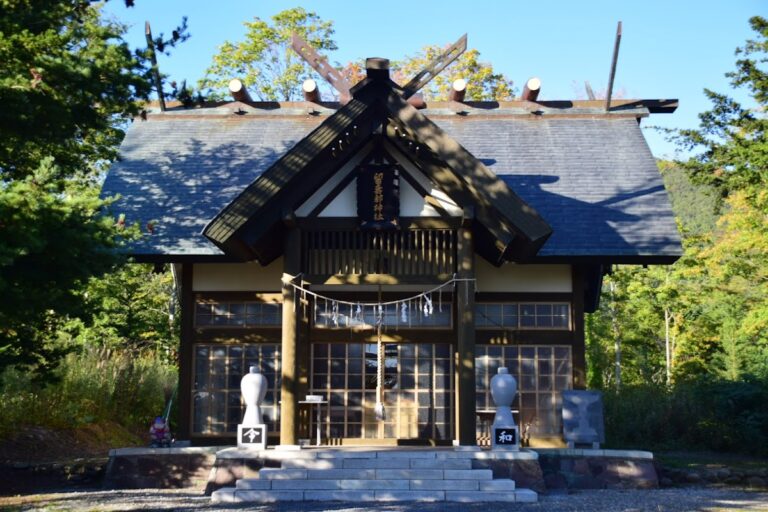
Completed in 1909 (Meiji 42), the Makari Shrine building retains characteristics of shrine architecture from the pioneering era of Hokkaido. Its simple yet majestic appearance evokes the history of over 100 years of faith held by the people of Makari Village.
The shrine grounds are well-maintained and enveloped in a refreshing atmosphere. Combined with its location at the foot of Mount Yotei, it creates a space that evokes a sense of openness and the powerful force of nature, characteristic of Hokkaido.
First Torii Gate and Approach
The first torii gate, facing Hokkaido Prefectural Road 66, welcomes visitors to Makari Shrine. Passing through the gate, a magnificent view unfolds, with ancient Ezo cherry trees lining both sides of the straight approach, beyond which Mount Yotei can be seen.
The approach to the shrine is of a moderate length, allowing visitors to take a moment to calm their minds and escape the hustle and bustle of everyday life as they walk from the torii gate to the shrine building.
Makari Shrine in Winter
Besides cherry blossom season, Makari Shrine displays different expressions throughout the four seasons. In particular, the scenery created by the snow-covered approach and the pure white Mount Yotei is magnificent in winter.
The snow-covered cherry trees and the snow-covered landscape of Mount Yotei towering in the background possess a different kind of serene beauty than in spring. Visiting the shrine in the solemn atmosphere unique to winter in Hokkaido will surely be a special experience.
Annual Festival and Events
The annual festival of Makari Shrine is held on September 15th. On this day, local people gather for a Shinto ritual. This traditional festival, which has continued since the pioneering era, is an important annual event for the community of Makari Village.
The annual festival includes Shinto rituals praying for a bountiful harvest, the safety and development of the region, and serves as an opportunity to deepen the bonds among local residents. This is a valuable opportunity to experience the history and culture of Makari Village, so if you have the chance to visit during this time, please be sure to participate.
Goshuin Information
You can receive a goshuin (temple/shrine stamp) at Makari Shrine. Goshuin are popular as proof of worship and as souvenirs of travel, and many visitors bring their goshuin notebooks with them.
When receiving a goshuin, the basic etiquette is to complete your prayers first and then request one at the shrine office. However, since Makari Shrine may not always have a resident priest, it is recommended to check in advance if you wish to receive a goshuin. You can obtain information on available dates and times by contacting the Hokkaido Shrine Association or the Makari Village Office.
The goshuin will have the shrine name and date of visit written in ink, and will be stamped with the shrine’s seal. A goshuin from Makari Shrine will be a valuable item for those visiting shrines in Hokkaido.
Access Information
Location
Address: 79, Yashiro, Makari-mura, Abuta-gun, Hokkaido
Makari Shrine is located in Makari-mura, Shiribeshi region, Hokkaido. It is situated on the western slopes of Mt. Yotei, along Hokkaido Prefectural Road 66 (Iwanai-Toya Line), making it relatively easy to access.
Access by Car
From Sapporo
Approximately 2 hours from Sapporo city via National Route 230. Cross Nakayama Pass, pass through Kimobetsu town, and then take Hokkaido Prefectural Road 66.
From Niseko
Approximately 30 minutes from Niseko town via National Route 5 and Hokkaido Prefectural Road 66.
From Lake Toya
Approximately 40 minutes north from Toyako Onsen on Hokkaido Prefectural Road 66.
There are a few parking spaces on the shrine grounds or nearby. However, congestion is expected during the cherry blossom season due to the large number of tourists. Early morning visits are recommended.
Access by Public Transportation
Public transportation access is limited. The nearest JR stations are Niseko Station or Kutchan Station, from which you will need to take a bus or taxi.
From JR Niseko Station
Take a Niseko Bus route and get off at a bus stop in Makari Village. From there, walk or take a taxi to the shrine. However, since bus services are limited, checking the timetable in advance is essential.
If you don’t have a car, renting a car in Niseko or Kutchan, or chartering a taxi, are the most practical options.
Nearby Tourist Attractions
When visiting Makari Shrine, we recommend also visiting nearby tourist attractions.
Mount Yotei
A stratovolcano with an elevation of 1,898m, it is a famous peak in Hokkaido, also known as “Ezo Fuji.” Hiking and trekking are popular activities.
Makkari Village Spring Water Village
This spot is where groundwater from Mount Yotei springs forth, attracting many visitors who come to collect its famous spring water.
Takashi Hosokawa Memorial Statue
A memorial statue of Takashi Hosokawa, an enka singer from Makkari Village, is located here.
Niseko Area
A world-famous ski resort, offering skiing in winter and rafting and cycling in summer.
Lake Toya
A beautiful caldera lake with a hot spring resort area, making it an ideal base for sightseeing.
About Makkari Village
Makkari Village is a small municipality with a population of approximately 2,000 people, located in Abuta District, under the jurisdiction of the Shiribeshi General Subprefectural Bureau of Hokkaido. Situated at the western foot of Mount Yotei, it is blessed with a rich natural environment and clean water resources.
Specialty Products of Makkari Village
Potatoes
Makkari Village is known as one of Hokkaido’s leading potato producing areas. In particular, the cultivation of “Danshaku” potatoes is thriving. The high-quality potatoes, nurtured by the groundwater of Mount Yotei and volcanic ash soil, are highly regarded nationwide.
Lily Bulbs Makari Village boasts the largest production volume of lily bulbs in Japan. While lily bulbs require labor-intensive cultivation, Makari Village’s climate and soil are ideal for their growth, resulting in the production of high-quality lily bulbs.
Water of Makari Village The groundwater of Mount Yotei, known as “Yotei’s Spring Water,” has been selected as one of Japan’s 100 best waters. This pure water supports the quality of Makari Village’s agricultural products.
History and Present of Immigrants
Makari Village is a region that developed through pioneering efforts during the Meiji era. Since 1896, immigrants from various parts of Honshu have settled there, cultivating the land in a harsh natural environment. As the history of Makari Shrine shows, while the immigrants brought their local beliefs, they ultimately fostered a sense of unity within the village by enshrining them all in one shrine. Currently, Makari Village faces the challenge of depopulation, but is working towards sustainable community development, leveraging its rich natural environment and high-quality agricultural products. In recent years, with the growing international popularity of the Niseko area, Makari Village has also been attracting attention.
Points to Note and Manners When Visiting
Manners for Worship
Makari Shrine is a popular tourist spot, but above all, it is a place of worship for the local people. Please observe the following manners when worshipping:
- Bow before passing through the torii gate
- Walk along the side of the path, as the center is considered the path of the gods
- If there is a purification fountain, cleanse your hands and mouth before worshipping
- Worship in front of the main hall using the two bows, two claps, and one bow ritual
- Be quiet on the shrine grounds and refrain from speaking loudly
Considerations When Taking Photos
Many photographers visit during cherry blossom season, but please keep the following points in mind.
- Take photos in a location that does not obstruct other worshippers.
- When using a tripod, be considerate of pedestrian traffic.
- Avoid crowds by visiting early in the morning or on weekdays.
- Do not break or damage cherry tree branches.
- Use of drones requires prior confirmation.
Seasonal Clothing and Preparations
Spring (Cherry Blossom Season)
Even in early May, Hokkaido can still be chilly. Don’t forget to take precautions against the cold, such as a light down jacket or windbreaker. It gets especially cold in the mornings and evenings, so layering is recommended.
Summer
It can get hot during the day, but it’s cool in the mornings and evenings, so a long-sleeved jacket or cardigan is useful. Insect repellent spray is also a good idea.
Autumn
By the time of the September festival, the signs of autumn are already strong. Take thorough precautions against the cold.
Winter
There is severe cold and snow. Thorough cold weather precautions are necessary, including warm clothing, winter boots, gloves, and a hat. Please be careful of icy roads.
The Significance of Visiting Makari Shrine
Makari Shrine is not merely a tourist spot; it is a valuable cultural heritage site that conveys the history of Hokkaido’s development. This shrine is inscribed with the history of people who migrated to this undeveloped land in the Meiji era, filled with hope, helping each other in the harsh natural environment and forming a community through faith.
The cherry tree-lined avenue, with trees over 100 years old, is proof that each tree planted by the pioneers has been carefully protected for generations. The cherry blossoms that bloom every spring symbolize the hardships of our ancestors and the history of Makari Village that they overcame to build it.
The experience of walking through the tunnel of cherry blossoms with Mount Yotei in the background is a special one unique to this place, where the magnificent nature of Hokkaido and the lives of its people harmonize. By visiting Makari Shrine, you can reflect on the history of Hokkaido’s development, be moved by the beauty of nature, and develop a respect for the place of worship of the local people.
Summary
Makkari Shrine, located in Makkari Village, Abuta District, Hokkaido, is a shrine that preserves the history of the Meiji era’s pioneering efforts. With a history of over 120 years since its founding in 1896 (Meiji 29), it has been revered by the local people as the village’s guardian shrine, enshrining six deities.
Its greatest attraction is the row of Ezo cherry trees, planted around 1920 (Taisho 9), now over 100 years old. 50 to 60 cherry trees adorn the approach to the shrine, and the view of Mount Yotei, still covered in snow, rising in the distance, is a representative scenic spot in Hokkaido, captivating many visitors. The best time to see the cherry blossoms is usually around May 10th, and during this time, many photographers and tourists from both within and outside Hokkaido visit.
Makkari Shrine is approximately a 2-hour drive from Sapporo and about 30 minutes from Niseko. Public transportation is limited, so renting a car is recommended. The surrounding area boasts numerous attractive tourist spots, including Mount Yotei, the Makari Village spring water area, the Niseko area, and Lake Toya.
When visiting, please remember that this is both a tourist attraction and a place of local worship, and be sure to observe proper etiquette. Makari Shrine is a special place where the natural beauty of Hokkaido, the history of its development, and the feelings of the local people are embodied.
Makari Shrine displays different expressions throughout the seasons, from the cherry blossoms of spring, to the lush greenery of summer, the vibrant autumn leaves, and the snowy landscapes of winter. When visiting Hokkaido, be sure to visit this little-known scenic spot. The view of Mount Yotei and the cherry blossom trees will surely become an unforgettable memory.