Manpuku-ji Temple Complete Guide: History, Highlights, and Visiting Information for the Obaku Zen Sect’s Head Temple [Uji, Kyoto]
About Manpuku-ji Temple
Manpuku-ji Temple is a head temple of the Obaku Zen sect located in Uji City, Kyoto Prefecture. Its mountain name is Obaku-san, and its principal image is Shakyamuni Buddha. It was founded in 1661 (Kanbun 1) during the early Edo period by the eminent monk Ingen Ryuki, who came from China.
While there are three main schools of Zen Buddhism in Japan—Rinzai, Soto, and Obaku—the Obaku school is the latest to be established among the various Buddhist sects in Japan before the modern era. Manpuku-ji Temple has played a vital role as a central temple of the Obaku school to this day.
Characteristics of the Obaku School
While the Obaku school is sometimes considered a branch of the Rinzai school, it has been heavily influenced by Chinese Zen Buddhism during the Ming Dynasty and possesses its own unique characteristics. It uses Chinese pronunciation (Ming Dynasty pronunciation) during chanting, and many Chinese elements remain in its rituals and practices. It is also characterized by its unique style called “Nembutsu Zen,” which incorporates elements of Pure Land Buddhism, such as chanting the Buddha’s name.
History of Manpuku-ji Temple
The Arrival of Zen Master Ingen
Ingen Ryūki was born in 1592 in Fujian Province, China. Originally a high-ranking monk who served as the abbot of Manpuku-ji Temple on Mount Huangbo in Fuzhou Prefecture, Fujian Province, China, he came to Nagasaki in Japan at the age of 63 with over 20 disciples in response to an invitation from Japan.
Initially, his stay was planned for three years, but Ingen’s teachings, which breathed new life into the Japanese Zen world, garnered widespread support, and he even received the devotion of the 4th Shogun, Tokugawa Ietsuna. Ultimately, Ingen decided to remain in Japan, and plans were made to build a new temple.
Founding of Manpuku-ji Temple
In 1661 (Kanbun 1), the shogunate granted land in Uji City, Kyoto Prefecture, and construction of Manpuku-ji Temple began. Zen Master Ingen named the new temple “Obaku-san Manpuku-ji” to ensure he would not forget the Manpuku-ji Temple on Mount Obaku in China where he had served as abbot, and also to signify his commitment to remembering his origins.
The construction of the temple was spearheaded by Ingen’s disciple, Mokuan Shōtō, and a series of temple buildings faithfully reproducing the style of the Chinese Ming Dynasty were erected. By 1669, the main halls were almost complete, and a magnificent Chinese-style temple was born in Japan.
Development after the Edo Period
Zen Master Ingen passed away in 1673 at the age of 82, but Manpuku-ji Temple continued to develop as the head temple of the Obaku sect. With outstanding Zen masters such as the second abbot Mokuan and the third abbot Sokuhi Nyoichi, the Obaku sect grew into a major sect with many branch temples throughout the Edo period.
Despite the impact of the anti-Buddhist movement after the Meiji Restoration, Manpuku-ji Temple maintained its position as the central temple of the Obaku sect, and continues to do so to this day. In 2024, 23 of its main buildings, including the Daiohōden (Great Buddha Hall), were designated as National Treasures, reaffirming its historical and cultural value.
Architecture and Temple Layout of Manpuku-ji Temple
Characteristics of Chinese Ming Dynasty Style
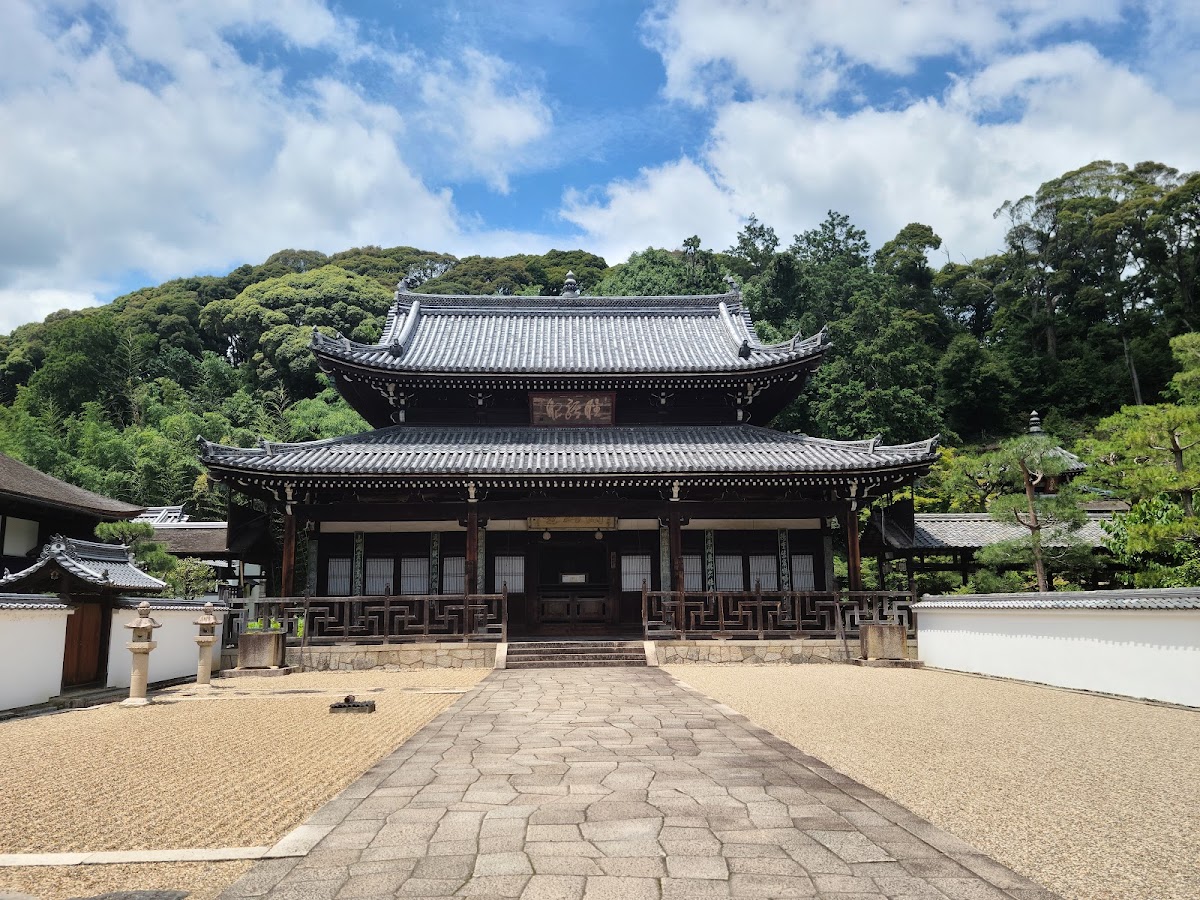
The most distinctive feature of Manpuku-ji Temple is its architecture, which differs from typical Japanese temples, being in the Chinese Ming Dynasty style. The entire temple grounds are unified in the style of the late Ming Dynasty in China, creating an atmosphere as if you were visiting China.
As for the building’s characteristics, the roofs use a unique type of tile called Obaku tile, and the eaves are adorned with a decoration called “manji-kuzushi” (a type of swastika). The columns feature an “entasis” style with a bulging top, and the floor is paved with cobblestones, both characteristic of Chinese architecture.
Temple Layout Modeled After a Dragon
The layout of Manpuku-ji Temple is designed to resemble a dragon. The main buildings, lined up in a straight line from the main gate to the Tenno-den (Hall of Heavenly Kings), Daio-hoden (Hall of the Great Buddha), and Hatto (Dharma Hall), represent the dragon’s spine, while the symmetrically arranged buildings symbolize the dragon’s ribs and limbs.
This magnificent temple layout faithfully reproduces the style of large Chinese temples, creating a unique spatial configuration not seen in other Japanese temples.
Main Buildings
Main Gate
This is the main entrance gate to Manpuku-ji Temple, a heavy, Chinese-style structure. The presence of statues of Idaten and Guan Yu, rather than Nio statues, on either side of the gate is also characteristic of Chinese temples.
Sanmon (Mountain Gate)
A two-story gate located beyond the main gate. The building bears a plaque inscribed with “Ōbaku-san,” and the upper level houses statues of Shakyamuni Buddha and the Sixteen Arhats.
Tenno-den
Located beyond the Sanmon Gate, this building is equivalent to the main hall in a Japanese temple. A statue of Maitreya Bodhisattva (Hotei) is enshrined in the center, with Skanda behind him and the Four Heavenly Kings on either side. The ceiling features a painting of a coiled dragon, awe-inspiring to visitors.
Daiohōden
This building is the main hall of Manpuku-ji Temple, housing the principal image, a seated statue of Shakyamuni Buddha. It is the central structure designated a National Treasure in 2024. Eighteen Arhats are also enshrined inside, creating a solemn atmosphere.
Hatto
This building, where sermons are given, is located behind the Daiohōden. The ceiling features a painting of a cloud dragon by Kano Tan’yū, another highlight.
Saido (Meal Hall)
This is where the monks eat. A large, fish-shaped wooden fish drum called a “gyoho” hangs from the ceiling. This gyoho is approximately 2 meters long and is struck to signal meal times.
Cultural Properties of Manpuku-ji Temple
National Treasure Designated Buildings
In 2024, 23 major buildings of Manpuku-ji Temple were designated as National Treasures. These include the Daio-hoden (Great Buddha Hall), Tenno-den (Heavenly King Hall), Hatto (Dharma Hall), Zen-do (Zen Hall), Tohojo (Eastern Abbot’s Quarters), Nishihojo (Western Abbot’s Quarters), Garan-do (Temple Complex), Soshi-do (Founder’s Hall), Saido (Meal Hall), Shoro (Bell Tower), Koro (Drum Tower), Toro (Drum Tower), Toro (East Corridor), and Nishi-ro (West Corridor).
These buildings are valuable legacies that preserve the early Edo period Chinese Ming Dynasty style architecture and are considered masterpieces of Chinese-style temple architecture in Japan.
Important Cultural Properties
In addition to buildings, Manpuku-ji Temple also houses many Important Cultural Properties. Among the Buddhist statues, the wooden seated statue of Shakyamuni Buddha and the wooden statues of the Eighteen Arhats are designated as Important Cultural Properties.
Furthermore, the calligraphy and paintings of Zen Master Ingen, as well as Buddhist implements from the Ming Dynasty, are preserved as Important Cultural Properties, conveying the richness of the Obaku culture to the present day.
Fine Arts and Crafts
Manpuku-ji Temple houses numerous works of art and crafts brought from China or made in the Chinese style. The style of the Buddhist statues also differs from typical Japanese Buddhist statues, exhibiting the realistic and expressive characteristics of the Ming Dynasty style.
Particularly noteworthy is the Maitreya Bodhisattva statue (Hotei statue) in the Tenno-den Hall, affectionately known as the “Smiling Buddha” for its beaming smile.
Highlights of Manpuku-ji Temple
Tips for Exploring the Temple Grounds
The grounds of Manpuku-ji Temple are vast, and a thorough exploration will take more than two hours. Here are some tips for efficiently visiting the main highlights.
Central Temple Complex
The central temple complex, stretching in a straight line from the main gate, is a must-see. The magnificent space, encompassing the main gate, the Sanmon gate, the Tenno-den hall, the Daio-hoden hall, and the Hatto hall, is a place where you can experience the true essence of Manpuku-ji Temple.
Corridors
Walking along the symmetrically arranged corridors, you can appreciate the unique spatial composition of Chinese-style temples. The beautiful scenery created by the stone pavement, vermilion-painted pillars, and yellow tile roofs is a popular spot for photography.
Founder’s Hall and Shoin-do Hall
The Founder’s Hall, dedicated to Zen Master Ingen, and its stupa, the Shoin-do Hall, are important places where you can feel the history of Manpuku-ji Temple. In a tranquil atmosphere, you can reflect on the virtues of the founding Zen master.
Seasonal Scenery
Manpuku-ji Temple shows different faces throughout the four seasons.
Spring
Cherry and plum trees are planted on the temple grounds, and in spring, beautiful flowers bloom in abundance. The contrast between the Chinese-style architecture and the Japanese cherry blossoms is magnificent.
Summer
The fresh greenery is beautiful, and lush trees adorn the temple grounds. Special events are held in the summer, attracting many visitors.
Autumn
During the autumn foliage season, the temple grounds are dyed in red and yellow. The view of the autumn leaves from the corridor is particularly spectacular, attracting many photography enthusiasts.
Winter
When it snows, the Chinese-style architecture is covered in snow, creating a mystical atmosphere reminiscent of an ink painting.
Special Experiences
Fucha Cuisine
Manpuku-ji Temple is also known as the birthplace of “Fucha cuisine.” Fucha cuisine is a type of vegetarian cuisine introduced from China by Zen Master Ingen, characterized by its use of oil in cooking. Authentic Fucha cuisine can be enjoyed at the temple’s restaurant by reservation.
Zen Meditation Experience
A program to experience Zen meditation of the Obaku school is also available. By experiencing Chinese-style Nembutsu Zen firsthand, you can encounter the teachings of the Obaku school of Zen Buddhism.
Sutra Copying and Buddha Image Copying
You can calm your mind and engage in sutra copying and Buddha image copying. Completed sutra copies can be dedicated to the main hall.
Culture Brought by Zen Master Ingen
Green Beans and Fucha Cuisine
Zen Master Ingen brought not only Zen teachings but also various cultural elements and ingredients to Japan. The most famous is “green beans,” named after Zen Master Ingen. Other ingredients such as watermelon, lotus root, and moso bamboo are also said to have been introduced to Japan by Ingen.
Fucha cuisine is a type of vegetarian cuisine using these ingredients, characterized by cooking methods such as stir-frying and deep-frying. These cooking methods were unprecedented in Japanese vegetarian cuisine at the time and had a significant impact on Japanese food culture.
Development of Sencha Tea Ceremony
Disciples who came to Japan with Zen Master Ingen introduced the Chinese style of tea drinking to Japan. This later developed into “Sencha-do” (the art of sencha tea ceremony), forming a tea culture distinct from the tea ceremony using matcha (powdered green tea).
Influence on Calligraphy and Painting
Ingen Zenji and successive generations of Obaku monks were also accomplished calligraphers, and their calligraphic style, known as “Obaku-style,” had a significant influence on the Japanese calligraphy world. Their powerful and distinctive brushwork was beloved by many literati and artists.
Visiting Information
Visiting Hours and Fees
Visiting Hours
- 9:00 AM – 5:00 PM (Last entry at 4:30 PM)
- Open year-round (Subject to change due to events)
Admission Fee
- Adults: 500 yen
- High school and junior high school students: 300 yen
- Elementary school students: 200 yen
- Group discounts available (30 or more people)
Access
Access by Train
- Get off at JR Nara Line “Obaku Station,” approximately 5 minutes on foot
- Get off at Keihan Uji Line “Obaku Station,” approximately 5 minutes on foot
The two stations are adjacent, and you can access Manpuku-ji Temple via the same route. There are signs along the way from the station to the temple, so you won’t get lost.
Access by Car
- Approximately 5 minutes from the Keiji Bypass “Uji Higashi IC”
- Approximately 20 minutes from the Meishin Expressway “Kyoto Minami IC”
Parking
- Approximately 50 regular cars can be accommodated
- Parking fee: 500 yen (regular cars)
- Large bus parking is also available (reservations required)
Nearby Tourist Attractions
Uji City, where Manpuku-ji Temple is located, has many other tourist attractions.
Byodo-in Temple
A World Heritage temple known for its design on the 10-yen coin. It is approximately 10 minutes by car and 5 minutes by train from Manpuku-ji Temple.
Ujigami Shrine
A World Heritage shrine known as the oldest shrine architecture in Japan.
Around the Uji River
Along the Uji River, famous for Uji tea, there are many tea houses and souvenir shops, making it a pleasant place to stroll around Uji.
Annual Events
Manpuku-ji Temple holds various events throughout the year.
January
- Shusho-e (January 1st-3rd): A memorial service to celebrate the New Year
March
- Shunki Higan-e (Spring Equinox Service): A memorial service for ancestors
April
- Ingen Zenji Kotan-e (Ingen Zenji’s Birthday Celebration): A memorial service to celebrate the birth of the temple’s founder, Ingen Zenji
- Hana Matsuri (Flower Festival): A memorial service to celebrate the birth of Shakyamuni Buddha
May
- Ingen Zenji Memorial Service: A memorial service for Ingen Zenji on the anniversary of his death (May 19th)
July
- Urabon-e (Obon Festival): A memorial service for ancestors
September
- Akiki Higan-e (Autumn Equinox Service): A memorial service for ancestors
October
- Kaisan-ki (Founder’s Memorial Service): A memorial service to commemorate Ingen Zenji
December
- Jodo-e (Enlightenment Ceremony): A memorial service to commemorate the enlightenment of Shakyamuni Buddha
- New Year’s Eve Bell Ringing: The temple bell is rung 108 times on New Year’s Eve.
Many of these events are open to the public, allowing you to experience the unique rituals of the Obaku sect.
Special Viewings and Events
Special Nighttime Viewing (Illumination)
To commemorate the designation as a National Treasure, special nighttime viewings are sometimes held for a limited time. The illuminated temple buildings create a fantastical atmosphere different from the daytime, offering a special experience.
We recommend checking the official website for dates and details.
Special Public Opening of Cultural Properties
Cultural properties that are normally closed to the public are sometimes specially opened. This is an opportunity not to be missed to see valuable cultural properties up close, such as important cultural property Buddha statues and the calligraphy of Zen Master Ingen.
Information Dissemination on Social Media
Manpuku-ji Temple actively disseminates information on its official Instagram and Facebook accounts. Since the temple grounds change with the seasons, event information, and special viewing information are updated in real time, we recommend checking before your visit.
Visitor Etiquette and Precautions
Attire and Belongings
Manpuku-ji Temple is a religious site, so it is desirable to visit in appropriate attire. Since the temple grounds have many stone paths, comfortable walking shoes are recommended.
In summer, the sun is strong, so a hat or parasol is useful. In winter, the buildings can get cold, so be sure to dress warmly.
Photography
Photography is generally permitted within the temple grounds, but there are areas where photography is prohibited, such as inside buildings or of Buddhist statues. There will be signs indicating areas where photography is permitted; please follow them.
Commercial photography and photography using tripods require prior permission.
Temple Visiting Etiquette
- Please pray quietly and be considerate of other visitors.
- Do not touch the buildings or cultural artifacts.
- Entry to areas other than designated areas is prohibited.
- Please take your trash with you.
Summary
Manpuku-ji Temple is a precious temple where you can experience the Zen culture of the Ming Dynasty in China while in Japan. As the head temple of the Obaku sect founded by Zen Master Ingen, it boasts a history of over 360 years, and its cultural value continues to grow, with its major buildings designated as National Treasures in 2024.
With its magnificent Chinese-style temple complex, numerous important cultural properties, beautiful scenery throughout the seasons, and unique cultures such as Fucha cuisine and sencha tea, Manpuku-ji Temple is filled with many attractions that cannot be experienced at other temples.
When visiting Kyoto or Uji, be sure to visit Manpuku-ji Temple and experience the unique world where Japanese and Chinese cultures merge. Strolling through the temple grounds and experiencing the Zen teachings transmitted by Zen Master Ingen will bring you peace of mind and new discoveries.
Checking the official website and social media for the latest information and not missing out on special viewings and events will allow you to have a more fulfilling experience at Manpuku-ji Temple. Spend some special time at Obaku-san Manpuku-ji Temple, where history and culture thrive.